Kirjojen hintavertailu – 12 903 725 kirjaa ja 27 kauppaa

Kirjailija

National Research Council

Kirjat ja teokset yhdessä paikassa: 34 kirjaa, julkaisuja vuosilta 1987–2019, suosituimpiin kuuluu Twenty-Fourth Symposium on Naval Hydrodynamics. Vertaile teosten hintoja ja tarkista saatavuus suomalaisista kirjakaupoista.

34 kirjaa

Kirjojen julkaisuvuodet: 1987–2019.

Going to Extremes

Going to Extremes

National Research Council

National Academies Press
2005
nidottu
Advanced polymer matrix composites (PMC) have many advantages such as light weight and high specific strength that make them useful for many aerospace applications. Enormous uncertainty exists, however, in predicting long-term changes in properties of PMCs under extreme environmental conditions, which has limited their use. To help address this issue, the Department of Defense requested a study from the NRC to identify the barriers and limitations to the use of PMCs in extreme environments. The study was to focus on issues surrounding methodologies for predicting long-term performance. This report provides a review of the challenges facing application of PMCs in extreme environments, the current understanding of PMC properties and behavior, an analysis of the importance of data in developing effective models, and recommendations for improving long-term predictive methodologies. Table of Contents Front Matter Executive Summary 1 Background and Overview 2 Composite Properties and Behavior 3 A Team Strategy 4 Roadmapping 5 The Importance of Data 6 A Path Forward Appendix A Committee Members Appendix B Frequently Used Abbreviations Appendix C Why Polymers Are More Susceptible Than Other Materials to Environmental Damage Appendix D Organizations Interested in Damage in Composite Materials Appendix E Survey of Some Computational Models for Failure, Damage, and Degradation in Composite Materials Appendix F Roadmapping Process Appendix G Attendees at the July 2004 Workshop

Population, Land Use, and Environment

Population, Land Use, and Environment

National Research Council

National Academies Press
2005
nidottu
Population, Land Use, and Environment: Research Directions offers recommendations for future research to improve understanding of how changes in human populations affect the natural environment by means of changes in land use, such as deforestation, urban development, and development of coastal zones. It also features a set of state-of-the-art papers by leading researchers that analyze population-land useenvironment relationships in urban and rural settings in developed and underdeveloped countries and that show how remote sensing and other observational methods are being applied to these issues. This book will serve as a resource for researchers, research funders, and students.
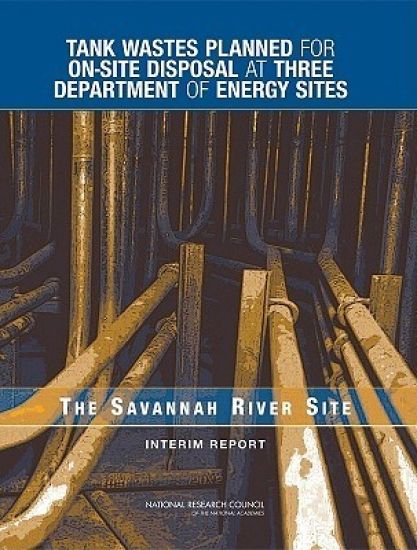
Tank Wastes Planned for On-Site Disposal at Three Department of Energy Sites
In response to a request from Congress, the U. S. Department of Energy (DOE) asked the National Academies to evaluate its plans for managing radioactive wastes from spent nuclear fuel at sites in Idaho, South Carolina, and Washington. This interim report evaluates storage facilities at the Savannah River Site in South Carolina, with a particular focus on plans to seal the tanks with grouting. The report finds that tanks at the site do not necessarily need to be sealed shut as soon as the bulk of the waste has been removed. Postponing permanent closure buys more time for the development and application of emerging technologies to remove and better immobilize residual waste, without increasing risks to the environment or delaying final closure of the "tank farms." The report also recommends alternatives to address the lack of tank space at the site, as well as the need for focused R&D activities to reduce the amount and improve the immobilization of residual waste in the tanks and to test some of the assumptions used in evaulating long-term risks at the site. Table of Contents Front Matter Summary I Introduction and Background II Ideal Objectives and Real-World Challenges III Findings and Recommendations IV Future Plans for the Study References Appendix A Statement of Task and Performance Objectives Appendix B Information-Gathering Meetings Appendix C Biographical Sketches of Committee Members Appendix D Acronyms Appendix E Maps of the Savannah River Site Appendix F Federal Facility Agreement Waste Removal Schedule
Thirteenth Interim Report of the Subcommittee on Acute Exposure Guideline Levels
Formed in 1995 by EPA, several other federal and state agencies, and several private organizations, the National Advisory Committee on Acute Exposure Guideline Levels for Hazardous Substances (referred to as the NAC) develops, reviews, and approves acute exposure guideline levels (AEGLs) for up to 400 extremely hazardous substances (EHSs). AEGLs have a broad array of potential applications for federal, state, and local governments and for the private sector. They are necessary for prevention and emergency-response planning for potential releases of EHSs, either from accidents or as a result of terrorist activities. This report includes an assessment of the NAC's draft AEGLs documents for the following 10 chemicals: 1, 4-dioxane; chloroform; carbon tetrachloride; sulfur dioxide; cis, trans 1,-2 dichloroethylene; monochloroacetic acid; carbon monoxide; fluorine; methanol; and phenol. Table of Contents Front Matter Thirteenth Interim Report of the Subcommittee on Acute Exposure Guideline Levels
Outer Continental Shelf Frontier Technology

Outer Continental Shelf Frontier Technology

National Research Council

University Press of the Pacific
2004
pokkari
CONTENTS: Introduction Committee on Assessment of Safety of OCS Activities Exploratory Drilling Systems Deepwater Drilling and Production Platforms in Non-Arctic Areas Arctic Platforms Offshore Discharge of Drill Muds and Cuttings Subsea Production Systems Deep Water Pipelines Offshore Storage, Tanker Loading, Floating Facilities Supporting Systems for Installation, Inspection, and Repair Oil Spill Cleanup and Containment Discussion Summary Participants
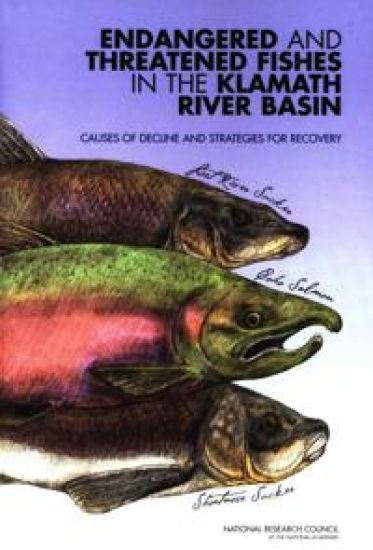
Endangered and Threatened Fishes in the Klamath River Basin

Endangered and Threatened Fishes in the Klamath River Basin

National Research Council

National Academies Press
2004
sidottu
In 1988 the U. S. Fish and Wildlife Service listed two endemic fishes of the upper Klamath River basin of Oregon and California, the sucker and the Lost River sucker, as endangered under the federal Endangered Species Act (ESA). In 1997, the National Marine Fisheries Service added the Southern Oregon Northern coastal California (SONCC) coho salmon as a threatened species to the list. The leading factors attributed to the decline of these species were overfishing, blockage of migration, entrainment by water management structures, habitat degradation, nonnative species, and poor water quality. Endangered and Threatened Fishes of the Klamath River Basin addresses the scientific aspects related to the continued survival of coho salmon and shortnose and Lost River suckers in the Klamath River. The book further examines and identifies gaps in the knowledge and scientific information needed for recovery of the listed species and proves an assessment of scientific considerations relevant to strategies for promoting the recovery of those species. Table of Contents Front Matter Summary 1. Introduction 2. Land Use and Water Management 3. Current Status of Aquatic Ecosystems: Lakes 4. Current and Historical Status of River and Stream Ecosystem 5. Fishes of the Upper Klamath Basin 6. Causes of Decline and Strategies for Recovery of Klamath Basin Suckers 7. Fishes of the Lower Klamath Basin 8. Facilitating Recovery of Coho Salmon and Other Anadromous Fishes of the Klamath River 9. Regulatory Context: The Endangered Species Act 10. Adaptive Management for Ecosystem Restoration in the Klamath Basin 11. Recommendations References Appendix A: Statement of Task Appendix B: Committee on Endangered and Threatened Fishes in the Klamath River Basin Index
Understanding Climate Change Feedbacks

Understanding Climate Change Feedbacks

National Research Council

National Academies Press
2004
nidottu
During the past decade, scientists have learned much about the complex natural processes that influence climate variability and change, and our ability to model climate has increased significantly. We also have begun to better identify those parts of the climate system that are particularly important and not well understood and that therefore limit our ability to project the future evolution of Earth's climate. One of these critical areas is our understanding of the role of feedbacks in the climate system and their role in determining climate sensitivity. Feedbacks are processes in the climate system that can either amplify or dampen the system's response to changed forcings. This study looks at what is known and not known about climate change feedbacks and seeks to identify the feedback processes most in need of improved understanding. It identifies key observations needed to monitor and understand climate feedbacks, discusses ways to evaluate progress in understanding climate feedbacks, recommends ways to improve climate modeling and analysis for climate feedbacks research, and identifies priority areas for research. Table of Contents Front Matter Executive Summary 1 Introduction 2 Cloud, Water Vapor, and Lapse Rate Feedbacks 3 Sea-Ice Feedbacks 4 Ocean Heat Uptake and Ocean Circulation Feedbacks 5 Terrestrial Hydrology and Vegetation Feedbacks 6 Atmospheric Chemical Feedbacks 7 Biogeochemical Feedbacks and the Carbon Cycle 8 Modes of Variability 9 Recommendations References Appendix A: Climate Change Feedbacks Workshop Appendix B: Biographical Sketches of Panel Members Appendix C: Acronyms
Information and Communications

Information and Communications

National Research Council

National Academies Press
2003
nidottu
Since publication of the National Research Council (NRC) reports on chemistry in 1985 and chemical engineering in 1988,1,2 dramatic advances in information technology (IT) have totally changed these communities. During this period, the chemical enterprise and information technology have enjoyed both a remarkably productive and mutually supportive set of advances. These synergies sparked unprecedented growth in the capability and productivity of both fields including the definition of entirely new areas of the chemical enterprise. The chemical enterprise provided information technology with device fabrication processes, new materials, data, models, methods, and (most importantly) people. In turn, information technology provided chemical science and technology with truly remarkable and revolutionary resources for computations, communications, and data management. Indeed, computation has become the strong third component of the chemical science research and development effort, joining experiment and theory. Sustained mutual growth and interdependence of the chemical and information communities should take account of several unique aspects of the chemical sciences. These include extensive and complex databases that characterize the chemical disciplines; the importance of multiscale simulations that range from molecules to technological processes; the global economic impact of the chemical industry; and the industry's major influence on the nation's health, environment, security, and economic well-being. In planning the future of the chemical sciences and technology, it is crucial to recognize the benefits already derived from advances in information technology as well as to point the way to future benefits that will be derived. Table of Contents Front Matter Executive Summary 1. Introduction: The Human Resource 2. Accomplishments 3. Opportunities, Challenges, and Needs 4. Interfaces: Cooperation and Collaboration Across Disciplines 5. Infrastructure: Capabilities and Goals Appendix A: Statement of Task Appendix B: Biographies of the Organizing Committee Members Appendix C: Workshop Agenda Appendix D: Workshop Presentations Appendix E: Biographies of Workshop Speakers Appendix F: Participants Appendix G: Reports from Breakout Session Groups Appendix H: Acronyms
Twenty-Fourth Symposium on Naval Hydrodynamics

Twenty-Fourth Symposium on Naval Hydrodynamics

National Research Council

National Academies Press
2003
nidottu
This report is part of a series of reports that summarize this regular event. The report discusses research developments in ship design, construction, and operation in a forum that encouraged both formal and informal discussion of presented papers. Table of Contents Front Matter Opening Remarks Microbubbles: Drag Reduction Mechanism and Applicability to Ships Wave Patterns and Minimum Wave Resistance for High Speed Vessels Prediction of High Reynolds Number Flow Around Naval Vessels Frontiers in Experimental Techniques Toward Virtual Reality by Computational Physics Study on the CFD Application for VLCC Hull-Form Design Unsteady RANS Simulation of a Surface Combatant with Roll Motion On the Role Played by Turbulence Closures in Hull Shape Optimatization at Model and Full Scale The Use of a RANS Code in the Design and Analysis of a Naval Combatant Efficient Methods to Compute Steady Ship Viscous Flow with Free Surface Hydrofoil Near-Wake Structure and Dynamics at High Reynolds Number Unstructured Nonlinear Free Surface Simulations for the Fully Appended DTMB Model 5415 Series Hull Including Rotating Propulsors Bow Waves on a Free-Running, Heaving, and/or Pitching Destroyer Numerical Simulation of Two-Dimensional Breaking Waves Past a Submerged Hydrofoil Genesis of Design Wave Groups in Extreme Seas for the Evaluation of Wave/Structure Interaction Direct Numerical Simulation of Surface Tension Dominated and Non-Dominated Breaking Waves Towards the Simulation of Seakeeping and Manoeuvering Based on the Computation of the Free Surface Viscous Ship Flow A 2D+T VOF Fully Coupled Formulation for Calculation of Breaking Free Surface Flow Breaking Waves Generated by a Fast Displacement Ship Model An Experimental and Computational Study of Three-Dimensional Unsteady Flow Features Found Behind a Truncated Cylinder A Finite Amplitude Steady Ship Motion Model Whipping Loads Due to Aft Body Slamming A Nonlinear Stability Analysis of Tandem Offloading System A Spectral-Shell Solution for Viscous Wave-Body Interactions Application of a 3-D Time Domain Panel Method to Ship Seakeeping Problems Water Shipping on a Vessel in Head Waves Nonlinear Green Water Effects on Ship Motions and Structural Loads Complete Cancellation of Ship Waves in a Narrow Shallow Channel Wash Waves Generated by Ships Moving on Fairways of Varying Topography Validation and Application of Chimera RANS Method for Ship-Ship Interactions in Shallow Water and Restricted Waterway Development, Validation, and Application of a Time Domain Seakeeping Method for High-Speed Craft with a Ride Control System A Flow Model for a Displacement-Type Fast Ship with Shallow Draft in Regular Waves Nonlinear Free-Surface Effects on the Resistance and Squat of High-Speed Vessels with a Transom Stern Numerical Simulation of Wakes in a Weakly Stratified Fluid LES of Bubble Dynamics in Wake Flows Propeller Inflow at Full Scale During a Manoeuver An Evaluation of Verification Procedure for CFD Applications Calculations of Flows Over Underwater Appended Bodies with High Resolution ENO Schemes Validation of Numerical Method for Predicting Hydrodynamic Characteristics of a High-Speed Ship High-Incidence and Dynamic Pitch-Up Maneuvering Characteristics of a Prolate Spheroid-CFD Validation Validation of Control-Surface Induced Submarine Maneuvering Simulations Using UNCLE Planing Hull Performance Evaluation Using a General Purpose CFD Code PIV Measurements of the Cross-Flow Wake of a Turning Submarine Model (ONR Body 1) Validation of the Flow Around a Turning Submarine Viscous Roll Predictions of a Circular Cylinder with Bilge Keels Analysis of a Jet-Controlled High-Lift Hydrofoil with a Flop Prediction of Slam Loads on Wedge Section Using Computational Fluid Dynamics (CFD) Techniques Using Recursive Neural Networks for Blind Predictions of Submarine Maneuvers Scale Effects on Ducted Propellers Hull Vibration Excitation by Propeller Sources: A Link Between Hydrodynamics and Marine Acoustics Experimental and CFD Analysis for Rotor-Stator Interaction of a Waterjet Pump Propeller Wake Analysis Behind a Ship by Stereo PIV Numerical Study on Propulsion by Undulating Motion in Laminar-Turbulent Flow A BEM Technique for the Modeling of Supercavitating and Surface-Piercing Propeller Flows A New Propeller Design Method for the POD Propulsion System Experimental and Numerical Investigation of the Cavitation Pattern on a Marine Propeller Prediction of Vortex Cavitation Inception Using Coupled Spherical and Non-Spherical Models and UnRANS Computations Influence of Acoustic Interaction in Noise Generating Cavitation Phase-Average PIV for Surface Combatant in Regular Head Waves Phase-Averaged PTV Measurements of Propeller Wake Quantitative Visualization (QVix) Hydrodynamic Measurement Technique of Multiphase Unsteady Surfaces Computation of Viscous Flow Around Fast Ship Superstructures Tracking Vortices Over Large Distances Using Vorticity Confinement A Panel-Free Method for Time-Domain Analysis Multi Objective Optimization of Ship Hull Form Design by Response Surface Methodology Computational Design Optimization Using RANS List of Attendees
Improving Racial and Ethnic Data on Health

Improving Racial and Ethnic Data on Health

National Research Council

National Academies Press
2003
nidottu
The panel convened the Workshop on Improving Racial and Ethnic Data in Health to review information about current private-sector and state data collection practices in light of existing federal, state, and local regulations, laws, and requirements. The workshop presentations featured the perspectives of data users, health care providers, insurance plan representatives, state and local public health officials, and regulatory officials. Participants assessed policies, practices, barriers, and opportunities for collecting racial and ethnic data in their settings, and explored ways that private and state systems can be improved to address data needs. In preparation for the workshop, the panel commissioned four background papers to fill gaps in knowledge of private-sector and state government policies and practices and to address the importance of racial and ethnic data collection. The panel is also examining the role of socioeconomic status regarding health and health care disparities. However, the workshop intended to focus only on racial and ethnic data collection. The panel's final report will contain a full consideration of the collection of racial, ethnic, and socioeconomic status data. Table of Contents Front Matter Report of a Workshop References Appendix A: Abbreviations Appendix B: Abstracts of Papers Commissioned for the Workshop Appendix C: Workshop Agenda and Participant List
Monitoring International Labor Standards

Monitoring International Labor Standards

National Research Council

National Academies Press
2003
nidottu
The National Research Council has convened the Committee on Monitoring International Labor Standards to provide expert, science-based advice on monitoring compliance with international labor standards. The committee has undertaken a two-year project with multiple intersecting activities. The committee is charged with assembling information on country compliance with international labor standards and organizing these data into an easily accessible, web-based format for use by the DOL. As one step in this process, a workshop in November 2002 was held to discuss national legal frameworks and the challenges of measuring the extent to which international standards have been incorporated into national laws and practices. Monitoring International Labor Standards is the summary of that workshop. This report communicates the key ideas and themes that emerged from the workshop presentations and discussions.