Kirjojen hintavertailu – 12 859 819 kirjaa ja 27 kauppaa
Kirjailija
Niccolo Machiavelli
Kirjat ja teokset yhdessä paikassa: 586 kirjaa, julkaisuja vuosilta 1908–2027, suosituimpiin kuuluu Sotataidosta. Vertaile teosten hintoja ja tarkista saatavuus suomalaisista kirjakaupoista.
Nimi esiintyy myös muodoissa: Niccolò Machiavelli, Niccoló Machiavelli, Niccolo` Machiavelli, Niccolõ Machiavelli
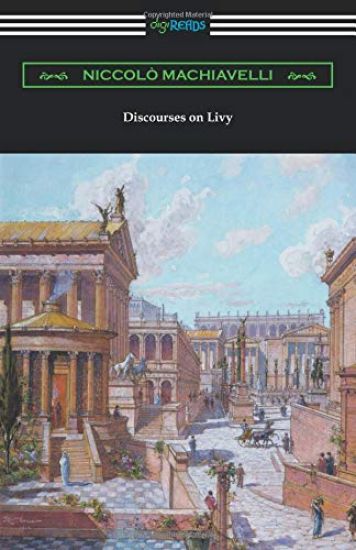
"Discourses on Livy," which was first published posthumously in 1531, is Niccolo Machiavelli's analysis of the first ten books of Livy's monumental work of Roman History, which details the expansion of Rome through the end of the Third Samnite War in 293 BC. Machiavelli believed that by examining the exemplary greatness in Roman history, practical lessons could be applied to the politics of the present day. The Italian renaissance was causing people to look back to the ancients as examples of greatness in the fields of art, law, and medicine. Driven by a motivation to do the same for the field of politics, Machiavelli undertook an examination of the structure and benefit of government in ancient times. "Discourses on Livy" are comprised of three books. In the first book Machiavelli discusses the internal structure of a republic. In the second book he discusses matters of warfare and in the third his attention is turned to matters of individual leadership. An important work of political history and philosophy, "Discourses on Livy" is a must read for any student of political science. This edition is printed on premium acid-free paper and follows the translation of Ninian Hill Thomson.
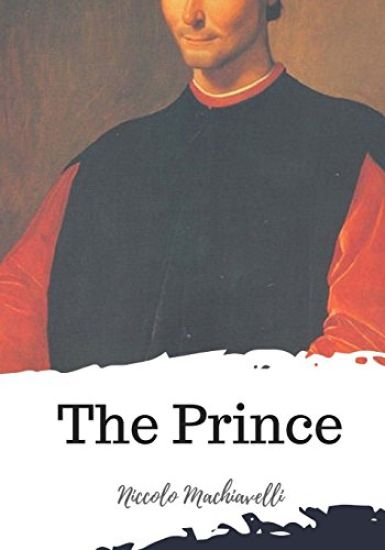
The Prince is one of the first works of political philosophy, in which the effective truth is taken to be more important than any abstract ideal. Written by by the Italian diplomat, historian andpolitical theorist Niccolo Machiavelli, the treatise is the most remembered of his works and the one most responsible for bringing the word Machiavellian into wide usage.
The Prince is a 16th-century political treatise by the Italian diplomat and political theorist Niccol Machiavelli. From correspondence a version appears to have been distributed in 1513, using a Latin title, De Principatibus (Of Principalities). However, the printed version was not published until 1532, five years after Machiavelli's death. This was done with the permission of the Medici pope Clement VII, but "long before then, in fact since the first appearance of The Prince in manuscript, controversy had swirled about his writings". Although it was written as if it were a traditional work in the mirrors for princes style, it is generally agreed that it was especially innovative. This is only partly because it was written in the vernacular Italian rather than Latin, a practice which had become increasingly popular since the publication of Dante's Divine Comedy and other works of Renaissance literature. The Prince is sometimes claimed to be one of the first works of modern philosophy, especially modern political philosophy, in which the effective truth is taken to be more important than any abstract ideal. It was also in direct conflict with the dominant Catholic and scholastic doctrines of the time concerning politics and ethics. Although it is relatively short, the treatise is the most remembered of Machiavelli's works and the one most responsible for bringing the word "Machiavellian" into usage as a pejorative. It even contributed to the modern negative connotations of the words "politics" and "politician" in western countries. In terms of subject matter it overlaps with the much longer Discourses on Livy, which was written a few years later. In its use of near-contemporary Italians as examples of people who perpetrated criminal deeds for politics, another lesser-known work by Machiavelli which The Prince has been compared to is the Life of Castruccio Castracani. The descriptions within The Prince have the general theme of accepting that the aims of princes - such as glory and survival - can justify the use of immoral means to achieve those ends: He who neglects what is done for what ought to be done, sooner effects his ruin than his preservation.
A guide for rulers. A mirror of ambition. A masterpiece that changed the way the world understands power. Written in the early 16th century, The Prince remains one of the most influential works in political thought. In this bold and provocative treatise, Machiavelli strips away ideals and exposes the raw mechanics of leadership, strategy, and control. With razor-sharp pragmatism, he explores what it takes to win and maintain power, whether through wisdom, manipulation, or force. Engage with Machiavelli''s pragmatic analysis of political power. Delve into the principles of effective leadership and statecraft. Reflect on Machiavelli''s bold and controversial advice to rulers. Explore the timeless themes of ambition, morality, and the pursuit of power. A valuable resource for students, scholars, and anyone interested in the study of politics and leadership. Perfect For Students of political science, philosophy, and history Leaders, managers, and entrepreneurs seeking strategic insight Readers of Sun Tzu, Robert Greene, or Aristotle Anyone fascinated by ambition, influence, and the anatomy of power
The Prince is a 16th-century political treatise by the Italian diplomat and political theorist Niccol Machiavelli. From correspondence a version appears to have been distributed in 1513, using a Latin title, De Principatibus (Of Principalities). However, the printed version was not published until 1532, five years after Machiavelli's death. This was done with the permission of the Medici pope Clement VII, but "long before then, in fact since the first appearance of The Prince in manuscript, controversy had swirled about his writings". Although it was written as if it were a traditional work in the mirrors for princes style, it is generally agreed that it was especially innovative. This is only partly because it was written in the vernacular Italian rather than Latin, a practice which had become increasingly popular since the publication of Dante's Divine Comedy and other works of Renaissance literature. The Prince is sometimes claimed to be one of the first works of modern philosophy, especially modern political philosophy, in which the effective truth is taken to be more important than any abstract ideal. It was also in direct conflict with the dominant Catholic and scholastic doctrines of the time concerning politics and ethics.
Niccol di Bernardo dei Machiavelli (* 3. Mai 1469 in Florenz, Republik Florenz; + 21. Juni 1527 ebenda) war ein florentinischer Philosoph, Politiker, Diplomat, Chronist, Schriftsteller und Dichter. Er gilt als einer der bedeutendsten Staatsphilosophen der Neuzeit. Machiavelli ging es darum, Macht analytisch zu untersuchen, anstatt normativ vorzugehen und die Differenz zwischen dem, was sein soll, und dem, was ist, festzustellen. Er orientierte sich in seiner Analyse an dem, was er f r empirisch feststellbar hielt. Der sp ter gepr gte Begriff Machiavellismus wird oft als abwertende Beschreibung eines Verhaltens gebraucht, das zwar raffiniert ist, aber ohne ethische Einfl sse von Moral und Sittlichkeit die eigene Macht und das eigene Wohl als Ziel sieht.
Il Principe (titolo assegnato nell'edizione originale postuma di Antonio Blado e poi unanimemente adottato, ma il titolo originario era in lingua latina: De Principatibus, "Sui Principati") un trattato di dottrina politica scritto da Niccol Machiavelli nel 1513, nel quale espone le caratteristiche dei principati e dei metodi per mantenerli e conquistarli. Si tratta senza dubbio della sua opera pi nota e celebrata, quella dalle cui massime (spesso superficialmente interpretate) sono nati il sostantivo "machiavellismo" e l'aggettivo "machiavellico". L'opera non ascrivibile ad alcun genere letterario particolare, in quanto non ha le caratteristiche di un vero e proprio trattato; se ne ipotizzata la natura di libriccino a carattere divulgativo. Il Principe si compone di una dedica e ventisei capitoli di varia lunghezza; l'ultimo capitolo consiste nell'appello ai de' Medici ad accettare le tesi espresse nel testo.
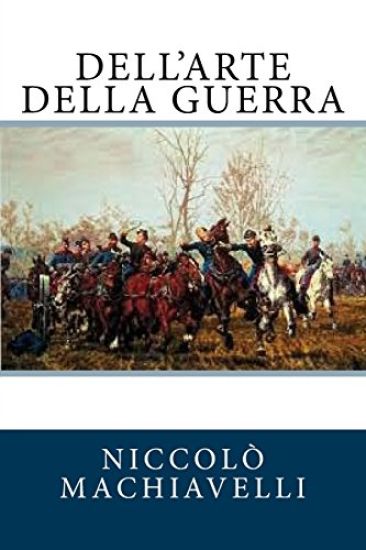
Dell'arte della guerra diviso in sette libri preceduti da un proemio e composti da una serie di dialoghi tra Cosimo Rucellai, un amico di Machiavelli morto in giovane et , e Fabrizio Colonna, con altri patrizi e membri della recente Repubblica fiorentina. Quest'opera dedicata a Lorenzo di Filippo Strozzi, patrizio fiorentino. Fabrizio affascinato dalle legioni romane dell'inizio della Repubblica e sostiene fortemente la possibilit di adattare quello stesso sistema alla Firenze rinascimentale. Fabrizio domina le discussione con la sua conoscenza e saggezza. Gli altri personaggi fanno da semplici contraltari. I dialoghi, quindi, spesso si risolvono in monologhi di Fabrizio che indica come un esercito dovrebbe essere formato, allenato e organizzato.
Classic Books Library presents this brand new edition of Machiavelli's political treatise entitled, "The Prince" (1532). The work notably advocates the power of human action and free will - unusual ethical concepts in the political landscape of Florence that customarily favoured religion and ancient philosophies to explain society's issues. Published after his death, it is commonly believed that Machiavelli wrote "The Prince" as a guide for rulers, namely Lorenzo Medici, who was not in power at the time. Niccol Machiavelli (1469-1527) was a Florentine politician, philosopher and historian. An influential figure during the Italian Renaissance, Machiavelli was instrumental in the development of Western political science.
Rare edition with unique illustrations and elegant classic cream paper. The Prince is a 16th-century political treatise by the Italian diplomat and political theorist Niccolo Machiavelli. The descriptions within The Prince have the general theme of accepting that the aims of princes-such as glory and survival-can justify the use of immoral means to achieve those ends. "He who neglects what is done for what ought to be done, sooner effects his ruin than his preservation". Includes unique illustrations.
The Prince, by Niccolo Machiavelli, is a 16th-century political treatise. The Prince is sometimes claimed to be one of the first works of modern philosophy, especially modern political philosophy, in which the effective truth is taken to be more important than any abstract ideal. It was also in direct conflict with the dominant Catholic and scholastic doctrines of the time concerning politics and ethics. The Prince has the general theme of accepting that the aims of princes-such as glory and survival-can justify the use of immoral means to achieve those ends. Although it is relatively short, the treatise is the most remembered of Machiavelli's works and the one most responsible for bringing the word "Machiavellian" into usage as a pejorative. It even contributed to the modern negative connotations of the words "politics" and "politician" in western countries. In terms of subject matter it overlaps with the much longer Discourses on Livy, which was written a few years later. Machiavelli emphasized the need for realism, as opposed to idealism. Along with this, he stresses the difference between human-beings and animals since "there are two ways of contending, one in accordance with the laws, the other by force; the first of which is proper to men, the second to beast". In The Prince he does not explain what he thinks the best ethical or political goals are, except the control of one's own fortune, as opposed to waiting to see what chance brings. Machiavelli took it for granted that would-be leaders naturally aim at glory or honor. He associated these goals with a need for "virtue" and "prudence" in a leader, and saw such virtues as essential to good politics and indeed the common good. That great men should develop and use their virtue and prudence was a traditional theme of advice to Christian princes. And that more virtue meant less reliance on chance was a classically influenced "humanist commonplace" in Machiavelli's time, as Fischer says, even if it was somewhat controversial. However, Machiavelli went far beyond other authors in his time, who in his opinion left things to fortune, and therefore to bad rulers, because of their Christian beliefs. He used the words "virtue" and "prudence" to refer to glory-seeking and spirited excellence of character, in strong contrast to the traditional Christian uses of those terms, but more keeping with the original pre-Christian Greek and Roman concepts from which they derived. He encouraged ambition and risk taking. So in another break with tradition, he treated not only stability, but also radical innovation, as possible aims of a prince in a political community. Managing major reforms can show off a Prince's virtue and give him glory. He clearly felt Italy needed major reform in his time, and this opinion of his time is widely shared. Machiavelli's descriptions in The Prince encourage leaders to attempt to control their fortune gloriously, to the extreme extent that some situations may call for a fresh "founding" (or re-founding) of the "modes and orders" that define a community, despite the danger and necessary evil and lawlessness of such a project. Founding a wholly new state, or even a new religion, using injustice and immorality has even been called the chief theme of The Prince. Machiavelli justifies this position by explaining how if "a prince did not win love he may escape hate" by personifying injustice and immorality; therefore, he will never loosen his grip since "fear is held by the apprehension of punishment" and never diminishes as time goes by. For a political theorist to do this in public was one of Machiavelli's clearest breaks not just with medieval scholasticism, but with the classical tradition of political philosophy, especially the favorite philosopher of Catholicism at the time, Aristotle. This is one of Machiavelli's most lasting influences upon modernity.
Il Principe (The Prince) is the famous text by Florentine public servant Niccolo Machiavelli, in which he outlines the best strategy by which a prince can acquire, maintain and protect his state. Published posthumously, the text departs from his previous works, but is that for which he is remembered, and which has produced the adjective "Machiavellian". Machiavelli directives for maintaining a secure state are direct and at times brutal, taking the view that the ends justify the means.
Bench si tratti dell'unico lavoro storico-politico dell'autore pubblicato mentre questi era ancora in vita, un libro meno letto e conosciuto del Principe, uscito postumo. L'opera scritta, nello stile del dialogo, con lo scopo, dichiarato in principio da Fabrizio Colonna (alter ego dello stesso Machiavelli): di onorare e premiare le virt , non dispregiare la povert , stimare i modi e gli ordini della disciplina militare, costringere i cittadini ad amare...
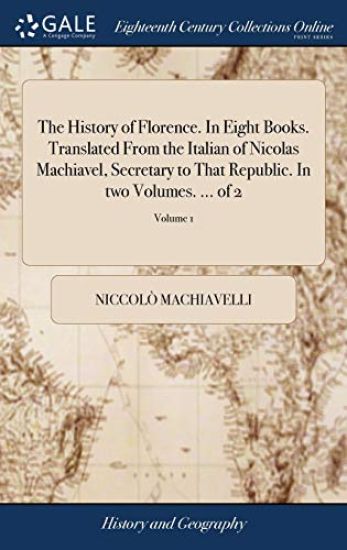
The 18th century was a wealth of knowledge, exploration and rapidly growing technology and expanding record-keeping made possible by advances in the printing press. In its determination to preserve the century of revolution, Gale initiated a revolution of its own: digitization of epic proportions to preserve these invaluable works in the largest archive of its kind. Now for the first time these high-quality digital copies of original 18th century manuscripts are available in print, making them highly accessible to libraries, undergraduate students, and independent scholars. Western literary study flows out of eighteenth-century works by Alexander Pope, Daniel Defoe, Henry Fielding, Frances Burney, Denis Diderot, Johann Gottfried Herder, Johann Wolfgang von Goethe, and others. Experience the birth of the modern novel, or compare the development of language using dictionaries and grammar discourses. ++++The below data was compiled from various identification fields in the bibliographic record of this title. This data is provided as an additional tool in helping to insure edition identification: ++++Cambridge University LibraryT171818Dublin: printed by Ed. Bate, for James Kelburn, 1743. 15, 1]p.; 8
The 18th century was a wealth of knowledge, exploration and rapidly growing technology and expanding record-keeping made possible by advances in the printing press. In its determination to preserve the century of revolution, Gale initiated a revolution of its own: digitization of epic proportions to preserve these invaluable works in the largest archive of its kind. Now for the first time these high-quality digital copies of original 18th century manuscripts are available in print, making them highly accessible to libraries, undergraduate students, and independent scholars. Rich in titles on English life and social history, this collection spans the world as it was known to eighteenth-century historians and explorers. Titles include a wealth of travel accounts and diaries, histories of nations from throughout the world, and maps and charts of a world that was still being discovered. Students of the War of American Independence will find fascinating accounts from the British side of conflict. ++++The below data was compiled from various identification fields in the bibliographic record of this title. This data is provided as an additional tool in helping to insure edition identification: ++++British LibraryT091115A new edition of the English translation of 1674. Glasgow: printed for Robert Urie, 1761. 2v.; 12
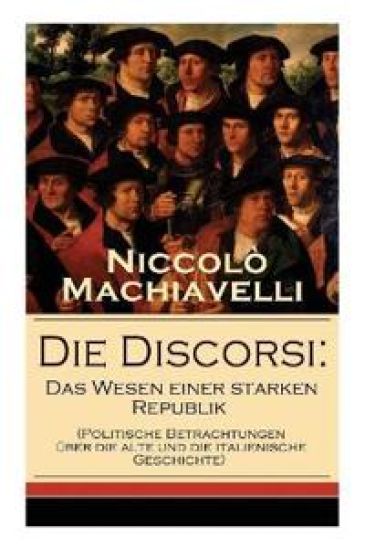
Die Discorsi: Politische Betrachtungen ber die alte und die italienische Geschichte (Abhandlungen ber die ersten zehn B cher des Titus Livius) ist das literarische Hauptwerk von Niccol Machiavelli, in dem er seine Gedanken zur Politik, zum Krieg und zur politischen F hrung zusammenfasst. In seinem umfangreichen Werk entwickelt Machiavelli, der ein berzeugter Republikaner war, seine Vorstellung ber ein ideales Staatswesen, wobei der r mische Geschichtsschreiber Titus Livius (59 v. Chr. bis 17 n. Chr.) ihm den roten Faden lieferte, "denn nur Livius befa te sich mit der Gr ndung des r mischen Staates." Machiavelli analysiert in drei Teilen (Buch I - III) die verschiedenen Staats- und Regierungsformen (Republik, Alleinherrschaft, Volksherrschaft, Aristokratie, Tyrannis, Oligarchie und Anarchie). Machiavelli macht in seiner Discorsi immer wieder deutlich, dass alles zum Wohle des Volkes zu geschehen habe (nicht zum Wohle seiner Herrscher) und bringt es mit der bekannten Formulierung auf den Punkt: Republiken sind Staaten, in denen das Volk F rst ist Er kritisiert, die Menschen h tten sich bisher leider nicht die M he gemacht, die Technik des richtigen Handelns in der Politik zu erlernen, sondern eher nach Gef hl, Instinkt, Gewohnheit und Laune gehandelt, die Alten zwar bewundert, aber ihre Taten nicht systematisch ausgewertet. Niccol Machiavelli (1469-1527) war ein florentinischer Philosoph, Politiker, Diplomat, Geschichtsschreiber und Dichter.