Kirjojen hintavertailu – 12 903 725 kirjaa ja 27 kauppaa

Kirjailija

Nicholas Williams

Kirjat ja teokset yhdessä paikassa: 28 kirjaa, julkaisuja vuosilta 2006–2025, suosituimpiin kuuluu Fabianism and Fabianist Morals in G.B. Shaw's Widowers' Houses, Arms and the Man and The Devil's Disciple. Vertaile teosten hintoja ja tarkista saatavuus suomalaisista kirjakaupoista.

28 kirjaa

Kirjojen julkaisuvuodet: 2006–2025.

Fabianism and Fabianist Morals in G.B. Shaw's Widowers' Houses, Arms and the Man and The Devil's Disciple
Seminar paper from the year 2007 in the subject English - Literature, Works, grade: 1,3, University of Heidelberg (Anglistisches Seminar), course: PS II Literaturwissenschaft - Shaws Fr he Dramen, language: English, abstract: This essay shall aim at portraying Shaw's Fabian thought and morality in his early plays, i.e. Widowers' Houses, Arms and the Man, and The Devil's Disciple. Such a task automatically renders the essay no more than an attempt at finding traces, for there are no socialists in the plays mentioned. Instead, socialist thought is conveyed implicitly, i.e. by means of the plot, by method of showing, or by confronting a Victorian theatre audience with realities they would only too well like to ignore. Widower's Houses is a good case in point: it is highly unlikely any tenants living in the sort of substandard accommodation portrayed in the play could afford a night out in Covent Garden, and it is equally unlikely the theatre-going audience would ever bother to visit them in "their" rundown houses. Consequently, Shaw forced the reality upon the audience and explicitly tried to use drama as a means of propaganda (Grene: 1987: 15 and 3). However, here one could critically add that Shaw - like most Fabians - had as little contact with the working class as those he criticised for the same reasons (Ballay 1980: 237). I shall focus on Widowers' Houses, Arms and the Man, and The Devil's Disciple, for reasons I will explain in the conclusion. The essay follows a hypothesis, which is as written above: Shaw forced upon his audience realities they would like to ignore, and he wished to radicalise his audience (Gahan: 13). The second assumption this essay follows is that morality is as much part of Fabianism as politics are. In his economic and political writings, Shaw made a strong connection between economics and morality (Griffith: 29f.). His opposition to capitalism rooted very much in the fact that he rejected it morally. Hence, according to Fabian logic, the

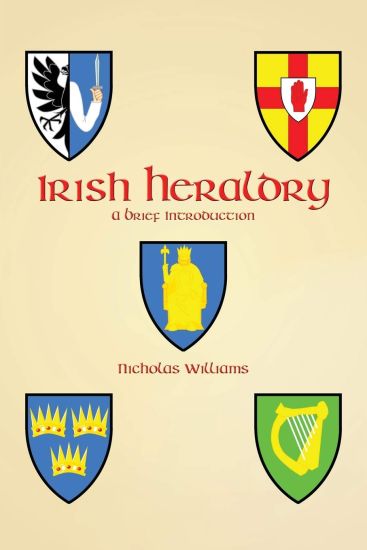
Irish Heraldry

Irish Heraldry

Nicholas Williams

Evertype
2017
pokkari
Few topics are as interesting as heraldry although it is necessary to learn a new vocabulary to enjoy the subject fully. In this book, illustrated by the author, the origin, development and particular nature of Irish heraldry are described; how heraldry was first brought to Ireland by the Anglo-Normans and gradually adopted also by the Gaelic Irish. When describing the various aspects of coats of arms the book almost exclusively uses Irish examples, both Gaelic and Anglo-Norman. The volume includes sections on the heraldry of Ireland itself and of the historic provinces. The arms of cities, towns, counties and dioceses are also discussed, as well as the arms of some notable Irish people. Later chapters deal with modern heraldic jurisdiction and why spurious "souvenir heraldry" is best avoided. The history of the Irish heralds and kings of arms is also described with as well as origins of the present-day Office of the Chief Herald of Ireland.
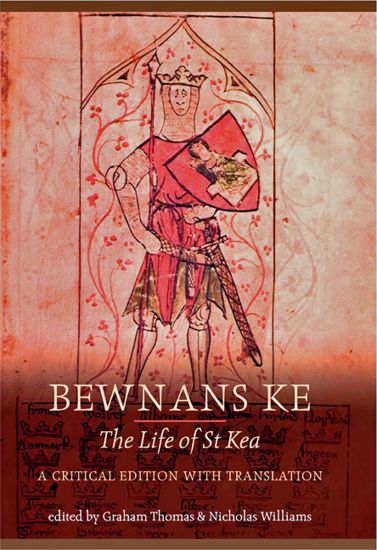
Bewnans Ke / The Life of St Kea

Bewnans Ke / The Life of St Kea

Graham Thomas; Nicholas Williams

University of Exeter Press
2016
nidottu
In 2000, a sixteenth-century manuscript containing a copy of a previously unknown play in Middle Cornish, probably composed in the second half of the fifteenth century, was discovered among papers bequeathed to the National Library of Wales, Aberystwyth. This eagerly awaited edition of the play, published in association with the National Library of Wales, offers a conservatively edited text with a facing-page translation, and a reproduction of the original text at the foot of the page – vital for comparative purposes. Also included are a complete vocabulary, detailed linguistic notes, and a thorough introduction dealing with the language of the play, the hagiographic background of the St Kea material and the origins of other parts in the work of Geoffrey of Monmouth. The theme of the play is the contention between St Kea, patron of Kea parish in Cornwall, and Teudar, a local tyrant. This is combined with a long section dealing with the dispute over tribute payments between King Arthur and the Emperor Lucius Hiberius; Queen Guinevere’s adultery with Arthur’s nephew Modred; the latter’s invitation to Cheldric and his Saxon hordes to come to Britain to assist him in his conflict with his uncle; and Arthur’s battle with Modred. Winner of the 2008 Holyer An Gof Award for Cornish language publications.
Poor English Israelites

Poor English Israelites

Nicholas Williams

Grin Publishing
2009
nidottu
Essay aus dem Jahr 2009 im Fachbereich Geschichte Europa - and. L nder - Mittelalter, Fr he Neuzeit, Note: nicht benotet, Ruprecht-Karls-Universit t Heidelberg, Sprache: Deutsch, Abstract: Anhand der "Diggers" bzw. "True Levellers" wird ein radikaler Diskurs im Rahmen des englischen B rgerkriegs aufgezeigt. Die Kernthese lautet, dass erst der Zusammenbruch der staatlichen Gewalt nach dem Tod bzw. Sieg ber Karl I. eine solche Radikalit t erm glichte. Dazu werden einige wichtige Elemente des englischen B rgerkriegs bzw. der englischen Revolution kurz dargestellt, um am Schluss die Frage in den Raum zu stellen, inwieweit agrarkommunistische, utopische Konzeptionen auch in weiteren Kontexten entstehen k nnen.
Gesellschaftsvertrag und Menschenbild bei Thomas Hobbes
Studienarbeit aus dem Jahr 2005 im Fachbereich Philosophie - Philosophie des 17. und 18. Jahrhunderts, Note: 1,0, Ruprecht-Karls-Universit t Heidelberg (Ev. Theologie), Veranstaltung: Tugenden - Werte - Pflichten: Eine Einf hrung in die Ethik, Sprache: Deutsch, Abstract: Wenn man 330 Jahre nach Thomas Hobbes' Tod von seiner Staatstheorie spricht, so gibt es laut Wolfgang Kersting im Grunde zwei Rezeptionen von Hobbes: eine schwarze und eine wei e Rezeption. Die schwarze Rezeption steht dabei f r Hobbes' Souver nit ts- und Letztinstanzlichkeitsargument, w hrend die wei e Rezeption die Diskussionsstr nge bezeichnet, die sich auf Hobbes' Gesellschaftsvertrag beziehen. Tats chlich lehnen Menschen, die in Demokratien aufgewachsen sind, die Vorstellung uneingeschr nkter und totaler Herrschaft eines Leviathan mehrheitlich ab, selbst wenn Hobbes ihnen entgegnen w rde, dass sie Teil dieses Leviathan sind. Vor allem nach dem dunkelsten Kapitel der Geschichte, dem Nationalsozialismus, bereitet uns die Vorstellung ungeteilter Souver nit t Unbehagen, selbst wenn sich Thomas Hobbes' Rationalismus und Materialismus mit dem idealistischen NS-Geb ude berhaupt nicht vertr gt. Hobbes entwickelte seinen Staatsaufbau aus dem Kontraktualismus, also einem Gesellschaftsvertrag, heraus, und er w re wohl kaum damit einverstanden gewesen, dass der eine Teil seiner Lehre berleben und weiterbestehen sollte, der andere hingegen verworfen wurde. Doch genau das ist geschehen. Diese Arbeit konzentriert sich auf den "wei en" Strang, also den Gesellschaftsvertrag als Grundlage des Liberalismus. Daraus wird auch das Menschenbild Thomas Hobbes' herausgestellt, vor allem anhand der (oft verk rzt widergegebenen) Behauptung, dass der Mensch dem Menschen ein Wolf sei. Der zweite Teil erg nzt dieses Menschenbild anhand der Theologie, die Thomas Hobbes im zweiten Teil des Leviathan entwickelte, um dann deren Verh ltnis zur S kularisierung der politischen Philosophie zu schildern.
Has the role of rituals in medieval politics been exaggerated?
Seminar paper from the year 2006 in the subject History Europe - Other Countries - Middle Ages, Early Modern Age, grade: 1,5, University of Wales, Aberystwyth (History Department), course: Politics and Political Culture in Norman and Angevin England, language: English, abstract: The problems arising from both the term "politics" and the term "ritual" is that they are essentially modern concepts, at least in the sense in which we use them today. Consequently, anything said about the involvement and use of ritual in the realm of politics, a word here used in a broad sense of meaning, should be read with extreme caution. Politics, on a provisional definition for the purpose of this essay, is therefore to be understood as the means and mechanism through which decisions concerning the community are taken, exercised, and communicated. A ritual, on the other hand, is harder to define, and all attempts to do so would not pass unchallenged. For the purpose of this essay it will be understood as an often recurring proceeding, with symbolic meaning attached to its outer appearance. Borrowing from linguistics, but without engaging in that discipline's debate between structuralists and followers of Noam Chomsky's generative grammar, the notion of Ferdinand de Saussure's sign theory may help: a ritual itself will in this essay be understood as a sign, the realization of which is a signifier (signifiant), and the meaning of which is the signified (signifi ). In other words, ritual here is understood as following similar patterns as language. Letters are of no use to an illiterate, as the shapes of letters mean nothing to him, nor does a ritual for someone unfamiliar with any given society's customs and values. The meaning (signified) has a dialectic connection with its realized counterpart, the performance of ritual (or, in Saussure's field, speech). The ritual itself is thus an abstract concept standing above both as the sign, which is, in turn, hollow if unperforme
Rien ne va plus? Zum Verhältnis von Globalisierung und Nationalstaat
Studienarbeit aus dem Jahr 2005 im Fachbereich Politik - Internationale Politik - Thema: Globalisierung, pol. konomie, Note: 2,0, Ruprecht-Karls-Universit t Heidelberg (Institut f r Politische Wissenschaft), Veranstaltung: Einf hrung in die internationale Wirtschaftspolitik, Sprache: Deutsch, Abstract: Kaum eine Debatte ber den wirtschaftlichen Zustand Deutschlands kommt mehr ohne den Begriff Globalisierung aus. In den Wahlprogrammen von CDU und SPD zur Bundestagswahl im September diesen Jahres wird der Begriff jeweils in den ersten paar Zeilen verwendet: Bei der SPD auf Seite vier und bei der CDU schon auf Seite drei. Beide Parteien verwenden den Begriff dabei als Synonym f r die wirtschaftlichen und damit einhergehenden wirtschaftspolitischen Herausforderungen, denen sich die Bundesrepublik, je nach Sichtweise, gestellt hat oder noch stellen muss. Genauso wenig wie der Begriff Globalisierung aus der politischen Terminologie wegzudenken ist, herrscht dar ber Konsens, was die richtigen politischen Schlussfolgerungen aus den mit dem Begriff Globalisierung bezeichneten Prozessen sind. Der Begriff Globalisierung ist dabei zun chst recht leicht zu definieren: "Ausdruck der politischen und der sozial- und wirtschaftswissenschaftlichen Sprache f r die weltweite Ausweitung gesellschaftlicher Interaktionen, insbesondere der Waren-, Kapital-, und Informationsstr me ber die Grenzen des Nationalstaats hinaus." Auch der zweite Teil der Definition, wonach die Globalisierung die Souver nit t und Handlungsspielr ume der Nationalstaaten gef hrden kann, wird einen breiten Konsens finden. Anders aber sieht es mit der Frage aus, wie das genaue Verh ltnis zwischen Globalisierung und Nationalstaat aussieht. Diese Arbeit versucht in die Frage eben dieses Verh ltnisses einzuf hren, wobei es insbesondere im letzten Teil der Arbeit im Vordergrund steht. Es finden sich dabei sowohl globalisierungskritische Haltungen als auch rein deskriptive Positionen in der Bearbeitung der Leitfrage w