Kirjojen hintavertailu – 12 903 725 kirjaa ja 27 kauppaa

Kirjailija

Norbert Elias

Kirjat ja teokset yhdessä paikassa: 49 kirjaa, julkaisuja vuosilta 1976–2026, suosituimpiin kuuluu Der Fußballsport im Prozeß der Zivilisation. Vertaile teosten hintoja ja tarkista saatavuus suomalaisista kirjakaupoista.

49 kirjaa

Kirjojen julkaisuvuodet: 1976–2026.

The Loneliness of the Dying and Humana Conditio

The Loneliness of the Dying and Humana Conditio

Norbert Elias

University College Dublin Press
2010
sidottu
This volume contains two of Elias' shorter books. "The Loneliness of the Dying" is one of his most admired works - drawing on a range of literary and historical sources, it is sensitive and even moving in its discussion of the changing social context of death and dying over the centuries. Today, when death is less familiar to most people in everyday life, the dying frequently experience the loneliness of social isolation. "Humana Conditio", written in 1985 to mark the fortieth anniversary of the end of the Second World War, has never before been published in English. 'Human beings', writes Elias, 'have made the reciprocal murdering of people a permanent institution. Wars are part of a fixed tradition of humanity. They are anchored in its social institutions and in the social habitus of people, even the most peace-loving'. Elias' meditation on the human lot ranges over the whole of human history, to international relations and the future of humanity.
Essays I: On the Sociology of Knowledge and the Sciences

Essays I: On the Sociology of Knowledge and the Sciences

Norbert Elias

University College Dublin Press
2009
sidottu
Between the end of the Second World War and his death in 1990, Elias published almost 60 articles on a wide range of topics. About a third of them have not previously appeared in English, and many of the rest were widely scattered and difficult to obtain. They are being published in three thematic volumes, all edited by Richard Kilminster and Stephen Mennell. In this volume, Elias develops his sociological theory of knowledge and the sciences - in the plural - to counter what he sees as the inadequacies of traditional philosophical theories. Included are savage attacks on the philosophy of Karl Popper and its damaging influence, a brilliant essay on scientific establishments, and essays on Thomas More and the social uses of utopias.
Essays III: On Sociology and the Humanities

Essays III: On Sociology and the Humanities

Norbert Elias

University College Dublin Press
2009
nidottu
Almost half of the 28 essays in this volume have not been published in English before, and many of the others were little known. Some directly express Elias' dissatisfaction with the ahistorical, present-centred trend of modern sociology. Others scintillatingly show how wide ranging were Elias' own sociological interests. Topics include, among many others: the work of Theodor W. Adorno; sociology and psychiatry; psychosomatic illness; human emotions; communities in long-term perspective; the changing balance of power between the sexes; African art; football; and even pigeon racing.
Essays II: On Civilising Processes, State Formation and National Identity
Eleven of the 18 essays by Norbert Elias collected in this volume have not been published previously in English, and several of the remainder were not easily obtained. The themes of this volume represent major extensions of and reflections upon the ideas first advanced in "The Civilizing Process". The topics include violence and civilisation; the civilising of parents; privacy; conflict and change within communities; public opinion and national character in Britain; the charismatic leadership of Adolf Hitler; and the fear of death.
The Established and the Outsiders

The Established and the Outsiders

Norbert Elias

University College Dublin Press
2008
sidottu
In "The Established and the Outsiders", Elias and Scotson explain differences in power and rank between two very similar groups - both working class - in a local community studied in the early 1960s. They show how one group monopolised sources of power and used them to exclude and stigmatise members of the other, pinpointing the role of gossip in the process. In a later theoretical introduction, Elias advanced a general theory of power relations, applying the established-outsiders model to changing power balances between classes, ethnic groups, colonised and colonisers, men and women, parents and children, gays and straights. A further theoretical development in the last year of his life is an essay inspired by Harper Lee's "To Kill a Mocking Bird", published here in English for the first time.
Quest for Excitement

Quest for Excitement

Norbert Elias

University College Dublin Press
2008
sidottu

Halvin toimitettuna 56,80 €

Elias effectively founded the modern sociology of sport in collaboration with Eric Dunning in the 1960s and 1970s. They argue that in highly constrained, 'civilised' societies, sports - as well as a spectrum of other cultural and leisure activities - are to be understood not in terms of 'relaxation' but rather of the need for pleasurable excitement and its pleasurable resolution. The topics range historically from the violence of the ancient Greek Olympic Games to foxhunting, early forms of football, and the question of why Britain proved to be the cradle of so many modern sports. And, today, what are the effects of achievement striving in elite sports? Why has spectator violence become such a problem? Why do so many sports retain the character of a 'male preserve'? Originally written in English, this volume has been thoroughly revised by Eric Dunning and includes one hitherto unpublished essay by Elias and a new essay by Dunning, bringing up to date his interpretation of football hooliganism.
An Essay on Time

An Essay on Time

Norbert Elias

University College Dublin Press
2007
sidottu
In this profound book, Elias characteristically turns an ancient philosophical question - what is time? - into a researchable theoretical-empirical problem. What we call 'time' is neither an innate property of the human mind nor an immutable quality of the 'external' world. Rather it is an achievement of the human capacity for 'synthesis', for using symbolic thought to make connections between two or more sequences of events. In the course of human social development, that capacity has itself changed and developed. It is originally written in English. Two later additional sections have been translated by Edmund Jephcott.
Involvement and Detachment

Involvement and Detachment

Norbert Elias

University College Dublin Press
2007
sidottu
"Involvement and Detachment" is much more than a discussion of 'objectivity' in the social sciences. It is Elias' major exposition of his sociological theory of the growth of knowledge and the sciences as an aspect of overall human social development. The essay 'The fishermen in the maelstrom' takes its title from a short story by Edgar Allan Poe, and is used to illustrate how fears have to be overcome in order for 'reality-adequate' knowledge - necessary to tackle the dangers from which the fears arise - to accumulate. Discussions of rising dangers in international relations show how far the theory of civilising process is from being a model of unilinear 'progress'. Two fragments on 'The great evolution' discuss the long-term development of the various levels of scientific knowledge - physical, biological and social. Originally written in English, it includes various passages omitted from the previous edition.
The Genesis of the Naval Profession

The Genesis of the Naval Profession

Norbert Elias

University College Dublin Press
2007
nidottu
The emergence of the professional naval officer was related both to the necessities of naval warfare and to the structure of society on land. Originally warships were manned by two separate sets of commanders - gentleman soldiers skilled in fighting, and 'tarpaulins' of humbler social origin skilled in navigation and the manual skills of sailing. Elias traces the onboard conflicts between them, from Drake's famous insistence that the gentlemen 'haul and draw' with the sailors, to the gradual merging of the two hierarchies by the end of the eighteenth century. The innovation of the midshipmen - boys of gentle birth who both learned the manual skills of the sailor and received the education of a gentleman - gave crucial advantage to the British Royal Navy over the French and Spanish, in which the greater rigidity of social barriers ashore prevented a similar solution afloat. Planned but never completed by Elias, this book has been reconstructed from his mainly unpublished typescripts.
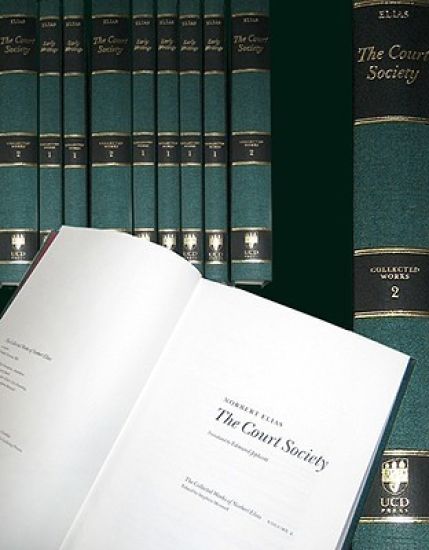
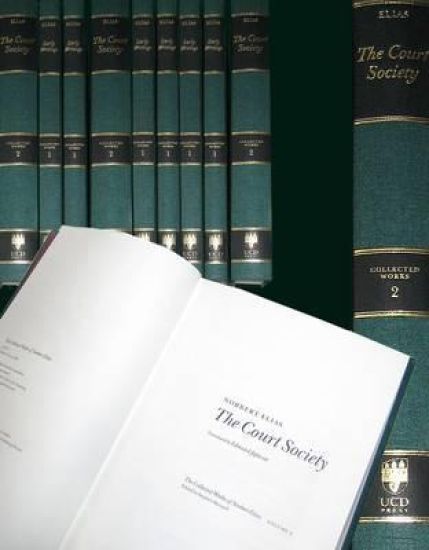
The Court Society

The Court Society

Norbert Elias

University College Dublin Press
2005
sidottu
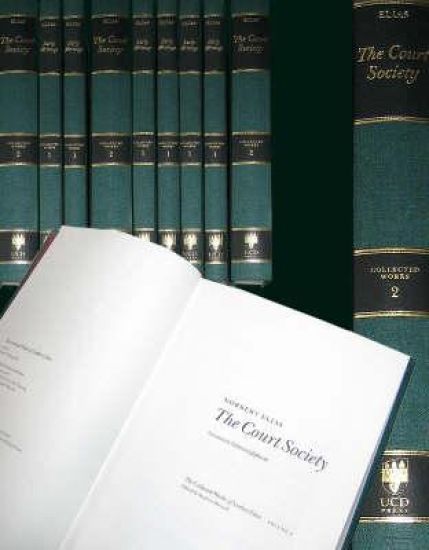
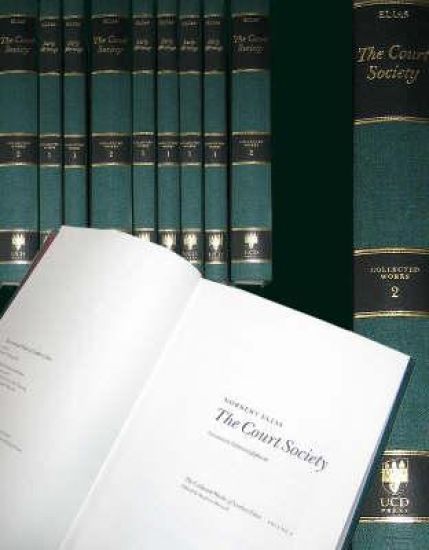
This classic study of the life of the nobility at the royal court of France, especially under Louis XIV, has long been out of print. Recognised by historians as the benchmark for studies of early modern courts, which were an important but long neglected phase in the growth of the 'civilising' constraints imposed on people in increasingly complex networks of interdependence. Elias shows how courtiers - and finally even the king himself - were entrapped in a web of etiquette and ceremonial, how their expenses, even down to details of their houses and households, were dictated by their rank rather than their income. Includes appendix on the parallels between factional competition at the royal court and within Hitler's regime. Originally published in German in 1969 as Die hofische Gesellschaft.
Early Writings

Early Writings

Norbert Elias

University College Dublin Press
2005
sidottu
The writings in this volume previously unpublished in English include the essay 'On Seeing in Nature', his doctoral dissertation 'Idea and Individual', a response to Karl Mannheim's famous paper on cultural competition, and a number of short stories contributed to a newspaper. Other essays collected together here concern primitive art, the sociology of German anti-Semitism, kitsch style and the age of kitsch, and the expulsion of the Huguenots from France. This edition includes as an appendix a draft outline of Elias' Habilitation thesis begun under Alfred Weber. "Early Writings" have been translated from the German edition, Fruschriften, published by Suhrkamp Verlag, Frankfurt/Main as volume 1 of the Norbert Elias Gesammelte Schriften, 2002.
Society of Individuals

Society of Individuals

Norbert Elias

Continuum International Publishing Group Ltd.
2001
nidottu
Originally published in 1991 and now reissued by Continuum International, this book consists of three sections. The first, written in 1939, was either left out of Elias's most famous book, The Civilizing Process, or was written along with it. Part 2 was written between 1940 and 1960. Part 3 is from 1987. The entire book is a study of the unique relationship between the individual and society--Elias's best-known theme and the basis for the discipline of sociology.
The Civilizing Process

The Civilizing Process

Norbert Elias

JOHN WILEY AND SONS LTD
2000
nidottu

Halvin toimitettuna 37,20 €

The Civilizing Process stands out as Norbert Elias' greatest work, tracing the "civilizing" of manners and personality in Western Europe since the late Middle Ages by demonstrating how the formation of states and the monopolization of power within them changed Western society forever.
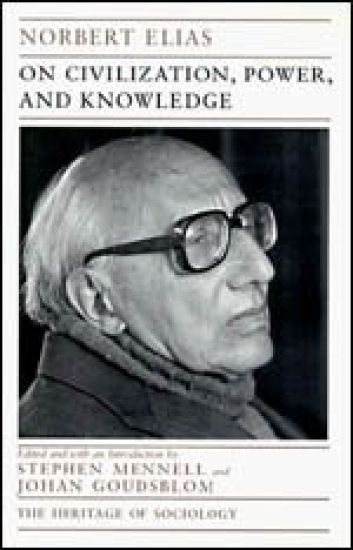
On Civilization, Power, and Knowledge

On Civilization, Power, and Knowledge

Norbert Elias

University of Chicago Press
1998
sidottu
Nobert Elias (1897-1990) is described as one of the great sociologists of the 20th century. Born in Germany, Elias earned a doctorate in philosophy and then turned to sociology, working with Max Weber's younger brother, Alfred Weber, and with Karl Mannheim. He later fled the Nazi regime in 1935 and spent most of his life in Britain. He is best known for his book, "The Civilizing Process," wherein he traces the subtle changes in manners among the European upper classes since the Middle Ages, and shows how those seemingly innocuous changes in etiquette reflected profound transformations of power relations in society. He later applied these insights to a wide range of subjects, from art and culture to the control of violence, the sociology of sports, the development of knowledge and the sciences, and the methodology of sociology. This volume is a collection of Elias's most important writings, and includes many of his ideas. The development of Elias's thinking during the course of his long career is traced, along with a discussion of how his work relates to other major sociologists and how the various selections are interconnected.
On Civilization, Power, and Knowledge

On Civilization, Power, and Knowledge

Norbert Elias

University of Chicago Press
1998
nidottu

Halvin toimitettuna 48,90 €

Nobert Elias (1897-1990) is described as one of the great sociologists of the 20th century. Born in Germany, Elias earned a doctorate in philosophy and then turned to sociology, working with Max Weber's younger brother, Alfred Weber, and with Karl Mannheim. He later fled the Nazi regime in 1935 and spent most of his life in Britain. He is best known for his book, "The Civilizing Process," wherein he traces the subtle changes in manners among the European upper classes since the Middle Ages, and shows how those seemingly innocuous changes in etiquette reflected profound transformations of power relations in society. He later applied these insights to a wide range of subjects, from art and culture to the control of violence, the sociology of sports, the development of knowledge and the sciences, and the methodology of sociology. This volume is a collection of Elias's most important writings, and includes many of his ideas. The development of Elias's thinking during the course of his long career is traced, along with a discussion of how his work relates to other major sociologists and how the various selections are interconnected.
The Established and the Outsiders

The Established and the Outsiders

Norbert Elias; John L Scotson

SAGE Publications Ltd
1994
sidottu
The Established and the Outsiders is a classic text from one of the major figures of world sociology. This new edition includes a theoretical introduction, published in English for the first time. In Norbert Elias's hands, a local community study of tense relations between an established group and outsiders - with no other discernible difference between them - becomes a microcosm that illuminates a wide range of sociological configurations including racial, ethnic, class and gender relations. The book examines the mechanisms of stigmatisation, taboo and gossip, monopolisation of power, collective fantasy and 'we' and 'they' images which support and reinforce divisions in society. Developing aspects of Elias's thinking that relate his work to current sociological concerns, it presents the fullest elaboration of his concepts of mutual identification and functional democratisation. The Established and the Outsiders not only brings out the important theoretical implications of micro-analysis but also demonstrates the significance of such detailed study analysis for better sociological theory. It is essential reading for students and scholars in social theory, sociology and anthropology.
The Established and the Outsiders

The Established and the Outsiders

Norbert Elias; John L Scotson

SAGE Publications Ltd
1994
nidottu
The Established and the Outsiders is a classic text from one of the major figures of world sociology. This new edition includes a theoretical introduction, published in English for the first time. In Norbert Elias's hands, a local community study of tense relations between an established group and outsiders - with no other discernible difference between them - becomes a microcosm that illuminates a wide range of sociological configurations including racial, ethnic, class and gender relations. The book examines the mechanisms of stigmatisation, taboo and gossip, monopolisation of power, collective fantasy and 'we' and 'they' images which support and reinforce divisions in society. Developing aspects of Elias's thinking that relate his work to current sociological concerns, it presents the fullest elaboration of his concepts of mutual identification and functional democratisation. The Established and the Outsiders not only brings out the important theoretical implications of micro-analysis but also demonstrates the significance of such detailed study analysis for better sociological theory. It is essential reading for students and scholars in social theory, sociology and anthropology.