Kirjojen hintavertailu – 12 903 724 kirjaa ja 27 kauppaa

Kirjailija

Omar Khayyam

Kirjat ja teokset yhdessä paikassa: 120 kirjaa, julkaisuja vuosilta 1889–2026, suosituimpiin kuuluu Rubaiyât D'omar Khàyyâm. Vertaile teosten hintoja ja tarkista saatavuus suomalaisista kirjakaupoista.

Nimi esiintyy myös muodoissa: Omar Khayyám, Omar Khayyàm, Omar Khàyyâm

120 kirjaa

Kirjojen julkaisuvuodet: 1889–2026.

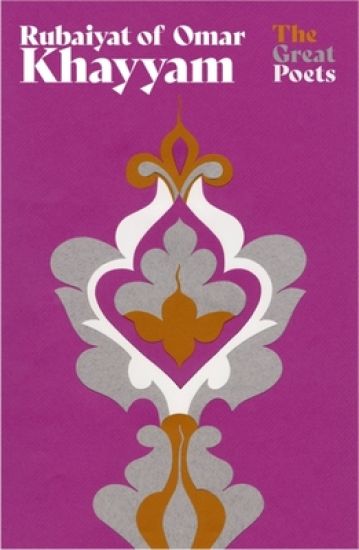
Rubaiyat of Omar Khayyam

Rubaiyat of Omar Khayyam

Omar Khayyam

ORION PUBLISHING CO
2023
pokkari

Halvin toimitettuna 15,90 €

The best-loved, bestselling poem ever published - a poem that embraces the theme 'seize the moment''One thing is certain, that Life flies; One thing is certain, and the Rest is Lies'The epic, beautiful poem Rubaiyat is widely attributed to Omar Khayyam. As much a philosopher as a poet, he was a Persian astronomer, who praised the beauties of nature, the essence of love, the mysteries of existence, the limits of private life and the joys of wine. Translated in 1857 by Edward Fitzgerald it was originally published in English anonymously, but was later discovered and promoted by the Pre-Raphaelites, who would have emphathised with many of the poem's themes. Published here as part of the Great Poets series, it is without doubt one of the greatest works of literature of all time.
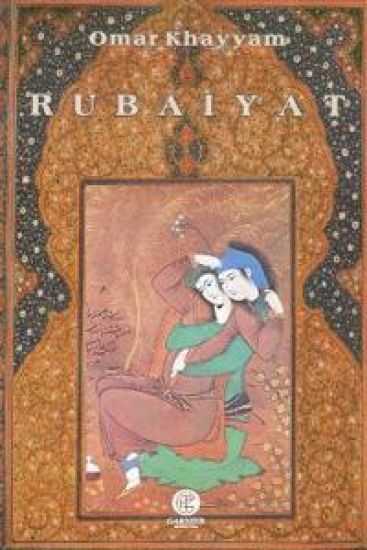
Rubaiyat

Rubaiyat

Omar Khayyam

Garnier Editora
2023
nidottu
Nascido em 1040 em Nichapur, na P rsia, mesma cidade em que morreu em 1120, o poeta Omar Ibn Ibrahim El Khayym foi, tamb m, astr nomo e matem tico. Rubaiy t, plural da palavra rubai, significa quadras, ou quartetos, nos quais o primeiro, o segundo e o quarto versos s o rimados e o terceiro branco. Muita gente, no Brasil e no mundo, traduziu esses versos de Khayym, mas a Edi o p e nas livrarias resultado de um longo, dedicado e minucioso trabalho do tradutor Jo o Baptista de Mello e Souza (1888-1969), que finalizou sua rdua tarefa em 1959 mas n o p de v -la publicada.
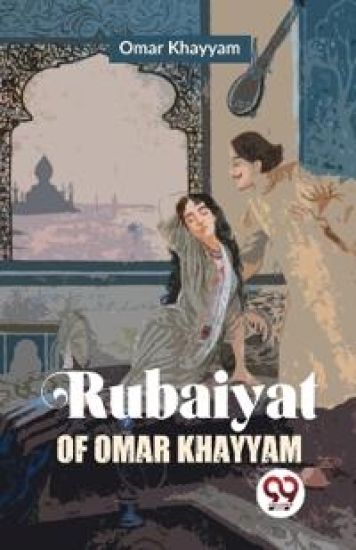
Rubaiyat Of Omar Khayyam

Rubaiyat Of Omar Khayyam

Omar Khayyam

Double 9 Books
2023
nidottu
"Rubaiyat of Omar Khayyam" is a collection of Persian poems, originally written by Omar Khayyam in the 11th century. The book is composed of quatrains, also known as "rubaiyat," that explore themes such as love, mortality, and the meaning of life. The poems are written in a simple yet profound style and are often filled with references to nature, wine, and the pleasures of life. Khayyam also questions the traditional beliefs of his time, including the idea of an afterlife and the role of religion in human affairs. One of the most notable features of the book is its use of imagery, which ranges from the beauty of a rose to the vastness of the universe. Khayyam's poems also contain a sense of melancholy and a recognition of the fleeting nature of life, which adds to the book's timeless appeal. The "Rubaiyat" has been translated into many languages and has become a beloved classic throughout the world. It continues to inspire readers with its timeless wisdom and its celebration of the beauty and impermanence of life.
The Romance of the Rubáiyát

The Romance of the Rubáiyát

Omar Khayyam

Hassell Street Press
2021
nidottu
This work has been selected by scholars as being culturally important and is part of the knowledge base of civilization as we know it. This work is in the public domain in the United States of America, and possibly other nations. Within the United States, you may freely copy and distribute this work, as no entity (individual or corporate) has a copyright on the body of the work. Scholars believe, and we concur, that this work is important enough to be preserved, reproduced, and made generally available to the public. To ensure a quality reading experience, this work has been proofread and republished using a format that seamlessly blends the original graphical elements with text in an easy-to-read typeface. We appreciate your support of the preservation process, and thank you for being an important part of keeping this knowledge alive and relevant.
The Romance of the Rubáiyát

The Romance of the Rubáiyát

Omar Khayyam

Hassell Street Press
2021
sidottu
This work has been selected by scholars as being culturally important and is part of the knowledge base of civilization as we know it. This work is in the public domain in the United States of America, and possibly other nations. Within the United States, you may freely copy and distribute this work, as no entity (individual or corporate) has a copyright on the body of the work. Scholars believe, and we concur, that this work is important enough to be preserved, reproduced, and made generally available to the public. To ensure a quality reading experience, this work has been proofread and republished using a format that seamlessly blends the original graphical elements with text in an easy-to-read typeface. We appreciate your support of the preservation process, and thank you for being an important part of keeping this knowledge alive and relevant.
The Quatrains of Omar Khayyam

The Quatrains of Omar Khayyam

Omar Khayyam

Alpha Edition
2020
sidottu
This book has been considered by academicians and scholars of great significance and value to literature. This forms a part of the knowledge base for future generations. So that the book is never forgotten we have represented this book in a print format as the same form as it was originally first published. Hence any marks or annotations seen are left intentionally to preserve its true nature.
The Quatrains of Omar Khayyam

The Quatrains of Omar Khayyam

Omar Khayyam

Alpha Edition
2020
pokkari
This book has been considered by academicians and scholars of great significance and value to literature. This forms a part of the knowledge base for future generations. So that the book is never forgotten we have represented this book in a print format as the same form as it was originally first published. Hence any marks or annotations seen are left intentionally to preserve its true nature.
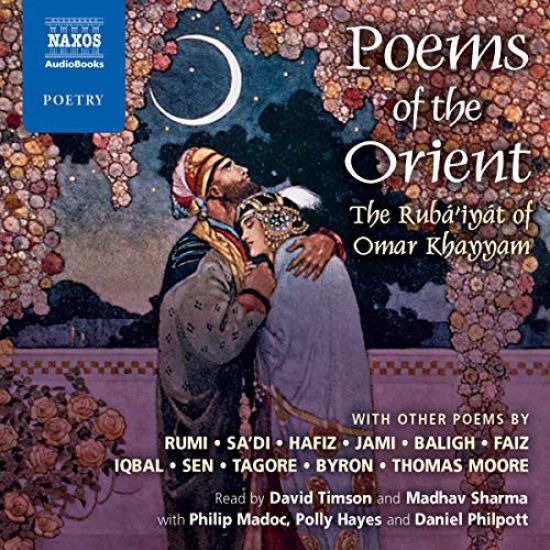
Poems of the Orient

Poems of the Orient

Omar Khayyám

Naxos
2020
mp3 cd-levyllä
The Rub 'iy t of Omar Khayyam, in the famous translation by Edward FitzGerald, remains one of the world's most popular poems. Well received at the time, it also reveals the popularity of Victorian England's fascination with the Orient. Here, the poem forms the main work in the first part of this recording, along with shorter poems by other leading Persian and Indian figures, including Rumi, Sa'di and Rabindranath Tagore. The second half is devoted to works written by Western poets on the theme of the East with "The Veiled Prophet of Khorassan," an excerpt from Thomas Moore's Lalla Rookh, one of the bestsellers of the early nineteenth century.
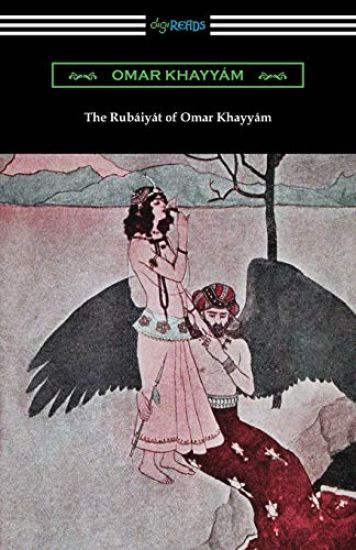
The Rubaiyat of Omar Khayyam

The Rubaiyat of Omar Khayyam

Omar Khayyam

Digireads.com
2019
pokkari

Halvin toimitettuna 16,20 €

First published in English by Edward Fitzgerald in 1859 from its original Farsi, "The Rubaiyat of Omar Khayyam" is a collection of quatrains attributed to Omar Khayyam, a Persian astronomer and mathematician born in the later part of the 11th century. Omar Khayyam's poetry, which received very little international notoriety in its own day, achieved classic status when it was discovered and rendered into English verse by Edward Fitzgerald over seven hundred years later. Omar Khayyam was famous in his time for his important contributions to geometry and the creation of a highly accurate solar calendar, yet it is the beautiful and captivating verses of his poetry that have withstood the test of time and continue to inspire readers and writers to this day. Omar Khayyam celebrated life in all its humor, pleasure, and beauty, while also capturing its frailty and impermanence. Romantic, clever, funny, passionate and bittersweet, this collection is a must-read for all who love language and poetry. Presented here are the beloved and traditionally collected first and fifth editions with the original notes and introduction by Edward Fitzgerald. This edition is printed on premium acid-free paper.
Rubaiyat of Omar Khayyam and Salaman and Absal of Jami

Rubaiyat of Omar Khayyam and Salaman and Absal of Jami

Omar Khayyam; Et Al Jami

Bibliotech Press
2019
sidottu
Omar Khayyam (18 May 1048 - 4 December 1131) was a Persian mathematician, astronomer, and poet. He was born in Nishapur, in northeastern Iran, and spent most of his life near the court of the Karakhanid and Seljuq rulers in the period which witnessed the First Crusade. As a mathematician, he is most notable for his work on the classification and solution of cubic equations, where he provided geometric solutions by the intersection of conics. Khayyam also contributed to the understanding of the parallel axiom. As an astronomer, he designed the Jalali calendar, a solar calendar with a very precise 33-year intercalation cycle. There is a tradition of attributing poetry to Omar Khayyam, written in the form of quatrains. This poetry became widely known to the English-reading world in a translation by Edward FitzGerald (Rubaiyat of Omar Khayyam, 1859), which enjoyed great success in the Orientalism of the fin de si cle. Omar Khayyam was born in Nishapur, a leading metropolis in Khorasan during medieval times that reached its climax of prosperity in the eleventh century under the Seljuq dynasty. Nishapur was, at the time, a major center of the Zoroastrian religion. It is likely that Khayyam's father was a Zoroastrian who had converted to Islam. He was born into a family of tent-makers (Khayyam). His full name, as it appears in the Arabic sources, was Abu'l Fath Omar ibn Ibrahim al-Khayyam. In medieval Persian texts he is usually simply called Omar Khayyām. His boyhood was spent in Nishapur. His gifts were recognized by his early tutors who sent him to study under Imam Muwaffaq Nishaburi, the greatest teacher of the Khorasan region who tutored the children of the highest nobility. In 1073, at the age of twenty-six, he entered the service of Sultan Malik-Shah I as an adviser. In 1076 Khayyam was invited to Isfahan by the vizier and political figure Nizam al-Mulk to take advantage of the libraries and centers in learning there. His years in Isfahan were productive. It was at this time that he began to study the work of Greek mathematicians Euclid and Apollonius much more closely. But after the death of Malik-Shah and his vizier (murdered, it is thought, by the Ismaili order of Assassins), Omar had fallen from favour at court, and as a result, he soon set out on his pilgrimage to Mecca... He was later allowed to return to Nishapur owing to his declining health. Upon his return, he seemed to have lived the life of a recluse. Khayyam died in 1131 and is buried in the Khayyam Garden. (wikipedia.org)

Rubaiyat of Omar Khayyam and Salaman and Absal of Jami

Rubaiyat of Omar Khayyam and Salaman and Absal of Jami

Omar Khayyam; Et Al Jami

Bibliotech Press
2019
pokkari
Omar Khayyam (18 May 1048 - 4 December 1131) was a Persian mathematician, astronomer, and poet. He was born in Nishapur, in northeastern Iran, and spent most of his life near the court of the Karakhanid and Seljuq rulers in the period which witnessed the First Crusade. As a mathematician, he is most notable for his work on the classification and solution of cubic equations, where he provided geometric solutions by the intersection of conics. Khayyam also contributed to the understanding of the parallel axiom. As an astronomer, he designed the Jalali calendar, a solar calendar with a very precise 33-year intercalation cycle. There is a tradition of attributing poetry to Omar Khayyam, written in the form of quatrains. This poetry became widely known to the English-reading world in a translation by Edward FitzGerald (Rubaiyat of Omar Khayyam, 1859), which enjoyed great success in the Orientalism of the fin de si cle. Omar Khayyam was born in Nishapur, a leading metropolis in Khorasan during medieval times that reached its climax of prosperity in the eleventh century under the Seljuq dynasty. Nishapur was, at the time, a major center of the Zoroastrian religion. It is likely that Khayyam's father was a Zoroastrian who had converted to Islam. He was born into a family of tent-makers (Khayyam). His full name, as it appears in the Arabic sources, was Abu'l Fath Omar ibn Ibrahim al-Khayyam. In medieval Persian texts he is usually simply called Omar Khayyām. His boyhood was spent in Nishapur. His gifts were recognized by his early tutors who sent him to study under Imam Muwaffaq Nishaburi, the greatest teacher of the Khorasan region who tutored the children of the highest nobility. In 1073, at the age of twenty-six, he entered the service of Sultan Malik-Shah I as an adviser. In 1076 Khayyam was invited to Isfahan by the vizier and political figure Nizam al-Mulk to take advantage of the libraries and centers in learning there. His years in Isfahan were productive. It was at this time that he began to study the work of Greek mathematicians Euclid and Apollonius much more closely. But after the death of Malik-Shah and his vizier (murdered, it is thought, by the Ismaili order of Assassins), Omar had fallen from favour at court, and as a result, he soon set out on his pilgrimage to Mecca... He was later allowed to return to Nishapur owing to his declining health. Upon his return, he seemed to have lived the life of a recluse. Khayyam died in 1131 and is buried in the Khayyam Garden. (wikipedia.org)
Rubáiyát of Omar Khayyám

Rubáiyát of Omar Khayyám

Omar Khayyam; Edward Fitzgerald

Hansebooks
2019
pokkari
Rub iy t of Omar Khayy m - the astronomer-poet of Persia is an unchanged, high-quality reprint of the original edition of 1872. Hansebooks is editor of the literature on different topic areas such as research and science, travel and expeditions, cooking and nutrition, medicine, and other genres. As a publisher we focus on the preservation of historical literature. Many works of historical writers and scientists are available today as antiques only. Hansebooks newly publishes these books and contributes to the preservation of literature which has become rare and historical knowledge for the future.