

Kirjailija
Omar Khayyam
Kirjat ja teokset yhdessä paikassa: 120 kirjaa, julkaisuja vuosilta 1889–2026, suosituimpiin kuuluu Rubaiyât D'omar Khàyyâm. Vertaile teosten hintoja ja tarkista saatavuus suomalaisista kirjakaupoista.
Nimi esiintyy myös muodoissa: Omar Khayyám, Omar Khayyàm, Omar Khàyyâm
120 kirjaa
Kirjojen julkaisuvuodet: 1889–2026.

"Rubaiyat of Omar Khayyam" from Omar Khayy m. Persian philosopher, mathematician, astronomer and poet (1048-1131).
Rubáiyát of Omar Khayyám and Salámán and Absál
Omar Khayyam
Createspace Independent Publishing Platform
2015
nidottu
"Rub iy t of Omar Khayy m and Sal m n and Abs l" from Omar Khayy m. Persian philosopher, mathematician, astronomer and poet (1048-1131).
The Sufistic Quatrains of Omar Khayyam
Omar Khayyam
Createspace Independent Publishing Platform
2015
nidottu
"The Sufistic Quatrains of Omar Khayyam" from Omar Khayy m. Persian philosopher, mathematician, astronomer and poet (1048-1131).
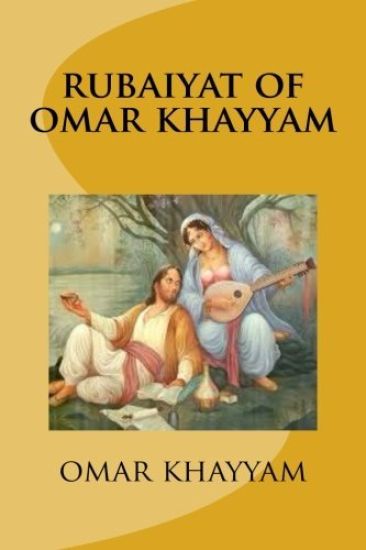
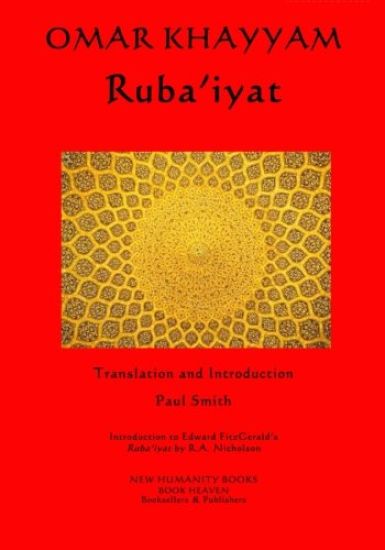
OMAR KHAYYAM: RUBA'IYAT Translation & Introduction Paul Smith Reprint of 1909 Introduction by R. A. Nicholson Omar Khayyam (died 1132) was one of the early masters of the Persian poetic form of the ruba'i... so much so that many in collections of these profound, philosophic, mystical, sometimes controversial poems were often attributed to him, although many were by other great Persian poets such as 'Attar, Sadi, Rumi and Hafiz. More famous in Iran as an astronomer and mathematician... the sometimes nihilistic and hedonistic and occasionally Sufi philosophy in his ruba'is meant that his poems were never really popular in his homeland, but after the interpretations of Edward FitzGerald the west fell in love with him. Introduction: The Life and Times of Omar Khayyam and his work as a Scientist & Philosopher and a history of the ruba'i and examples by its greatest exponents and a chapter on the various translations into English and other languages. Selected bibliography. The correct rhyme-structure is here, the beauty and meaning of these fatalistic, intoxicated, loving, sometimes mystical and often satirical 186 four-line poems. Large format 7" x 10" 280 pages. COMMENTS ON PAUL SMITH'S TRANSLATION OF HAFIZ'S 'DIVAN'." It is not a joke... the English version of ALL the ghazals of Hafiz is a great feat and of paramount importance. I am astonished. If he comes to Iran I will kiss the fingertips that wrote such a masterpiece inspired by the Creator of all." Dr. Mir Mohammad Taghavi (Dr. of Literature) Tehran." Superb translations. 99% Hafiz 1% Paul Smith." Ali Akbar Shapurzman, translator of many works into Persian and knower of Hafiz's Divan off by heart. "Smith has probably put together the greatest collection of literary facts and history concerning Hafiz." Daniel Ladinsky (Penguin Books author). Paul Smith is a poet, author and translator of over 150 books of Sufi poets of the Persian, Arabic, Urdu, Turkish, Pashtu and other languages... including Hafiz, Sadi, Nizami, Rumi, 'Attar, Sana'i, Jahan Khatun, Obeyd Zakani, Nesimi, Kabir, Anvari, Ansari, Jami, Khayyam, Rudaki, Yunus Emre, Lalla Ded, Rahman Baba, Bulleh Shah, Ghalib, Iqbal and many others, as well as poetry, fiction, plays, biographies, children's books and screenplays. amazon.com/author/smithpa Published by New Humanity Books
The Ruba�������yat of Omar Khayyam is a collection of poems written by the Persian poet Omar Khayyam. The poems were originally written in the 11th century, but were translated into English by Edward FitzGerald in 1859. This particular edition was published in 1899 and features the original Persian text alongside the English translation. The poems are written in the form of quatrains, or four-line stanzas, and cover a variety of themes including love, nature, and the meaning of life. The language is rich and evocative, and the poems have become famous for their philosophical and spiritual insights. The Ruba�������yat of Omar Khayyam is considered a masterpiece of Persian literature and is widely regarded as one of the greatest works of poetry in the world. This Is A New Release Of The Original 1899 Edition. This scarce antiquarian book is a facsimile reprint of the old original and may contain some imperfections such as library marks and notations. Because we believe this work is culturally important, we have made it available as part of our commitment for protecting, preserving, and promoting the world's literature in affordable, high quality, modern editions, that are true to their original work.
Edward Fitzgerald's Rubaiyat of Omar Khayyam: With Their Original Persian Sources (1899)
Omar Khayyam; Edward Fitzgerald
Literary Licensing, LLC
2014
nidottu
Edward Fitzgerald's Rubaiyat of Omar Khayyam: With Their Original Persian Sources (1899)
Omar Khayyam; Edward Fitzgerald
Literary Licensing, LLC
2014
sidottu
Edward Fitzgerald's Ruba�������Iyat Of Omar Khayyam: With Their Original Persian Sources (1899) is a book that presents the famous collection of poems by the Persian poet Omar Khayyam, translated into English by Edward Fitzgerald. The Ruba�������Iyat is a collection of quatrains, or four-line verses, that explore themes of love, mortality, and the meaning of life. This edition includes the original Persian text of the Ruba�������Iyat alongside Fitzgerald's translation, allowing readers to compare the two versions and gain a deeper understanding of the original work. The book also includes an introduction by Fitzgerald and a biographical sketch of Omar Khayyam, providing context and background for the poems. Overall, this book is a valuable resource for lovers of poetry and Persian literature, offering a unique glimpse into the work of one of the most celebrated poets of the Islamic world. This Is A New Release Of The Original 1899 Edition. This scarce antiquarian book is a facsimile reprint of the old original and may contain some imperfections such as library marks and notations. Because we believe this work is culturally important, we have made it available as part of our commitment for protecting, preserving, and promoting the world's literature in affordable, high quality, modern editions, that are true to their original work.
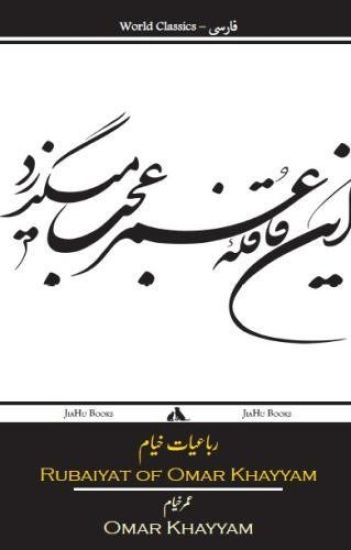

Rubaiyat of Omar Khayyam (Selected Poems) (Persian /Farsi Edition)
Omar Khayyam
Bahar Books
2012
nidottu
Halvin toimitettuna 17,40 €
A selection of Rubaiyat (Quatrains) of Omar Khayyam in Persian/Farsi. For more information about "Bahar Books", please visit the website: www.baharbooks.com
The Rubaiyat of Omar Khayyam is a selection of poems, originally written in Persian attributed to Omar Khayy m (1048-1131), a Persian poet, mathematician and astronomer. A ruba'i is a two-line stanza with two parts (or hemistichs) per line, hence the word rubaiyat (derived from the Arabic language root for "four"), meaning "quatrains". Ghiyath ad-Din Abul-Fath Umar ibn Ibrahim al-Khayyam Nishapuri (18 May 1048 - 4 December 1131) was a Persian polymath: philosopher, mathematician, astronomer and poet. He also wrote treatises on mechanics, geography, mineralogy, music, and Islamic theology.
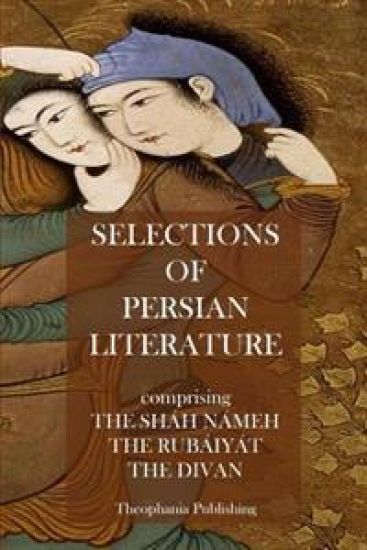
Selections of Persian Literature
Sa'di; Omar Khayyám; Jami
Createspace Independent Publishing Platform
2012
nidottu
Thank you for checking out this book by Theophania Publishing. We appreciate your business and look forward to serving you soon. We have thousands of titles available, and we invite you to search for us by name, contact us via our website, or download our most recent catalogues. A certain amount of romantic interest has always attached to Persia. With a continuous history stretching back into those dawn-days of history in which fancy loves to play, the mention of its name brings to our minds the vision of things beautiful and artistic, the memory of great deeds and days of chivalry. We seem almost to smell the fragrance of the rose-gardens of Tus and of Shiraz, and to hear the knight-errants tell of war and of love. There are other Oriental civilizations, whose coming and going have not been in vain for the world; they have done their little bit of apportioned work in the universe, and have done it well. India and Arabia have had their great poets and their great heroes, yet they have remained well-nigh unknown to the men and women of our latter day, even to those whose world is that of letters. But the names of Firdusi, Sa'di, Omar Khayy m, Jami, and H fiz, have a place in our own temples of fame. They have won their way into the book-stalls and stand upon our shelves, side by side with the other books which mould our life and shape our character.