
Kirjailija
Oscar Wilde
Kirjat ja teokset yhdessä paikassa: 2 744 kirjaa, julkaisuja vuosilta 1890–2026, suosituimpiin kuuluu Aforismeja. Vertaile teosten hintoja ja tarkista saatavuus suomalaisista kirjakaupoista.
2 744 kirjaa
Kirjojen julkaisuvuodet: 1890–2026.
Extract: THE TOMB OF KEATS (Irish Monthly, July 1877.) As one enters Rome from the Via Ostiensis by the Porta San Paolo, the first object that meets the eye is a marble pyramid which stands close at hand on the left. There are many Egyptian obelisks in Rome-tall, snakelike spires of red sandstone, mottled with strange writings, which remind us of the pillars of flame which led the children of Israel through the desert away from the land of the Pharaohs; but more wonderful than these to look upon is this gaunt, wedge-shaped pyramid standing here in this Italian city, unshattered amid the ruins and wrecks of time, looking older than the Eternal City itself, like terrible impassiveness turned to stone. And so in the Middle Ages men supposed this to be the sepulchre of Remus, who was slain by his own brother at the founding of the city, so ancient and mysterious it appears; but we have now, perhaps unfortunately, more accurate information about it, and know that it is the tomb of one Caius Cestius, a Roman gentleman of small note, who died about 30 b.c. Yet though we cannot care much for the dead man who lies in lonely state beneath it, and who is only known to the world through his sepulchre, still this pyramid will be ever dear to the eyes of all English-speaking people, because at evening its shadows fall on the tomb of one who walks with Spenser, and Shakespeare, and Byron, and Shelley, and Elizabeth Barrett Browning in the great procession of the sweet singers of England. For at its foot there is a green sunny slope, known as the Old Protestant Cemetery, and on this a common-looking grave, which bears the following inscription: This grave contains all that was mortal of a young English poet, who on his deathbed, in the bitterness of his heart, desired these words to be engraven on his tombstone: Here lies one whose name was writ in water. February 24, 1821. And the name of the young English poet is John Keats.
The Canterville Ghost, suivi de, De Profundis
Oscar Wilde
Createspace Independent Publishing Platform
2017
nidottu
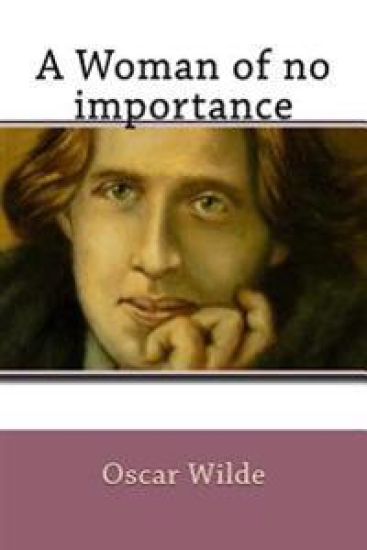
extract: FIRST ACT SCENE Lawn in front of the terrace at Hunstanton. Sir John and Lady Caroline Pontefract, Miss Worsley, on chairs under large yew tree.] Lady Caroline. I believe this is the first English country house you have stayed at, Miss Worsley? Hester. Yes, Lady Caroline. Lady Caroline. You have no country houses, I am told, in America? Hester. We have not many. Lady Caroline. Have you any country? What we should call country? Hester. Smiling.] We have the largest country in the world, Lady Caroline. They used to tell us at school that some of our states are as big as France and England put together. Lady Caroline. Ah you must find it very draughty, I should fancy. To Sir John.] John, you should have your muffler. What is the use of my always knitting mufflers for you if you won't wear them? Sir John. I am quite warm, Caroline, I assure you. Lady Caroline. I think not, John. Well, you couldn't come to a more charming place than this, Miss Worsley, though the house is excessively damp, quite unpardonably damp, and dear Lady Hunstanton is sometimes a little lax about the people she asks down here. To Sir John.] Jane mixes too much. Lord Illingworth, of course, is a man of high distinction. It is a privilege to meet him. And that member of Parliament, Mr. Kettle- Sir John. Kelvil, my love, Kelvil. Lady Caroline. He must be quite respectable. One has never heard his name before in the whole course of one's life, which speaks volumes for a man, nowadays. But Mrs. Allonby is hardly a very suitable person. Hester. I dislike Mrs. Allonby. I dislike her more than I can say. Lady Caroline. I am not sure, Miss Worsley, that foreigners like yourself should cultivate likes or dislikes about the people they are invited to meet. Mrs. Allonby is very well born. She is a niece of Lord Brancaster's. It is said, of course, that she ran away twice before she was married. But you know how unfair people often are. I myself don't believe she ran away more than once. Hester. Mr. Arbuthnot is very charming. Lady Caroline. Ah, yes the young man who has a post in a bank. Lady Hunstanton is most kind in asking him here, and Lord Illingworth seems to have taken quite a fancy to him. I am not sure, however, that Jane is right in taking him out of his position. In my young days, Miss Worsley, one never met any one in society who worked for their living. It was not considered the thing. Hester. In America those are the people we respect most. Lady Caroline. I have no doubt of it.......
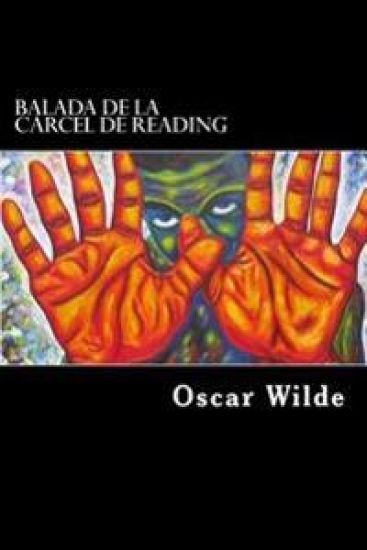
La Balada de la C rcel de Reading es un poema escrito por Oscar Wilde durante su exilio en Berneval o Dieppe, Francia. Fue escrito tras su liberaci n de la prisi n de Reading en torno al 19 de mayo de 1897. El poema es una de las baladas m s representativas tanto del autor como de la literatura en ingl s. El encarcelamiento de Wilde en el penal de Reading tuvo lugar tras ser condenado por actos homosexuales en 1895 y sentenciado a dos a os de trabajos forzados. Durante su periodo de encarcelamiento, concretamente el s bado 7 de julio de 1896, tuvo lugar un ahorcamiento. Se trataba de Charles Thomas Wooldridge que hab a sido un soldado de la Guardia Real de Caballer a. Este hombre hab a sido encarcelado por matar, cortando la garganta a su esposa s lo un a o antes en Clewer, localidad cercana a Windsor. Tan solo ten a 30 a os cuando fue ejecutado. Esta ejecuci n impact de forma especial a Wilde y se tradujo en varias l neas de este poema "Aunque todos los hombres matan lo que aman", por ejemplo.
PREFACE With the possible exceptions of the Greek Anthology, the "Golden Treasury" and those which bear the name of E. V. Lucas, no selections of poetry or prose have ever given complete satisfaction to anyone except the compiler. But critics derive great satisfaction from pointing out errors of omission and inclusion on the part of the anthologist, and all of us have putatively re-arranged and re-edited even the "Golden Treasury" in our leisure moments. In an age when "Art for Art's sake" is an exploded doctrine, anthologies, like everything else, must have a purpose. The purpose or object of the present volume is to afford admirers of Wilde's work the same innocent pleasure obtainable from similar compilations, namely that of reconstructing a selection of their own in their mind's eye-for copyright considerations would interfere with the materialisation of their dream. A stray observation in an esteemed weekly periodical determined the plan of this anthology and the choice of particular passages. The writer, whose name has escaped me, opined that the reason the works of Pater and Wilde were no longer read was owing to both authors having treated English as a dead language. By a singular coincidence I had purchased simultaneously with the newspaper a shilling copy of Pater's "Renaissance," published by Messrs. Macmillan; and a few days afterwards Messrs. Methuen issued at a shilling the twenty-eighth edition of "De Profundis." Obviously either Messrs. Macmillan and Messrs. Methuen or the authority on dead languages must have been suffering from hallucinations. It occurred to me that a selection of Wilde's prose might at least rehabilitate the notorious reputation for common sense enjoyed by all publishers, who rarely issue shilling editions of deceased authors for mere sthetic considerations. And I confess to a hope that this volume may reach the eye or ear of those who have not read Wilde's books, or of those, such as Mr. Sydney Grundy, who are irritated by the revival of his plays and the praise accorded to his works throughout the Continent. Wilde's prose is distinguished by its extraordinary ease and clarity, and by the absence-very singular in his case-of the preciosity which he admired too much in other writers, and advocated with over-emphasis. Perhaps that is why many of his stories and essays and plays are used as English text-books in Russian and Scandinavian and Hungarian schools
PREFACE It is thought that a selection from Oscar Wilde's early verses may be of interest to a large public at present familiar only with the always popular Ballad of Reading Gaol, also included in this volume. The poems were first collected by their author when he was twenty-sex years old, and though never, until recently, well received by the critics, have survived the test of NINE editions. Readers will be able to make for themselves the obvious and striking contrasts between these first and last phases of Oscar Wilde's literary activity. The intervening period was devoted almost entirely to dramas, prose, fiction, essays, and criticism. ROBERT ROSS
INTRODUCTION The editor of writings by any author not long deceased is censured sooner or later for his errors of omission or commission. I have decided to err on the side of commission and to include in the uniform edition of Wilde's works everything that could be identified as genuine. Wilde's literary reputation has survived so much that I think it proof against any exhumation of articles which he or his admirers would have preferred to forget. As a matter of fact, I believe this volume will prove of unusual interest; some of the reviews are curiously prophetic; some are, of course, biassed by prejudice hostile or friendly; others are conceived in the author's wittiest and happiest vein; only a few are colourless. And if, according to Lord Beaconsfield, the verdict of a continental nation may be regarded as that of posterity, Wilde is a much greater force in our literature than even friendly contemporaries ever supposed he would become. It should be remembered, however, that at the time when most of these reviews were written Wilde had published scarcely any of the works by which his name has become famous in Europe, though the protagonist of the sthetic movement was a well-known figure in Paris and London. Later he was recognised-it would be truer to say he was ignored-as a young man who had never fulfilled the high promise of a distinguished university career although his volume of Poems had reached its fifth edition, an unusual event in those days. He had alienated a great many of his Oxford contemporaries by his extravagant manner of dress and his methods of courting publicity. The great men of the previous generation, Wilde's intellectual peers, with whom he was in artistic sympathy, looked on him askance. Ruskin was disappointed with his former pupil, and Pater did not hesitate to express disapprobation to private friends; while he accepted incense from a disciple, he distrusted the thurifer. From a large private correspondence in my possession I gather that it was, oddly enough, in political and social centres that Wilde's amazing powers were rightly appreciated and where he was welcomed as the most brilliant of living talkers. Before he had published anything except his Poems, the literary dovecots regarded him with dislike, and when he began to publish essays and fairy stories, the attitude was not changed; it was merely emphasised in the public press. His first dramatic success at the St. James's Theatre gave Wilde, of course, a different position, and the dislike became qualified with envy. Some of the younger men indeed were dazzled, but with few exceptions their appreciation was expressed in an unfortunate manner. It is a consolation or a misfortune that the wrong kind of people are too often correct in their prognostications of the future; the far-seeing are also the foolish. From these reviews which illustrate the middle period of Wilde's meteoric career, between the sthetic period and the production of Lady Windermere's Fan, we learn his opinion of the contemporaries who thought little enough of him. .......
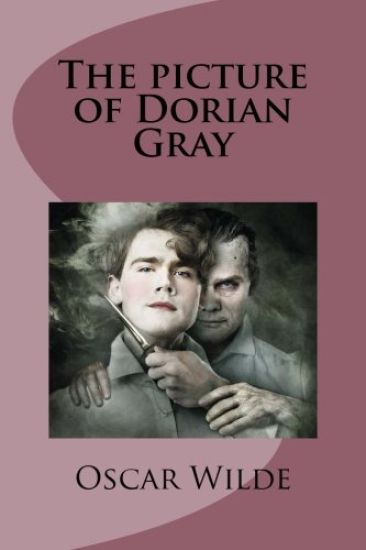
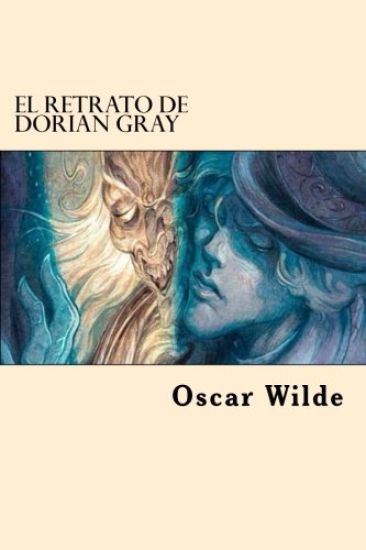
The Portrait of Dorian Gray is a novel by Oscar Wilde, published in 1890 (revised in 1891) and written in the context of the Victorian era. The author includes themes of aesthetics such as art, beauty, youth, morals and hedonism. The novel is fantastic, but also philosophical, and highlights the equivocal personality of the Irish dandy as well as the current decadentist, prompting virulent exchanges of letters between Wilde and several very critical papers judging the work "repugnant". It is also Wilde's only novel in his entire career. Summary Dorian meets Lord Henry, says Harry, a friend of Basil Hallward, a renowned painter. Conscious of the fascination and perversion that Lord Henry might have for his ideal of beauty, "this simple and beautiful nature," Basil asks Lord Henry not to attempt to corrupt him. But Dorian lets himself be seduced by theories about youth and the pleasure of this new friend who reveals it to himself by flattering him: "A new hedonism ... You could be the visible symbol. With your personality, there is nothing you can do. " From then on, he became deeply jealous of his own portrait painted by Basil Hallward. He expressed the hope that the painting would age in its place in order to be able to preserve its beauty as a teenager. "If I were still young and the portrait grows old in my place I would give everything, everything so that it would be so. There is nothing in the world that I would not give. I would give my soul ". Eventually the young man falls in love with an actress whose fascination, Sibyl Vane, and promises him marriage. But his love for Dorian prevents Sibyl from embodying her characters as she did before and her game becomes very bad, which can be seen by Basil and Lord Henry that Dorian took with him to the theater. Deeply disappointed and humiliated, Dorian repudiates Sibyl and leaves her brutally, leaving her collapsed. On returning he notices on the portrait an expression of cruelty which he did not know. He begins to suspect that his senseless wish might have been realized. The next day Harry learns of Sibyl's suicide. Surprisingly, he only feels a superficial pain at the announcement of this death: "However, I must admit that this event did not move me as much as it should have. It seems to me as the sublime denouement of an astonishing piece. He has all the frightful beauty of a Greek tragedy, a tragedy in which I played a great part but from which I emerged unscathed. ". It is a pivotal moment of the novel, the moment when Dorian's return is no longer possible, although he does not know it yet. The portrait began to change: Dorian's soul is no longer that of the innocent young man who could feel compassion for his fellow men....
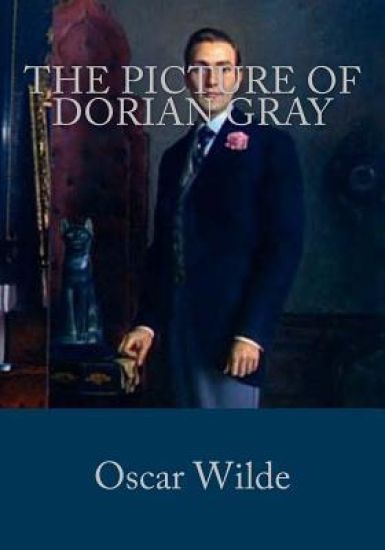
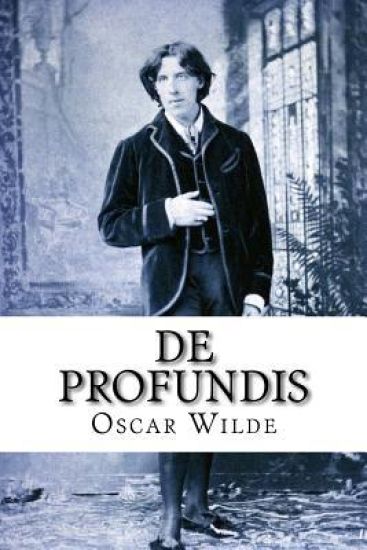
De Profundis (Latin: "from the depths") is a letter written by Oscar Wilde during his imprisonment in Reading Gaol, to "Bosie" (Lord Alfred Douglas). In its first half Wilde recounts their previous relationship and extravagant lifestyle which eventually led to Wilde's conviction and imprisonment for gross indecency. He indicts both Lord Alfred's vanity and his own weakness in acceding to those wishes. In the second half, Wilde charts his spiritual development in prison and identification with Jesus Christ, whom he characterises as a romantic, individualist artist. The letter began "Dear Bosie" and ended "Your Affectionate Friend"
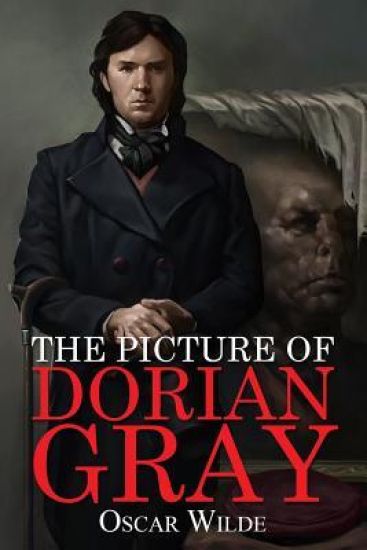
The Picture Of Dorian Gray (1891 Version) Oscar WILDE (1854 - 1900)

For Love of the King: a Burmese Masque
Oscar Wilde
Createspace Independent Publishing Platform
2017
nidottu