Kirjojen hintavertailu – 12 859 826 kirjaa ja 27 kauppaa
Kirjailija
Oscar Wilde
Kirjat ja teokset yhdessä paikassa: 2 744 kirjaa, julkaisuja vuosilta 1890–2026, suosituimpiin kuuluu Aforismeja. Vertaile teosten hintoja ja tarkista saatavuus suomalaisista kirjakaupoista.
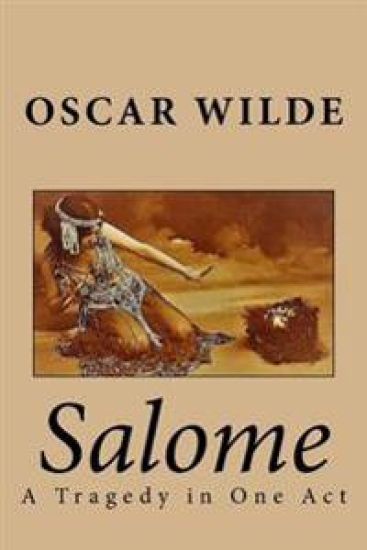
Salome is a tragedy of Oscar Wilde whose original version of 1891 is in French. A translation into English followed three years later. The play, in one act, rests on the biblical episode of Salome, 1 the daughter-in-law of the tetrarch of Galilee Herod Antipas, who, to the dismay of his father-in-law, but to the delight of his mother Herodias, Brings him the head of Iokanaan (John the Baptist) on a silver platter as a reward for performing the seven-veil dance. Versions and firsts Wilde wrote this play to Paris, where he had retired after completing Lady Windermere's Fan. He dedicated it to Pierre Louÿs, who made some corrections to the text but intervened very little. Seduced by the title role, Sarah Bernhardt decided to interpret it herself, and the rehearsals began at the Palace Theater in London. These rehearsals, however, had to be interrupted when the Lord Chamberlain's censorship had banned Salom on the grounds that it was illegal to represent biblical figures on stage. Indignant, Wilde envisioned renouncing his British nationality and becoming French so as not to have to undergo such restrictions.
LONDON: ST. JAMES'S THEATRE Lessee and Manager: Mr. George Alexander February 14th, 1895 * * * * * John Worthing, J. P.: Mr. George Alexander. Algernon Moncrieff: Mr. Allen Aynesworth. Rev. Canon Chasuble, D. D.: Mr. H. H. Vincent. Merriman: Mr. Frank Dyall. Lane: Mr. F. Kinsey Peile. Lady Bracknell: Miss Rose Leclercq. Hon. Gwendolen Fairfax: Miss Irene Vanbrugh. Cecily Cardew: Miss Evelyn Millard. Miss Prism: Mrs. George Canninge. FIRST ACT SCENE Morning-room in Algernon's flat in Half-Moon Street. The room is luxuriously and artistically furnished. The sound of a piano is heard in the adjoining room. Lane is arranging afternoon tea on the table, and after the music has ceased, Algernon enters.] Algernon. Did you hear what I was playing, Lane? Lane. I didn't think it polite to listen, sir. Algernon. I'm sorry for that, for your sake. I don't play accurately-any one can play accurately-but I play with wonderful expression. As far as the piano is concerned, sentiment is my forte. I keep science for Life. Lane. Yes, sir. Algernon. And, speaking of the science of Life, have you got the cucumber sandwiches cut for Lady Bracknell? Lane. Yes, sir. Hands them on a salver.] Algernon. Inspects them, takes two, and sits down on the sofa.] Oh . . . by the way, Lane, I see from your book that on Thursday night, when Lord Shoreman and Mr. Worthing were dining with me, eight bottles of champagne are entered as having been consumed. Lane. Yes, sir; eight bottles and a pint. Algernon. Why is it that at a bachelor's establishment the servants invariably drink the champagne? I ask merely for information.
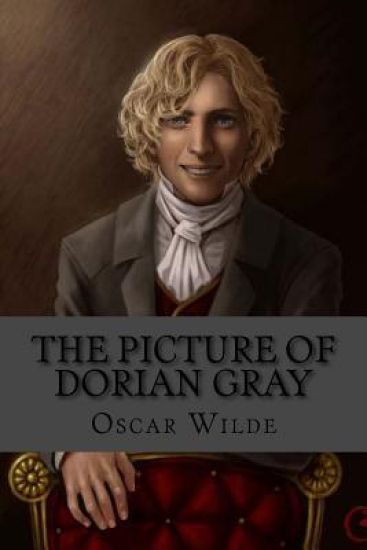
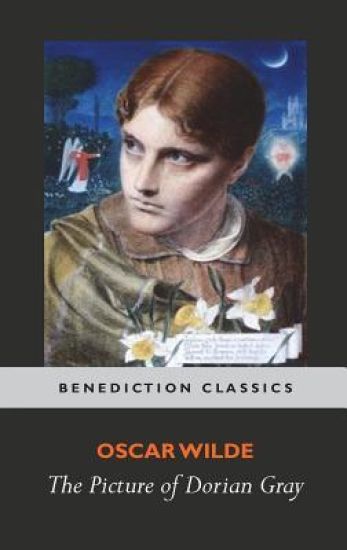
Dorian Gray is the subject of a full-length portrait in oil by Basil Hallward, an artist who is impressed and infatuated by Dorian's beauty; the artist believes that Dorian's beauty is responsible for the new mode in his art as a painter. Through Basil, Dorian meets Lord Henry Wotton, and he soon is enthralled by the aristocrat's hedonistic worldview: that beauty and sensual fulfillment are the only things worth pursuing in life. Newly understanding that his beauty will fade, Dorian expresses the desire to sell his soul, to ensure that the picture, rather than he, will age and fade. The wish is granted, and Dorian pursues a libertine life of varied and amoral experiences, while staying young and beautiful; all the while his portrait ages and records every sin.
The Duchess of Padua is a play by the world famous wit Oscar Wilde. A five-act melodramatic tragedy set in Padua and written in blank verse. It was written for the actress Mary Anderson in early 1883 while in Paris. Alas she turned it down and it was abandoned until a run on Broadway re-titled Guido Ferranti. It ran for three weeks. It is rarely seen but on account of the immense talents of its author we thought it deserved a wider audience. We hope that includes you. Oscar Fingal O'Flahertie Wills Wilde (16 October 1854- 30 November 1900) was an Irish playwright, novelist, essayist, and poet. After writing in different forms throughout the 1880s, he became one of London's most popular playwrights in the early 1890s. He is remembered for his epigrams, his novel The Picture of Dorian Gray, his plays, as well as the circumstances of his imprisonment and early death. Wilde's parents were successful Anglo-Irish Dublin intellectuals. Their son became fluent in French and German early in life. At university, Wilde read Greats; he proved himself to be an outstanding classicist, first at Dublin, then at Oxford. He became known for his involvement in the rising philosophy of aestheticism, led by two of his tutors, Walter Pater and John Ruskin. After university, Wilde moved to London into fashionable cultural and social circles. As a spokesman for aestheticism, he tried his hand at various literary activities: he published a book of poems, lectured in the United States and Canada on the new "English Renaissance in Art", and then returned to London where he worked prolifically as a journalist. Known for his biting wit, flamboyant dress and glittering conversation, Wilde became one of the best-known personalities of his day. At the turn of the 1890s, he refined his ideas about the supremacy of art in a series of dialogues and essays, and incorporated themes of decadence, duplicity, and beauty into his only novel, The Picture of Dorian Gray (1890). The opportunity to construct aesthetic details precisely, and combine them with larger social themes, drew Wilde to write drama. He wrote Salome (1891) in French in Paris but it was refused a licence for England due to the absolute prohibition of Biblical subjects on the English stage. Unperturbed, Wilde produced four society comedies in the early 1890s, which made him one of the most successful playwrights of late Victorian London.
A nightingale overhears a student complaining that his professor's daughter will not dance with him, as he is unable to give her a red rose. The nightingale visits all the rose-trees in the garden, and one of the white roses tell her that there's a way to produce a red rose, but only if the nightingale is prepared to sing the sweetest song for the rose all night, and sacrifice her life to do so. Seeing the student in tears, the nightingale carries out the ritual, and impales herself on the rose-tree's thorn so that her heart's blood can stain the rose. The student takes the rose to the professor's daughter, but she again rejects him because another man has sent her some real jewels, and "everybody knows that jewels cost far more than flowers." The student angrily throws the rose into the gutter, returns to his study of metaphysics, and decides not to believe in true love anymore.
The Happy Prince and Other Tales is a collection of stories for children by Oscar Wilde first published in May 1888. It contains five stories, "The Happy Prince", "The Nightingale and the Rose", "The Selfish Giant", "The Devoted Friend", and "The Remarkable Rocket". It is most famous for its title story, "The Happy Prince".
El xito de Oscar Wilde se basaba en el ingenio punzante y epigram tico que derrochaba en sus obras, dedicadas casi siempre a fustigar las hipocres as de sus contempor neos. En este cuento, Wilde narra la celebraci n del duod cimo cumplea os de la infanta. Para dicha ocasi n actu ante ella un enano deforme muy feo, el cual hizo que la infanta se riera y disfrutara much simo. Tanto disfrut que quiso que actuara solo para ella m s tarde. El enano, que no era consciente de su aspecto f sico, al saber la noticia se puso muy contento, pensando que le gustaba a la infanta y llegando a hacer planes para llev rsela al bosque con l . El enano, al pasear por palacio en busca de la infanta, encontr una sala en la que hab a un espejo y en l, un horrible monstruo, que no era m s que su mismo reflejo.
Los buenos novelistas -escribi Oscar Wilde- son mucho m s raros que los buenos hijos. Quiz ser a l cito a adir que los buenos cuentistas son a n m s raros que los buenos novelistas. Sorprende c mo un autor que prescind a de la moral en beneficio del arte pudo escribir estos cuentos sentimentales y con moraleja. En otras manos habr a sido un material peligroso; en las suyas, los cuentos sentimentales se hacen conmovedores, y las f bulas morales se convierten en poemas l ricos de insospechada belleza, imaginaci n, fantas a y un de verdadero desarrollo literario de excelente nivel.
Era el d a del cumplea os de la Infanta, la princesita real de Espa a. Ella cumpl a doce a os, y el sol iluminaba con esplendor los jardines del Palacio. Por m s que fuese una Princesa de sangre real, y adem s Infanta del inmenso imperio de Espa a, tambi n ella deb a resignarse a no tener m s que un cumplea os cada a o, lo mismo que los hijos de los plebeyos del reino. Era, por lo tanto, muy importante para todos que ese d a fuera un d a hermoso. Y era un d a lind simo Los arrogantes tulipanes se ergu an en sus tallos, como largas filas de soldados y miraban desafiantes a las rosas, diciendo: - Hoy somos tan hermosos como ustedes
"Los reyes nunca deber an comprometer su palabra. Si no la cumplen, es terrible, y si la cumplen, es terrible tambi n". Oscar Wilde a ade al personaje de Salom todo un argumento que trastoca la historia evang lica de Jokanaan. En la Biblia, Salom ped a la muerte de Juan por instigaci n de su madre Herod as, a la que Jokanaan reprochaba convivir con Herodes a pesar de estar casada con Filipo, hermano de Herodes. En la obra de Wilde, en cambio, Salom est enamorada (obsesivamente incluso) de Jokanaan (Juan), quien rechaza su amor. La petici n de que sea decapitado se produce, pues, por despecho. Tras la muerte, en una combinaci n de eros y thanatos muy propia de la poca (en la misma obra un soldado sirio, enamorado de Salom , comete suicidio), Salom besa los labios de la cabeza cortada de Jokanaan. Herodes, enamorado a su vez de Salom , ordena matarla.
Intentions is a groudbreaking work of criticism, in four parts, by the inimitable Oscar Wilde. The book is important; Oscar Wilde is a genius. Throughout each of the four parts, Wilde advocates for originality. For Wilde, all virtues are subservient to Art. The first part, "The Decay of Lying", consists of a dialogue between Cyril and Vivian that takes place in "the Libarary of a country house in Nottinghamshire." The dialogue begins with Cyril walking into the library and encouraging Vivian to go outside.
OSCAR WILDE (Dubl n, 1854 - Par s, 1900) Escritor brit nico. Hijo del cirujano William Wills-Wilde y de la escritora Joana Elgee, Oscar Wilde tuvo una infancia tranquila y sin sobresaltos. Estudi en la Portora Royal School de Euniskillen, en el Trinity College de Dubl n y, posteriormente, en el Magdalen College de Oxford, centro en el que permaneci entre 1874 y 1878 y en el cual recibi el Premio Newdigate de poes a, que gozaba de gran prestigio en la poca. El xito de Wilde se basaba en el ingenio punzante y epigram tico que derrochaba en sus obras, dedicadas casi siempre a fustigar las hipocres as de sus contempor neos.
(Dubl n, 1854 - Par s, 1900) Escritor brit nico. Hijo del cirujano William Wills-Wilde y de la escritora Joana Elgee, Oscar Wilde tuvo una infancia tranquila y sin sobresaltos. Estudi en la Portora Royal School de Euniskillen, en el Trinity College de Dubl n y, posteriormente, en el Magdalen College de Oxford, centro en el que permaneci entre 1874 y 1878 y en el cual recibi el Premio Newdigate de poes a, que gozaba de gran prestigio en la poca. El xito de Wilde se basaba en el ingenio punzante y epigram tico que derrochaba en sus obras, dedicadas casi siempre a fustigar las hipocres as de sus contempor neos.