
Kirjailija
Oscar Wilde
Kirjat ja teokset yhdessä paikassa: 2 744 kirjaa, julkaisuja vuosilta 1890–2026, suosituimpiin kuuluu Aforismeja. Vertaile teosten hintoja ja tarkista saatavuus suomalaisista kirjakaupoista.
2 744 kirjaa
Kirjojen julkaisuvuodet: 1890–2026.
The Soul of Man Under Socialism
Oscar Wilde
Createspace Independent Publishing Platform
2016
nidottu
"The Soul of Man under Socialism" is an 1891 essay by Oscar Wilde in which he expounds a libertarian socialist worldview and a critique of charity. 1] The writing of "The Soul of Man" followed Wilde's conversion to anarchist philosophy, following his reading of the works of Peter Kropotkin. In "The Soul of Man" Wilde argues that, under capitalism, "the majority of people spoil their lives by an unhealthy and exaggerated altruism-are forced, indeed, so to spoil them": instead of realising their true talents, they waste their time solving the social problems caused by capitalism, without taking their common cause away. Thus, caring people "seriously and very sentimentally set themselves to the task of remedying the evils that they see in poverty but their remedies do not cure the disease: they merely prolong it" because, as Wilde puts it, "the proper aim is to try and reconstruct society on such a basis that poverty will be impossible."
Oscar Fingal O'Flahertie Wills Wilde fue un escritor, poeta y dramaturgo irland s.
Oscar Fingal O'Flahertie Wills Wilde fue un escritor, poeta y dramaturgo irland s. Wilde es considerado uno de los dramaturgos m s destacados del Londres victoriano tard o; adem s, fue una celebridad de la poca debido a su gran y aguzado ingenio

Teleny o el Reverso de la Medalla
Oscar Wilde
Createspace Independent Publishing Platform
2016
nidottu
"Teleny, or, the reverse of the medal" ("Teleny, o El reverso de la medalla", habitualmente titulada simplemente "Teleny" en espa ol) es una novela er tica gay, considerada pornogr fica en su poca. Se public por primera vez en 1893, en Londres. Aunque es una obra an nima, durante mucho tiempo se ha atribuido a Oscar Wilde. Se considera actualmente que Wilde no la escribi , aunque muy probablemente estuvo involucrado en su producci n y en su distribuci n, quiz s en calidad de editor, asesor o bien como uno entre varios autores. La trama se desarrolla en el Par s de finales del siglo XIX, y cuenta la fuerte atracci n y la apasionada relaci n con desenlace tr gico entre un joven franc s llamado Camille de Grieux y un pianista h ngaro, Ren Teleny. La novela destaca por ser uno de los primeros ejemplos de erotismo expl cito en lengua inglesa que se refieren a la homosexualidad casi exclusivamente, siguiendo los pasos de "The sins of the cities of the plain" ("Los pecados de las ciudades de la planicie", de 1881), adem s de por su estilo de prosa rica y culta. La relativa complejidad y profundidad de los personajes y la trama tienen m s en com n con la ficci n est tica de la poca (como el "El retrato de Dorian Gray", de Wilde) que con el t pico relato pornogr fico.
Salome (French: Salom , pronounced: salome]) is a tragedy by Oscar Wilde. The original 1891 version of the play was in French. Three years later an English translation was published. The play tells in one act the Biblical story of Salome, stepdaughter of the tetrarch Herod Antipas, who, to her stepfather's dismay but to the delight of her mother Herodias, requests the head of Jokanaan (John the Baptist) on a silver platter as a reward for dancing the dance of the seven veils.
De Profundis
Oscar Wilde
Createspace Independent Publishing Platform
2016
nidottu
Halvin toimitettuna 12,00 €
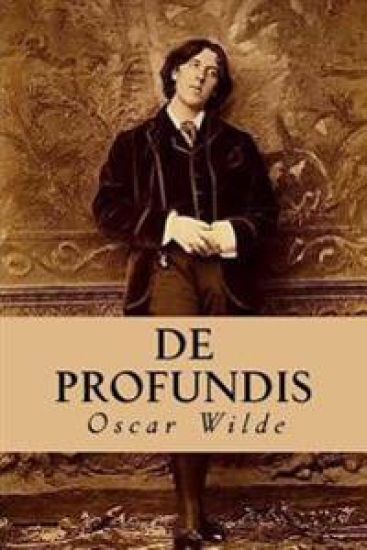
De Profundis (Latin: "from the depths") is a letter written by Oscar Wilde during his imprisonment in Reading Gaol, to "Bosie" (Lord Alfred Douglas). During its first half Wilde recounts their previous relationship and extravagant lifestyle which eventually led to Wilde's conviction and imprisonment for gross indecency. He indicts both Lord Alfred's vanity and his own weakness in acceding to those wishes. In the second half, Wilde charts his spiritual development in prison and identification with Jesus Christ, whom he characterises as a romantic, individualist artist. The letter began "Dear Bosie" and ended "Your Affectionate Friend". Wilde wrote the letter between January and March 1897, close to the end of his imprisonment. Contact had lapsed between Douglas and Wilde and the latter had suffered from his close supervision, physical labour and emotional isolation. Nelson, the new prison governor, thought that writing might be more cathartic than prison labour. He was not allowed to send the long letter which he was allowed to write "for medicinal purposes"; each page was taken away when completed, and only at the end could he read it over and make revisions. Nelson gave the long letter to him on his release on 18 May 1897. Wilde entrusted the manuscript to the journalist Robert Ross (an ex-lover, and rival to "Bosie"). Ross published the letter in 1905, five years after Wilde's death, giving it the title "De Profundis" from Psalm 130. It was an incomplete version, excised of its autobiographical elements and references to the Queensberry family; various editions gave more text until in 1962 the complete and correct version appeared in a volume of Wilde's letters.
The Happy Prince and Other Tales
Oscar Wilde
Createspace Independent Publishing Platform
2016
nidottu
The Happy Prince and Other Tales (sometimes called The Happy Prince and Other Stories) is a collection of stories for children by Oscar Wilde first published in May 1888. It contains five stories: "The Happy Prince", "The Nightingale and the Rose", "The Selfish Giant", "The Devoted Friend", and "The Remarkable Rocket".

Oscar Wilde Miscellaneous: La Sainte Courtisane & A Florentine Tragedy: Literature Classics
Oscar Wilde
Createspace Independent Publishing Platform
2016
nidottu
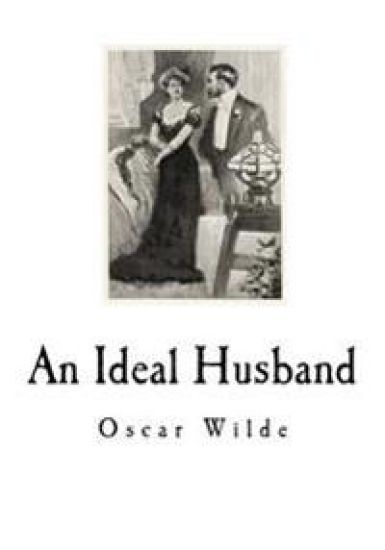
An Ideal Husband - A Play by Oscar Wilde - An Ideal Husband is an 1895 comedic stage play by Oscar Wilde which revolves around blackmail and political corruption, and touches on the themes of public and private honour. The action is set in London, in "the present", and takes place over the course of twenty-four hours. "Sooner or later," Wilde notes, "we shall all have to pay for what we do." But he adds that, "No one should be entirely judged by their past." Together with The Importance of Being Earnest, it is often considered Wilde's dramatic masterpiece. After Earnest, it is his most popularly produced play. The play opens during a dinner party at the home of Sir Robert Chiltern in London's fashionable Grosvenor Square. Sir Robert, a prestigious member of the House of Commons, and his wife, Lady Chiltern, are hosting a gathering that includes his friend Lord Goring, a dandified bachelor and close friend to the Chilterns, his sister Mabel Chiltern, and other genteel guests. During the party, Mrs. Cheveley, an enemy of Lady Chiltern's from their school days, attempts to blackmail Sir Robert into supporting a fraudulent scheme to build a canal in Argentina. Apparently, Mrs. Cheveley's dead mentor and lover, Baron Arnheim, convinced the young Sir Robert to sell him a Cabinet secret, a secret that suggested he buy stocks in the Suez Canal three days before the British government announced its purchase. Sir Robert made his fortune with that illicit money, and Mrs. Cheveley has the letter to prove his crime. Fearing the ruin of both career and marriage, Sir Robert submits to her demands. When Mrs. Cheveley pointedly informs Lady Chiltern of Sir Robert's change of heart regarding the canal scheme, the morally inflexible Lady Chiltern, unaware of both her husband's past and the blackmail plot, insists that Sir Robert renege on his promise. For Lady Chiltern, their marriage is predicated on her having an "ideal husband"
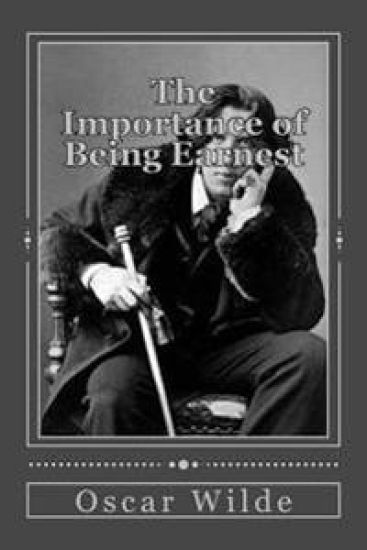
The Importance of Being Earnest: A Trivial Comedy for Serious People
Oscar Wilde
Createspace Independent Publishing Platform
2016
nidottu
The Importance of Being Earnest, A Trivial Comedy for Serious People is a play by Oscar Wilde. First performed on 14 February 1895 at the St James's Theatre in London, it is a farcical comedy in which the protagonists maintain fictitious person to escape burdensome social obligations. Working within the social conventions of late Victorian London, the play's major themes are the triviality with which it treats institutions as serious as marriage, and the resulting satire of Victorian ways. Contemporary reviews all praised the play's humour, though some were cautious about its explicit lack of social messages, while others foresaw the modern consensus that it was the culmination of Wilde's artistic career so far. Its high farce and witty dialogue have helped make The Importance of Being Earnest Wilde's most enduringly popular play.
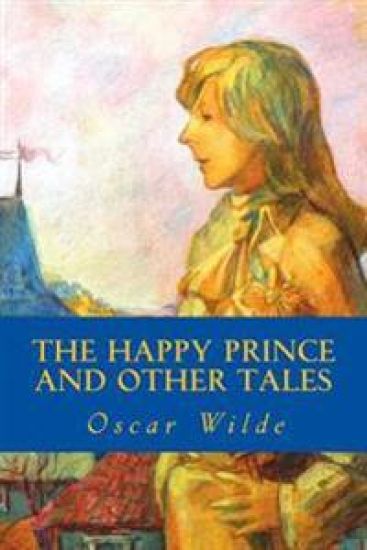
The Happy Prince and Other Tales
Oscar Wilde
Createspace Independent Publishing Platform
2016
nidottu
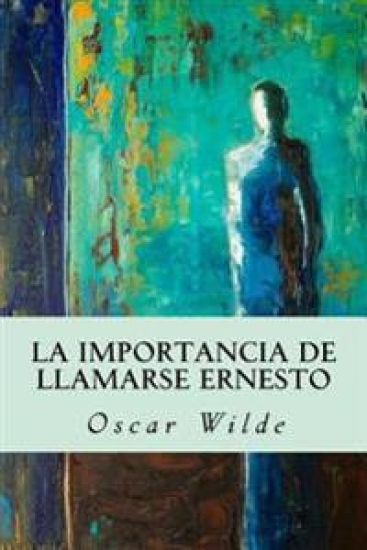
La importancia de llamarse Ernesto
Oscar Wilde
Createspace Independent Publishing Platform
2016
nidottu
Oscar Fingal O'Flahertie Wills Wilde fue un escritor, poeta y dramaturgo irland s.
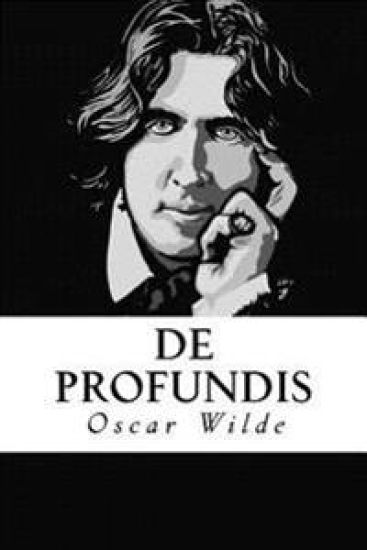
El De Profundis es la carta que escribi Oscar Wilde para Alfred Douglas -o Bosie- (en otros lados les pueden decir que era la carta a su amante y cosas por el estilo pero para m es la carta para el culpable de su ruina) desde la c rcel de Reading.