Kirjojen hintavertailu – 12 859 826 kirjaa ja 27 kauppaa
Kirjailija
Oscar Wilde
Kirjat ja teokset yhdessä paikassa: 2 744 kirjaa, julkaisuja vuosilta 1890–2026, suosituimpiin kuuluu Aforismeja. Vertaile teosten hintoja ja tarkista saatavuus suomalaisista kirjakaupoista.
The Importance of Being Earnest, A Trivial Comedy for Serious People is a play by Oscar Wilde. First performed on 14 February 1895 at the St James's Theatre in London, it is a farcical comedy in which the protagonists maintain fictitious person to escape burdensome social obligations. Working within the social conventions of late Victorian London, the play's major themes are the triviality with which it treats institutions as serious as marriage, and the resulting satire of Victorian ways. Contemporary reviews all praised the play's humour, though some were cautious about its explicit lack of social messages, while others foresaw the modern consensus that it was the culmination of Wilde's artistic career so far. Its high farce and witty dialogue have helped make The Importance of Being Earnest Wilde's most enduringly popular play. The successful opening night marked the climax of Wilde's career but also heralded his downfall. The Marquess of Queensberry, whose son Lord Alfred Douglas was Wilde's lover, planned to present the writer with a bouquet of rotten vegetables and disrupt the show. Wilde was tipped off and Queensberry was refused admission. Soon afterwards their feud came to a climax in court, where Wilde's homosexual double life was revealed to the Victorian public and he was eventually sentenced to imprisonment. His notoriety caused the play, despite its early success, to be closed after 86 performances. After his release, he published the play from exile in Paris, but he wrote no further comic or dramatic work.
Das Bildnis des Dorian Gray ist der einzige Roman des irischen Schriftstellers Oscar Wilde. Eine erste Fassung erschien 1890 in Lippincott's Monthly Magazine aus Philadelphia, 1891 wurde bei dem Londoner Verlag...
De Profundis una lunga lettera che Oscar Wilde scrisse, dopo essere stato processato per omosessualit , al suo compagno, Alfred Douglas, proprio durante il periodo della carcerazione.
"The Canterville Ghost" is a short story by Oscar Wilde, widely adapted for the screen and stage. It was the first of Wilde's stories to be published, appearing in two parts in The Court and Society Review, 23 February and 2 March 1887. 1] The story is about a family who moves to a castle haunted by the ghost of a dead nobleman, who killed his wife and was starved to death by his wife's brothers. The home of the Canterville Ghost was the ancient Canterville Chase, which has all the accoutrements of a traditional haunted house. Descriptions of the wainscoting, the library panelled in black oak, and the armour in the hallway characterise the setting. Wilde mixes the macabre with comedy, juxtaposing devices from traditional English ghost stories such as creaking floorboards, clanking chains, and ancient prophecies. The story begins when Mr Otis and family move into Canterville Chase, despite warnings from Lord Canterville that the house is haunted. Mr Otis says that he will take the furniture as well as the ghost at valuation. The Otis family includes Mr and Mrs Otis, their eldest son Washington, their daughter Virginia and the Otis twins. The other characters include the Canterville Ghost, the Duke of Cheshire (who wants to marry Virginia), Mrs Umney (the housekeeper), and Rev. Augustus Dampier. At first, none of the Otis family believe in ghosts, but shortly after they move in, none of them can deny the presence of Sir Simon de Canterville . The family hears clanking chains, they witness reappearing bloodstains "on the floor just by the fireplace", which are removed every time they appear in various forms. But, humorously, none of these scare the Otis family in the least. In fact, upon hearing the clanking noises in the hallway, Mr Otis promptly gets out of bed and pragmatically offers the ghost Tammany Rising Sun Lubricator to oil his chains.
De profundis es el t tulo de una ep stola escrita por Oscar Wilde en 1897. De profundis es la ep stola que Oscar Wilde escribi para su compa ero, Lord Alfred Douglas en la prisi n de Reading en marzo de 1897, dos meses antes de que cumpliera su sentencia, la cual fue impuesta por el delito de sodom a. Bella, emp tica, triste, conmovedora, irritante, reflexiva, espiritual... muchos adjetivos pueden definir esta obra, dependiendo del lector. Lo cierto es que, a pesar de la confrontaci n de diversos sentimientos, el autor redacta cada palabra de esta obra con esperanza; esperanza de recibir una respuesta, cualquiera que esta fuera, del principal responsable de su estancia en prisi n. La denuncia por sodom a fue presentada por el padre de Lord Alfred Douglas, el marqu s de Queensberry. En la ep stola, Wilde recuerda c mo el abogado del marqu s exhib a, como prueba, una carta que a os atr s l hab a dedicado a Bossie.3 Seg n Wilde, era un extravagante halago literario para un joven que le hab a dado a revisar un poema. Wilde afirma que la carta estar a dirigida a cualquier persona que estimara su consentimiento para la publicaci n de un escrito; no obstante, la sociedad inglesa no interpret as los versos del autor.
An Ideal Husband is an 1895 comedic stage play by Oscar Wilde which revolves around blackmail and political corruption, and touches on the themes of public and private honour. The action is set in London, in "the present", and takes place over the course of twenty-four hours. "Sooner or later," Wilde notes, "we shall all have to pay for what we do." But he adds that, "No one should be entirely judged by their past." Together with The Importance of Being Earnest, it is often considered Wilde's dramatic masterpiece. After Earnest, it is his most popularly produced play. In the summer of 1893, Oscar Wilde began writing An Ideal Husband, and he completed it later that winter. His work began at Goring-on-Thames, after which he named the character Lord Goring, and concluded at St. James Place. He initially sent the completed play to the Garrick Theatre, where the manager rejected it, but it was soon accepted by the Haymarket Theatre, where Lewis Waller had temporarily taken control. Waller was an excellent actor and cast himself as Sir Robert Chiltern. The play gave the Haymarket the success it desperately needed. After opening on 3 January 1895, it continued for 124 performances. In April of that year, Wilde was arrested for "gross indecency" and his name was publicly taken off the play. On 6 April, soon after Wilde's arrest, the play moved to the Criterion Theatre where it ran from 13-27 April. The play was published in 1899, although Wilde was not listed as the author. This published version differs slightly from the performed play, for Wilde added many passages and cut others. Prominent additions included written stage directions and character descriptions. Wilde was a leader in the effort to make plays accessible to the reading public.
Por si no saben de qu va el De Profundis deber a advertirles que quiz s no sea apto para que lo lea cualquiera. A no ser que tengan un esp ritu sumamente curioso y lo quieran leer porque s . El De Profundis es la carta que escribi Oscar Wilde para Alfred Douglas -o Bosie- (en otros lados les pueden decir que era la carta a su amante y cosas por el estilo pero para m es la carta para el culpable de su ruina) desde la c rcel de Reading. Como dije al principio, no veo que sea algo de inter s general, a n as acostumbran a publicar cartas de escritores reconocidos. Pero para alguien que, como yo, adora a Oscar Wilde y su obra, el De Profundis es imprescindible.
Le personnage principal de ce r cit, Lord Arthur Savile, est pr sent , l'occasion d'une soir e donn e par Lady Windermere, un chiromancien, Septimus R. Podgers.
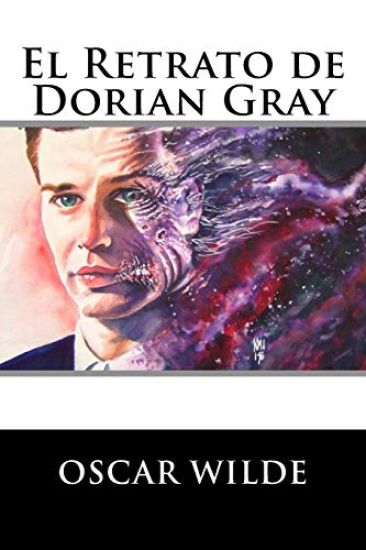
Dorian Gray est un jeune homme d'une tr s grande beaut . Son ami artiste peintre Basil Hallward est obs d par cette derni re et en tire toute son inspiration. Sa fascination pour le jeune homme le m ne faire son portrait, qui se r v le tre la plus belle oeuvre qu'il ait jamais peinte, et qu'il ne souhaite pas exposer: J'y ai mis trop de moi-m me .
En esta novela, Oscar Wilde (1854-1900) indaga sobre el mito de la eterna juventud, al recrear el tema de un pacto diab lico para conservar la belleza y permanecer eternamente joven. Un pintor queda fascinado por la extraordinaria hermosura de Dorian, su joven modelo, que vive en plena era victoriana satisfaciendo todos sus deseos, sin l mites ni prejuicios. El pintor declara que ser a dichoso si Dorian pudiese permanecer para siempre exactamente como es. Este deseo se traduce en un pacto que lleva a Dorian a cometer todo tipo de atrocidades, hasta llegar al crimen. A medida que se desarrolla la novela y que el protagonista se sumerge en el vicio en contraposici n con el desesperado anhelo de eterna juventud, se presiente un final terrible." Con frecuencia, al volver a su casa despu s de alguna de aquellas prolongadas y misteriosas ausencias que provocaran tan extra as conjeturas entre sus amigos -o que por tales se ten an- sub a a paso de lobo la escalera hasta la cerrada habitaci n, abr a la puerta con la llave que nunca le abandonaba, y all , en pie frente al retrato obra de Basil Hallward, con un espejo en la mano, miraba alternativamente el rostro perverso y envejecido del lienzo y la faz joven y hermosa que le sonre a desde el cristal. La misma violencia del contraste avivaba su deleite. Cada d a se sent a m s enamorado de su propia belleza, m s interesado en la corrupci n de su alma." El retrato de Dorian Gray es una extensa alegor a que sondea las profundidades del ser humano y cuya vigencia sorprende en cada nueva lectura de esta magistral obra.
The Importance of Being Earnest, A Trivial Comedy for Serious People is a play by Oscar Wilde. First performed on 14 February 1895 at the St James's Theatre in London, it is a farcical comedy in which the protagonists maintain fictitious person to escape burdensome social obligations. Working within the social conventions of late Victorian London, the play's major themes are the triviality with which it treats institutions as serious as marriage, and the resulting satire of Victorian ways. Contemporary reviews all praised the play's humour, though some were cautious about its explicit lack of social messages, while others foresaw the modern consensus that it was the culmination of Wilde's artistic career so far. Its high farce and witty dialogue have helped make The Importance of Being Earnest Wilde's most enduringly popular play.
This Side of Paradise is the debut novel by F. Scott Fitzgerald. Published in 1920 and taking its title from a line of Rupert Brooke's poem Tiare Tahiti, the book examines the lives and morality of post-World War I youth. Its protagonist, Amory Blaine, is an attractive Princeton University student who dabbles in literature. The novel explores the theme of love warped by greed and status seeking. *Plot summary* The book is written in three parts. "Book One: The Romantic Egotist"-The novel centers on Amory Blaine, a young Midwesterner who, convinced that he has an exceptionally promising future, attends boarding school and later Princeton University. He leaves behind his eccentric mother Beatrice and befriends a close friend of hers, Monsignor Darcy. While at Princeton he goes back to Minneapolis, where he re-encounters Isabelle Borg , a young lady whom he had met as a little boy, and starts a romantic relationship with her. At Princeton he repeatedly writes ever more flowery poems, but Amory and Isabelle become disenchanted with each after meeting again at his prom. "Interlude"-Following their break-up, Amory is shipped overseas, to serve in the army in World War I. (Fitzgerald had been in the army himself, but the war ended while he was still stationed on Long Island.) Amory's experiences in the war are not described, other than to say later in the book that he was a bayonet instructor "Book Two: The Education of a Personage"-After the war, Amory falls in love with a New York debutante named Rosalind Connage. Because he is poor, however, this relationship collapses as well; Rosalind decides to marry a wealthy man, instead. A devastated Amory is further crushed to learn that his mentor Monsignor Darcy has died. The book ends with Amory's iconic lament, "I know myself, but that is all". Francis Scott Key Fitzgerald (September 24, 1896 - December 21, 1940), known professionally as F. Scott Fitzgerald, was an American novelist and short story writer, whose works are the paradigmatic writings of the Jazz Age. Oscar Fingal O'Flahertie Wills Wilde (16 October 1854 - 30 November 1900) was an Irish playwright, novelist, essayist, and poet. After writing in different forms throughout the 1880s, he became one of London's most popular playwrights in the early 1890s. He is remembered for his epigrams, his novel The Picture of Dorian Gray, his plays, as well as the circumstances of his imprisonment and early death. Rupert Chawner Brooke (middle name sometimes given as "Chaucer";3 August 1887 - 23 April 1915) was an English poet known for his idealistic war sonnets written during the First World War, especially "The Soldier". He was also known for his boyish good looks, which were said to have prompted the Irish poet W. B. Yeats to describe him as "the handsomest young man in England".