Kirjojen hintavertailu – 12 859 819 kirjaa ja 27 kauppaa

Kirjailija

Ovid

Kirjat ja teokset yhdessä paikassa: 336 kirjaa, julkaisuja vuosilta 1914–2027, suosituimpiin kuuluu The Metamorphoses of Ovid. Vertaile teosten hintoja ja tarkista saatavuus suomalaisista kirjakaupoista.

Nimi esiintyy myös muodoissa: Ovid .

336 kirjaa

Kirjojen julkaisuvuodet: 1914–2027.

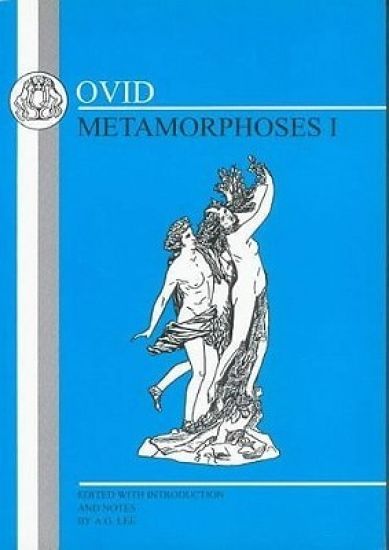
Ovid: Metamorphoses I

Ovid: Metamorphoses I

Ovid

Bristol Classical Press
1991
nidottu
The first book of Ovid's Metamorphoses contains an interesting variety of material. It begins with myths related to the creation of the world and man, decline from the golden age, the flood and the story of Deucalion and Pyrrha. In the second half it deals primarily with two main metamorphosis myths - Apollo's love for Daphne and the story of Io. Guy Lee's edition, first published by CUP in 1952, supplies a detailed commentary of explanatory notes (with useful index) and, separately, a number of critical notes on the readings adopted by his text. the substantial introduction deals with Ovid himself, with the Metamorphoses and Ovid's other works; there is also a practical section on the Ovidian hexameter and (as one might expect from an editor who is himself a consummate translator of Latin poetry) a sensitive section on translations of the Metamorphoses, in particular Golding, Sandys and Dryden.
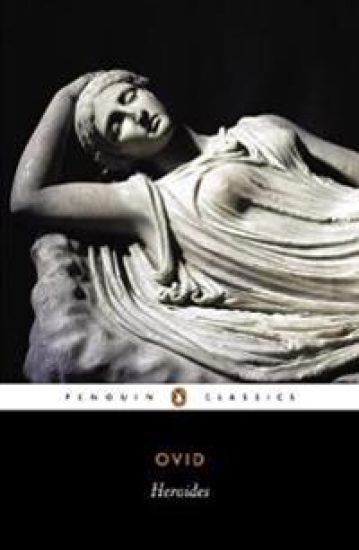
Heroides

Heroides

Ovid

Penguin Classics
1990
pokkari

Halvin toimitettuna 17,00 €

In the twenty-one poems of the Heroides, Ovid gave voice to the heroines and heroes of epic and myth. These deeply moving literary epistles reveal the happiness and torment of love, as the writers tell of their pain at separation, forgiveness of infidelity or anger at betrayal. The faithful Penelope wonders at the suspiciously long absence of Ulysses, while Dido bitterly reproaches Aeneas for too eagerly leaving her bed to follow his destiny, and Sappho - the only historical figure portrayed here - describes her passion for the cruelly rejecting Phaon. In the poetic letters between Paris and Helen the lovers seem oblivious to the tragedy prophesied for them, while in another exchange the youthful Leander asserts his foolhardy eagerness to risk his life to be with his beloved Hero.
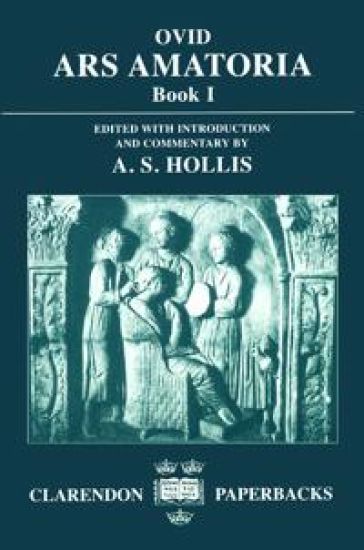
Ars Amatoria, Book I

Ars Amatoria, Book I

Ovid

Clarendon Press
1989
nidottu
Ovid's Ars Amatoria has met with astonishingly varied fortunes down the centuries. Ten years after publication the book became a reason, or more probably a pretext, for the author's banishment from Rome. It was removed from public libraries, and more recently the poem suffered a virtual embargo in schools and universities. This is the first detailed English commentary on any part of the poem. Examined afresh, it emerges as the wittiest of Ovid's love poems, turning upside down the attitudes and conventions of orthodox love elegy. The work is full of psychological insight and is richly embroidered with details of contemporary Roman social and political life. This new paperback edition intends to bring out the spirit of provocative frivolity which was undeniably meant to irritate Roman traditionalists. The text of Kenney's Oxford Classical Text is reproduced and supplemented with a full introduction to the style and historical background the poem, as well as with a full commentary and appendices.
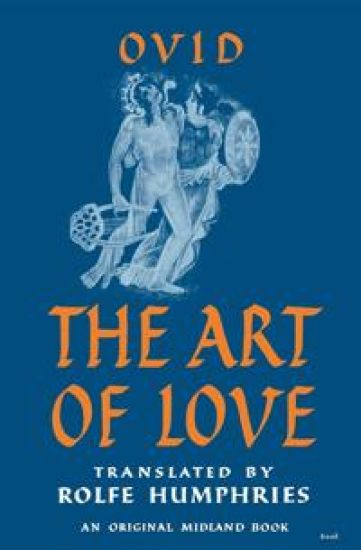
The Art of Love

The Art of Love

Ovid

Indiana University Press
1960
pokkari
" . . . Humphries has rendered (Ovid's) love poetry with conspicuous success into English which is neither obtrusively colloquial nor awkwardly antique." —Virginia Quarterly Review
Fasti

Fasti

Ovid

LOEB
1931
sidottu
The Roman book of days. Ovid (Publius Ovidius Naso, 43 BC–AD 17), born at Sulmo, studied rhetoric and law at Rome. Later he did considerable public service there, and otherwise devoted himself to poetry and to society. Famous at first, he offended the emperor Augustus by his Ars amatoria, and was banished because of this work and some other reason unknown to us, and dwelt in the cold and primitive town of Tomis on the Black Sea. He continued writing poetry, a kindly man, leading a temperate life. He died in exile. Ovid’s main surviving works are the Metamorphoses, a source of inspiration to artists and poets including Chaucer and Shakespeare; the Fasti, a poetic treatment of the Roman year of which Ovid finished only half; the Amores, love poems; the Ars amatoria, not moral but clever and in parts beautiful; Heroides, fictitious love letters by legendary women to absent husbands; and the dismal works written in exile: the Tristia, appeals to persons including his wife and also the emperor; and similar Epistulae ex Ponto. Poetry came naturally to Ovid, who at his best is lively, graphic and lucid. The Loeb Classical Library edition of Ovid is in six volumes.
Art of Love. Cosmetics. Remedies for Love. Ibis. Walnut-tree. Sea Fishing. Consolation
Seductive verse. Ovid (Publius Ovidius Naso, 43 BC–AD 17), born at Sulmo, studied rhetoric and law at Rome. Later he did considerable public service there, and otherwise devoted himself to poetry and to society. Famous at first, he offended the emperor Augustus by his Ars Amatoria, and was banished because of this work and some other reason unknown to us, and dwelt in the cold and primitive town of Tomis on the Black Sea. He continued writing poetry, a kindly man, leading a temperate life. He died in exile. Ovid’s main surviving works are the Metamorphoses, a source of inspiration to artists and poets including Chaucer and Shakespeare; the Fasti, a poetic treatment of the Roman year of which Ovid finished only half; the Amores, love poems; the Ars Amatoria, not moral but clever and in parts beautiful; Heroides, fictitious love letters by legendary women to absent husbands; and the dismal works written in exile: the Tristia, appeals to persons including his wife and also the emperor; and similar Epistulae ex Ponto. Poetry came naturally to Ovid, who at his best is lively, graphic and lucid. The Loeb Classical Library edition of Ovid is in six volumes.
Tristia. Ex Ponto
The poet in exile. Ovid (Publius Ovidius Naso, 43 BC–AD 17), born at Sulmo, studied rhetoric and law at Rome. Later he did considerable public service there, and otherwise devoted himself to poetry and to society. Famous at first, he offended the emperor Augustus by his Ars amatoria, and was banished because of this work and some other reason unknown to us, and dwelt in the cold and primitive town of Tomis on the Black Sea. He continued writing poetry, a kindly man, leading a temperate life. He died in exile. Ovid’s main surviving works are the Metamorphoses, a source of inspiration to artists and poets including Chaucer and Shakespeare; the Fasti, a poetic treatment of the Roman year of which Ovid finished only half; the Amores, love poems; the Ars amatoria, not moral but clever and in parts beautiful; Heroides, fictitious love letters by legendary women to absent husbands; and the dismal works written in exile: the Tristia, appeals to persons including his wife and also the emperor; and similar Epistulae ex Ponto. Poetry came naturally to Ovid, who at his best is lively, graphic and lucid. The Loeb Classical Library edition of Ovid is in six volumes.
Metamorphoses, Volume II

Metamorphoses, Volume II

Ovid

LOEB
1916
sidottu

Halvin toimitettuna 36,30 €

The poetry of change. Ovid (Publius Ovidius Naso, 43 BC–AD 17), born at Sulmo, studied rhetoric and law at Rome. Later he did considerable public service there, and otherwise devoted himself to poetry and to society. Famous at first, he offended the emperor Augustus by his Ars Amatoria, and was banished because of this work and some other reason unknown to us, and dwelt in the cold and primitive town of Tomis on the Black Sea. He continued writing poetry, a kindly man, leading a temperate life. He died in exile. Ovid's main surviving works are the Metamorphoses, a source of inspiration to artists and poets including Chaucer and Shakespeare; the Fasti, a poetic treatment of the Roman year of which Ovid finished only half; the Amores, love poems; the Ars Amatoria, not moral but clever and in parts beautiful; Heroides, fictitious love letters by legendary women to absent husbands; and the dismal works written in exile: the Tristia, appeals to persons including his wife and also the emperor; and similar Epistulae ex Ponto. Poetry came naturally to Ovid, who at his best is lively, graphic and lucid. The Loeb Classical Library edition of Ovid is in six volumes.
Metamorphoses, Volume I

Metamorphoses, Volume I

Ovid

LOEB
1916
sidottu

Halvin toimitettuna 36,30 €

The poetry of change. Ovid (Publius Ovidius Naso, 43 BC–AD 17), born at Sulmo, studied rhetoric and law at Rome. Later he did considerable public service there, and otherwise devoted himself to poetry and to society. Famous at first, he offended the emperor Augustus by his Ars Amatoria, and was banished because of this work and some other reason unknown to us, and dwelt in the cold and primitive town of Tomis on the Black Sea. He continued writing poetry, a kindly man, leading a temperate life. He died in exile. Ovid's main surviving works are the Metamorphoses, a source of inspiration to artists and poets including Chaucer and Shakespeare; the Fasti, a poetic treatment of the Roman year of which Ovid finished only half; the Amores, love poems; the Ars Amatoria, not moral but clever and in parts beautiful; Heroides, fictitious love letters by legendary women to absent husbands; and the dismal works written in exile: the Tristia, appeals to persons including his wife and also the emperor; and similar Epistulae ex Ponto. Poetry came naturally to Ovid, who at his best is lively, graphic and lucid. The Loeb Classical Library edition of Ovid is in six volumes.
Heroides. Amores
Two early works by the consummate Latin love poet. Ovid (Publius Ovidius Naso, 43 BC–AD 17), born at Sulmo, studied rhetoric and law at Rome. Later he did considerable public service there, and otherwise devoted himself to poetry and to society. Famous at first, he offended the emperor Augustus by his Ars Amatoria, and was banished because of this work and some other reason unknown to us, and dwelt in the cold and primitive town of Tomis on the Black Sea. He continued writing poetry, a kindly man, leading a temperate life. He died in exile. Ovid's main surviving works are the Metamorphoses, a source of inspiration to artists and poets including Chaucer and Shakespeare; the Fasti, a poetic treatment of the Roman year of which Ovid finished only half; the Amores, love poems; the Ars Amatoria, not moral but clever and in parts beautiful; Heroides, fictitious love letters by legendary women to absent husbands; and the dismal works written in exile: the Tristia, appeals to persons including his wife and also the emperor; and similar Epistulae ex Ponto. Poetry came naturally to Ovid, who at his best is lively, graphic and lucid. The Loeb Classical Library edition of Ovid is in six volumes.