Kirjojen hintavertailu – 12 859 828 kirjaa ja 27 kauppaa

Kirjailija

Partha Chatterjee

Kirjat ja teokset yhdessä paikassa: 32 kirjaa, julkaisuja vuosilta 1993–2026, suosituimpiin kuuluu For a Just Republic. Vertaile teosten hintoja ja tarkista saatavuus suomalaisista kirjakaupoista.

32 kirjaa

Kirjojen julkaisuvuodet: 1993–2026.

For a Just Republic

For a Just Republic

Partha Chatterjee

Columbia University Press
2026
pokkari
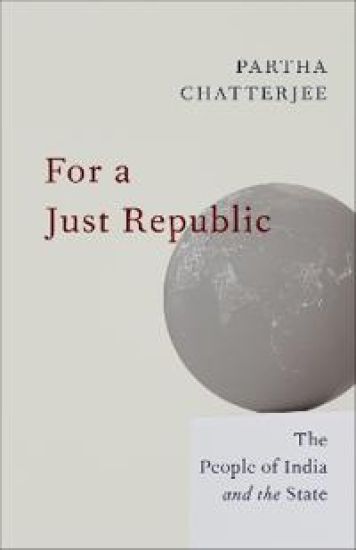
From the forging of a constitution for the postindependence republic to the reign of Narendra Modi’s Bharatiya Janata Party today, the idea of India as a nation-state has predominated. Yet the country encompasses a vast diversity of communities, regions, languages, and cultures, calling into question any unitary identity. In this magisterial account of Indian politics over the past seventy-five years, the renowned scholar Partha Chatterjee challenges common notions of “state” and “nation,” arguing for a more capacious understanding of “the people.” He examines the varying trajectories of the Indian nation-state, as opposed to what he calls the “people-nation,” analyzing the complex connections between the two. Chatterjee offers a persuasive political-economic analysis of the transition from the time of developmental planning to the present era of capitalist dominance. He combines keen analysis of changing caste-class-gender formations in the country’s diverse regions with a close examination of the uneven spread of India’s capitalist economy. By looking beyond the nation-state, this book unveils many hidden aspects of Indian politics today—and makes a powerful case for a future in which the federal system respects the equal worth of each part of the country.
For a Just Republic

For a Just Republic

Partha Chatterjee

Columbia University Press
2026
sidottu
From the forging of a constitution for the postindependence republic to the reign of Narendra Modi’s Bharatiya Janata Party today, the idea of India as a nation-state has predominated. Yet the country encompasses a vast diversity of communities, regions, languages, and cultures, calling into question any unitary identity. In this magisterial account of Indian politics over the past seventy-five years, the renowned scholar Partha Chatterjee challenges common notions of “state” and “nation,” arguing for a more capacious understanding of “the people.” He examines the varying trajectories of the Indian nation-state, as opposed to what he calls the “people-nation,” analyzing the complex connections between the two. Chatterjee offers a persuasive political-economic analysis of the transition from the time of developmental planning to the present era of capitalist dominance. He combines keen analysis of changing caste-class-gender formations in the country’s diverse regions with a close examination of the uneven spread of India’s capitalist economy. By looking beyond the nation-state, this book unveils many hidden aspects of Indian politics today—and makes a powerful case for a future in which the federal system respects the equal worth of each part of the country.
I Am the People

I Am the People

Partha Chatterjee

Columbia University Press
2019
pokkari
The forms of liberal government that emerged after World War II are in the midst of a profound crisis. In I Am the People, Partha Chatterjee reconsiders the concept of popular sovereignty in order to explain today’s dramatic outburst of movements claiming to speak for “the people.” To uncover the roots of populism, Chatterjee traces the twentieth-century trajectory of the welfare state and neoliberal reforms. Mobilizing ideals of popular sovereignty and the emotional appeal of nationalism, anticolonial movements ushered in a world of nation-states while liberal democracies in Europe guaranteed social rights to their citizens. But as neoliberal techniques shrank the scope of government, politics gave way to technical administration by experts. Once the state could no longer claim an emotional bond with the people, the ruling bloc lost the consent of the governed. To fill the void, a proliferation of populist leaders have mobilized disaffected groups into a battle that they define as the authentic people against entrenched oligarchy. Once politics enters a spiral of competitive populism, Chatterjee cautions, there is no easy return to pristine liberalism. Only a counter-hegemonic social force that challenges global capital and facilitates the equal participation of all peoples in democratic governance can achieve significant transformation. Drawing on thinkers such as Antonio Gramsci, Michel Foucault, and Ernesto Laclau and with a particular focus on the history of populism in India, I Am the People is a sweeping, theoretically rich account of the origins of today’s tempests.
I Am the People

I Am the People

Partha Chatterjee

Columbia University Press
2019
sidottu
The forms of liberal government that emerged after World War II are in the midst of a profound crisis. In I Am the People, Partha Chatterjee reconsiders the concept of popular sovereignty in order to explain today’s dramatic outburst of movements claiming to speak for “the people.” To uncover the roots of populism, Chatterjee traces the twentieth-century trajectory of the welfare state and neoliberal reforms. Mobilizing ideals of popular sovereignty and the emotional appeal of nationalism, anticolonial movements ushered in a world of nation-states while liberal democracies in Europe guaranteed social rights to their citizens. But as neoliberal techniques shrank the scope of government, politics gave way to technical administration by experts. Once the state could no longer claim an emotional bond with the people, the ruling bloc lost the consent of the governed. To fill the void, a proliferation of populist leaders have mobilized disaffected groups into a battle that they define as the authentic people against entrenched oligarchy. Once politics enters a spiral of competitive populism, Chatterjee cautions, there is no easy return to pristine liberalism. Only a counter-hegemonic social force that challenges global capital and facilitates the equal participation of all peoples in democratic governance can achieve significant transformation. Drawing on thinkers such as Antonio Gramsci, Michel Foucault, and Ernesto Laclau and with a particular focus on the history of populism in India, I Am the People is a sweeping, theoretically rich account of the origins of today’s tempests.
Through my looking glass: Close Encounters of a personal kind
"Partha never worked behind a desk and from 9 to 5. He started his career in the exotic tea gardens of Northeast India and continued his career in luxury hotels around the country. During his life's journey, he met various interesting people, and he has been in unique situations. These stories make up this beautiful collection. There are celebrated movies and books on the people he encountered like Dr. John Nash covered in the film A Beautiful Mind, female war correspondents reflected in the movie Private War and his association with JRD Tata and Russi Mody, The story of Billy Arjan Singh and Billy's association with the film Born Free, Partha's own experiences during The Sikh Riots and his travels through Zululand are just some of the stories. This is an anthology of a person's experiences who knows how to spin a tale."
Britain in India, 1765-1905, Volume III

Britain in India, 1765-1905, Volume III

John Marriott; Bhaskar Mukhopadhyay; Partha Chatterjee

Routledge
2016
nidottu
Seeks to explore the nature of the relationship between Britain and India at the height of imperial expansion. This collection is of interest among academic communities exploring British and Indian history. It is useful for literary, cultural and urban historians working in this area.
Britain in India, 1765-1905, Volume I

Britain in India, 1765-1905, Volume I

John Marriott; Bhaskar Mukhopadhyay; Partha Chatterjee

Routledge
2016
nidottu
Seeks to explore the nature of the relationship between Britain and India at the height of imperial expansion. This collection is of interest among academic communities exploring British and Indian history. It is useful for literary, cultural and urban historians working in this area.
Britain in India, 1765-1905, Volume V

Britain in India, 1765-1905, Volume V

John Marriott; Bhaskar Mukhopadhyay; Partha Chatterjee

Routledge
2016
nidottu
Seeks to explore the nature of the relationship between Britain and India at the height of imperial expansion. This collection is of interest among academic communities exploring British and Indian history. It is useful for literary, cultural and urban historians working in this area.
Britain in India, 1765-1905, Volume II

Britain in India, 1765-1905, Volume II

John Marriott; Bhaskar Mukhopadhyay; Partha Chatterjee

Routledge
2016
nidottu
Seeks to explore the nature of the relationship between Britain and India at the height of imperial expansion. This collection is of interest among academic communities exploring British and Indian history. It is useful for literary, cultural and urban historians working in this area.
Britain in India, 1765-1905, Volume VI

Britain in India, 1765-1905, Volume VI

John Marriott; Bhaskar Mukhopadhyay; Partha Chatterjee

Routledge
2016
nidottu
Seeks to explore the nature of the relationship between Britain and India at the height of imperial expansion. This collection is of interest among academic communities exploring British and Indian history. It is useful for literary, cultural and urban historians working in this area.
The Black Hole of Empire

The Black Hole of Empire

Partha Chatterjee

Princeton University Press
2012
pokkari
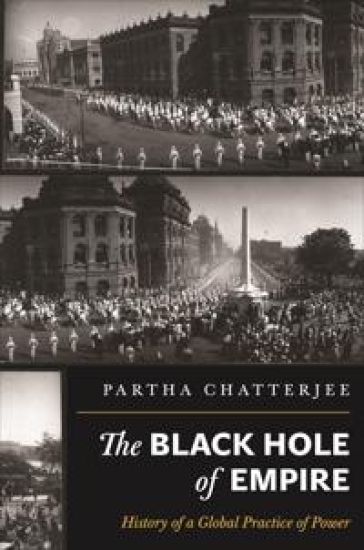
When Siraj, the ruler of Bengal, overran the British settlement of Calcutta in 1756, he allegedly jailed 146 European prisoners overnight in a cramped prison. Of the group, 123 died of suffocation. While this episode was never independently confirmed, the story of "the black hole of Calcutta" was widely circulated and seen by the British public as an atrocity committed by savage colonial subjects. The Black Hole of Empire follows the ever-changing representations of this historical event and founding myth of the British Empire in India, from the eighteenth century to the present. Partha Chatterjee explores how a supposed tragedy paved the ideological foundations for the "civilizing" force of British imperial rule and territorial control in India. Chatterjee takes a close look at the justifications of modern empire by liberal thinkers, international lawyers, and conservative traditionalists, and examines the intellectual and political responses of the colonized, including those of Bengali nationalists. The two sides of empire's entwined history are brought together in the story of the Black Hole memorial: set up in Calcutta in 1760, demolished in 1821, restored by Lord Curzon in 1902, and removed in 1940 to a neglected churchyard. Challenging conventional truisms of imperial history, nationalist scholarship, and liberal visions of globalization, Chatterjee argues that empire is a necessary and continuing part of the history of the modern state.
Lineages of Political Society

Lineages of Political Society

Partha Chatterjee

Columbia University Press
2011
sidottu
Partha Chatterjee, a pioneering theorist known for his disciplinary range, builds on his theory of "political society" and reinforces its salience to contemporary political debate. Dexterously incorporating the concerns of South Asian studies, postcolonialism, the social sciences, and the humanities, Chatterjee broadly critiques the past three hundred years of western political theory to ask, Can democracy be brought into being, or even fought for, in the image of Western democracy as it exists today? Using the example of postcolonial societies and their political evolution, particularly communities within India, Chatterjee undermines the certainty of liberal democratic theory in favor of a realist view of its achievements and limitations. Rather than push an alternative theory, Chatterjee works solely within the realm of critique, proving political difference is not always evidence of philosophical and cultural backwardness outside of the West. Resisting all prejudices and preformed judgments, he deploys his trademark, genre-bending, provocative analysis to upend the assumptions of postcolonial studies, comparative history, and the common claims of contemporary politics.
Lineages of Political Society

Lineages of Political Society

Partha Chatterjee

Columbia University Press
2011
pokkari
Partha Chatterjee, a pioneering theorist known for his disciplinary range, builds on his theory of "political society" and reinforces its salience to contemporary political debate. Dexterously incorporating the concerns of South Asian studies, postcolonialism, the social sciences, and the humanities, Chatterjee broadly critiques the past three hundred years of western political theory to ask, Can democracy be brought into being, or even fought for, in the image of Western democracy as it exists today? Using the example of postcolonial societies and their political evolution, particularly communities within India, Chatterjee undermines the certainty of liberal democratic theory in favor of a realist view of its achievements and limitations. Rather than push an alternative theory, Chatterjee works solely within the realm of critique, proving political difference is not always evidence of philosophical and cultural backwardness outside of the West. Resisting all prejudices and preformed judgments, he deploys his trademark, genre-bending, provocative analysis to upend the assumptions of postcolonial studies, comparative history, and the common claims of contemporary politics.
Empire and Nation

Empire and Nation

Partha Chatterjee

Columbia University Press
2010
pokkari
Partha Chatterjee is one of the world's greatest living theorists on the political, cultural, and intellectual history of nationalism. Beginning in the 1980s, his work, particularly within the context of India, has served as the foundation for subaltern studies, an area of scholarship he continues to develop. In this collection, English-speaking readers are finally able to experience the breadth and substance of Chatterjee's wide-ranging thought. His provocative essays examine the phenomenon of postcolonial democracy and establish the parameters for research in subaltern politics. They include an early engagement with agrarian politics and Chatterjee's brilliant book reviews and journalism. Selections include one never-before-published essay, "A Tribute to the Master," which considers through a mock retelling of an episode from the classic Sanskrit epic, The Mahabharata, a deep dilemma in the study of postcolonial history, and several Bengali essays, now translated into English for the first time. An introduction by Nivedita Menon adds necessary context and depth, critiquing Chatterjee's ideas and their influence on contemporary political thought.
Empire and Nation

Empire and Nation

Partha Chatterjee

Columbia University Press
2010
sidottu
Partha Chatterjee is one of the world's greatest living theorists on the political, cultural, and intellectual history of nationalism. Beginning in the 1980s, his work, particularly within the context of India, has served as the foundation for subaltern studies, an area of scholarship he continues to develop. In this collection, English-speaking readers are finally able to experience the breadth and substance of Chatterjee's wide-ranging thought. His provocative essays examine the phenomenon of postcolonial democracy and establish the parameters for research in subaltern politics. They include an early engagement with agrarian politics and Chatterjee's brilliant book reviews and journalism. Selections include one never-before-published essay, "A Tribute to the Master," which considers through a mock retelling of an episode from the classic Sanskrit epic, The Mahabharata, a deep dilemma in the study of postcolonial history, and several Bengali essays, now translated into English for the first time. An introduction by Nivedita Menon adds necessary context and depth, critiquing Chatterjee's ideas and their influence on contemporary political thought.
Little Clay Cart

Little Clay Cart

Partha Chatterjee

New York University Press
2009
sidottu
The "Little Clay Cart" is, for Sanskrit theatre, atypically romantic, funny, and thrilling. This most human of Sanskrit plays is Shakespearian in its skilful drawing of characters and in the plot's direct clarity. One of the earliest Sanskrit dramas, "Little Clay Cart" was created in South India, perhaps in the seventh century CE. Set in the city of Ujjain, so secular and universal is the story that it can be situated in any society, and it has, including in Bollywood film and by the BBC. Charu•datta, a bankrupt married merchant, is extramaritally involved with a wealthy courtesan, Vasánta•sena. The king's vile brother-in-law, unable to win Vasánta•sena's love, strangles her, and accuses Charu•datta. The court decides the case hastily, condemning Charu•datta to death. Fortunately, our heroine rises from the dead to save her beloved, and all applaud their love. At this climax, the regime changes, and the rebel-turned-king makes Charu•datta lord of an adjacent city.
The Politics of the Governed

The Politics of the Governed

Partha Chatterjee

Columbia University Press
2006
pokkari
Often dismissed as the rumblings of "the street," popular politics is where political modernity is being formed today, according to Partha Chatterjee. The rise of mass politics all over the world in the twentieth century led to the development of new techniques of governing population groups. On the one hand, the idea of popular sovereignty has gained wide acceptance. On the other hand, the proliferation of security and welfare technologies has created modern governmental bodies that administer populations, but do not provide citizens with an arena for democratic deliberation. Under these conditions, democracy is no longer government of, by, and for the people. Rather, it has become a world of power whose startling dimensions and unwritten rules of engagement Chatterjee provocatively lays bare. This book argues that the rise of ethnic or identity politics-particularly in the postcolonial world-is a consequence of new techniques of governmental administration. Using contemporary examples from India, the book examines the different forms taken by the politics of the governed. Many of these operate outside of the traditionally defined arena of civil society and the formal legal institutions of the state. This book considers the global conditions within which such local forms of popular politics have appeared and shows us how both community and global society have been transformed. Chatterjee's analysis explores the strategic as well as the ethical dimensions of the new democratic politics of rights, claims, and entitlements of population groups and permits a new understanding of the dynamics of world politics both before and after the events of September 11, 2001. The Politics of the Governed consists of three essays, originally given as the Leonard Hastings Schoff Lectures at Columbia University in November 2001, and four additional essays that complement and extend the analyses presented there. By combining these essays between the covers of a single volume, Chatterjee has given us a major and urgent work that provides a full perspective on the possibilities and limits of democracy in the postcolonial world.
Britain in India, 1765-1905, Volume V

Britain in India, 1765-1905, Volume V

John Marriott; Bhaskar Mukhopadhyay; Partha Chatterjee

Routledge
2006
sidottu
Seeks to explore the nature of the relationship between Britain and India at the height of imperial expansion. This collection is of interest among academic communities exploring British and Indian history. It is useful for literary, cultural and urban historians working in this area.