Kirjojen hintavertailu – 12 859 818 kirjaa ja 27 kauppaa

Kirjailija

Pat Thomson

Kirjat ja teokset yhdessä paikassa: 41 kirjaa, julkaisuja vuosilta 1993–2026, suosituimpiin kuuluu Managing Your Research Project. Vertaile teosten hintoja ja tarkista saatavuus suomalaisista kirjakaupoista.

41 kirjaa

Kirjojen julkaisuvuodet: 1993–2026.

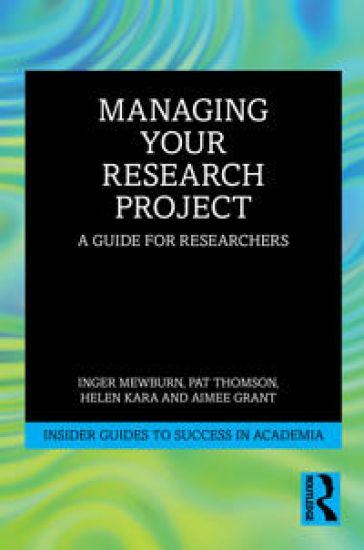
Managing Your Research Project

Managing Your Research Project

Inger Mewburn; Pat Thomson; Helen Kara; Aimee Grant

TAYLOR FRANCIS LTD
2026
nidottu
Managing Your Research Project is a practical and accessible guide that will help researchers navigate the complexities of project management. This user-friendly resource offers valuable insights and tools for funded, commissioned, unfunded, and student research in academic settings. Instead of advocating for a single project management approach, the book provides a variety of options, empowering readers to develop a style that works best for them. Each chapter is packed with practical tools and examples, offering easy-to-follow guidance on how to keep a project moving forward. Key topics include selecting the right project management approach, utilising effective tools, addressing ethical considerations, and managing critical aspects such as time, relationships, finances, bureaucracy, visibility, and quality assurance. While project management can be demanding, this book shows readers how to approach it so that it can be a satisfying, collaborative, rewarding experience. Along the way, the authors address the potential challenges and pitfalls of managing research projects and offer strategies to overcome them. This essential guide equips researchers with the knowledge and strategies they need to manage their projects efficiently and effectively. ‘Insider Guides to Success in Academia’ offers support and practical advice to doctoral students and early-career researchers. Covering the topics that really matter, but which often get overlooked, this indispensable series provides practical and realistic guidance to address many of the needs and challenges of trying to operate, and remain, in academia. These neat pocket guides fill specific and significant gaps in current literature. Each book offers insider perspectives on the often-implicit rules of the game – the things you need to know but usually aren’t told by institutional postgraduate support, researcher development units, or supervisors – and will address a practical topic that is key to career progression. They are essential reading for doctoral students, early-career researchers, supervisors, mentors, or anyone looking to launch or maintain their career in academia.
Managing Your Research Project

Managing Your Research Project

Inger Mewburn; Pat Thomson; Helen Kara; Aimee Grant

TAYLOR FRANCIS LTD
2026
sidottu
Managing Your Research Project is a practical and accessible guide that will help researchers navigate the complexities of project management. This user-friendly resource offers valuable insights and tools for funded, commissioned, unfunded, and student research in academic settings. Instead of advocating for a single project management approach, the book provides a variety of options, empowering readers to develop a style that works best for them. Each chapter is packed with practical tools and examples, offering easy-to-follow guidance on how to keep a project moving forward. Key topics include selecting the right project management approach, utilising effective tools, addressing ethical considerations, and managing critical aspects such as time, relationships, finances, bureaucracy, visibility, and quality assurance. While project management can be demanding, this book shows readers how to approach it so that it can be a satisfying, collaborative, rewarding experience. Along the way, the authors address the potential challenges and pitfalls of managing research projects and offer strategies to overcome them. This essential guide equips researchers with the knowledge and strategies they need to manage their projects efficiently and effectively. ‘Insider Guides to Success in Academia’ offers support and practical advice to doctoral students and early-career researchers. Covering the topics that really matter, but which often get overlooked, this indispensable series provides practical and realistic guidance to address many of the needs and challenges of trying to operate, and remain, in academia. These neat pocket guides fill specific and significant gaps in current literature. Each book offers insider perspectives on the often-implicit rules of the game – the things you need to know but usually aren’t told by institutional postgraduate support, researcher development units, or supervisors – and will address a practical topic that is key to career progression. They are essential reading for doctoral students, early-career researchers, supervisors, mentors, or anyone looking to launch or maintain their career in academia.
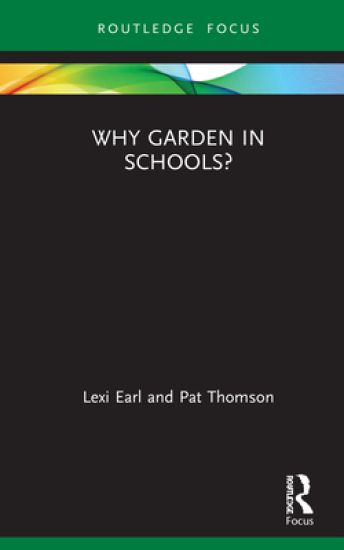
Why Garden in Schools?

Why Garden in Schools?

Lexi Earl; Pat Thomson

TAYLOR FRANCIS LTD
2023
nidottu
This book delves into the complex history of the gardening movement in schools and examines the question why gardens should be built in schools. It offers practical guidance for teachers to begin thinking about how to approach educational gardening. A resurgence of interest in school gardens is linked to concerns about children’s health, food knowledge, lack of outdoor play and contact with the natural world. This book warns against simplistic one-best approaches and makes a case about the complexity of gardening in schools. It is the first critical attempt to address the complex and conflicting notions about school gardens and to tackle the question ‘what is the problem to which school gardens are the answer?’ Examining the educational theory in which gardening has been explained and advocated, the book explores the way contemporary gardens research has been conducted with specific questions such as ‘what works well in school gardens?’ Based on case studies of a school establishing a garden and another one maintaining a garden, chapters look at the way in which schools come to frame their gardens. The authors suggest that there are four issues to consider when setting up a school garden or evaluating a pre-existing one – wider social context, public policy, the whole school, and the formal and informal curriculum. The book ends with a call for consideration of the ways in which school gardens can be built, the myriad practices that constitute an educational garden space and the challenges of maintaining a school garden over the long term. It will be of interest to teachers in primary schools, as well as a key point of reference for scholars, academics and students researching school gardens.
Schools and Cultural Citizenship

Schools and Cultural Citizenship

Pat Thomson; Christine Hall

TAYLOR FRANCIS LTD
2023
nidottu
‘Why study the arts at school?’ This book offers a fresh perspective on this question. Informed by rigorous research, the book argues that the arts help young people to develop key skills, knowledge and practices that support them to become both critical appreciative audiences and socially engaged cultural producers. Drawing on a three-year study in partnership with the Royal Shakespeare Company and Tate art museum, Schools and Cultural Citizenship sets out an ecological model for cultural citizenship that goes beyond the classroom to include families, the media and popular culture. The authors introduce new, interrelated concepts to change how we consider arts education. Chapters provide fresh insights, guidance and practical recommendations for educators, including:An introduction to the Tracking Arts Learning and Engagement researchDetailed case studies featuring arts-rich schools and arts-broker teachersAnalysis of the importance of immersive professional development for teachers and the benefits of partnerships with arts organisationsAn ecological model for cultural citizenshipFocusing on the ways in which cultural citizenship can be taught and learnt, this is an essential read for arts educators, education staff in arts organisations, researchers, postgraduate students, arts education activists and policy makers.
Schools and Cultural Citizenship

Schools and Cultural Citizenship

Pat Thomson; Christine Hall

TAYLOR FRANCIS LTD
2023
sidottu
‘Why study the arts at school?’ This book offers a fresh perspective on this question. Informed by rigorous research, the book argues that the arts help young people to develop key skills, knowledge and practices that support them to become both critical appreciative audiences and socially engaged cultural producers. Drawing on a three-year study in partnership with the Royal Shakespeare Company and Tate art museum, Schools and Cultural Citizenship sets out an ecological model for cultural citizenship that goes beyond the classroom to include families, the media and popular culture. The authors introduce new, interrelated concepts to change how we consider arts education. Chapters provide fresh insights, guidance and practical recommendations for educators, including:An introduction to the Tracking Arts Learning and Engagement researchDetailed case studies featuring arts-rich schools and arts-broker teachersAnalysis of the importance of immersive professional development for teachers and the benefits of partnerships with arts organisationsAn ecological model for cultural citizenshipFocusing on the ways in which cultural citizenship can be taught and learnt, this is an essential read for arts educators, education staff in arts organisations, researchers, postgraduate students, arts education activists and policy makers.
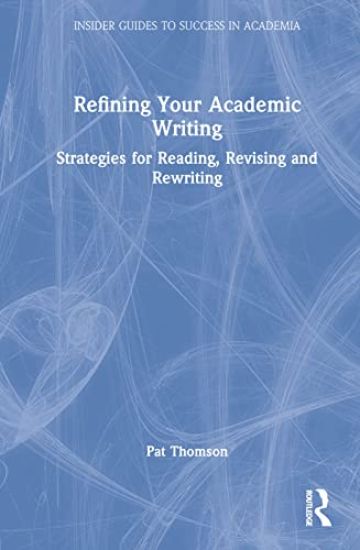
Refining Your Academic Writing

Refining Your Academic Writing

Pat Thomson

TAYLOR FRANCIS LTD
2022
sidottu
Revision is often taken as a largely instrumental process which happens after the real work of writing is done – it is an unavoidable and tedious process. Refining by contrast is imaginative work, it requires craft, connoisseurship and courage, and builds knowledge about academic writing purposes and practices. Refining Your Academic Writing will help you complete your writing project and provides a reading, revising and rewriting repertoire that you can adapt and add to. It offers ways to think about revision and a basic tool kit which will help you to identify what needs your attention and why. This accessible book draws on and extends some of the most heavily used posts on Thomson’s popular academic writing blog Patter, as well as tried and tested writing workshops. Exercises and templates are grounded in research and theory on doctoral experience and academic writing. The wider context of academic writing is clearly explained, and the terms used to describe text refinement build understanding while challenging taken-for-granted assumptions about revision, editing and proof-reading. Written with a light touch, this book is ideal reading for doctoral and early career researchers, and provides strategies needed to support the writing revision process. The ‘Insider Guides to Success in Academia’ offers support and practical advice to doctoral students and early-career researchers. Covering the topics that really matter, but which often get overlooked, this indispensable series provides practical and realistic guidance to address many of the needs and challenges of trying to operate, and remain, in academia. These neat pocket guides fill specific and significant gaps in current literature. Each book offers insider perspectives on the often implicit rules of the game – the things you need to know but usually aren’t told by institutional postgraduate support, researcher development units, or supervisors – and will address a practical topic that is key to career progression. They are essential reading for doctoral students, early-career researchers, supervisors, mentors, or anyone looking to launch or maintain their career in academia.
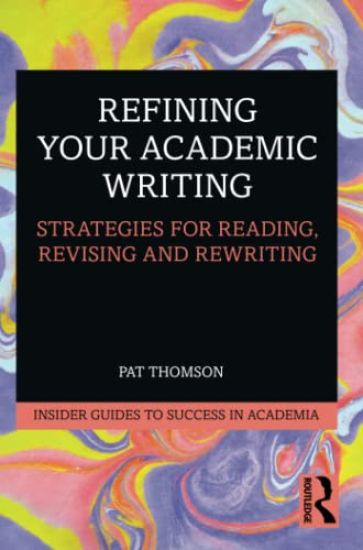
Refining Your Academic Writing

Refining Your Academic Writing

Pat Thomson

TAYLOR FRANCIS LTD
2022
nidottu

Halvin toimitettuna 29,70 €

Revision is often taken as a largely instrumental process which happens after the real work of writing is done – it is an unavoidable and tedious process. Refining by contrast is imaginative work, it requires craft, connoisseurship and courage, and builds knowledge about academic writing purposes and practices. Refining Your Academic Writing will help you complete your writing project and provides a reading, revising and rewriting repertoire that you can adapt and add to. It offers ways to think about revision and a basic tool kit which will help you to identify what needs your attention and why. This accessible book draws on and extends some of the most heavily used posts on Thomson’s popular academic writing blog Patter, as well as tried and tested writing workshops. Exercises and templates are grounded in research and theory on doctoral experience and academic writing. The wider context of academic writing is clearly explained, and the terms used to describe text refinement build understanding while challenging taken-for-granted assumptions about revision, editing and proof-reading. Written with a light touch, this book is ideal reading for doctoral and early career researchers, and provides strategies needed to support the writing revision process. The ‘Insider Guides to Success in Academia’ offers support and practical advice to doctoral students and early-career researchers. Covering the topics that really matter, but which often get overlooked, this indispensable series provides practical and realistic guidance to address many of the needs and challenges of trying to operate, and remain, in academia. These neat pocket guides fill specific and significant gaps in current literature. Each book offers insider perspectives on the often implicit rules of the game – the things you need to know but usually aren’t told by institutional postgraduate support, researcher development units, or supervisors – and will address a practical topic that is key to career progression. They are essential reading for doctoral students, early-career researchers, supervisors, mentors, or anyone looking to launch or maintain their career in academia.
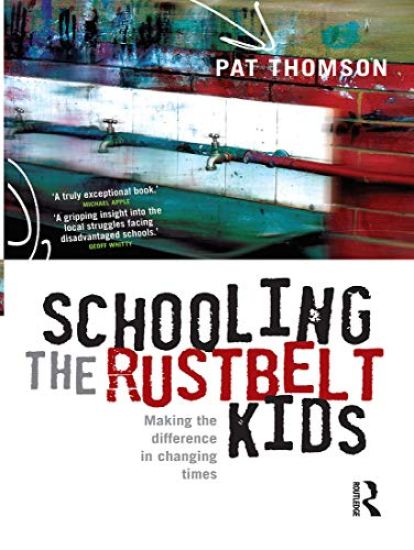
Schooling the Rustbelt Kids

Schooling the Rustbelt Kids

Pat Thomson

Routledge
2021
sidottu
'A truly exceptional book.' - Michael W. Apple, University of Wisconsin, Madison'A gripping insight into the local struggles facing disadvantaged schools and a compelling account of the injustice of their place in the bigger picture.' - Professor Geoff Whitty, Director, Institute of Education, University of LondonSchools in disadvantaged areas are struggling in the current economic and political environment. Like schools everywhere they are being asked to do more with less, but they face more obstacles. In recent years education policy has shifted from a holistic approach to learning to a focus on narrow educational outcomes: spelling, reading and writing. Thomson shows that this approach penalises disadvantaged schools and argues that educational and social disadvantage are inextricably linked in children's everyday lives. Examining primary and secondary schools in disadvantaged areas in a post-industrial ('rustbelt') city, Schooling the Rustbelt Kids reopens the debate about inequality in schooling. It provides concrete evidence that typical government policies in the Western world are not working, and that they are helping to create a permanent underclass. Thomson outlines an alternative whole of government approach to policy, which builds on those school programs that do make a real difference to educational outcomes. Thomson also emphasises the influence of local geography. Schools are coloured by particular neighbourhoods, permeated by national and global events, and tangled in complex networks of social relations. Interventions which work in one school may not work in others.
Why Garden in Schools?

Why Garden in Schools?

Lexi Earl; Pat Thomson

Routledge
2020
sidottu
This book delves into the complex history of the gardening movement in schools and examines the question why gardens should be built in schools. It offers practical guidance for teachers to begin thinking about how to approach educational gardening. A resurgence of interest in school gardens is linked to concerns about children’s health, food knowledge, lack of outdoor play and contact with the natural world. This book warns against simplistic one-best approaches and makes a case about the complexity of gardening in schools. It is the first critical attempt to address the complex and conflicting notions about school gardens and to tackle the question ‘what is the problem to which school gardens are the answer?’ Examining the educational theory in which gardening has been explained and advocated, the book explores the way contemporary gardens research has been conducted with specific questions such as ‘what works well in school gardens?’ Based on case studies of a school establishing a garden and another one maintaining a garden, chapters look at the way in which schools come to frame their gardens. The authors suggest that there are four issues to consider when setting up a school garden or evaluating a pre-existing one – wider social context, public policy, the whole school, and the formal and informal curriculum. The book ends with a call for consideration of the ways in which school gardens can be built, the myriad practices that constitute an educational garden space and the challenges of maintaining a school garden over the long term. It will be of interest to teachers in primary schools, as well as a key point of reference for scholars, academics and students researching school gardens.
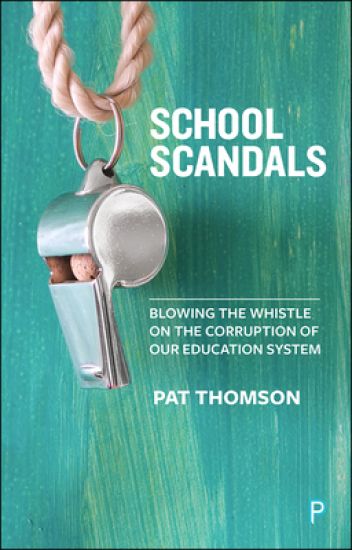
School scandals

School scandals

Pat Thomson

Policy Press
2020
nidottu
With almost daily reports of failings in school management, school discipline and the curriculum, what can be done to improve educational outcomes for everyone? Pat Thomson takes on England’s muddled education system, highlighting failings caused by the actions of ministers in successive governments. While corrupt actions are taken by some, it is predominantly the corruption of the system that is at fault. Using the lens of school scandals, she exposes fraudulent and unethical practices, including the skewing of the curriculum and manipulation of results. Thomson argues for an urgent review of current practices, leading to a revitalised education system that has the public good at its heart.
Educational Leadership and Pierre Bourdieu
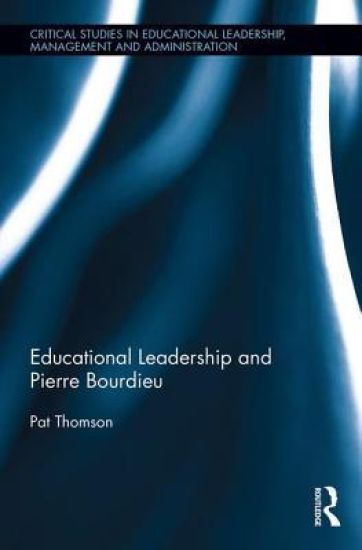
Pierre Bourdieu was one of the most important thinkers of the twentieth century. He argued for, and practiced, rigorous and reflexive scholarship, interrogating the inequities and injustices of modern societies. Through a lifetime’s explication of the ways in which schooling both produces and reproduces the status quo, Bourdieu offered a powerful critique and method of analysis of the history of schooling, and of contemporary educational polices and trends. Though frequently used in educational research, Bourdieu’s work has had much less take up in Educational Leadership, Management and Administration. Educational Leadership and Pierre Bourdieu argues that ELMA scholars have much to gain by engaging more thoroughly with his work. The book explains each of the key terms in Bourdieu’s thinking tool kit, showing how the tripartite concepts of field, habitus and capitals offer a way through which to understand the interaction of structure and agency, and the limits on the freedom of an individual – in this case an educational leader – to act. Educational Leadership and Pierre Bourdieu offers an analysis of dominant trends in ELMA research, examining the kinds of questions asked, projects undertaken and methods used. It provides alternative questions and methods based on a Bourdieusian approach, further readings and a range of exemplars of the application of these tools. The book will be of interest to those whose primary focus is the utility of Bourdieu’s social theory.
Read with Oxford: Stage 6: Badcats

Read with Oxford: Stage 6: Badcats

Pat Thomson

Oxford University Press
2018
nidottu
The Badcat gang are the hairiest, scariest animals around! At least they think they are, until they meet a little hamster called Hattie Books with chapters are a great way for children who are reading independently to extend reading stamina and progress to the next step of their reading journey. This Read with Oxford Stage 6 book has short chapters, an engaging story and humorous illustrations. Tips for parents and fun after-reading activities help you to get the most out of the story. Featuring much-loved characters, great authors, engaging storylines and fun activities, Read with Oxford offers an exciting range of carefully levelled reading books to build your child's reading confidence. Find practical advice, free eBooks and fun activities to help your child progress on oxfordowl.co.uk. Let's get them flying!
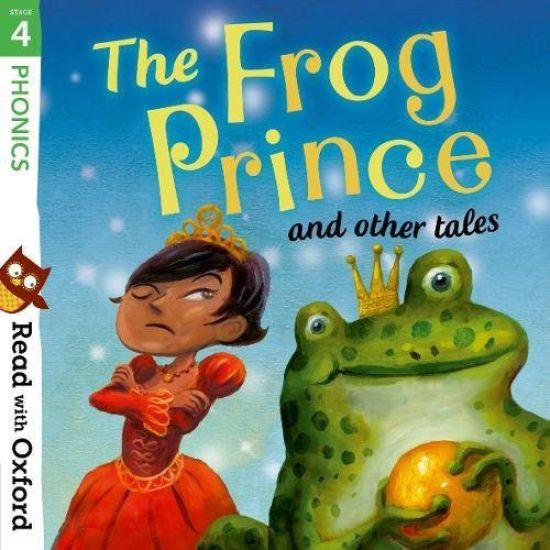
Read with Oxford: Stage 4: Phonics: The Frog Prince and Other Tales

Read with Oxford: Stage 4: Phonics: The Frog Prince and Other Tales

Pippa Goodhart; Susan Price; Pat Thomson; Becca Heddle

Oxford University Press
2018
nidottu
This Read with Oxford Stage 4 story collection contains four traditional tales: The Frog Prince; How the Bear Lost his Tail; Monkey's Magic Pipe; and Yoshi the Stonecutter. This beautifully-illustrated book with clear phonics progression is ideal for children who are gaining more reading confidence. These well-loved traditional tales from around the world have been rewritten so that children can read them for themselves. They are expertly levelled and in line with children's phonics learning at school. In additional to the stories, the collection offers tips for reading the stories together, extended story texts that parents can read aloud to their child, and story maps that children can use to help retell the story in their own words. Featuring much-loved characters, great authors, engaging storylines and fun activities, Read with Oxford offers an exciting range of carefully levelled reading books to build your child's reading confidence. Find practical advice, free eBooks and fun activities to help your child progress on oxfordowl.co.uk. Let's get them flying!
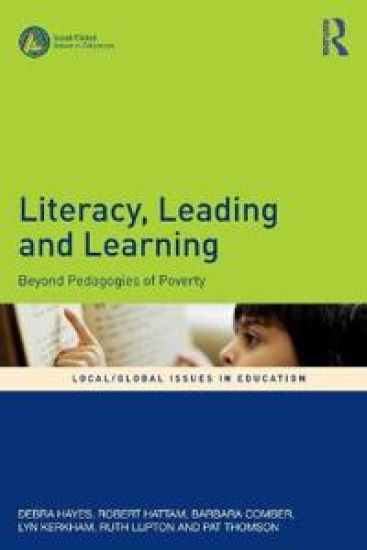
Literacy, Leading and Learning

Literacy, Leading and Learning

Debra Hayes; Robert Hattam; Barbara Comber; Lyn Kerkham; Ruth Lupton; Pat Thomson

Routledge
2017
sidottu
How might educational leaders and teachers improve literacy achievement in schools serving communities experiencing high levels of poverty? This question is the focus of this book. Drawing on long-term case studies of four primary schools located in these communities, this book describes the difference between what is commonly practiced and those practices that have a greater chance of supporting young people’s literacy learning. In this multi-layered analysis of the effects of policy on practice, the authors: discuss global concerns with literacy policy and testing in view of the growing gaps between rich and poor; examine the effects of the intensification of inequality and entrenched poverty, and the implications for schools; illustrate how deficit discourses pertaining to communities living in poverty are contested in schools; and describe the complexities of sustaining pedagogical and curriculum change to address the problem of unequal educational outcomes in literacy. This book grapples with some of the most debated questions regarding educational disadvantage, school change, leadership and literacy pedagogy that face educational researchers, policy-makers and practitioners internationally. As well as providing a critique of the risks of current policy rationales, it conveys some hopeful accounts of practice that provide leads for further development.
Literacy, Leading and Learning

Literacy, Leading and Learning

Debra Hayes; Robert Hattam; Barbara Comber; Lyn Kerkham; Ruth Lupton; Pat Thomson

Routledge
2017
nidottu
How might educational leaders and teachers improve literacy achievement in schools serving communities experiencing high levels of poverty? This question is the focus of this book. Drawing on long-term case studies of four primary schools located in these communities, this book describes the difference between what is commonly practiced and those practices that have a greater chance of supporting young people’s literacy learning. In this multi-layered analysis of the effects of policy on practice, the authors: discuss global concerns with literacy policy and testing in view of the growing gaps between rich and poor; examine the effects of the intensification of inequality and entrenched poverty, and the implications for schools; illustrate how deficit discourses pertaining to communities living in poverty are contested in schools; and describe the complexities of sustaining pedagogical and curriculum change to address the problem of unequal educational outcomes in literacy. This book grapples with some of the most debated questions regarding educational disadvantage, school change, leadership and literacy pedagogy that face educational researchers, policy-makers and practitioners internationally. As well as providing a critique of the risks of current policy rationales, it conveys some hopeful accounts of practice that provide leads for further development.
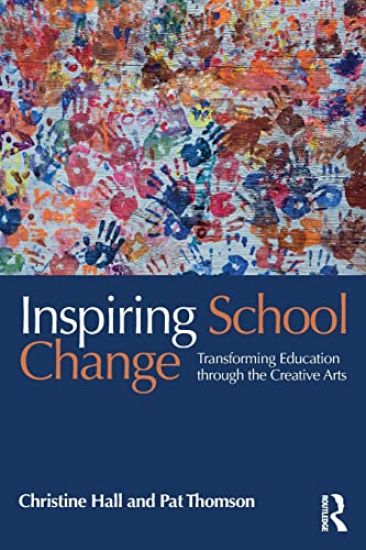
Inspiring School Change

Inspiring School Change

Christine Hall; Pat Thomson

Routledge
2017
nidottu
Recognising performance and accountability pressures on schools, Inspiring School Change shows how a commitment to the arts in education can meet core school agendas of pupil and parent engagement, attainment, improved teaching and inclusion. Schools are under pressure to develop their students’ creativity and to improve their cultural education. This book fills a gap by marshalling the arguments and evidence for a form of education in, through and with the arts that moves beyond individual projects to become central to teaching, learning and school reform. When the arts are taken seriously, schools become different - and better - places. Using research evidence to promote greater awareness of the capacity of the arts to promote educational change, this text captures four key themes that run through all of the chapters:• Inspiration - sharing experiences and the way they happened, documenting inspiring pedagogy by understanding the reason it was done, the factors and the people involved in making it work. • School change - the need for schools to better prepare young people for the lives they will live in the twenty-first century; to engage young people more effectively and so educate them better, and the recognition that in an unequal society schools can contribute to making things fairer.• Creative arts - demonstrates, through international research, how the arts can facilitate whole school learning, meet core agendas, such as attainment, inclusion and promote lifelong learning. • Transforming education - marshals the arguments and evidence for a form of education in, through and with the arts that moves beyond individual projects to become central to teaching, learning and school reform. Tackling the hot topics of parent and pupil engagement, standards and accountability in a fresh way, Inspiring School Change offers those engaged in the research and practice of improving teaching and learning with insight into the educational value and possibilities of arts-based teaching and an arts-rich curriculum
Inspiring School Change

Inspiring School Change

Christine Hall; Pat Thomson

Routledge
2017
sidottu
Recognising performance and accountability pressures on schools, Inspiring School Change shows how a commitment to the arts in education can meet core school agendas of pupil and parent engagement, attainment, improved teaching and inclusion. Schools are under pressure to develop their students’ creativity and to improve their cultural education. This book fills a gap by marshalling the arguments and evidence for a form of education in, through and with the arts that moves beyond individual projects to become central to teaching, learning and school reform. When the arts are taken seriously, schools become different - and better - places. Using research evidence to promote greater awareness of the capacity of the arts to promote educational change, this text captures four key themes that run through all of the chapters:• Inspiration - sharing experiences and the way they happened, documenting inspiring pedagogy by understanding the reason it was done, the factors and the people involved in making it work. • School change - the need for schools to better prepare young people for the lives they will live in the twenty-first century; to engage young people more effectively and so educate them better, and the recognition that in an unequal society schools can contribute to making things fairer.• Creative arts - demonstrates, through international research, how the arts can facilitate whole school learning, meet core agendas, such as attainment, inclusion and promote lifelong learning. • Transforming education - marshals the arguments and evidence for a form of education in, through and with the arts that moves beyond individual projects to become central to teaching, learning and school reform. Tackling the hot topics of parent and pupil engagement, standards and accountability in a fresh way, Inspiring School Change offers those engaged in the research and practice of improving teaching and learning with insight into the educational value and possibilities of arts-based teaching and an arts-rich curriculum
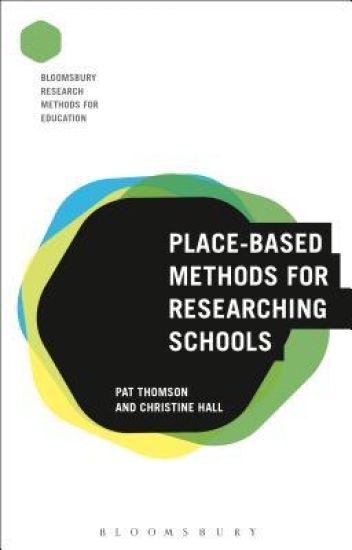
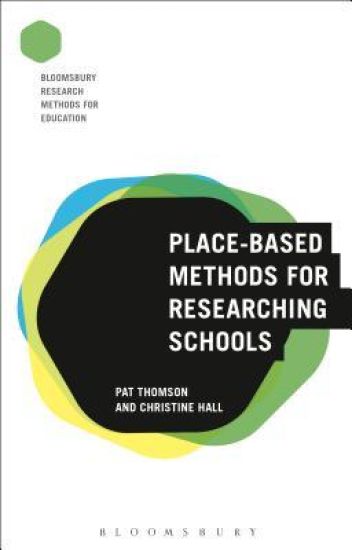
Place-Based Methods for Researching Schools

Place-Based Methods for Researching Schools

Pat Thomson; Christine Hall

Bloomsbury Academic
2016
sidottu
Schools are complex institutions. They do not easily reveal themselves to researchers who rely on only one or two methods. Understanding a school, its neighbourhood and its students requires a researcher with a more complex repertoire of verbal, statistical and visual research strategies. Place-Based Methods for Researching Schools shows how multiple methods can be used together to research schools, rather than dealing with decontextualised methods, one by one. Taking a novel theoretical approach to the school as a ‘place’, the book offers grounded illustrations of schools as places from real case study and ethnographic research conducted in both Australia and the UK. A practical guide, this book explores the on-the-ground questions researchers are likely to face in the order they are likely to face them. The chapters not only look at data generation approaches, but also address analysis of the data and writing about the school, topics that are often ignored. Methods explored for use include those drawn from urban planning and geography to explore neighbourhoods, visual surveys, mapping, classroom observation, ethnographic observation, interviews, focus groups, sociograms and linguistic corpora. Including research tips from the authors, case studies, a glossary and annotated further reading list, this book is essential reading for students and scholars approaching their research project.
Place-Based Methods for Researching Schools

Place-Based Methods for Researching Schools

Pat Thomson; Christine Hall

Bloomsbury Academic
2016
nidottu
Schools are complex institutions. They do not easily reveal themselves to researchers who rely on only one or two methods. Understanding a school, its neighbourhood and its students requires a researcher with a more complex repertoire of verbal, statistical and visual research strategies. Place-Based Methods for Researching Schools shows how multiple methods can be used together to research schools, rather than dealing with decontextualised methods, one by one. Taking a novel theoretical approach to the school as a ‘place’, the book offers grounded illustrations of schools as places from real case study and ethnographic research conducted in both Australia and the UK. A practical guide, this book explores the on-the-ground questions researchers are likely to face in the order they are likely to face them. The chapters not only look at data generation approaches, but also address analysis of the data and writing about the school, topics that are often ignored. Methods explored for use include those drawn from urban planning and geography to explore neighbourhoods, visual surveys, mapping, classroom observation, ethnographic observation, interviews, focus groups, sociograms and linguistic corpora. Including research tips from the authors, case studies, a glossary and annotated further reading list, this book is essential reading for students and scholars approaching their research project.
Educational Leadership and Pierre Bourdieu
Pierre Bourdieu was one of the most important thinkers of the twentieth century. He argued for, and practiced, rigorous and reflexive scholarship, interrogating the inequities and injustices of modern societies. Through a lifetime’s explication of the ways in which schooling both produces and reproduces the status quo, Bourdieu offered a powerful critique and method of analysis of the history of schooling, and of contemporary educational polices and trends. Though frequently used in educational research, Bourdieu’s work has had much less take up in Educational Leadership, Management and Administration. Educational Leadership and Pierre Bourdieu argues that ELMA scholars have much to gain by engaging more thoroughly with his work. The book explains each of the key terms in Bourdieu’s thinking tool kit, showing how the tripartite concepts of field, habitus and capitals offer a way through which to understand the interaction of structure and agency, and the limits on the freedom of an individual – in this case an educational leader – to act. Educational Leadership and Pierre Bourdieu offers an analysis of dominant trends in ELMA research, examining the kinds of questions asked, projects undertaken and methods used. It provides alternative questions and methods based on a Bourdieusian approach, further readings and a range of exemplars of the application of these tools. The book will be of interest to those whose primary focus is the utility of Bourdieu’s social theory.