Kirjojen hintavertailu – 12 859 818 kirjaa ja 27 kauppaa

Kirjailija

Pat Thomson

Kirjat ja teokset yhdessä paikassa: 41 kirjaa, julkaisuja vuosilta 1993–2026, suosituimpiin kuuluu Managing Your Research Project. Vertaile teosten hintoja ja tarkista saatavuus suomalaisista kirjakaupoista.

41 kirjaa

Kirjojen julkaisuvuodet: 1993–2026.

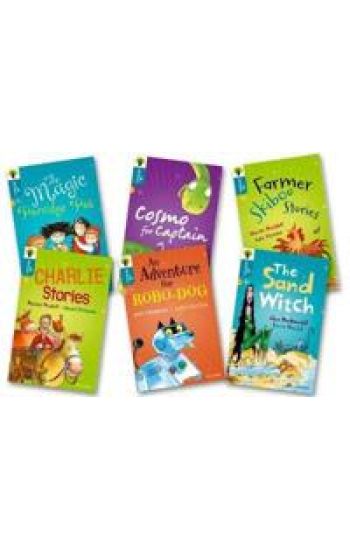
Oxford Reading Tree All Stars: Oxford Level 9: Pack 1 (Pack of 6)

Oxford Reading Tree All Stars: Oxford Level 9: Pack 1 (Pack of 6)

Margaret McAllister; Jonathan Emmett; Martin Waddell; Alan MacDonald; Pat Thomson

Oxford University Press
2016
nidottu
Oxford Reading Tree All Stars is an engaging chapter fiction series which combines age-appropriate content with imaginative stories, perfect for inspiring and stretching able infants. The series develops comprehension skills and provides a wide variety of fiction topics and styles, alongside illustrations that aid understanding. All the books in this series are carefully levelled, so its easy to match every child to the right book one which will develop their reading skills and fuel their love of reading. Help with childrens reading development is also available at www.oxfordowl.co.uk. This pack contains six Level 9 books, one of each of the following titles: The Magic Porridge Pot, Cosmo for Captain, Charlie Stories, Farmer Skiboo Stories, The Sand Witch and An Adventure for Robo-dog.
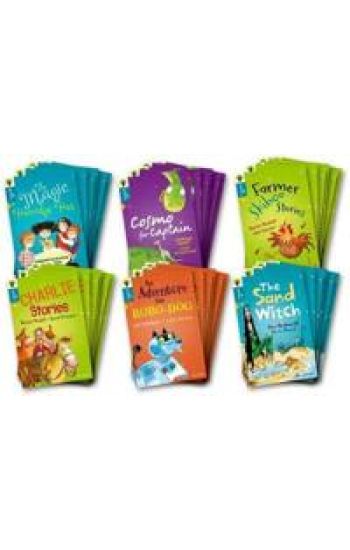
Oxford Reading Tree All Stars: Oxford Level 9: Pack 1 (Class pack of 36)

Oxford Reading Tree All Stars: Oxford Level 9: Pack 1 (Class pack of 36)

Margaret McAllister; Jonathan Emmett; Martin Waddell; Alan MacDonald; Pat Thomson

Oxford University Press
2016
nidottu
Oxford Reading Tree All Stars is an engaging chapter fiction series which combines age-appropriate content with imaginative stories, perfect for inspiring and stretching able infants. The series develops comprehension skills and provides a wide variety of fiction topics and styles, alongside illustrations that aid understanding. All the books in this series are carefully levelled, so its easy to match every child to the right book one which will develop their reading skills and fuel their love of reading. Help with childrens reading development is also available at www.oxfordowl.co.uk. This pack contains 36 Level 9 books, six of each of the following titles: The Magic Porridge Pot, Cosmo for Captain, Charlie Stories, Farmer Skiboo Stories, The Sand Witch and An Adventure for Robo-dog.
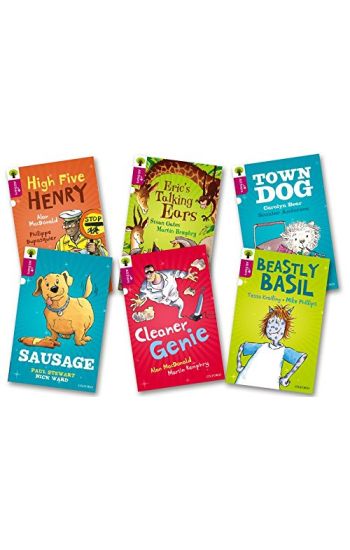
Oxford Reading Tree All Stars: Oxford Level 10: Pack 2a (Pack of 6)

Oxford Reading Tree All Stars: Oxford Level 10: Pack 2a (Pack of 6)

Pat Thomson; Pippa Goodhart; Martin Waddell; Alan MacDonald; Kes Gray; Tessa Krailing

Oxford University Press
2016
nidottu
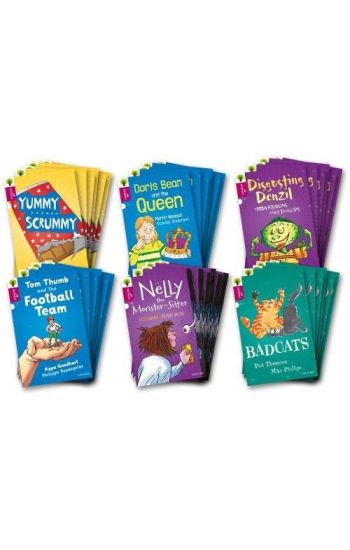
Oxford Reading Tree All Stars is an engaging chapter fiction series which combines age-appropriate content with imaginative stories, perfect for inspiring and stretching able infants. The series develops comprehension skills and provides a wide variety of fiction topics and styles, alongside illustrations that aid understanding. All the books in this series are carefully levelled, so its easy to match every child to the right book one which will develop their reading skills and fuel their love of reading. Help with childrens reading development is also available at www.oxfordowl.co.uk. This pack contains six Level 10 books, one of each of the following titles: Badcats, Tom Thumb and the Football Team, Doris Bean and the Queen, Yummy Scrummy, Nelly the Monster-Sitter and Disgusting Denzil.
Oxford Reading Tree All Stars: Oxford Level 10: All Stars Pack 2a (Class pack of 36)

Oxford Reading Tree All Stars: Oxford Level 10: All Stars Pack 2a (Class pack of 36)

Pat Thomson; Pippa Goodhart; Martin Waddell; Alan MacDonald; Kes Gray; Tessa Krailing

Oxford University Press
2016
nidottu
Oxford Reading Tree All Stars is an engaging chapter fiction series which combines age-appropriate content with imaginative stories, perfect for inspiring and stretching able infants. The series develops comprehension skills and provides a wide variety of fiction topics and styles, alongside illustrations that aid understanding. All the books in this series are carefully levelled, so its easy to match every child to the right book one which will develop their reading skills and fuel their love of reading. Help with childrens reading development is also available at www.oxfordowl.co.uk. This pack contains 36 Level 10 books, six of each of the following titles: Badcats, Tom Thumb and the Football Team, Doris Bean and the Queen, Yummy Scrummy, Nelly the Monster-Sitter and Disgusting Denzil.
Oxford Reading Tree All Stars: Oxford Level 11: Pack 3a (Pack of 6)

Oxford Reading Tree All Stars: Oxford Level 11: Pack 3a (Pack of 6)

Sean Taylor; Pippa Goodhart; Pat Thomson; Martin Waddell; Geraldine McCaughrean; Kes Gray

Oxford University Press
2016
nidottu
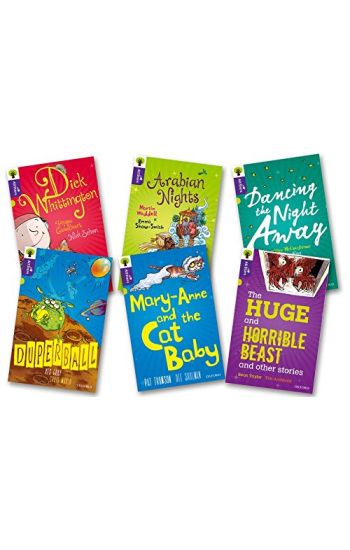
Oxford Reading Tree All Stars is an engaging chapter fiction series which combines age-appropriate content with imaginative stories, perfect for inspiring and stretching able infants. The series develops comprehension skills and provides a wide variety of fiction topics and styles, alongside illustrations that aid understanding. All the books in this series are carefully levelled, so its easy to match every child to the right book one which will develop their reading skills and fuel their love of reading. Help with childrens reading development is also available at www.oxfordowl.co.uk. This pack contains six Level 11 books, one of each of the following titles: The Huge and Horrible Beast, Dick Whittington, Mary-Anne and the Cat Baby, Arabian Nights, Dancing the Night Away and Duperball.
Oxford Reading Tree All Stars: Oxford Level 11: Pack 3a (Class pack of 36)

Oxford Reading Tree All Stars: Oxford Level 11: Pack 3a (Class pack of 36)

Sean Taylor; Pippa Goodhart; Pat Thomson; Martin Waddell; Geraldine McCaughrean; Kes Gray

Oxford University Press
2016
nidottu
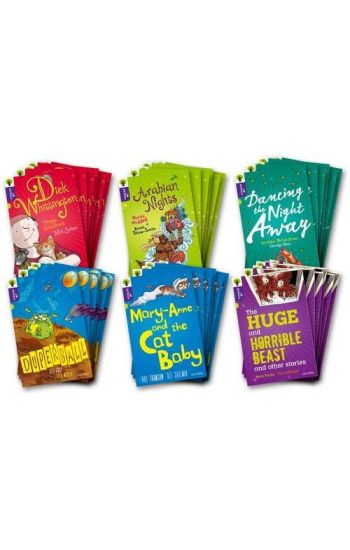
Oxford Reading Tree All Stars is an engaging chapter fiction series which combines age-appropriate content with imaginative stories, perfect for inspiring and stretching able infants. The series develops comprehension skills and provides a wide variety of fiction topics and styles, alongside illustrations that aid understanding. All the books in this series are carefully levelled, so its easy to match every child to the right book one which will develop their reading skills and fuel their love of reading. Help with childrens reading development is also available at www.oxfordowl.co.uk. This pack contains 36 Level 11 books, six of each of the following titles: The Huge and Horrible Beast, Dick Whittington, Mary-Anne and the Cat Baby, Arabian Nights, Dancing the Night Away and Duperball.
Detox Your Writing

Detox Your Writing

Pat Thomson; Barbara Kamler

Routledge
2016
sidottu
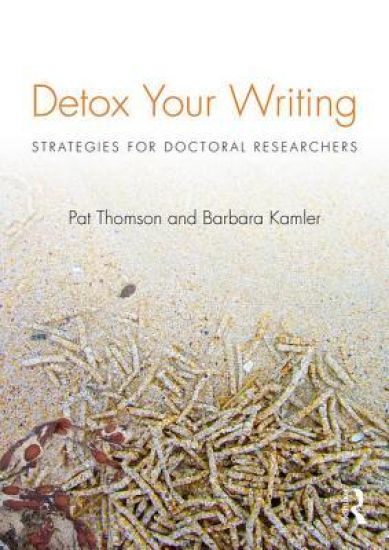
There are a number of books which aim to help doctoral researchers write the PhD. This book offers something different - the scholarly detox. This is not a faddish alternative, it’s not extreme. It’s a moderate approach intended to gently interrupt old ways of doing things and establish new habits and orientations to writing the PhD. The book addresses the problems that most doctoral researchers experience at some time during their candidature – being unclear about their contribution, feeling lost in the literature, feeling like an imposter, not knowing how to write with authority, wanting to edit rather than revise. Each chapter addresses a problem, suggests an alternative framing, and then offers strategies designed to address the real issue. Detox Your Writing is intended to be a companionable work book – something doctoral researchers can use throughout their doctorate to ask questions about taken-for-granted ways of writing and reading, and to develop new and effective approaches. The authors’ distinctive approach to doctoral writing mobilises the rich traditions of linguistic scholarship, as well as the literatures on scholarly identity formation. Building on years of expertise they place their emphasis both on tools and techniques as well as the discursive practices of becoming a scholar. The authors provide a wide repertoire of strategies that doctoral researchers can select from, rather than a linear lock step progression through a set of exercises. The book is a toolkit but a far from prescriptive one. It shows that there are many routes to developing a personal academic voice and identity and a well-crafted text. With points for reflection alongside examples from a broad range of disciplines, the book offers thinking tools, writing tools, linguistic tools, and reading tools which are relevant to all stages of doctoral research. This practical text can be used in all university doctoral training and composition and writing courses. However, it is not a dry how-to-do–it manual that ignores debates or focuses solely on the mechanical at the expense of the lived experience of doctoral research. It provides a practical, theorised, real-world, guide to postgraduate writing.
Detox Your Writing

Detox Your Writing

Pat Thomson; Barbara Kamler

Routledge
2016
nidottu

Halvin toimitettuna 54,50 €

There are a number of books which aim to help doctoral researchers write the PhD. This book offers something different - the scholarly detox. This is not a faddish alternative, it’s not extreme. It’s a moderate approach intended to gently interrupt old ways of doing things and establish new habits and orientations to writing the PhD. The book addresses the problems that most doctoral researchers experience at some time during their candidature – being unclear about their contribution, feeling lost in the literature, feeling like an imposter, not knowing how to write with authority, wanting to edit rather than revise. Each chapter addresses a problem, suggests an alternative framing, and then offers strategies designed to address the real issue. Detox Your Writing is intended to be a companionable work book – something doctoral researchers can use throughout their doctorate to ask questions about taken-for-granted ways of writing and reading, and to develop new and effective approaches. The authors’ distinctive approach to doctoral writing mobilises the rich traditions of linguistic scholarship, as well as the literatures on scholarly identity formation. Building on years of expertise they place their emphasis both on tools and techniques as well as the discursive practices of becoming a scholar. The authors provide a wide repertoire of strategies that doctoral researchers can select from, rather than a linear lock step progression through a set of exercises. The book is a toolkit but a far from prescriptive one. It shows that there are many routes to developing a personal academic voice and identity and a well-crafted text. With points for reflection alongside examples from a broad range of disciplines, the book offers thinking tools, writing tools, linguistic tools, and reading tools which are relevant to all stages of doctoral research. This practical text can be used in all university doctoral training and composition and writing courses. However, it is not a dry how-to-do–it manual that ignores debates or focuses solely on the mechanical at the expense of the lived experience of doctoral research. It provides a practical, theorised, real-world, guide to postgraduate writing.
Helping Doctoral Students Write

Helping Doctoral Students Write

Barbara Kamler; Pat Thomson

Routledge
2014
sidottu
Helping Doctoral Students Write offers a proven approach to effective doctoral writing. By treating research as writing and writing as research, the authors offer pedagogical strategies for doctoral supervisors that will assist the production of well-argued and lively dissertations. It is clear that many doctoral candidates find research writing complicated and difficult, but the advice they receive often glosses over the complexities of writing and/or locates the problem in the writer. Kamler and Thomson provide a highly effective framework for scholarly work that is located in personal, institutional and cultural contexts. The pedagogical approach developed in the book is based on the notion of writing as a social practice. This approach allows supervisors to think of doctoral writers as novices who need to learn new ways with words as they enter the discursive practices of scholarly communities. This involves learning sophisticated writing practices with specific sets of conventions and textual characteristics. The authors offer supervisors practical advice on helping with commonly encountered writing tasks such as the proposal, the journal abstract, the literature review and constructing the dissertation argument. The first edition of this book has helped many academics and thousands of research students produce better written material. Now fully updated the second edition includes: Examples from a broader range of academic disciplines A new chapter on writing from the thesis for peer reviewed journals More advice on reading and note taking, performance and conferences, Further information on developing a personal academic writing style, and Advice on the use of social media (blogs, tweets and wikis) to create trans-disciplinary and trans-national networks and conversations. Their discussion of the complexities of forming a scholarly identity is illustrated throughout by stories and writings of actual doctoral students. In conclusion, they present a persuasive and proven argument that universities must move away from simply auditing supervision to supporting the development of scholarly research communities. Any supervisor keen to help their students develop as academics will find the ideas and practical solutions presented in this book fascinating and insightful reading.
Helping Doctoral Students Write

Helping Doctoral Students Write

Barbara Kamler; Pat Thomson

Routledge
2014
nidottu
Helping Doctoral Students Write offers a proven approach to effective doctoral writing. By treating research as writing and writing as research, the authors offer pedagogical strategies for doctoral supervisors that will assist the production of well-argued and lively dissertations. It is clear that many doctoral candidates find research writing complicated and difficult, but the advice they receive often glosses over the complexities of writing and/or locates the problem in the writer. Kamler and Thomson provide a highly effective framework for scholarly work that is located in personal, institutional and cultural contexts. The pedagogical approach developed in the book is based on the notion of writing as a social practice. This approach allows supervisors to think of doctoral writers as novices who need to learn new ways with words as they enter the discursive practices of scholarly communities. This involves learning sophisticated writing practices with specific sets of conventions and textual characteristics. The authors offer supervisors practical advice on helping with commonly encountered writing tasks such as the proposal, the journal abstract, the literature review and constructing the dissertation argument. The first edition of this book has helped many academics and thousands of research students produce better written material. Now fully updated the second edition includes: Examples from a broader range of academic disciplines A new chapter on writing from the thesis for peer reviewed journals More advice on reading and note taking, performance and conferences, Further information on developing a personal academic writing style, and Advice on the use of social media (blogs, tweets and wikis) to create trans-disciplinary and trans-national networks and conversations. Their discussion of the complexities of forming a scholarly identity is illustrated throughout by stories and writings of actual doctoral students. In conclusion, they present a persuasive and proven argument that universities must move away from simply auditing supervision to supporting the development of scholarly research communities. Any supervisor keen to help their students develop as academics will find the ideas and practical solutions presented in this book fascinating and insightful reading.
You Can't Bring That in Here!

You Can't Bring That in Here!

Pat Thomson

Penguin Random House Children's UK
2013
pokkari
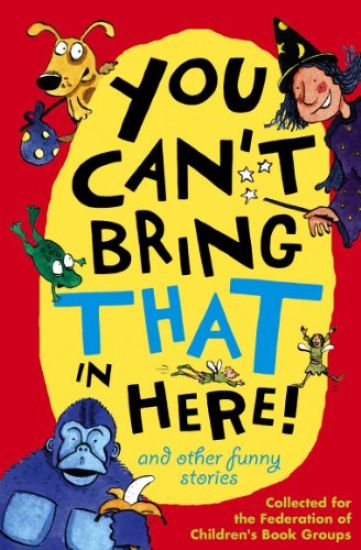
Find out how Bozo the gorilla helps Jimmy deal with his lazy big brother, what Dinah Price does when she finds the three bears tucked up in her bed and what fate Agnethia Toadfax, trainee witch, has in store for Mr Smike the rude librarian .
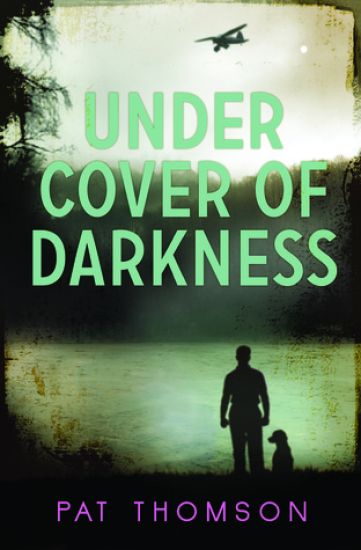
Under Cover of Darkness

Under Cover of Darkness

Pat Thomson

Barrington Stoke Ltd
2013
nidottu

Halvin toimitettuna 15,90 €

Michel hatches a plan to join the resistance in Nazi-occupied France in this thrilling WWll drama, edited to a reading age of 6.5. The Nazis have occupied France. Michel knows that there are Resistance fighters in his town and he's desperate to join them. Will his mother agree to it? After all with his father AWOL, she needs a man around the house. But when someone's injured, Michel gets his chance. Can he help without being shot by the Nazis? Particularly suitable for readers aged 11+ with a reading age of 6.5.
Writing for Peer Reviewed Journals

Writing for Peer Reviewed Journals

Pat Thomson; Barbara Kamler

Routledge
2012
nidottu

Halvin toimitettuna 69,10 €

It’s not easy getting published, but everyone has to do it. Writing for Peer Reviewed Journals presents an insider’s perspective on the secret business of academic publishing, making explicit many of the dilemmas and struggles faced by all writers, but rarely discussed. Its unique approach is theorised and practical. It offers a set of moves for writing a journal article that is structured and doable but also attends to the identity issues that manifest on the page and in the politics of academic life. The book comprehensively assists anyone concerned about getting published; whether they are early in their career or moving from a practice base into higher education, or more experienced but still feeling in need of further information. Avoiding a ‘tips and tricks’ approach, which tends to oversimplify what is at stake in getting published, the authors emphasise the production, nurture and sustainability of scholarship through writing – a focus on both the scholar and the text or what they call text work/identity work. The chapters are ordered to develop a systematic approach to the process, including such topics as: The writer The reader What’s the contribution? Beginning work Refining the argument Engaging with reviewers and editors Writing for Peer Reviewed Journals uses a wide range of multi-disciplinary examples from the writing workshops the authors have run in universities around the world: including the UK, Canada, Australia, New Zealand, Ireland, South Africa, Norway, Sweden, Denmark and the United States. This international approach coupled with theoretically grounded strategies to guide the authoring process ensure that people at all stages of their career are addressed. This lively book uses a combination of personal stories, student texts, published journal abstracts and excerpts from interviews with journal editors and publishers. Written in an accessible style, one which does not use the patronising ‘you’ of advice books, it offers a collegial approach to a task which is difficult for most scholars, regardless of their years of experience.
Writing for Peer Reviewed Journals

Writing for Peer Reviewed Journals

Pat Thomson; Barbara Kamler

Routledge
2012
sidottu
It’s not easy getting published, but everyone has to do it. Writing for Peer Reviewed Journals presents an insider’s perspective on the secret business of academic publishing, making explicit many of the dilemmas and struggles faced by all writers, but rarely discussed. Its unique approach is theorised and practical. It offers a set of moves for writing a journal article that is structured and doable but also attends to the identity issues that manifest on the page and in the politics of academic life. The book comprehensively assists anyone concerned about getting published; whether they are early in their career or moving from a practice base into higher education, or more experienced but still feeling in need of further information. Avoiding a ‘tips and tricks’ approach, which tends to oversimplify what is at stake in getting published, the authors emphasise the production, nurture and sustainability of scholarship through writing – a focus on both the scholar and the text or what they call text work/identity work. The chapters are ordered to develop a systematic approach to the process, including such topics as: The writer The reader What’s the contribution? Beginning work Refining the argument Engaging with reviewers and editors Writing for Peer Reviewed Journals uses a wide range of multi-disciplinary examples from the writing workshops the authors have run in universities around the world: including the UK, Canada, Australia, New Zealand, Ireland, South Africa, Norway, Sweden, Denmark and the United States. This international approach coupled with theoretically grounded strategies to guide the authoring process ensure that people at all stages of their career are addressed. This lively book uses a combination of personal stories, student texts, published journal abstracts and excerpts from interviews with journal editors and publishers. Written in an accessible style, one which does not use the patronising ‘you’ of advice books, it offers a collegial approach to a task which is difficult for most scholars, regardless of their years of experience.
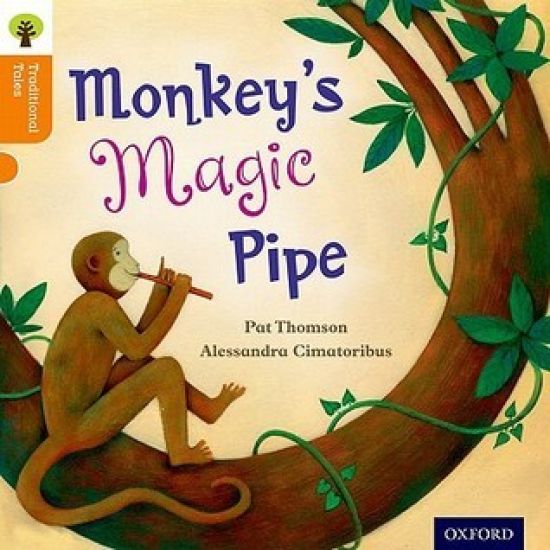
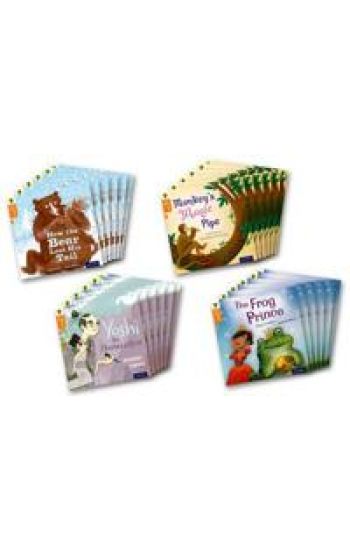
Oxford Reading Tree Traditional Tales: Level 6: Monkey's Magic Pipe

Oxford Reading Tree Traditional Tales: Level 6: Monkey's Magic Pipe

Pat Thomson; Nikki Gamble; Pam Dowson; Charlotte Raby

Oxford University Press
2011
nidottu
In this traditional South American tale, Monkey triumphs over the Monster, who thinks he is the best at everything. Clever Monkey tricks the Monster into releasing her friends, and he goes back to his cave empty-handed. This imaginative story, written by Pat Thomson and charmingly illustrated by Alessandra Cimatoribus, will capture your child's imagination! It has been sensitively rewritten to enable your child to read it with confidence whilst capturing the magic of the original tale. There are useful tips for parents and an engaging story map inside the book to help you and your child retell the story together. The Oxford Reading Tree Traditional Tales series includes 40 of the best known stories from all over the world, which have been passed down for generations. They are a perfect introduction to different cultures, traditions and morals. All the stories are carefully levelled to Oxford Reading Tree levels and matched to the phonic progression in Letters and Sounds enabling your children to read the stories independently. Books contain inside cover notes to support children in their reading. Help with childrens reading development is also available at www.oxfordowl.co.uk.
Oxford Reading Tree Traditional Tales: Level 6: Class Pack of 24

Oxford Reading Tree Traditional Tales: Level 6: Class Pack of 24

Pippa Goodhart; Becca Heddle; Pat Thomson; Susan Price; Nikki Gamble; Pam Dowson

Oxford University Press
2011
nidottu
The Oxford Reading Tree Traditional Tales series includes 40 of the best known stories from all over the world, which have been passed down for generations. They are a perfect introduction to different cultures, traditions and morals. All the stories are carefully levelled to Oxford Reading Tree levels and matched to the phonic progression in Letters and Sounds, enabling your children to read the stories independently. There are four Traditional Tales titles available at level 6: The Frog Prince Yoshi the Stonecutter Monkey's Magic Pipe How the Bear Lost His Tail The Oxford Reading Tree Traditional Tales series includes 40 of the best known stories from all over the world, which have been passed down for generations. They are a perfect introduction to different cultures, traditions and morals. All the stories are carefully levelled to Oxford Reading Tree levels and matched to the phonic progression in Letters and Sounds enabling your children to read the stories independently. Books contain inside cover notes to support children in their reading. Help with childrens reading development is also available at www.oxfordowl.co.uk.
School Leadership - Heads on the Block?
Most teachers become heads for idealistic reasons, wanting to make a difference to the lives of children and young people. Yet serving heads suggest the job is getting harder, talking openly about stress and leaving the job. Many teachers now see headship as a risky business, and succession planning, while necessary, will not on its own be sufficient to attract the diverse range of applicants required to satisfactorily fill leadership positions. School Leadership: Heads on the Block addresses this shortage. It suggests there is no crisis in supply per se, but that schools in some locations find it difficult to attract the ‘right people with the right stuff’. The book examines the expectations of heads, the hours they are expected to work and the nature of everyday demands. It proposes that ‘sudden death’ accountabilities act as a major disincentive to potential applicants, and outlines a series of policy measures to tackle the kinds of daily pressures heads now experience. Key features of the book: draws on a wide range of material, ranging from published research, interviews and media clippings to popular films and children’s novels makes extensive use of headteachers’ words and stories based in the author’s own experiences of headship, tackling issues that leadership books often ignore. The book will be of interest to headteachers, headteachers’ professional associations, teachers and those who study teaching. It will be useful to policy makers, those responsible for the education of potential heads and for headteacher professional development.
Schooling the Rustbelt Kids

Schooling the Rustbelt Kids

Pat Thomson

Allen Unwin
2002
nidottu
'A truly exceptional book.' - Michael W. Apple, University of Wisconsin, Madison 'A gripping insight into the local struggles facing disadvantaged schools and a compelling account of the injustice of their place in the bigger picture.' - Professor Geoff Whitty, Director, Institute of Education, University of London Schools in disadvantaged areas are struggling in the current economic and political environment. Like schools everywhere they are being asked to do more with less, but they face more obstacles. In recent years education policy has shifted from a holistic approach to learning to a focus on narrow educational outcomes: spelling, reading and writing. Thomson shows that this approach penalises disadvantaged schools and argues that educational and social disadvantage are inextricably linked in children's everyday lives. Examining primary and secondary schools in disadvantaged areas in a post-industrial ('rustbelt') city, Schooling the Rustbelt Kids reopens the debate about inequality in schooling. It provides concrete evidence that typical government policies in the Western world are not working, and that they are helping to create a permanent underclass. Thomson outlines an alternative whole of government approach to policy, which builds on those school programs that do make a real difference to educational outcomes. Thomson also emphasises the influence of local geography. Schools are coloured by particular neighbourhoods, permeated by national and global events, and tangled in complex networks of social relations. Interventions which work in one school may not work in others.
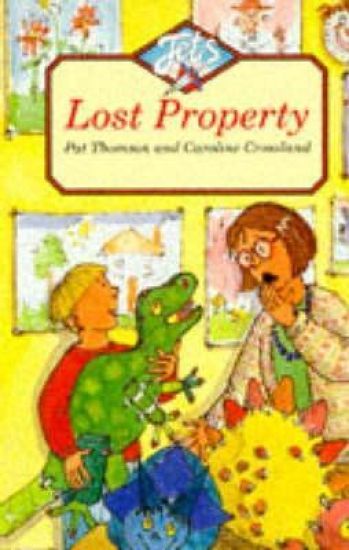
Lost Property

Lost Property

Pat Thomson

HARPERCOLLINS PUBLISHERS
1995
pokkari
Alex has got some explaining to do. Everything he takes to school disappears, but Mrs Etheridge, Alex's teacher, isn't at all prepared for some of his explanations.