Kirjailija
Patrick Williams
Kirjat ja teokset yhdessä paikassa: 31 kirjaa, julkaisuja vuosilta 1988–2026, suosituimpiin kuuluu Gypsy World. Vertaile teosten hintoja ja tarkista saatavuus suomalaisista kirjakaupoista.
31 kirjaa
Kirjojen julkaisuvuodet: 1988–2026.
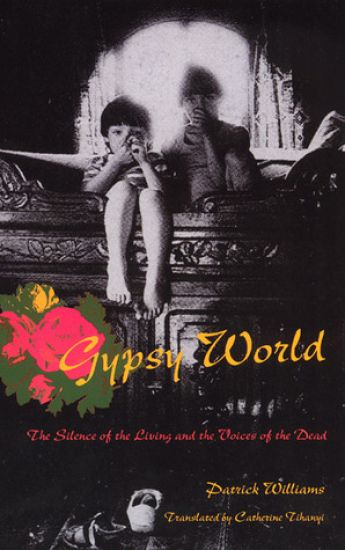
For many of us, one of the most important ways of coping with the death of a close relative is talking about them, telling all who will listen what they meant to us. Yet the Gypsies of central France, the Manus, not only do not speak of their dead, they burn or discard the deceased's belongings, refrain from eating the dead person's favourite foods and avoid camping in the place where he or she died. In "Gypsy World", Patrick Williams argues that these customs are at the centre of how Manus see the world and their place in it. The Manus inhabit a world created by the "Gadzos" (non-Gypsies) , who frequently limit or even prohibit Manus's movements within it. To claim this world for themselves, the Manus employ a principle of cosmological subtraction: just as the dead seem to be absent from Manus society, argues Williams, so too do the Manus absent themselves from Gadzo society - and in so doing they assert and preserve their own separate culture and identity. Anyone interested in Gypsies, death rituals or the formation of culture should enjoy this fascinating and sensitive ethnography.

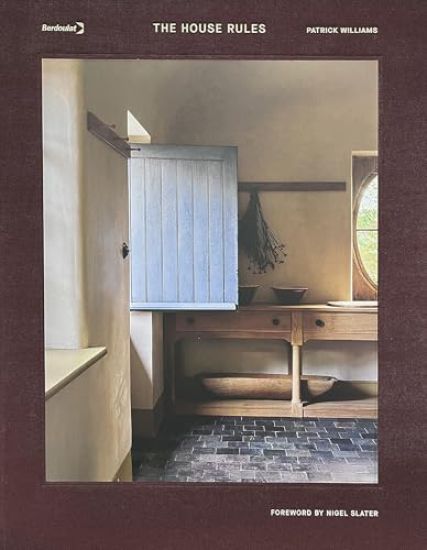
A trailblazing British interiors practice that has become THE name in authentic period design. This special edition is comprised of a cloth-bound slipcase with marbled inlay and contains Patrick Williams’ The House Rules, with foreword by Nigel Slater, alongside additional special content, Another Spoonful, with foreword by Charlie Porter. From a 14th-century court house, to a Regency manor, through to a newly built extension to an Arts & Crafts home, Patrick Williams’ The House Rules showcases sensitive period restorations that combine artisan techniques and heritage aesthetics with modern, sustainable sensibilities to create timeless historic interiors. Another Spoonful is an ode to an array of deeply skilled and knowledgeable artisans, whose work is stocked in Berdoulat’s shop in Bath. The book celebrates the craftsmanship and dedication that goes into keeping traditional ways of making alive.
A trailblazing British interiors practice that has become THE name in authentic period design. The House Rules charts the evolution of Patrick Williams' design studio Berdoulat, and is a stunning visual exploration of his practice and meticulous approach to working with period buildings. From a 14th-century court house, to a Regency manor, through to a newly built extension to an Arts & Crafts home, Patrick Williams showcases sensitive period restorations that combine artisan techniques and heritage aesthetics with modern, sustainable sensibilities to create timeless historic interiors.
Hundreds of Little Wars
Elliott West; Patrick Williams
LOUISIANA STATE UNIVERSITY PRESS
2025
sidottu
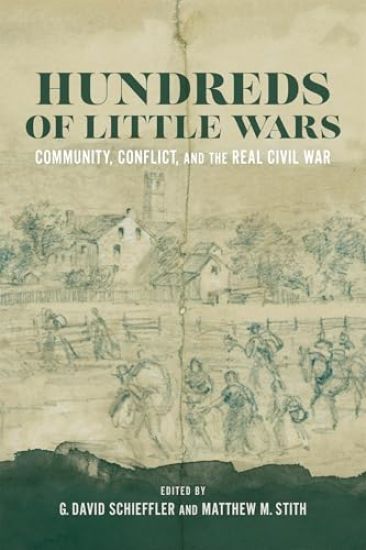
From Texas to Virginia, towns, regions, counties, regiments, prisons, and even refugee camps played a significant role in shaping the contours of the Civil War. According to historian Daniel E. Sutherland, whose many books and essays helped establish the field of community studies, these varied assemblages of individuals experienced and fought the real war. Following his lead, the contributors to Hundreds of Little Wars reveal how viewing the war from the vantage point of singular communities allows us to better understand the larger conflict. The volume includes contributions from a wide array of Civil War scholars. Lesley J. Gordon and Eric P. Totten examine military outfits, namely the 126th New York Regiment and the 4th New Hampshire Volunteer Infantry. Madeleine C. Forrest provides an analysis of Fauquier County, Virginia, in 1862, and Matthew M. Stith evaluates a Confederate prisoner-of-war camp in East Texas. Christopher Phillips and Scott A. Tarnowieckyi investigate the middle border region spanning the Ohio, Mississippi, and Missouri rivers. Lorien Foote and G. David Schieffler assess the demographically diverse Sea Islands of South Carolina and Georgia, as well as Helena, Arkansas. Barton A. Myers and Terry L. Beckenbaugh employ Sutherland's framing while considering irregular war, first with an examination of partisan officers and then with a survey of the White River Valley in Arkansas. Finally, Niels Eichhorn and Michael Shane Powers assume a transnational viewpoint, comparing Richmond with Vienna, Austria, and analyzing a community of Confederate veterans in Central America. The essays in Hundreds of Little Wars show that no one single conflict defined the Civil War. Instead, hundreds of wars existed, variously categorized by geography, race, gender, environment, and myriad other factors. Only by concentrating on these communities can we grasp the scope and complexity of the Civil War.
The profession of life coaching is more necessary than ever in this time of pandemic-related uncertainty, the shift (in some cases, permanent) to remote learning and working, and the constant change that accompanies world events. With his best-selling Therapist as Life Coach, Patrick Williams introduced the therapeutic community to the career of life coach, and in the first and second editions of Becoming a Professional Life Coach, he and Diane S. Menendez covered basic principles and strategies for effective coaching. Now Williams and Menendez bring a fresh take on the book that has taught thousands of coaches over fifteen years—with all-new information on the dialogue between coaches and clients, how to utilise metaphors and question-asking, the role of emotions in life coaching, the eight coaching competence categories and more.
Inspire or Perish, Second Edition: How to Communicate Your Message to a 21st Century Audience
Patrick Williams; Gerardo Suárez del Real Luján
Library and Archives Canada
2021
nidottu
When people communicate with each other they have one or more of four tools available to them to help convey their message. They can inform, entertain, persuade, or inspire. At Sliding.ca we believe persuasion is all but dead. This leaves presenters with no choice but to avail themselves of what's left, using them, ideally, in combination with each other. If your goal is to inform your audience, inform and inspire them. If your goal is to entertain your audience, entertain and inspire them. But, if your goal is to wow your audience and leave them with an experience they will learn from and thank you for, deliver a presentation that will inform, entertain, and inspire them all at the same time. Inspire or Perish will teach you how to do that. Learn, practice, and use the tips and techniques in this book and you will be well on your way to creating presentations that your audience will listen to, remember, and embrace long after you've left the stage. Don't perish, inspire
A collection of poetry and short stories that explores the life of a teen male growing up in Cleveland, Ohio's modern world.
From the heady springtime rush of first meeting to the hard tear-stained winter of goodbye, these poems explore the lifespan of a relationship. Published chronologically as written for her, and sent as text messages so she could read them over her morning coffee, these poems are a passionate and painfully truthful testimony to someone who, for a much too brief time, was the poet's whole heart, and who will always hold a piece of it.
The first book of its kind in the field, this timely introduction to post- colonial theory offers lucid and accessible summaries of the major work of key theorists such as Frantz Fanon, Edward Said. Homi Bhabha and Gayatri Spivak. The Guide also Explores the lines of resistance against colonialism and highlights the theories of post-colonial identity that have been responsible for generating some of the most influential and challenging critical work of recent decades. Designed for undergraduates and postgraduates taking courses related to colonialisn or post-colonialism, the book summarieses the major topics and issues as well as covering the contributions of major and less familiar figures in the field.
This popular text provides an in-depth introduction to debates within post-colonial theory and criticism. The readings are drawn from a diverse selection of thinkers both historical and contemporary.
Building Your Ideal Private Practice, a best-seller in its genre, is now fully revised after its original publication in 2000. Much has changed for therapists in private practice over the past fifteen years, including the widespread encroachment by insurance and managed care into the marketplace, the density of new therapists as over 600,000 therapists nationwide try to stay viable, and the role of the Internet in marketing services. The revision of Building Your Ideal Private Practice is a comprehensive guide, updated with six new chapters and targeted for therapists at all stages of private practice development. It covers the essential how-to questions for those starting out in practice and explains the common pitfalls to avoid.
WaterborneRail Transport of U.S. Crude Oil
Patrick Williams
Nova Science Publishers Inc
2014
sidottu
Elements and Issues.
Katharine of Aragon was a central figure in one of the most dramatic and formative events of Tudor history – England’s breach with Rome after a thousand years of fidelity. She lived through traumatic and revolutionary times and her personal drama was played out against dramas of European significance. The heroic and dignified first wife of Henry VIII, Katharine was cast aside for reasons of dynastic ambition but resolutely and unbendingly stuck to her principles and her dignity at enormous cost to herself. Katharine’s story tells so much about the exercise of power, and about being married to a lover who became slowly but perceptibly a tyrant in public life and a monster in his private affairs. Professor Patrick Williams has been immersed in Spanish history for over forty years and his monumental new biography is the first to make full use of the Spanish royal archives; he presents a very new portrait of Katharine, most notably in establishing that her marriage to Prince Arthur, elder brother of Henry VIII, was never consummated. This biography thus forces a radical reappraisal of Henry VIII, his marriages and his reign – and of the origins of the Reformation in England.
This popular text provides an in-depth introduction to debates within post-colonial theory and criticism. The readings are drawn from a diverse selection of thinkers both historical and contemporary.
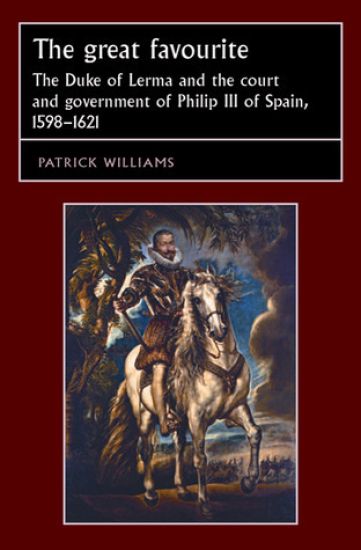
Francisco Gómez de Sandoval, Duke of Lerma (1553-1625) is the last major unknown statesman in modern European history. Patrick Williams brings him dramatically to life and challenges the assumptions that historians have made about him and about Spanish history at a time of profound crisis, inviting a re-evaluation of the phenomenon of government by favourites in this seminal period of European history. Lerma served Philip III as his favourite and first minister between 1598 and 1618. His power dazzled contemporaries; one petitioner telling Philip that he had come to see him ‘because I could not get an appointment with the Duke of Lerma’. Within a decade of assuming office Lerma had raised his family from humiliating poverty to great riches and was the greatest patron of the arts in Europe. His use of power provoked intense debate about the nature of corruption in government. Yet Lerma remained deeply ambivalent about his position. Determined to follow family tradition and retire into religious life to secure the salvation of his soul, he secured a cardinalate in 1617, ending his life as a prince of the Church.
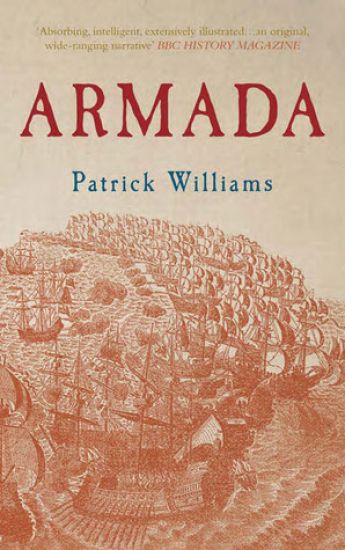
In Armada, Patrick Williams tells the only history of the Armada from the Spanish perspective. In the summer of 1588 Philip II's Invincible Armada edged its way slowly down the English Channel towards the Straits of Dover. The fleet consisted of over 130 ships and 30,000 men, but Philip II of Spain had not sent the Armada to fight the English navy; rather, he had instructed his commander to avoid battle and to ferry the invincible troops of Spain's Army of Flanders across to England to depose Elizabeth I. However, despite its awesome size the Armada did not succeed in embarking one soldier. It was brought to battle and although not conclusively defeated was forced to find its way home by a tortuous voyage around the north coastline of the British Isles. Few of the great galleons that reached Spain ever sailed again and nearly half the men on board did not survive the dreadful journey.