Kirjojen hintavertailu – 12 903 725 kirjaa ja 27 kauppaa

Kirjailija

Patrick Williams

Kirjat ja teokset yhdessä paikassa: 31 kirjaa, julkaisuja vuosilta 1988–2026, suosituimpiin kuuluu Gypsy World. Vertaile teosten hintoja ja tarkista saatavuus suomalaisista kirjakaupoista.

31 kirjaa

Kirjojen julkaisuvuodet: 1988–2026.

Therapist as Life Coach

Therapist as Life Coach

Patrick Williams; Deborah C. Davis

WW Norton Co
2007
sidottu
The first edition of Therapist as Life Coach, published in 2002, anticipated this trend, and since its publication it has become a standard for therapists who wish to transition or expand their practices into life coaching. Pat Williams and Deborah C. Davis have finally revised their classic practice-building book for today's therapists and future coaches. Every chapter in this second edition has been updated and rewritten, reflecting the growth of the coaching field and its increasing appeal to not only therapists, but all helping professionals. The book begins by exploring the history of the coaching movement and shows how society is hungry for life coaches. The second part of the book explains in detail the differences and similarities between coaching and therapy, discusses the coaching relationship, and considers some of the skills therapists will need to learn and unlearn in order to reclaim their joyfulness about their work. Professional transition tools such as developing and marketing your practice and honing your coaching skills are discussed at length in Part Three. The final section moves beyond basic life coaching to introduce coaching specialties such as corporate coaching, offers self-care strategies for life coaches, and peeks into the future of life coaching. There is new material throughout, including an overview of recent coaching developments, updated liability concerns, new business opportunities, and a new section on the research about coaching. Coaching gives practitioners the opportunity to break free of managed care and excessive reliance on the insurance industry and to work with a wide range of clients—specifically, those who are not suffering from mental illness but, rather, seeking to maximize their life potential. This book will help you enter this lucrative and personally enriching world with the skills and knowledge you need to build a successful coaching practice.
Postcolonial African Cinema

Postcolonial African Cinema

David Murphy; Patrick Williams

Manchester University Press
2007
nidottu
This is the first introduction of its kind to an important cross-section of postcolonial African filmmakers from the 1950s to the present. Building on previous critical work in the field, this volume will bring together ideas from a range of disciplines – film studies, African cultural studies, and, in particular, postcolonial studies – in order to combine the in-depth analysis of individual films and bodies of work by individual directors with a sustained interrogation of these films in relation to important theoretical concepts. Structurally, the book is straightforward, though the aim is to incorporate diversity and complexity of approach within the overall simplicity of format. Chapters provide both an overview of the director’s output to date, and the necessary background – personal or national, cultural or political – to enable readers to achieve a better understanding of the director’s choice of subject matter, aesthetic or formal strategies, or ideological stance. They also offer a particular reading of one or more films, in which the authors aim to situate African cinema in relation to important critical and theoretical debates. This book thus constitutes a new departure in African film studies, recognising the maturity of the field, and the need for complex yet accessible approaches to it, which move beyond the purely descriptive while refusing to get bogged down in theoretical jargon. Consequently, the volume should be of interest not only to specialists but also to the general reader.
Postcolonial African Cinema

Postcolonial African Cinema

David Murphy; Patrick Williams

Manchester University Press
2007
sidottu
This is the first introduction of its kind to an important cross-section of postcolonial African filmmakers from the 1950s to the present. Building on previous critical work in the field, this volume will bring together ideas from a range of disciplines – film studies, African cultural studies, and, in particular, postcolonial studies – in order to combine the in-depth analysis of individual films and bodies of work by individual directors with a sustained interrogation of these films in relation to important theoretical concepts. Structurally, the book is straightforward, though the aim is to incorporate diversity and complexity of approach within the overall simplicity of format. Chapters provide both an overview of the director’s output to date, and the necessary background – personal or national, cultural or political – to enable readers to achieve a better understanding of the director’s choice of subject matter, aesthetic or formal strategies, or ideological stance. They also offer a particular reading of one or more films, in which the authors aim to situate African cinema in relation to important critical and theoretical debates. This book thus constitutes a new departure in African film studies, recognising the maturity of the field, and the need for complex yet accessible approaches to it, which move beyond the purely descriptive while refusing to get bogged down in theoretical jargon. Consequently, the volume should be of interest not only to specialists but also to the general reader.
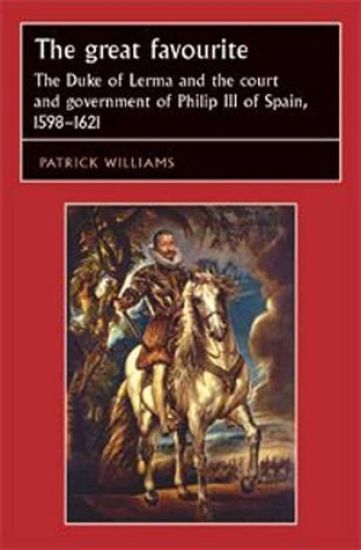
The Great Favourite

The Great Favourite

Patrick Williams

Manchester University Press
2007
sidottu
Francisco Gómez de Sandoval, Duke of Lerma (1553-1625) is the last major unknown statesman in modern European history. Patrick Williams brings him dramatically to life and challenges the assumptions that historians have made about him and about Spanish history at a time of profound crisis, inviting a re-evaluation of the phenomenon of government by favourites in this seminal period of European history. Lerma served Philip III as his favourite and first minister between 1598 and 1618. His power dazzled contemporaries; one petitioner telling Philip that he had come to see him 'because I could not get an appointment with the Duke of Lerma'. Within a decade of assuming office Lerma had raised his family from humiliating poverty to great riches and was the greatest patron of the arts in Europe. His use of power provoked intense debate about the nature of corruption in government. Yet Lerma remained deeply ambivalent about his position. Determined to follow family tradition and retire into religious life to secure the salvation of his soul, he secured a cardinalate in 1617, ending his life as a prince of the Church.
Law and Ethics in Coaching

Law and Ethics in Coaching

Patrick Williams; Sharon K. Anderson

John Wiley Sons Inc
2005
sidottu
"This book provides an easy-to-read introduction to the core ethical and professional issues faced by all coaches irrespective of length of coaching experience. The case studies and guidelines in this book will help coaches constructively reflect on their coaching practice, and will help build the solid ethical foundation that professional coaching practice demands. A very useful text for both the beginning and experienced coach." --Anthony M. Grant, PhD, Director, Coaching Psychology Unit, University of Sydney "Pat Williams is quickly becoming the authority on the ethics of the coaching profession. He brings his full integrity and passion to this wonderful book. Do not overlook the importance of this book to your success." --Laura Berman Fortgang, MCC, pioneer in the coaching field and author of Take Yourself to the Top and Now What? 90 Days to a New Life Direction The first comprehensive book covering ethical and legal guidelines for personal and executive coaches As coaching grows into a unique and fully established profession, coaches are already discovering and dealing with the special ethical and legal dilemmas that can arise in the coaching context. Law and Ethics in Coaching presents the first comprehensive look at ethical and legal issues in coaching. From coach-client conflicts to conflicts of interest, from assessments to informed consent, the authors detail the breadth of ethical quandaries in coaching and provide highly practical advice for avoiding problems--and for solving them. With contributions from leaders in law, ethics, and coaching, the text includes coverage of: * The emergence of the coaching profession and its intersection with ethics and law * Foundations of ethics for professions * Making ethical choices * Getting, growing, and measuring coaching ability * Developing and maintaining client trust * Multiple-role relationships in coaching * Ethical use of assessments in coaching * Legal issues and solutions for coaches * The intersection of culture and ethics in organizations * Coaching into the future Filled with a dynamic blend of case studies, discussion questions, illuminating quotes, and other examples, Law and Ethics in Coaching is both a trailblazing professional reference and an unparalleled textbook for coaching programs.
Total Life Coaching

Total Life Coaching

Lloyd J. Thomas; Patrick Williams

WW Norton Co
2005
sidottu
It is an interactive experience in which you will find recipes for living your life more authentically, as well as master time-honored lessons that you can bring to your coaching clients. Regardless of the personal coaching techniques or skills you may have learned, you may still not be the most effective coach you can become. This book will help you move closer to that goal. Life coaching is more than a collection of techniques and skills. It is more than something you do. Life coaching reflects who you are-it is your authentic being in action. Readers of Pat Williams's and Deborah Davis's book, Therapist as Life Coach, know Pat to be a gifted life coach and passionate teacher. Here Pat and colleague and writer, Lloyd J. Thomas, build on this earlier book and share a unique insight into the coaching process, which shows you precisely how to enhance your professional practices through practical and effective life coaching. It also empowers you to change your own lives through use of the practical information and philosophy presented here. Total Life Coaching is organized into a series of 50 life lessons, and is designed to be either read cover-to-cover or dipped into, as needed, for assistance when conducting a coaching session. Keeping life's processes on the "message and lesson" level makes living and life coaching much easier and more enjoyable. Total Life Coaching guides you step-by-step through the complex process of learning and coaching these fifty important lessons. The lessons are organized into 8 sections: Creating a Personal Identity; Coaching Spirituality and Life Purpose; Coaching Communication Skills; Living Life with Integrity; Success: Clients Achieving their Potential; Coaching Cognitive Skills; Creating High-Quality Relationships; Understanding Your Past to Create a Desired Future. Each lesson is presented as a structured recipe and includes: The life lessonThe messages contained within the lessonCoaching objectives for your clients regarding the lessonWhat you need to know about the lesson to provide the framework for coaching itCoaching methods, exercises, questions, and language for bringing each lesson to your clientsSample coaching conversations that exemplify the coach-client dialogue for the coaching of the lesson.
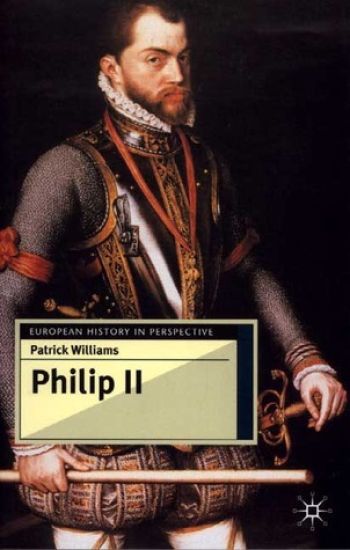
Philip II

Philip II

Patrick Williams

Red Globe Press
2001
nidottu
Four hundred years after his death, Philip II remains one of the most controversial figures in history, admired and reviled in equal measure. He is a figure of global importance, the first ruler on whose territories the sun never set. He led Europe in its defence against the seemingly irresistable power of the Ottoman Empire and many of the nations of Western Europe were forged in part by their responses to his ambitions - Portugal was conquered and most of Italy was controlled by him, while the Low Countries, England and France fought long and bitter wars against him. Philip proclaimed himself the leader of Catholic Europe but quarrelled incessantly with the popes of the Counter-Reformation. In consolidating his monarchy in Spain, Philip used the arts as a political tool; Titian and Palestrina did some of their greatest work for him. This new study traces the development of Philip II and of a kingship that lay at the heart of European political, religious and cultural evolution. It looks in detail at the ministers who worked with this most demanding of kings and at the government that evolved during his reign. It deals also with the pressures of a tortured private life and explores the paradox of a man who as a young ruler was deeply prudent but who became extraordinarily aggressive in his old age and who by his successes and failures - both of them on an epic scale - re-shaped the world in which he lived.
The Armada

The Armada

Patrick Williams

NPI Media Group
2000
sidottu
In the summer of 1588 Philip II's Invincible Armada edged its way slowly down the English Channel towards the Straits of Dover. The fleet consisted of more than 130 ships and 30,000 men, but Philip II of Spain had not sent the Armada to fight the English navy; rather, he had instructed his commander to avoid battle and to ferry the invincible troops of Spain's Army of Flanders across to England to depose Elizabeth I. However, despite its awesome size the Armada did not succeed in embarking one soldier. It was brought to battle and although not conclusively defeated was forced to find its way home by a tortuous voyage around the north coastline of the British Isles. Few of the great galleons that reached Spain ever sailed again and nearly half the men on board did not survive the dreadful journey.
Ngugi Wa Thiong'O

Ngugi Wa Thiong'O

Patrick Williams

Manchester University Press
1999
nidottu
Ngugi is one of the most important novelists on the contemporary world stage, and someone whose name has for many become synonymous with cultural controversy and political struggle. Patrick William’s lucid analysis offers the most up-to-date study of Ngugi’s writing, including his most rcent collection of essays. Focusing on important aspects of Ngugi’s work which critics have hitherto ignored, and drawing on a wide range of relevant theoretical perspectives, this study examines the growing complexity of Ngugi’s accounts of the history of colonised and post-colonial Kenya. The cultural and anti-imperial politics on Ngugi’s experimentation with language and form in both novel and drama is discussed, including the important role of culture as a source of historical memory and strategies of resistance for oppressed groups. All the novels and the major plays are studies in detail, and in addition a substantial chapter examines Ngugi’s contribution in the area of non-fiction.
An Introduction To Post-Colonial Theory

An Introduction To Post-Colonial Theory

Peter Childs; Patrick Williams

Routledge
1996
nidottu
The first book of its kind in the field, this timely introduction to post- colonial theory offers lucid and accessible summaries of the major work of key theorists such as Frantz Fanon, Edward Said. Homi Bhabha and Gayatri Spivak. The Guide also Explores the lines of resistance against colonialism and highlights the theories of post-colonial identity that have been responsible for generating some of the most influential and challenging critical work of recent decades. Designed for undergraduates and postgraduates taking courses related to colonialisn or post-colonialism, the book summarieses the major topics and issues as well as covering the contributions of major and less familiar figures in the field.
The American Public Library and the Problem of Purpose

The American Public Library and the Problem of Purpose

Patrick Williams

Praeger Publishers Inc
1988
sidottu
The problem of purpose in the title is the 130-year debate within the library community over the proper place for the library in society. Chapters discuss roles for public libraries from the founding of the Boston Public Library with its clear educational purpose through attempts at rational planning for library roles in the 1980s. The controversy about the place of popular fiction in American libraries in the late 19th century; the militant outreach efforts during the early decades of the 20th century; the adult education phase during the 1920s to 1940s; and the library as an information nexus for the people during the late 1960s and 1970s are additional topics covered. The style is highly readable and provides important historical insights that should be of interest not only to library educators and students, but to any public librarian concerned with current service roles. Library JournalSince the mid-1800s, when the first American public libraries were established, the proper role of the library as a public institution has been debated within the professional community. A systematic examination of that debate, this study provides an historical survey of the public library's view of itself--its development, social and educational functions, and larger purposes within American society. Williams begins with a discussion of the creation of the Boston Public Library. He assesses public satisfaction with the services that libraries have consistently provided, including books for the recreational reader, materials and assistance to students, and children's programs designed to make books attractive and interesting to younger readers. He looks at the changing aspirations of the community of librarians, which has envisioned the institution variously as an agency for continuing education, a civic center of inspiration and uplift for the people, and a center for the political enlightenment of the masses. The author maintains that the gulf between public and professional perceptions needs to be addressed by present-day librarians, who continue to be faced with conflicting notions of what the library's role should be. He suggests that the professional community must sooner or later integrate a broader vision of the library's purpose with the expectations of the public it is intended to serve. Both entertaining and informative, this book offers new insights and historical perspectives that will be of particular interest to the fields of library science and American social and intellectual history.