Kirjojen hintavertailu – 12 903 725 kirjaa ja 27 kauppaa

Kirjailija

Paul Smith

Kirjat ja teokset yhdessä paikassa: 428 kirjaa, julkaisuja vuosilta 1967–2026, suosituimpiin kuuluu Sana'i: Life & Poems. Vertaile teosten hintoja ja tarkista saatavuus suomalaisista kirjakaupoista.

428 kirjaa

Kirjojen julkaisuvuodet: 1967–2026.

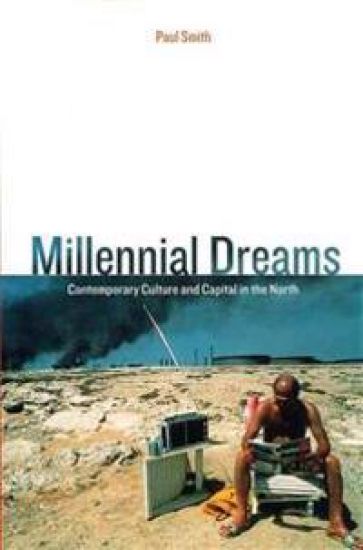
Millennial Dreams

Millennial Dreams

Paul Smith

Verso Books
1997
nidottu
A powerful debunking of the myths of globalization. What are the implications for culture and politics of the current fashion for talking about globalization? In a powerful study of capitalism in the advanced industrial North, Paul Smith demystifies much of the cant that surrounds this discourse and offers searching analyses of a series of cultural phenomena that have emerged in Germany, Britain and the United States during the 1990s. Opening with an examination of the rhetoric of globalization, Smith then makes a study of these three North Atlantic capitalist societies on the eve of the millennium. In Germany he looks at the impact of unification, in particular on the license to loot the former East Germany that is the Treuhand. Turning to Britain, he poignantly describes the serried legacies of Thatcherism, including the movement of resistance against the poll tax that ended her twelve-year reign. Then, in a culminating tour de force, he describes the mediatization of US culture that reached its apogee during the Gulf War and is now visible everywhere in the corporate hyping of the Internet and the Worldwide Web.

Disraeli

Disraeli

Paul Smith

Cambridge University Press
1996
sidottu
'There was', Gladstone declared in 1895, 'no life which required so much to be written as that of Disraeli.' Benjamin Disraeli was born in London in 1804, the grandson of an Italian Jew. In this fresh account of his life, Paul Smith looks at Disraeli's unique character as a fuse of Jewishness and Anglicanism, outsider and insider, nationalist and European, Romantic and Tory; and shows how this formed his 'appeal as an original and a card, the most piquant joker in the pack. His indomitable nerve, as a faintly raffish outsider, in scaling the highest peaks of public life, added spice … to an increasingly unpopular government.'
Government and Armed Forces in Britain, 1856-1990

Government and Armed Forces in Britain, 1856-1990

Paul Smith

BLOOMSBURY PUBLISHING PLC
1996
sidottu
In a period that began with Britain controlling a world-wide empire and included two world wars, followed by the Cold War and massive expenditure on nuclear armaments, the relationship between the politicians and the generals has been central to British history. While it is correctly assumed that the Armed Forces have never threatened British political stability in modern times, the relationship between the military and their political masters is a major, if under-emphasised, theme of British history. While in theory the politicians decided strategy and the military implemented it, in practice decisions often depended on the personalities and experience of those involved. Asquith, the epitome of the civilian, left major strategic decisions in the hands of the military; while Churchill, an ex-soldier and ex-First Lord of the Admiralty, rode roughshod over professional military advice. In a period when arms before ever more technologically sophisticated, there was also the problem of how far politicians could decide on strategies proposed by the military other than by the crude yardstick of cost. The essays in Government and the Armed Forces in Britain, 1856-1990 provide a coherent account not only of the major decision-making of warfare but also of the changes in the organisation and control of the Armed Forces.
Managing the Unions

Managing the Unions

Roger Undy; Patricia Fosh; Huw Morris; Paul Smith

Oxford University Press
1996
sidottu
One of the major intentions of the Conservative governments of the 1980s was to redraw the landscape and map of industrial relations. They aimed to achieve this through a combination of measures: political initiatives and campaigning; a changed economic and social environment; and most directly a programme of industrial relations legislation that increasingly curtailed the role and influence of trade union. This book examines the policies and associated legislation directly intended to change union behaviour. It considers origins, purpose and impact on union behaviour and structure, focusing on the role of ballots as the central mechanism chosen for changing union decision-making. The changes that occurred as a consequence of this legislation are placed in the wider union context and the relative influence of the balloting legislation is assessed against other developments affecting union behaviour, including the strategies adopted by the unions' leaders. It finds the results were not always as intended by the Conservative governments. In a concluding chapter the authors ask whether the framework created in the UK will be an exemplar or exceptional case when compared with developments in other European countries. The book itself is the result of research carried out over almost a decade by a highly experienced and respected team who base their analysis on interviews, detailed analysis of legislation and union rule books, and a series of in-depth case studies. This richly detailed and authoritative book will be essential reading for anyone who wishes to understand how the changing framework of labour relations affected changes in union behaviour. the book will thus appeal to students and academics working in industrial relations, human resource management, labour law, labour economics and politics. Employee relations practitioners and policy makers - managers and trade unionists - will also find it useful for increasing their understanding of the purpose and effect of the legislation.
Disraelian Conservatism and Social Reform

Disraelian Conservatism and Social Reform

Paul Smith

UNIVERSITY OF TORONTO PRESS
1967
pokkari
In the evolution of the Conservative party, the period between 1866 and 1880 marks a critical stage. It is in these years that Disraeli is often held to have founded 'modern' Conservatism, by adapting the party to the necessity of broading the franchise and promoting the interests of the new working-class electors to the forefront of politics. Yet the party hardly became deeply imbued with 'Disraelian' ideas, and the vital current in its development seems to have been rather its growing understanding with the urban bourgeoisie than any raaprochement with the urban working classes. The book discusses the party's course of evolution in its Disraelian period by focusing on a central theme of 'Disraelian' Conservatism -- social reform. Dr Smith examines the role given to social reform in Conservative strategy, and the attitudes adopted by the party towards the social problems most important to the condition of the working classes, education, public health, housing, labour questions, the drink traffic, and poor relief. Finally, he gauges how far the party was affected by 'Disraelian' ideas of popular appeal on the basis of social improvement, and how far its outlook and character were being shaped in other moulds.