

Kirjailija
Paul Virilio
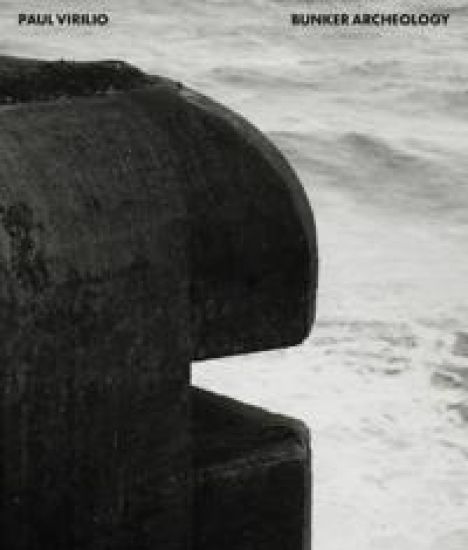
Kirjat ja teokset yhdessä paikassa: 44 kirjaa, julkaisuja vuosilta 1980–2026, suosituimpiin kuuluu Paul Virilio: Bunker Archéologie. Vertaile teosten hintoja ja tarkista saatavuus suomalaisista kirjakaupoista.
44 kirjaa
Kirjojen julkaisuvuodet: 1980–2026.

Paul Virilio is one of contemporary continental thought's most original and provocative critical voices. His vision of the impact of modern technology on the contemporary global condition is powerful and disturbing, ranging over art, architecture, science, politics, visual culture and warfare. In Art and Fear, Virilio traces the twin development of art and science over the 20th century. In his provocative vision, art and science vie with each other for the destruction of the human form as we know it. This is a radical take on the state of art for a post-human and post-historical world. In Art as Far as the Eye Can See Virilio considers the effects that the technological advances of the 20th century have had on art, aesthetics and politics and looks at the way in which these technologies alienate us from our physical environment.
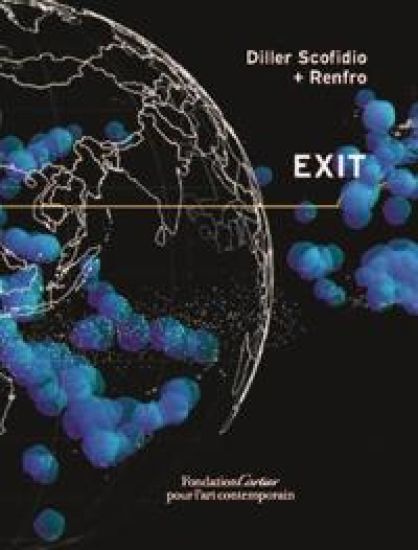
Diller Scofidio + Renfro, EXIT. Based on an idea by Paul Virilio
Paul Virilio; Francois Gemenne
Fondation Cartier pour l'art contemporain
2019
sidottu
Based on an idea by French philosopher and urbanist, Paul Virilio, the 360 video installation EXIT was created in 2008 by the New York-based studio of artists and architects Diller Scofidio + Renfro for the exhibition spaces of the Fondation Cartier pour l'art contemporain in Paris. Composed of a series of animated maps generated by data, this immersive installation investigates human migrations today and their leading causes, including the impact of climate change. Through six scenarios--Population Shifts: Cities; Remittances: Sending Money Home; Political Refugees and Forced Migration; Rising Seas, Sinking Cities; Natural Disasters; and Speechless and Deforestation--it provides the rare opportunity to visually understand the complex relationships between the various economic, political, and environmental factors underpinning contemporary human migrations. The work has been updated entirely in 2015, reflecting the alarming evolution of the data since it was first presented in 2008. Through various texts, descriptions of the animated maps, and numerous illustrations, this book sheds light on the reflections that led to the creation of EXIT. It proposes to delve deeper into the very notions and questions that it raises and that are more relevant today than ever.
A vision of the city as a web of interactive, informational networks that turn our world into a prison-house of illusory transcendence." Where does the city without gates begin? Perhaps inside that fugitive anxiety, that shudder that seizes the minds of those who, just returning from a long vacation, contemplate the imminent encounter with mounds of unwanted mail or with a house that's been broken into and emptied of its contents. It begins with the urge to flee and escape for a second from an oppressive technological environment, to regain one's senses and one's sense of self."-from Lost DimensionOriginally written in French in 1983, Lost Dimension remains a cornerstone book in the work of Paul Virilio: the one most closely tied to his background as an urban planner and architect, and the one that most clearly anticipates the technologically wired urban space we live in today: a city of permanent transit and internalized borders, where time has overtaken space, and where telecommunications has replaced both our living and our working environments. We are living in the realm of the lost dimension, where the three-dimensional public square of our urban past has collapsed into the two-dimensional interface of the various screens that function as gateways to home, office, and public spaces, be they the flat-screen televisions on our walls, the computer screens on our desktops, or the smartphones in our pockets. In this multidisciplinary tapestry of contemporary physics, architecture, aesthetic theory, and sociology, Virilio describes the effects of today's hyperreality on our understanding of space. Having long since passed the opposition of city and country, and city and suburb, the speed-ridden city and space of today are an opposition between the nomadic and the sedentary: a web of interactive, informational networks that turn our world into a prison-house of illusory transcendence.
On 10 September 2008, amid much fanfare, the Great Collider run by CERN in Geneva was turned on. The Collider was supposed to fire protons around a seventeen-mile loop of tunnels, causing them to crash into one another at close to the speed of light and break into even tinier particles. Nine days later the Collider broke down and had to be switched off, the accelerator temporarily silenced, the reckless search for 'God's particle' put on hold. At the same time the speeded-up markets of global finance, with screens of multi-coloured numbers designating the rapid flows of capital, are suddenly thrown into confusion when news spreads that the great Titan of Wall Street, Lehman Brothers, has filed for bankruptcy. Investors panic, share prices plunge and the accelerated markets of global finance seize up. In his latest book, Paul Virilio - the leading theorist of our obsession with technology, speed and power - rewrites 'The Book of Exodus', but the exodus he talks about is no longer conducted in a single file of people headed for some possible Promised Land. It is a closed-circuit exodus within a cramped world, where reduction in human stocks will suddenly look like the only solution to the lockdown of history.
On 10 September 2008, amid much fanfare, the Great Collider run by CERN in Geneva was turned on. The Collider was supposed to fire protons around a seventeen-mile loop of tunnels, causing them to crash into one another at close to the speed of light and break into even tinier particles. Nine days later the Collider broke down and had to be switched off, the accelerator temporarily silenced, the reckless search for 'God's particle' put on hold. At the same time the speeded-up markets of global finance, with screens of multi-coloured numbers designating the rapid flows of capital, are suddenly thrown into confusion when news spreads that the great Titan of Wall Street, Lehman Brothers, has filed for bankruptcy. Investors panic, share prices plunge and the accelerated markets of global finance seize up. In his latest book, Paul Virilio - the leading theorist of our obsession with technology, speed and power - rewrites 'The Book of Exodus', but the exodus he talks about is no longer conducted in a single file of people headed for some possible Promised Land. It is a closed-circuit exodus within a cramped world, where reduction in human stocks will suddenly look like the only solution to the lockdown of history.
A new interview with the philosopher of speed, addressing the ways in which technology is utilized in synchronizing mass emotions. We are living under the administration of fear: fear has become an environment, an everyday landscape. There was a time when wars, famines, and epidemics were localized and limited by a certain timeframe. Today, it is the world itself that is limited, saturated, and manipulated, the world itself that seizes us and confines us with a stressful claustrophobia. Stock-market crises, undifferentiated terrorism, lightning pandemics, "professional" suicides.... Fear has become the world we live in. The administration of fear also means that states are tempted to create policies for the orchestration and management of fear. Globalization has progressively eaten away at the traditional prerogatives of states (most notably of the welfare state), and states have to convince citizens that they can ensure their physical safety. In this new and lengthy interview, Paul Virilio shows us how the "propaganda of progress," the illuminism of new technologies, provide unexpected vectors for fear in the way that they manufacture frenzy and stupor. For Virilio, the economic catastrophe of 2007 was not the death knell of capitalism, as some have claimed, but just further evidence that capitalism has accelerated into turbo-capitalism, and is accelerating still. With every natural disaster, health scare, and malicious rumor now comes the inevitable "information bomb"-live feeds take over real space, and technology connects life to the immediacy of terror, the ultimate expression of speed. With the nuclear dissuasion of the Cold War behind us, we are faced with a new form of civil dissuasion: a state of fear that allows for the suspension of controversial social situations.

French cultural theorist and urbanist Paul Virilio is best known for his writings on media, technology, and architecture. Gathered here in "A Winter's Journey" are four remarkable conversations in which Virilio and architectural writer Marianne Brausch look at a twentieth century characterized by enormous technological acceleration and by technocultural accidents of barbarism and horror. The dialogues in "A Winter's Journey" - structured loosely around the dates 1940, 1950, 1960, and 1980 - chart Virilio's intimate intellectual biography, from his childhood lived against the unstable backdrop of a heavily bombed, wartime Nantes to maturity in a crisis space that is neither entirely militarized nor yet fully civilian, but somewhere between the two. In the course of these conversations, Virilio and Brausch ultimately find hope that in understanding the events of the last century and the cultural responses spawned by them, we can create a more humane era that is more adept at handling the transformations of its technology and culture. "A Winter's Journey" is a revealing and engaging look into the intellectual life and ideas of one of the most influential theorists of contemporary civilization.
With around 645 million people expected to be displaced Ð by wars and other catastrophes Ð by 2050, Virilio begins The Futurism of the Instant by looking at the future of human settlement and migration through the evolution of the city. What he finds is an accelerating exodus from the city as we have known it, an exodus that reverses the desertion of the countryside for the city in the past. This exodus creates a circulating city of transients on the move that will remove us further and further from our native lands en route to the ultimate exile, beyond planet Earth itself Ð something the world's mad scientists have already been planning for some time. Exploring the shifts in scale involved in such population flows and the fraught and complex relationship between sedentary settlement and globalization, Virilio considers what the resultant loss of identity might mean, not only in terms of the exhaustion of biodiversity, but also in terms of the catastrophic elimination of temporal diversity, with the compression and fragmentation of time enabled by the nanotechnologies in an ever increasing acceleration of reality. This previously unimaginable prospect is brought closer by the accident of an instant that wipes out all distinction between past, present and future within the black hole of globalized interconnectivity.
With around 645 million people expected to be displaced Ð by wars and other catastrophes Ð by 2050, Virilio begins The Futurism of the Instant by looking at the future of human settlement and migration through the evolution of the city. What he finds is an accelerating exodus from the city as we have known it, an exodus that reverses the desertion of the countryside for the city in the past. This exodus creates a circulating city of transients on the move that will remove us further and further from our native lands en route to the ultimate exile, beyond planet Earth itself Ð something the world's mad scientists have already been planning for some time. Exploring the shifts in scale involved in such population flows and the fraught and complex relationship between sedentary settlement and globalization, Virilio considers what the resultant loss of identity might mean, not only in terms of the exhaustion of biodiversity, but also in terms of the catastrophic elimination of temporal diversity, with the compression and fragmentation of time enabled by the nanotechnologies in an ever increasing acceleration of reality. This previously unimaginable prospect is brought closer by the accident of an instant that wipes out all distinction between past, present and future within the black hole of globalized interconnectivity.
Paul Virilio puts art back where it matters - at the centre of politics. Art used to be an engagement between artist and materials. But in our new media world art has changed, its very materials have changed and have become technologized. This change reflects a broader social shift. Speed and politics - what Virilio defined as the key characteristics of the twentieth century - have been transformed in the twenty-first century to speed and mass culture. And the defining characteristic of mass culture today is panic. This induced panic relies on a new, all-seeing technology. And the first casualty of this is the human response. What we are losing is the very human 'art of seeing', one individual's engagement with another or with an event, be that political or artistic. What we are losing is our sense of the aesthetic. Where art used to talk of the aesthetics of disappearance, it must now confront the disappearance of the aesthetic.
"The world of the future will be a tighter and tighter struggle against the limits of our intelligence", announced Norbert Wiener... On top of such confinement, today we are faced not only with the greenhouse effect of global warming but also that of incarceration within the tighter and tighter limits of an accelerating sphere, a dromosphere, where depletion of the time distances involved in the geodiversity of the Globe rounds off the depletion of the substances produced by biodiversity. An unanticipated victim of this geophysical foreclosure is science - not only biology but also physics, the "Big Science" now confronted by the space-time contraction of the known world and of knowledge once acquired here below. Whence the threat, still unnoticed, of an accident in knowledge which will double the accident of polluted substances and put paid to this crisis of reason denounced by Husserl, with the extravagant quest for a substitute exoplanet, a new "Promised Land" to be colonised as swiftly as possible; the climate necessary to the life of our minds, as much as to the life of our bodies, from then on, on this old Earth of ours, being like the fatal consequences of a long illness requiring hospitalisation.
"The world of the future will be a tighter and tighter struggle against the limits of our intelligence", announced Norbert Wiener... On top of such confinement, today we are faced not only with the greenhouse effect of global warming but also that of incarceration within the tighter and tighter limits of an accelerating sphere, a dromosphere, where depletion of the time distances involved in the geodiversity of the Globe rounds off the depletion of the substances produced by biodiversity. An unanticipated victim of this geophysical foreclosure is science - not only biology but also physics, the "Big Science" now confronted by the space-time contraction of the known world and of knowledge once acquired here below. Whence the threat, still unnoticed, of an accident in knowledge which will double the accident of polluted substances and put paid to this crisis of reason denounced by Husserl, with the extravagant quest for a substitute exoplanet, a new "Promised Land" to be colonised as swiftly as possible; the climate necessary to the life of our minds, as much as to the life of our bodies, from then on, on this old Earth of ours, being like the fatal consequences of a long illness requiring hospitalisation.
Reveals the convergence of perception and destruction in the parallel technologies of warfare and cinema.
Virilio introduces his understanding of "picnolepsy"-the epileptic state of consciousness produced by speed. Virilio himself referred to his 1980 work The Aesthetics of Disappearance as a "juncture" in his thinking, one at which he brought his focus onto the logistics of perception-a logistics he would soon come to refer to as the "vision machine." If Speed and Politics established Virilio as the inaugural-and still consummate-theorist of "dromology" (the theory of speed and the society it defines), The Aesthetics of Disappearance introduced his understanding of "picnolepsy"-the epileptic state of consciousness produced by speed, or rather, the consciousness invented by the subject through its very absence: the gaps, glitches, and speed bumps lacing through and defining it. Speed and Politics defined the society of speed; The Aesthetics of Disappearance defines what it feels like to live in the society of speed. "I always write with images," Virilio has claimed, and this statement is nowhere better illustrated than with The Aesthetics of Disappearance. Moving from the movie theater to the freeway, and from Craig Breedlove's attainment of terrifying speed in a rocket-power car to the immobility of Howard Hughes in his dark room atop the Desert Inn, Virilio himself jump cuts from such disparate reference points as Fred Astaire, Franz Liszt, and Adolf Loos to Dostoyevsky, Paul Morand, and Aldous Huxley. In its extension of the "aesthetics of disappearance" to war, film, and politics, this book paved the way to Virilio's follow-up: the celebrated study, War and Cinema. This edition features a new introduction by Jonathan Crary, one of the leading theorists of modern visual culture. Foreign Agents seriesDistributed for Semiotext(e)