Kirjojen hintavertailu – 12 859 828 kirjaa ja 27 kauppaa
Kirjailija
Pedro Calderón de la Barca
Kirjat ja teokset yhdessä paikassa: 425 kirjaa, julkaisuja vuosilta 1957–2026, suosituimpiin kuuluu Loa a El año santo de Roma. Vertaile teosten hintoja ja tarkista saatavuus suomalaisista kirjakaupoista.
Nimi esiintyy myös muodoissa: Pedro Calderon De La Barca
Calder ns ausgew hlte Werke in drei B nden - Erster Band ist ein unver nderter, hochwertiger Nachdruck der Originalausgabe aus dem Jahr 1680. Hansebooks ist Herausgeber von Literatur zu unterschiedlichen Themengebieten wie Forschung und Wissenschaft, Reisen und Expeditionen, Kochen und Ern hrung, Medizin und weiteren Genres. Der Schwerpunkt des Verlages liegt auf dem Erhalt historischer Literatur. Viele Werke historischer Schriftsteller und Wissenschaftler sind heute nur noch als Antiquit ten erh ltlich. Hansebooks verlegt diese B cher neu und tr gt damit zum Erhalt selten gewordener Literatur und historischem Wissen auch f r die Zukunft bei.
Prisionero en un castillo, un Pr ncipe quiere escapar de su condici n y enfrentarse a su destino...." La Vida es Sue o" es una obra maestra sobre el poder, la identidad y el l mite entre el sue o y la realidad.
"A Maria el Corazon" es uno de los autos sacramentales, son obras religiosas de car cter aleg rico representadas sobre todo en Espa a y Portugal durante el Corpus Christi. Este g nero ocupa un papel muy interesante en la tradici n teatral de Occidente, pues coexisti , antes de desaparecer, con una incipiente y cada vez m s popular narrativa esc nica inter esada en los individuos, y en los sucesos mundanos.
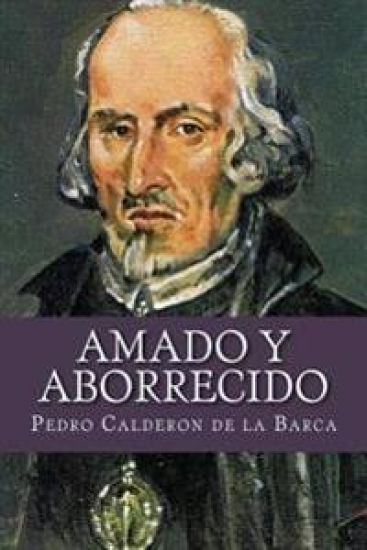
Titulo: Amado y aborrecido Autor: Pedro Calderon de la Barca fecha de Publicacion: a o 1657 Sinopsis: Pedro Calder n de la Barca (Madrid, 1600-Madrid, 1681). Espa a. Su padre era noble y escribano en el consejo de hacienda del rey. Se educ en el colegio imperial de los jesuitas y m s tarde entr en las universidades de Alcal y Salamanca, aunque no se sabe si lleg a graduarse. Tuvo una juventud turbulenta. Incluso se le acusa de la muerte de algunos de sus enemigos. En 1621 se neg a ser sacerdote, y poco despu s, en 1623, empez a escribir y estrenar obras de teatro. Escribi m s de ciento veinte, otra docena larga en colaboraci n y alrededor de setenta autos sacramentales. Sus primeros estrenos fueron en corrales. Entre 1635 y 1637, Calder n de la Barca fue nombrado caballero de la Orden de Santiago. Por entonces public veinticuatro comedias en dos vol menes y La vida es sue o (1636), su obra m s c lebre. En la d cada siguiente vivi en Catalu a y, entre 1640 y 1642, combati con las tropas castellanas. Sin embargo, su salud se quebrant y abandon la vida militar. Entre 1647 y 1649 la muerte de la reina y despu s la del pr ncipe heredero provocaron el cierre de los teatros, por lo que Calder n tuvo que limitarse a escribir autos sacramentales. Calder n muri mientras trabajaba en una comedia dedicada a la reina Mar a Luisa, mujer de Carlos II el Hechizado. Su herman Jos , hombre pendenciero, fue uno de sus editores m s fieles."
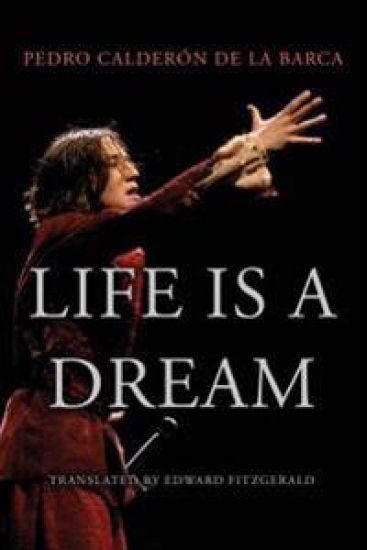
Life is a DreamByPedro Calderon De La BarcaTranslated by Edward FitzgeraldLife Is a Dream is a Spanish-language play by Pedro Calder n de la Barca. First published in 1635 (or possibly in early 1636), it is a philosophical allegory regarding the human situation and the mystery of life. The play has been described as "the supreme example of Spanish Golden Age drama." The story focuses on the fictional Segismundo, Prince of Poland, who has been imprisoned in a tower by his father, King Basilio, following a dire prophecy that the prince would bring disaster to the country and death to the King. Basilio briefly frees Segismundo, but when the prince goes on a rampage, the king imprisons him again, persuading him that it was all a dream. The play's central theme is the conflict between free will and fate. It remains one of Calder n's best-known and most studied works. Other themes include dreams vs. reality and the conflict between father and son. The play has been adapted for other stage works, in film and as a novel.
Two of the dramas contained in The Purgatory of St. Patrick are the most celebrated of all Calderon's writings. The first, "La Vida es Sueno", has been translated into many languages and performed with success on almost every stage in Europe but that of England. So late as the winter of 1866-7, in a Russian version, it drew crowded houses to the great theatre of Moscow; while a few years earlier, as if to give a signal proof of the reality of its title, and that Life was indeed a Dream, the Queen of Sweden expired in the theatre of Stockholm during the performance of "La Vida es Sueno". Saint Patrick was a fifth-century Romano-British Christian missionary and bishop in Ireland. Known as the "Apostle of Ireland", he is the primary patron saint of Ireland, along with saints Brigit of Kildare and Columba. He is venerated in the Roman Catholic Church, the Lutheran Churches, Anglican Communion, the Old Catholic Church and in the Eastern Orthodox Church as equal-to-the-apostles and Enlightener of Ireland. The dates of Patrick's life cannot be fixed with certainty, but there is broad agreement that he was active as a missionary in Ireland during the second half of the 5th century. Early medieval tradition credits him with being the first bishop of Armagh and Primate of Ireland, and they regard him as the founder of Christianity in Ireland, converting a society practising a form of Celtic polytheism. He has been generally so regarded ever since, despite evidence of some earlier Christian presence in Ireland. According to the Confessio of Patrick, when he was about 16, he was captured by Irish pirates from his home in Britain and taken as a slave to Ireland, looking after animals; he lived there for six years before escaping and returning to his family. After becoming a cleric, he returned to northern and western Ireland. In later life, he served as a bishop, but little is known about the places where he worked. By the seventh century, he had already come to be revered as the patron saint of Ireland. Saint Patrick's Day is observed on 17 March, the supposed date of his death. It is celebrated inside and outside Ireland as a religious and cultural holiday. In the dioceses of Ireland, it is both a solemnity and a holy day of obligation; it is also a celebration of Ireland itself. Patrick was born in Roman Britain. Calpurnius, his father, was a decurion and deacon, his grandfather Potitus a priest, from Banna Venta Berniae, a location otherwise unknown, though identified in one tradition as Glannoventa, modern Ravenglass in Cumbria, in what is now England; claims have been advanced for locations in both present-day Scotland and Wales. Patrick, however, was not an active believer. According to the Confession of Saint Patrick, at the age of sixteen he was captured by a group of Irish pirates. They took him to Ireland where he was enslaved and held captive for six years. Patrick writes in the Confession that the time he spent in captivity was critical to his spiritual development. He explains that the Lord had mercy on his youth and ignorance, and afforded him the opportunity to be forgiven of his sins and converted to Christianity. While in captivity, he worked as a shepherd and strengthened his relationship with God through prayer, eventually leading him to convert to Christianity. After six years of captivity he heard a voice telling him that he would soon go home, and then that his ship was ready. Fleeing his master, he travelled to a port, two hundred miles away, where he found a ship and with difficulty persuaded the captain to take him. After three days' sailing, they landed, presumably in Britain, and apparently all left the ship, walking for 28 days in a "wilderness" and becoming faint from hunger. After Patrick prayed for sustenance, they encountered a herd of wild boar; since this was shortly after Patrick had urged them to put their faith in God.
La obra narra el drama vivido en la localidad extreme a de Zalamea de la Serena al pasar las tropas espa olas con motivo de la Guerra de Portugal. El capit n Don lvaro Ataide, personaje de extracci n nobiliaria es alojado en la casa del labrador rico de la localidad, Pedro Crespo, a cuya hermosa hija Isabel secuestra y ultraja. Cuando Pedro Crespo intenta remediar la situaci n, ofrece bienes a Don lvaro para que se case con Isabel, a la que rechaza Don lvaro por ser villana, es decir de clase inferior. Este desprecio afrenta definitivamente el honor de toda la familia de Pedro Crespo. En pleno trauma familiar, es elegido alcalde de Zalamea y siguiendo una querella cursada a la justicia por la ultrajada Isabel, a n sin poseer jurisdicci n sobre el militar, Pedro Crespo prende, juzga y hace ajusticiar a Don lvaro d ndole garrote. La trama se resuelve, cuando el Rey Don Felipe, revisa la decisi n del alcalde, la ratifica y premia su decisi n nombrando a Pedro Crespo alcalde perpetuo de Zalamea.
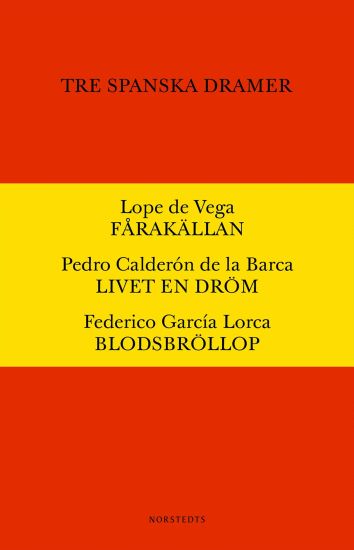
Lope de Vega (1562-1635) och Pedro Calderón de la Barca (1600-1681) är två av de främsta dramatikerna från seklet som kallas Spaniens guldålder. Ingen annanstans i Europa skrevs så mycket teater som i Spanien vid den här tiden. Federico García Lorca (1898-1936) räknas som Spaniens störste dramatiker sedan guldåldern. I Fårakällan (ca 1612-1614) speglar Lope de Vega med inträngande psykologi, ironi och humor sin tids sociala verklighet. Pedro Calderón de la Barcas Livet en dröm (1635) ställer frågor om människans villkor och ansvar och är en plädering för eftertanke och försoning. Detta står i bjärt kontrast till temat i Federico García Lorcas Blodsbröllop (1933), där modern kan bära vad som har hänt i det förflutna men aldrig förlåta.
Life Is a Dream is a play by Pedro Calder n de la Barca. First published in 1635, it is a philosophical allegory regarding the human situation and the mystery of life. Focusing on the fictional Segismundo, Prince of Poland, the play has as its central theme the conflict between free will and fate. The play remains one of Calder n's best-known and most studied works.