
Kirjailija
Percy Bysshe Shelley
Kirjat ja teokset yhdessä paikassa: 432 kirjaa, julkaisuja vuosilta 1964–2026, suosituimpiin kuuluu Peter Bell the Third. Vertaile teosten hintoja ja tarkista saatavuus suomalaisista kirjakaupoista.
432 kirjaa
Kirjojen julkaisuvuodet: 1964–2026.
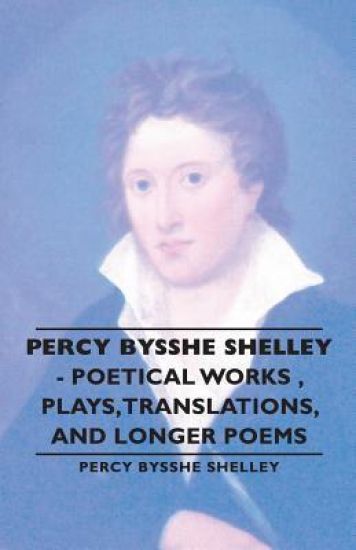
Percy Bysshe Shelley - Poetical Works, Plays,Translations, and Longer Poems
Percy Bysshe Shelley
Read Books
2006
pokkari
The Complete Poetry of Percy Bysshe Shelley
Percy Bysshe Shelley
Johns Hopkins University Press
2005
sidottu
Writing to his publisher in 1813, Shelley expressed the hope that two of his major works "should form one volume"; nearly two centuries later, the second volume of the Johns Hopkins edition of The Complete Poetry fulfills that wish for the first time. This volume collects two important pieces: Queen Mab and The Esdaile Notebook. Privately issued in 1813, Queen Mab was perhaps Shelley's most intellectually ambitious work, articulating his views of science, politics, history, religion, society, and individual human relations. Subtitled A Philosophical Poem: With Notes, it became his most influential-and pirated-poem during much of the nineteenth century, a favorite among reformers and radicals. The Esdaile Notebook, a cycle of fifty-eight early poems, exhibits an astonishing range of verse forms. Unpublished until 1964, this sequence is vital in understanding how the poet mastered his craft. As in the acclaimed first volume, these works have been critically edited by Donald H. Reiman and Neil Fraistat. The poems are presented as Shelley intended, with textual variants included in footnotes. Following the poems are extensive discussions of the circumstances of their composition and the influences they reflect; their publication or circulation by other means; their reception at the time of publication and in the decades since; their re-publication, both authorized and unauthorized; and their place in Shelley's intellectual and aesthetic development.
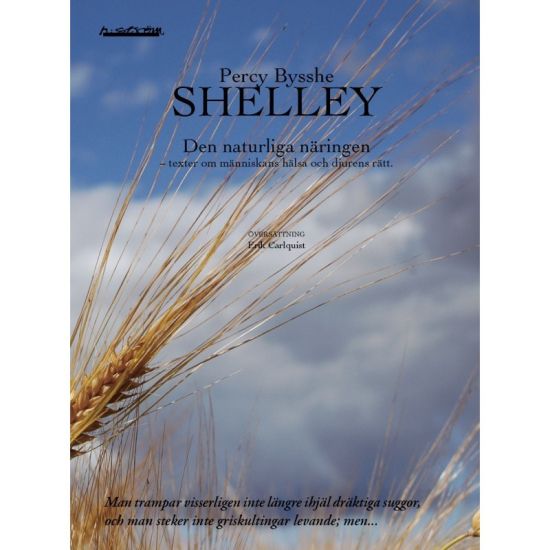
Den naturliga näringen : texter om människans hälsa och djurens rätt
Percy Bysshe Shelley
H:ström Text Kultur AB
2004
nidottu
Den naturliga näringen är ett engagerat försvar för en vegetarisk kost, både ur hälsomässig och moralisk synvinkel. Läs en socialt medveten uppgörelse skriven av en av västerlandets främsta tänkare! Ur utgivarens förord Den romantiske diktaren Percy Bysshe Shelley är oerhört nutida. Många av hans argument både biter och hörs idag i köttindustrialiseringens tidevarv. Att föda sig på djur innebär tortyr, både fysiskt och mentalt, hur försiktig eller "human" slaktaren än tycks vara. Det insåg Shelley och det inser fler och fler i vår tid. Därför kan det vara värt att närmare bekanta sig med en av egetarianismens mest inflytelserika personligheter, Percy Bysshe Shelley. "Man trampar visserligen inte längre ihjäl dräktiga suggor, och man steker inte griskultingar levande; men humrar kokas långsamt ihjäl, och uttrycker genom sina oartikulerade skrik de ohyggliga plågor de genomlider. Höns lemlästas och hålls fängslade tills de blir feta, kalvar blöds till döds för att deras kött skall bli vitt: och en särskild, fruktansvärd tortyrprocess tillhandahåller uskler, behövliga för det frosseri med vilka kristna firar årsdagen av sin Frälsares död. Vilket rovdjur tvingar sitt offer att undergå sådana utdragna, grymma och förnedrande plågor? Blotta tanken på att svälja ett stycke rått kött borde räcka för att bevisa att människans naturliga diet inte består av slaktade djurkadaver."

Complete Poetical Works Of Percy Bysshe Shelley Volume III
Percy Bysshe Shelley
KESSINGER PUBLISHING CO
2004
pokkari

Complete Poetical Works Of Percy Bysshe Shelley Volume II
Percy Bysshe Shelley
KESSINGER PUBLISHING CO
2004
pokkari

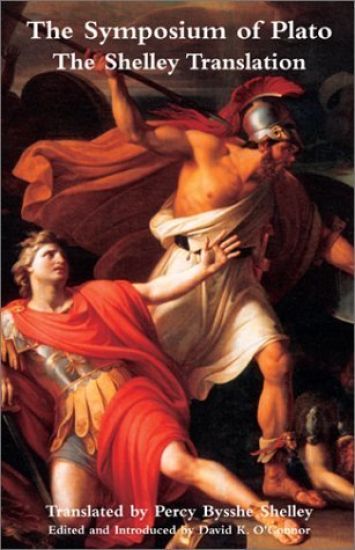
In the summer of 1818, Percy Bysshe Shelley pulled himself away from a flurry of other projects to devote himself to translating Plato's Symposium. Besides being one of the very great lyric poets of Romanticism, Shelley was an accomplished Hellenist, and had a natural sympathy for Plato's way of seeing the world. The result of his labor was a translation of Plato's principal work on love that is, in both clarity and felicity of expression, unmatched by any contemporary translation. Much of what the dialogue offers to today's reader - namely, its invitation to see erotic experience as the privileged locus of our contact with the sacred and the divine - is lost in translation by failures of tone more than by inaccuracies or simple infelicities. The elevation and sophistication of Shelley's prose makes his translation a much better English vehicle for Plato's writing than the rather chatty and colloquial translations current today. Plato's speeches on love need an English idiom in which myth is at home, and in which humour rises to urbanity rather than descending to mere wit and joke. With Shelley, we get a translation of a great literary masterpiece by a writer who is himself a literary master, and his mastery is of exactly the type required by Plato's text. This translation came at the height of Shelley's powers, mirroring in language and conception some of his finest works, and so is itself a precious document in the history of Romanticism, for which the re-appropriation of Plato is second in importance only to the massive influence of Shakespeare. Mary Wollstonecraft Shelley, her husband's literary executor, upon publication of (a somewhat expurgated version of) the dialogue, boasted that "Shelley resembled Plato; both taking more delight in the abstract and the ideal than in the special and the tangible. This did not result from imitation; for it was not till Shelley resided in Italy that he made Plato his study. He then translated his Symposium and Ion; and the English language boasts of no more brilliant composition than Plato's Praise of Love translated by Shelley." If this goes too far, it goes at least in the right direction. David K. O'Connor, in his introduction and footnotes, provides the historical and philosophic framework to appreciate best the importance of the dialogue and translation.
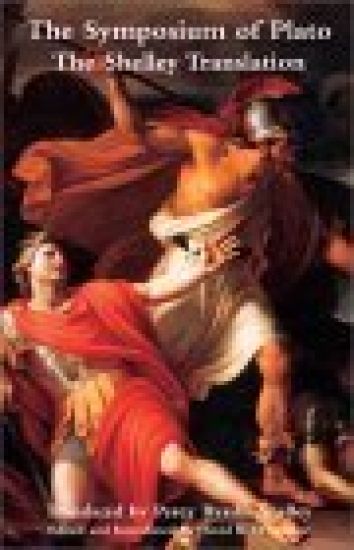
In the summer of 1818, Percy Bysshe Shelley pulled himself away from a flurry of other projects to devote himself to translating Plato's Symposium. Besides being one of the very great lyric poets of Romanticism, Shelley was an accomplished Hellenist, and had a natural sympathy for Plato's way of seeing the world. The result of his labor was a translation of Plato's principal work on love that is, in both clarity and felicity of expression, unmatched by any contemporary translation. Much of what the dialogue offers to today's reader - namely, its invitation to see erotic experience as the privileged locus of our contact with the sacred and the divine - is lost in translation by failures of tone more than by inaccuracies or simple infelicities. The elevation and sophistication of Shelley's prose makes his translation a much better English vehicle for Plato's writing than the rather chatty and colloquial translations current today. Plato's speeches on love need an English idiom in which myth is at home, and in which humour rises to urbanity rather than descending to mere wit and joke. With Shelley, we get a translation of a great literary masterpiece by a writer who is himself a literary master, and his mastery is of exactly the type required by Plato's text. This translation came at the height of Shelley's powers, mirroring in language and conception some of his finest works, and so is itself a precious document in the history of Romanticism, for which the re-appropriation of Plato is second in importance only to the massive influence of Shakespeare. Mary Wollstonecraft Shelley, her husband's literary executor, upon publication of (a somewhat expurgated version of) the dialogue, boasted that "Shelley resembled Plato; both taking more delight in the abstract and the ideal than in the special and the tangible. This did not result from imitation; for it was not till Shelley resided in Italy that he made Plato his study. He then translated his Symposium and Ion; and the English language boasts of no more brilliant composition than Plato's Praise of Love translated by Shelley." If this goes too far, it goes at least in the right direction. David K. O'Connor, in his introduction and footnotes, provides the historical and philosophic framework to appreciate best the importance of the dialogue and translation.