Kirjojen hintavertailu – 12 903 725 kirjaa ja 27 kauppaa

Kirjailija

Peter Clarke

Kirjat ja teokset yhdessä paikassa: 88 kirjaa, julkaisuja vuosilta 1981–2026, suosituimpiin kuuluu Stretch and Challenge 6. Vertaile teosten hintoja ja tarkista saatavuus suomalaisista kirjakaupoista.

88 kirjaa

Kirjojen julkaisuvuodet: 1981–2026.

Collins International Maths Foundation Plus Activity Book C
Collins International Maths Foundation and Foundation Plus provide inspirational, fun and age-appropriate learning for children in early years and kindergarten classes. The materials have been developed in consultation with expert practitioners to be easy to use in the classroom and to support children following a range of early years curricula and who are preparing for their first year of primary education in an international school, including schools following the Cambridge Assessment International Education primary framework. The course introduces young children to maths concepts in an age-appropriate way through topic-based discovery and activity-based learning, with plenty of opportunities to explore maths through games and hands-on exploration. Careful progression ensures children develop the skills they need to be ready for maths in their first year of primary and beyond. Each level comprises Activity Books A, B and C – one for each term – supported by a carefully selected collection of colourful stimulus materials in the Reading Anthology and Teacher’s Guide. Schools can opt to use the course over one or two school years. The engaging and brightly illustrated Activity Books provide age-appropriate practice that is fun for children, that allow teachers to see and record progress, and that show parents what is being covered in class. Collins International Maths Foundation and Foundation Plus can be used on their own, or alongside Collins International English Foundation and Foundation Plus and Collins International Science Foundation and Foundation Plus to provide a comprehensive early-years programme.
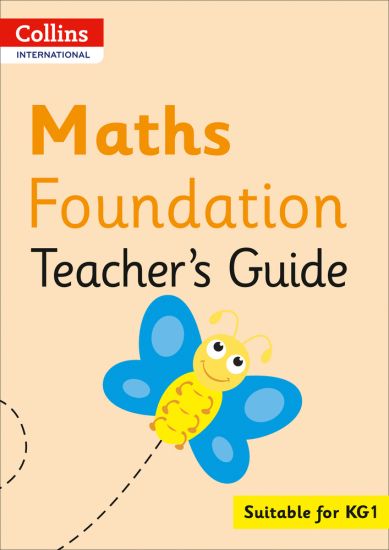
Collins International Maths Foundation Teacher's Guide
Collins International Maths Foundation and Foundation Plus provide inspirational, fun and age-appropriate learning for children in early years and kindergarten classes. The materials have been developed in consultation with expert practitioners to be easy to use in the classroom and to support children following a range of early years curricula and who are preparing for their first year of primary education in an international school, including schools following the Cambridge Assessment International Education primary framework. The course introduces young children to maths concepts in an age-appropriate way through topic-based discovery and activity-based learning, with plenty of opportunities to explore maths through games and hands-on exploration. Careful progression ensures children develop the skills they need to be ready for maths in their first year of primary and beyond. Each level comprises Activity Books A, B and C – one for each term – supported by a carefully selected collection of colourful stimulus materials in the Reading Anthology and Teacher’s Guide. Schools can opt to use the course over one or two school years. The Teacher’s Guides provide accessible support for teachers and teaching assistants, including detailed guidance, ideas for teaching maths in the early years classroom, support for assessment, advice on resources, songs and games, and additional photocopiable activity sheets. Collins International Maths Foundation and Foundation Plus can be used on their own, or alongside Collins International English Foundation and Foundation Plus and Collins International Science Foundation and Foundation Plus to provide a comprehensive early-years programme.
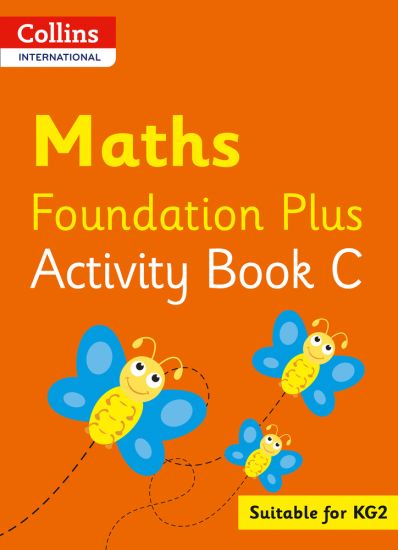
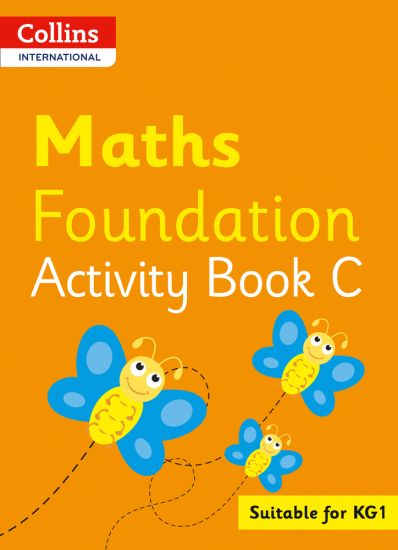
Collins International Maths Foundation Activity Book C

Collins International Maths Foundation Activity Book C

Peter Clarke

HARPERCOLLINS PUBLISHERS
2021
nidottu
Collins International Maths Foundation and Foundation Plus provide inspirational, fun and age-appropriate learning for children in early years and kindergarten classes. The materials have been developed in consultation with expert practitioners to be easy to use in the classroom and to support children following a range of early years curricula and who are preparing for their first year of primary education in an international school, including schools following the Cambridge Assessment International Education primary framework. The course introduces young children to maths concepts in an age-appropriate way through topic-based discovery and activity-based learning, with plenty of opportunities to explore maths through games and hands-on exploration. Careful progression ensures children develop the skills they need to be ready for maths in their first year of primary and beyond. Each level comprises Activity Books A, B and C – one for each term – supported by a carefully selected collection of colourful stimulus materials in the Reading Anthology and Teacher’s Guide. Schools can opt to use the course over one or two school years. The engaging and brightly illustrated Activity Books provide age-appropriate practice that is fun for children, that allow teachers to see and record progress, and that show parents what is being covered in class. Collins International Maths Foundation and Foundation Plus can be used on their own, or alongside Collins International English Foundation and Foundation Plus and Collins International Science Foundation and Foundation Plus to provide a comprehensive early-years programme.
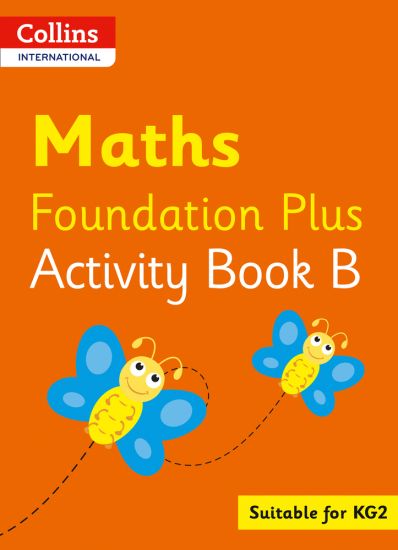
Collins International Maths Foundation Activity Book B

Collins International Maths Foundation Activity Book B

Peter Clarke

HARPERCOLLINS PUBLISHERS
2021
nidottu
Collins International Maths Foundation and Foundation Plus provide inspirational, fun and age-appropriate learning for children in early years and kindergarten classes. The materials have been developed in consultation with expert practitioners to be easy to use in the classroom and to support children following a range of early years curricula and who are preparing for their first year of primary education in an international school, including schools following the Cambridge Assessment International Education primary framework. The course introduces young children to maths concepts in an age-appropriate way through topic-based discovery and activity-based learning, with plenty of opportunities to explore maths through games and hands-on exploration. Careful progression ensures children develop the skills they need to be ready for maths in their first year of primary and beyond. Each level comprises Activity Books A, B and C – one for each term – supported by a carefully selected collection of colourful stimulus materials in the Reading Anthology and Teacher’s Guide. Schools can opt to use the course over one or two school years. The engaging and brightly illustrated Activity Books provide age-appropriate practice that is fun for children, that allow teachers to see and record progress, and that show parents what is being covered in class. Collins International Maths Foundation and Foundation Plus can be used on their own, or alongside Collins International English Foundation and Foundation Plus and Collins International Science Foundation and Foundation Plus to provide a comprehensive early-years programme.
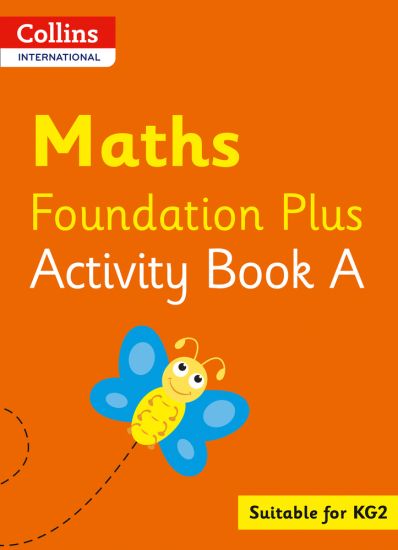
Collins International Maths Foundation Activity Book A

Collins International Maths Foundation Activity Book A

Peter Clarke

HARPERCOLLINS PUBLISHERS
2021
nidottu
Collins International Maths Foundation and Foundation Plus provide inspirational, fun and age-appropriate learning for children in early years and kindergarten classes. The materials have been developed in consultation with expert practitioners to be easy to use in the classroom and to support children following a range of early years curricula and who are preparing for their first year of primary education in an international school, including schools following the Cambridge Assessment International Education primary framework. The course introduces young children to maths concepts in an age-appropriate way through topic-based discovery and activity-based learning, with plenty of opportunities to explore maths through games and hands-on exploration. Careful progression ensures children develop the skills they need to be ready for maths in their first year of primary and beyond. Each level comprises Activity Books A, B and C – one for each term – supported by a carefully selected collection of colourful stimulus materials in the Reading Anthology and Teacher’s Guide. Schools can opt to use the course over one or two school years. The engaging and brightly illustrated Activity Books provide age-appropriate practice that is fun for children, that allow teachers to see and record progress, and that show parents what is being covered in class. Collins International Maths Foundation and Foundation Plus can be used on their own, or alongside Collins International English Foundation and Foundation Plus and Collins International Science Foundation and Foundation Plus to provide a comprehensive early-years programme.
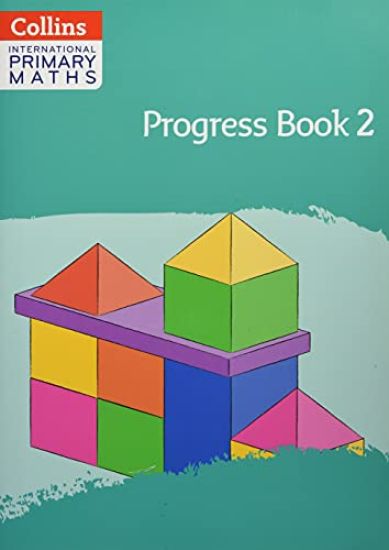
International Primary Maths Progress Book: Stage 2
Collins International Primary Maths supports best practice in primary maths teaching, whilst encouraging teacher professionalism and autonomy. A wealth of supporting digital assets are provided for every lesson, including slideshows, tools and games to ensure they are rich, lively and engaging. Collins International Primary Maths supports best practice in primary maths teaching, whilst encouraging teacher professionalism and autonomy. Each Progress Book page offers assessment questions which allow learners to apply what they have learned and demonstrate mastery and understanding of mathematical concepts. Questions throughout the course develop learners’ Thinking and Working Mathematically skills and each unit offers an opportunity for personal reflection on progress.
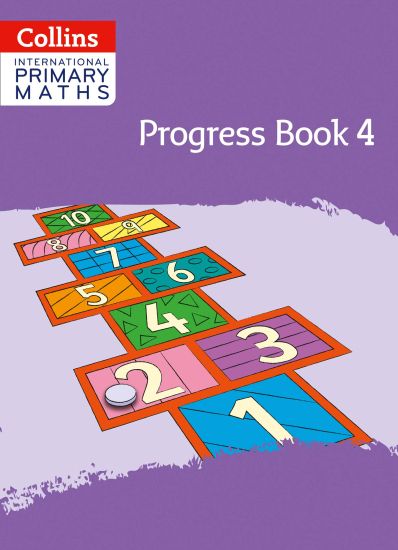
International Primary Maths Progress Book: Stage 4
Collins International Primary Maths supports best practice in primary maths teaching, whilst encouraging teacher professionalism and autonomy. A wealth of supporting digital assets are provided for every lesson, including slideshows, tools and games to ensure they are rich, lively and engaging. Collins International Primary Maths supports best practice in primary maths teaching, whilst encouraging teacher professionalism and autonomy. Each Progress Book page offers assessment questions which allow learners to apply what they have learned and demonstrate mastery and understanding of mathematical concepts. Questions throughout the course develop learners’ Thinking and Working Mathematically skills and each unit offers an opportunity for personal reflection on progress.
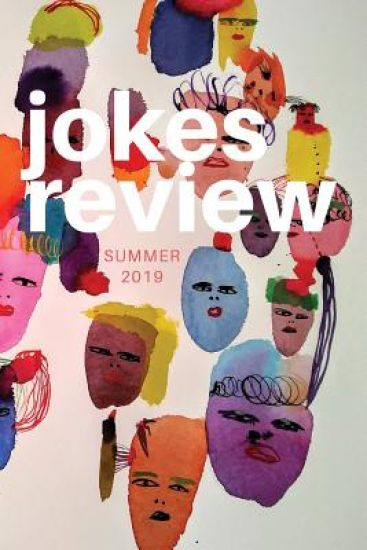
Jokes Review: Summer 2019

Jokes Review: Summer 2019

Peter Clarke

Independently Published
2019
nidottu
Jokes Review Issue 7 features fiction, poetry, and art by contributors including Emily Butler, Charles Cantrell, Laura Eddy, Will Ejzak, Chris Espenshade, Brianna Ferguson, Ricky Garni, Jerry Guarino, Bill Jeffries, Zachary Loewenstein, Raoul Marlowe, Casey McConahay, Dan Morey, Dan Nielsen, Jasmine Pressley, Jon Sindell, Mark Williams, and Jessica Wassil.
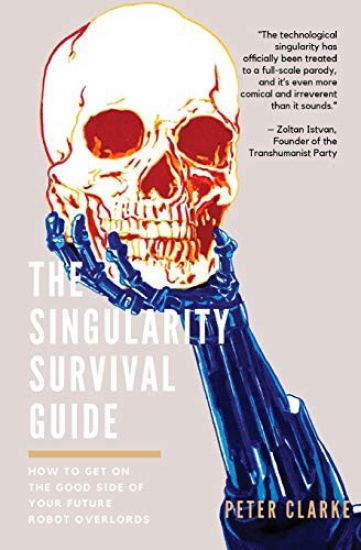
The Singularity Survival Guide: How to Get on the Good Side of Your Future Robot Overlords
Are you prepared to meet your future robot overlords? According to futurist Ray Kurzweil, we only have until 2045 to prepare for the singularity-the moment AI achieves human-level general intelligence. That's where The Singularity Survival Guide comes in. How will you greet this new form of higher intelligence? With a simple handshake? And what are you going to do if the AI is evil? How will you fight against it? Find the answers to these and many other questions in this survival guide-before it's too late." The technological singularity has officially been treated to a full-scale parody, and it's even more comical and irreverent than it sounds."- Zoltan Istvan, Founder of the Transhumanist Party"A timely satire, even if humor doesn't stand a chance of saving us from the sort of superintelligence Clarke envisions." - Arif Khan, Chief Marketing Officer, SingularityNET Published by Logos Literature.
Jokes Review: Winter 2018-19

Jokes Review: Winter 2018-19

Peter Clarke

Independently Published
2019
nidottu
Jokes Review Issue 5 features fiction, poetry, and art by contributors including Bill Abbott Lee Blevins, Clifford Browder, Kimmy Dee, Christopher Fairman, Brianna Ferguson, Chris Fox, Laura Gould, Janna Layton, Tony Lozzi, Jonathan Muzzall, Maya Sinha, Brianna Taylor, Josh Trapani, Sean Trolinder, and Dennis Vannatta.
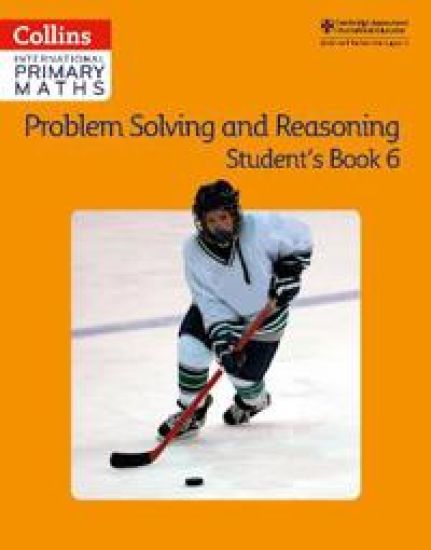
Problem Solving and Reasoning Student Book 6
Students can quickly get to grips with problem solving and reasoning by completing activities categorised by topic and question type. Fully in line with the Cambridge Primary Mathematics Curriculum. Problem solving and reasoning are focuses in the Cambridge Primary Mathematics Curriculum. It is essential that all students have access to problem solving and reasoning activities. Some key benefits to problem solving in maths include:• Helping pupils grasp diverse mathematical concepts and understand the application of the subject• Enhancing strategic thinking• Developing transferable skills This book consists of three different types of mathematical problem solving challenges:1. Solving mathematical problems. This involves pupils solving problems ‘within’ mathematics itself, recognising patterns and relationships, making conjectures and generalisations, and explaining and justifying conclusions.2. Reasoning mathematically. This involved pupils using logical thinking to solve problems, focusing on making conjectures and generalisations, and explaining and justifying conclusions using appropriate language.3. Using & applying mathematics in real-world contexts. This involves pupils engaging in challenges that require them to use and apply their mathematical knowledge and skills in open-ended, real-world contexts.
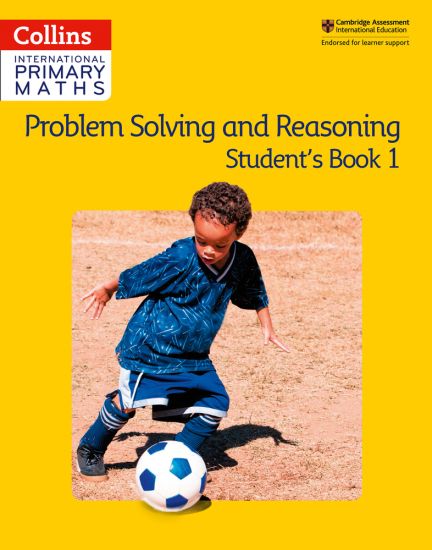
Problem Solving and Reasoning Student Book 1
Students can quickly get to grips with problem solving and reasoning by completing activities categorised by topic and question type. Fully in line with the Cambridge Primary Mathematics Curriculum. Problem solving and reasoning are focuses in the Cambridge Primary Mathematics Curriculum. It is essential that all students have access to problem solving and reasoning activities. Some key benefits to problem solving in maths include: • Helping pupils grasp diverse mathematical concepts and understand the application of the subject • Enhancing strategic thinking • Developing transferable skills This book consists of three different types of mathematical problem solving challenges: 1. Solving mathematical problems. This involves pupils solving problems ‘within’ mathematics itself, recognising patterns and relationships, making conjectures and generalisations, and explaining and justifying conclusions. 2. Reasoning mathematically. This involved pupils using logical thinking to solve problems, focusing on making conjectures and generalisations, and explaining and justifying conclusions using appropriate language. 3. Using & applying mathematics in real-world contexts. This involves pupils engaging in challenges that require them to use and apply their mathematical knowledge and skills in open-ended, real-world contexts.
Problem Solving and Reasoning Student Book 4
Students can quickly get to grips with problem solving and reasoning by completing activities categorised by topic and question type. Fully in line with the Cambridge Primary Mathematics Curriculum. Problem solving and reasoning are focuses in the Cambridge Primary Mathematics Curriculum. It is essential that all students have access to problem solving and reasoning activities. Some key benefits to problem solving in maths include:• Helping pupils grasp diverse mathematical concepts and understand the application of the subject• Enhancing strategic thinking• Developing transferable skills This book consists of three different types of mathematical problem solving challenges:1. Solving mathematical problems. This involves pupils solving problems ‘within’ mathematics itself, recognising patterns and relationships, making conjectures and generalisations, and explaining and justifying conclusions.2. Reasoning mathematically. This involved pupils using logical thinking to solve problems, focusing on making conjectures and generalisations, and explaining and justifying conclusions using appropriate language.3. Using & applying mathematics in real-world contexts. This involves pupils engaging in challenges that require them to use and apply their mathematical knowledge and skills in open-ended, real-world contexts.
Jokes Review: Summer 2018

Jokes Review: Summer 2018

Peter Clarke

Createspace Independent Publishing Platform
2018
nidottu
Jokes Review Issue 5 features fiction, poetry, and art by contributors including Donna Aversa, Mason Binkley, Lane Chasek, Alex Colvin, Robert Douglas Friedman, Jack Eddy, Ricky Garni, Cal LaFountain, Kathy Lanzarotti, Robert Perchan, Audra Puchalski, Adam Scharf, Kevin Sterne, John Stupp, Amanda Tumminaro, and Keir Wilkinson.
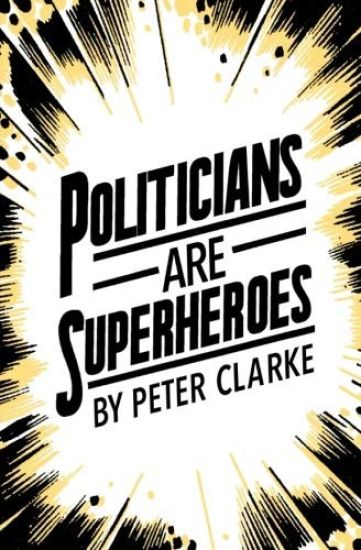
Politicians are Superheroes

Politicians are Superheroes

Peter Clarke

Pski's Porch
2018
nidottu
When politicians are bought and sold, when ancient monarchs prowl the earth looking for kingdoms to rule, and when common citizens are corrupted by dreams of an alien anarchist utopia, the time has come for the world to be destroyed at any moment. In this comic satire of political corruption gone off the rails, it's up to an ensemble of disgraced politicians to prove their mythical status as superheroes-and to save the world from something far more sinister than they had ever imagined.
Problem Solving and Reasoning Pupil Book 6
Pupils can quickly get to grips with KS2 problem solving and reasoning by completing activities categorised by topic and question type. Fully in line with the new National Curriculum. Problem solving and reasoning have been key focuses within primary maths since the introduction of the 2014 curriculum, and the focus on ‘teaching for mastery’. It is essential that all pupils have access to problem solving and reasoning activities. Some key benefits to problem solving in maths include:• Helping pupils grasp diverse mathematical concepts and understand the application of the subject• Enhancing strategic thinking• Developing transferable skills This book consists of three different types of mathematical problem solving challenges:1. Solving mathematical problems. This involves pupils solving problems ‘within’ mathematics itself, recognising patterns and relationships, making conjectures and generalisations, and explaining and justifying conclusions.2. Reasoning mathematically. This involved pupils using logical thinking to solve problems, focusing on making conjectures and generalisations, and explaining and justifying conclusions using appropriate language.3. Using & applying mathematics in real-world contexts. This involves pupils engaging in challenges that require them to use and apply their mathematical knowledge and skills in open-ended, real-world contexts.
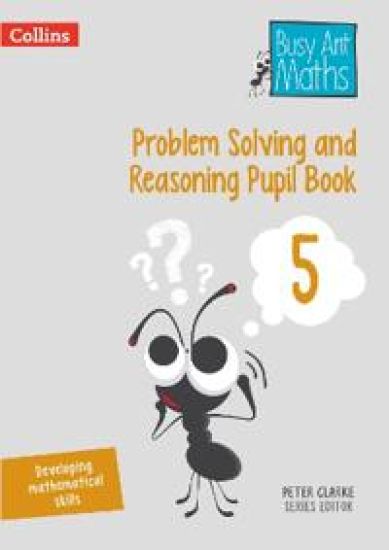
Problem Solving and Reasoning Pupil Book 5
Pupils can quickly get to grips with KS2 problem solving and reasoning by completing activities categorised by topic and question type. Fully in line with the new National Curriculum. Problem solving and reasoning have been key focuses within primary maths since the introduction of the 2014 curriculum, and the focus on ‘teaching for mastery’. It is essential that all pupils have access to problem solving and reasoning activities. Some key benefits to problem solving in maths include:• Helping pupils grasp diverse mathematical concepts and understand the application of the subject• Enhancing strategic thinking• Developing transferable skills This book consists of three different types of mathematical problem solving challenges:1. Solving mathematical problems. This involves pupils solving problems ‘within’ mathematics itself, recognising patterns and relationships, making conjectures and generalisations, and explaining and justifying conclusions.2. Reasoning mathematically. This involved pupils using logical thinking to solve problems, focusing on making conjectures and generalisations, and explaining and justifying conclusions using appropriate language.3. Using & applying mathematics in real-world contexts. This involves pupils engaging in challenges that require them to use and apply their mathematical knowledge and skills in open-ended, real-world contexts.
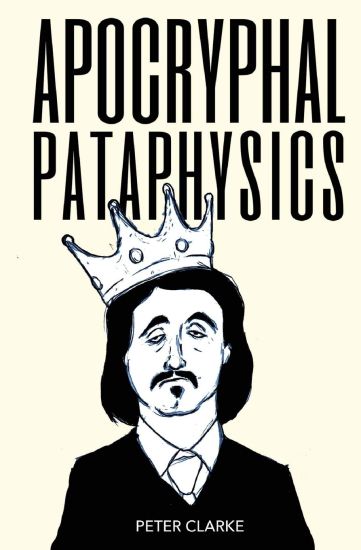
Apocryphal Pataphysics

Apocryphal Pataphysics

Peter Clarke

Createspace Independent Publishing Platform
2018
nidottu

Halvin toimitettuna 16,50 €

Pataphysics, at once a literary trope and a branch of philosophy (and science), has influenced an array of prominent artists, writers, and musicians since the early 20th century. Members of the Paris-based Coll ge de 'Pataphysique have included Marcel Duchamp, Raymond Queneau, Man Ray, Max Ernst, Fernando Arrabal, and the Marx Brothers. "Apocryphal Pataphysics" brings the study of pataphysics into the modern age, stripping off the arcane baggage, fleshing out new dimensions, and serving up a quasi-guidebook for pataphysicians
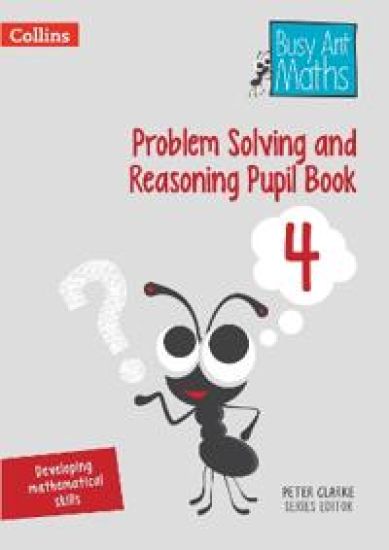
Problem Solving and Reasoning Pupil Book 4

Problem Solving and Reasoning Pupil Book 4

Peter Clarke

HARPERCOLLINS PUBLISHERS
2018
nidottu
Pupils can quickly get to grips with KS2 problem solving and reasoning by completing activities categorised by topic and question type. Fully in line with the new National Curriculum. Problem solving and reasoning have been key focuses within primary maths since the introduction of the 2014 curriculum, and the focus on ‘teaching for mastery’. It is essential that all pupils have access to problem solving and reasoning activities. Some key benefits to problem solving in maths include:• Helping pupils grasp diverse mathematical concepts and understand the application of the subject• Enhancing strategic thinking• Developing transferable skills This book consists of three different types of mathematical problem solving challenges:1. Solving mathematical problems. This involves pupils solving problems ‘within’ mathematics itself, recognising patterns and relationships, making conjectures and generalisations, and explaining and justifying conclusions.2. Reasoning mathematically. This involved pupils using logical thinking to solve problems, focusing on making conjectures and generalisations, and explaining and justifying conclusions using appropriate language.3. Using & applying mathematics in real-world contexts. This involves pupils engaging in challenges that require them to use and apply their mathematical knowledge and skills in open-ended, real-world contexts.