Kirjojen hintavertailu – 12 903 725 kirjaa ja 27 kauppaa

Kirjailija

Peter Clarke

Kirjat ja teokset yhdessä paikassa: 88 kirjaa, julkaisuja vuosilta 1981–2026, suosituimpiin kuuluu Stretch and Challenge 6. Vertaile teosten hintoja ja tarkista saatavuus suomalaisista kirjakaupoista.

88 kirjaa

Kirjojen julkaisuvuodet: 1981–2026.

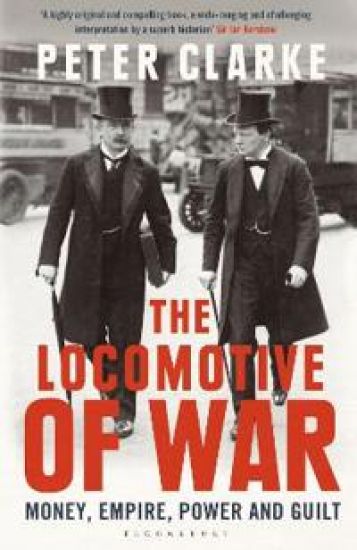
The Locomotive of War

The Locomotive of War

Peter Clarke

Bloomsbury Publishing PLC
2018
nidottu
A Times Literary Supplement Book of the Year for 2017‘War, comrades,’ declared Trotsky, ‘is a great locomotive of history.’ He was thought to be acknowledging the opportunity the First World War had offered the Bolsheviks to seize power in Russia in 1917. Twentieth-century warfare, based on new technologies and mass armies, certainly saw the locomotive power of war geared up to an unprecedented level. Peter Clarke explores the crucial ways in which war can be seen as a prime mover of history in the twentieth century through the eyes of five major figures. In Britain two wartime prime ministers – first David Lloyd George, later Winston Churchill – found their careers made and unmade by the unprecedented challenges they faced. In the United States, two presidents elected in peacetime – Woodrow Wilson and Franklin Roosevelt – likewise found that war drastically changed their agenda. And it was through the experience of war that the economic ideas of John Maynard Keynes were shaped and came to exert wide influence. When the United States entered the First World War in 1917, President Wilson famously declared: ‘The world must be made safe for democracy.’ This liberal prospectus was to be tested in the subsequent peace treaty, one that was to be bitterly remembered by Germans for its ‘war guilt clause’. But both in the making of the war and the making of the peace the issue of guilt did not suddenly materialise out of thin air. As Clarke’s narrative shows, it was an integral component of the Anglo-American liberal tradition. The Locomotive of War is a forensic and punctilious examination of both the interplay between key figures in the context of the unprecedented all-out wars of 1914–18 and 1939–45 and the broader dynamics of history in this extraordinary period. Deeply revealing and insightful, it is history of the highest calibre.
Problem Solving and Reasoning Pupil Book 3
Pupils can quickly get to grips with KS2 problem solving and reasoning by completing activities categorised by topic and question type. Fully in line with the new National Curriculum. Problem solving and reasoning have been key focuses within primary maths since the introduction of the 2014 curriculum, and the focus on ‘teaching for mastery’. It is essential that all pupils have access to problem solving and reasoning activities. Some key benefits to problem solving in maths include:• Helping pupils grasp diverse mathematical concepts and understand the application of the subject• Enhancing strategic thinking• Developing transferable skills This book consists of three different types of mathematical problem solving challenges:1. Solving mathematical problems. This involves pupils solving problems ‘within’ mathematics itself, recognising patterns and relationships, making conjectures and generalisations, and explaining and justifying conclusions.2. Reasoning mathematically. This involved pupils using logical thinking to solve problems, focusing on making conjectures and generalisations, and explaining and justifying conclusions using appropriate language.3. Using & applying mathematics in real-world contexts. This involves pupils engaging in challenges that require them to use and apply their mathematical knowledge and skills in open-ended, real-world contexts.
Problem Solving and Reasoning Pupil Book 2
Pupils can quickly get to grips with KS1 problem solving and reasoning by completing activities categorised by topic and question type. Fully in line with the new National Curriculum. Problem solving and reasoning have been key focuses within primary maths since the introduction of the 2014 curriculum, and the focus on ‘teaching for mastery’. It is essential that all pupils have access to problem solving and reasoning activities. Some key benefits to problem solving in maths include:• Helping pupils grasp diverse mathematical concepts and understand the application of the subject• Enhancing strategic thinking• Developing transferable skills This book consists of three different types of mathematical problem solving challenges:1. Solving mathematical problems. This involves pupils solving problems ‘within’ mathematics itself, recognising patterns and relationships, making conjectures and generalisations, and explaining and justifying conclusions.2. Reasoning mathematically. This involved pupils using logical thinking to solve problems, focusing on making conjectures and generalisations, and explaining and justifying conclusions using appropriate language.3. Using & applying mathematics in real-world contexts. This involves pupils engaging in challenges that require them to use and apply their mathematical knowledge and skills in open-ended, real-world contexts.
Problem Solving and Reasoning Pupil Book 1
Pupils can quickly get to grips with KS1 problem solving and reasoning by completing activities categorised by topic and question type. Fully in line with the new National Curriculum. Problem solving and reasoning have been key focuses within primary maths since the introduction of the 2014 curriculum, and the focus on ‘teaching for mastery’. It is essential that all pupils have access to problem solving and reasoning activities. Some key benefits to problem solving in maths include:• Helping pupils grasp diverse mathematical concepts and understand the application of the subject• Enhancing strategic thinking• Developing transferable skills This book consists of three different types of mathematical problem solving challenges:1. Solving mathematical problems. This involves pupils solving problems ‘within’ mathematics itself, recognising patterns and relationships, making conjectures and generalisations, and explaining and justifying conclusions.2. Reasoning mathematically. This involved pupils using logical thinking to solve problems, focusing on making conjectures and generalisations, and explaining and justifying conclusions using appropriate language.3. Using & applying mathematics in real-world contexts. This involves pupils engaging in challenges that require them to use and apply their mathematical knowledge and skills in open-ended, real-world contexts.
Stretch and Challenge 4

Stretch and Challenge 4

Peter Clarke

Collins
2016
nidottu
Challenge and stretch Year 4 pupils with this resource designed to broaden and deepen children’s mathematical understanding. This book supports the classroom teacher in delivering structured guidance and support for gifted children who are exceeding age-related expectations in mathematics. contains 36 photocopiable newspaper-style issues packed with investigations, problem-solving activities and maths challenges specific teacher guidance (and answers) in the accompanying teachers notes for all 36 issues all content is within the years programme of study evaluate children’s learning and identify the next steps for progression with detailed assessment guidance encourage children to apply their mathematical knowledge and skills across the curriculum with cross-curricular activities
Stretch and Challenge 3

Stretch and Challenge 3

Peter Clarke

Collins
2016
nidottu
Challenge and stretch Year 3 pupils with this resource designed to broaden and deepen children’s mathematical understanding. This book supports the classroom teacher in delivering structured guidance and support for gifted children who are exceeding age-related expectations in mathematics. contains 36 photocopiable newspaper-style issues packed with investigations, problem-solving activities and maths challenges specific teacher guidance (and answers) in the accompanying teachers notes for all 36 issues all content is within the years programme of study evaluate children’s learning and identify the next steps for progression with detailed assessment guidance encourage children to apply their mathematical knowledge and skills across the curriculum with cross-curricular activities
Stretch and Challenge 2

Stretch and Challenge 2

Peter Clarke

Collins
2016
nidottu
Challenge and stretch Year 2 pupils with this resource designed to broaden and deepen children’s mathematical understanding. This book supports the classroom teacher in delivering structured guidance and support for gifted children who are exceeding age-related expectations in mathematics. contains 36 photocopiable newspaper-style issues packed with investigations, problem-solving activities and maths challenges specific teacher guidance (and answers) in the accompanying teachers notes for all 36 issues all content is within the years programme of study evaluate children’s learning and identify the next steps for progression with detailed assessment guidance encourage children to apply their mathematical knowledge and skills across the curriculum with cross-curricular activities
Stretch and Challenge 1

Stretch and Challenge 1

Peter Clarke

Collins
2016
nidottu
Challenge and stretch Year 1 pupils with this resource designed to broaden and deepen children’s mathematical understanding. This book supports the classroom teacher in delivering structured guidance and support for gifted children who are exceeding age-related expectations in mathematics. contains 36 photocopiable newspaper-style issues packed with investigations, problem-solving activities and maths challengesspecific teacher guidance (and answers) in the accompanying teachers notes for all 36 issuesall content is within the years programme of studyevaluate children’s learning and identify the next steps for progression with detailed assessment guidanceencourage children to apply their mathematical knowledge and skills across the curriculum with cross-curricular activities
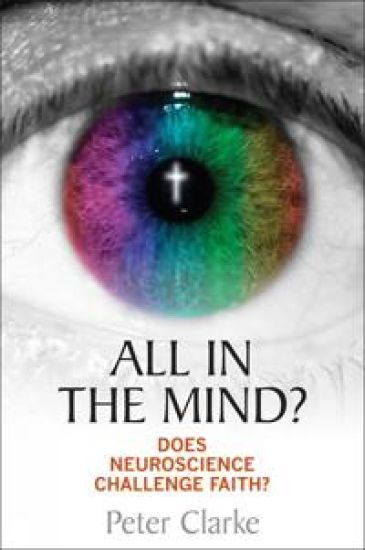
All in the Mind?

All in the Mind?

Peter Clarke

Lion Books
2015
nidottu
Much progress has been made to understand the intricacies of the brain's workings. Some have claimed, and many assumed, that these findings have challenged faith in God to the point of destruction. Are we not mere neural machines? Are religious experiences not just 'in the mind', the products of abnormal 'brain events'? Is faith not just a side effect of evolution? Not so, according to neuroscientist Peter Clarke, after a lifetime's study of the brain. In this comprehensive book, the current state of neuroscientific evidence is weighed up alongside ideas of what it means to be human, the idea of the soul, near-death experiences, and questions of free will and responsibility. He engages with the leading thinkers in these areas, including Francis Crick, Richard Dawkins, Daniel Dennett, Sam Harris, and Daniel Wegner.
Assessment Guide 5

Assessment Guide 5

Peter Clarke

Collins
2015
nidottu
The Busy Ant Maths programme has assessment at the heart and from the start, embedding best practice across the school. This guide offers you a simple and robust way of assessing and capturing progress and communicating it effectively to pupils, other teachers and parents. The Busy Ant Maths programme has assessment at the heart and from the start, embedding best practice across the school. This guide offers you a simple and robust way of assessing and capturing progress and communicating it effectively to pupils, other teachers and parents. Written by an expert author team with over 50 years’ combined classroom experience, Busy Ant Maths is a flexible, whole-school mathematics programme that ensures conceptual understanding and mathematical fluency from the start.
Assessment Guide 1

Assessment Guide 1

Peter Clarke

Collins Educational
2014
kierre
The Busy Ant Maths programme has assessment at the heart and from the start, embedding best practice across the school. This guide offers you a simple and robust way of assessing and capturing progress and communicating it effectively to pupils, other teachers and parents. The Busy Ant Maths programme has assessment at the heart and from the start, embedding best practice across the school. This guide offers you a simple and robust way of assessing and capturing progress and communicating it effectively to pupils, other teachers and parents. Written by an expert author team with over 50 years’ combined classroom experience, Busy Ant Maths is a flexible, whole-school mathematics programme that ensures conceptual understanding and mathematical fluency from the start.
Assessment Guide 3

Assessment Guide 3

Peter Clarke

Collins Educational
2014
kierre
The Busy Ant Maths programme has assessment at the heart and from the start, embedding best practice across the school. This guide offers you a simple and robust way of assessing and capturing progress and communicating it effectively to pupils, other teachers and parents. "The Busy Ant Maths programme has assessment at the heart and from the start, embedding best practice across the school. This guide offers you a simple and robust way of assessing and capturing progress and communicating it effectively to pupils, other teachers and parents. Written by an expert author team with over 50 years’ combined classroom experience, Busy Ant Maths is a flexible, whole-school mathematics programme that ensures conceptual understanding and mathematical fluency from the start. "
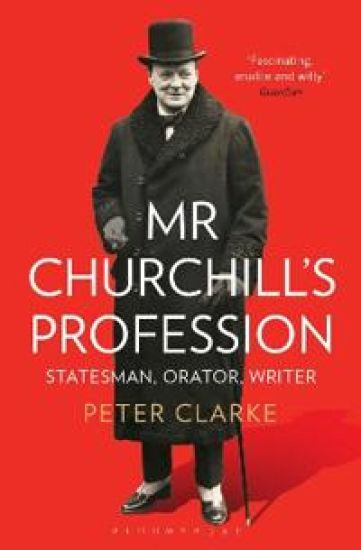
Mr Churchill's Profession

Mr Churchill's Profession

Peter Clarke

Bloomsbury Publishing PLC
2013
nidottu
A fascinating new look at a neglected side of Winston Churchill - his life as a professional author - revealing how his most important literary work shaped his role as a world leader, and the history of the Second World War'Clarke gives us the fullest account yet of Churchill's hair-raising attitude towards money ... A scholarly gem: polished and sparkling and a lasting contribution to our understanding of Churchill' The Literary Review'Fascinating, erudite and witty' GuardianIn 1953, Winston Churchill received the Nobel Prize for Literature. In fact, Churchill was a professional writer before he was a politician, and published a stream of books and articles over the course of two intertwined careers. Now historian Peter Clarke traces the writing of the magisterial work that occupied Churchill for a quarter century, his four-volume History of the English-Speaking Peoples. As an author, Churchill faced woes familiar to many others; chronically short of funds, late on deadlines, scrambling to sell new projects or cajoling his publishers for more advance money. He signed a contract for the English-Speaking project in 1932, a time when his political career seemed over. The magnum opus was to be delivered in 1939, but in that year, history overtook history-writing. When the Nazis swept across Europe, Churchill was summoned from political exile to become Prime Minister. The English-Speaking Peoples would have to wait. The book would indeed be written and become a bestseller, after Churchill left public life. But even before he took office, the massive project was shaping his worldview, his speeches and his leadership. In these pages, Peter Clarke follows Churchill's monumental quest to chronicle the English-Speaking Peoples - a quest that helped to define the enduring 'special relationship' between Britain and America. In the process, Clarke gives us not just an untold chapter in literary history, but a fresh perspective on this iconic figure: a life of Churchill the author.
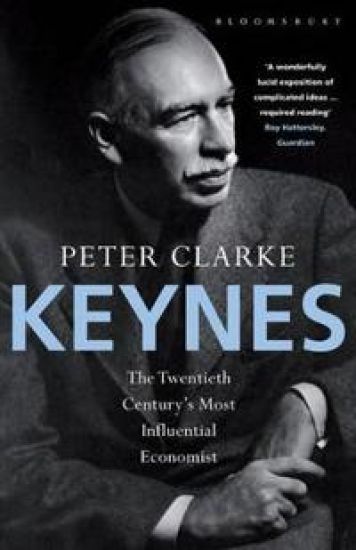
Keynes

Keynes

Peter Clarke

Bloomsbury Publishing PLC
2010
nidottu
In the midst of our current economic crisis, we peer anxiously over the precipice into an uncertain future, and try to put things in perspective by looking to the past. One name above all keeps on cropping up; often there is a grainy picture of a tall man with thinning hair and a heavy moustache, a half-familiar figure from a former era of worldwide economic depression - an era that closed when the Second World War peremptorily intervened. The name of John Maynard Keynes first came to public attention on both sides of the Atlantic in the early 1920s, when the depression in Britain engaged his attention, with the argument that unemployment needed a radical remedy. This was a direct attack on the orthodoxy of the free-market doctrines of the day, with their reliance on the self-acting mechanisms of the Gold Standard and Free Trade to do the trick - in the long run. No, said Keynes, coining one of his most famous phrases: 'In the long run we are all dead.' It is a measure of Keynes's apotheosis that it was President Nixon who said in 1971 that 'we are all Keynesians now', but slowly the name of Keynes lost its gilt; his thinking was dismissed as 'depression economics', irrelevant in a booming economic world. And then came the great meltdown of 2008. Incomprehensibly the market forces, on which the rising generation had been taught to rely, failed to deliver the goods, failed to offer self-correction and failed to cope with a self-inflicted crisis of confidence. For thirty years Keynes's reputation had languished; in thirty days the defunct economist was rediscovered and rehabilitated. Engaging and authoratitive, Keynes explores the often misunderstood man in the context of his own life and times - the impact of his homosexuality and his later marriage to ballerina Lydia Lopokova - and questions the relevence and significance of his groundbreaking ideas today.
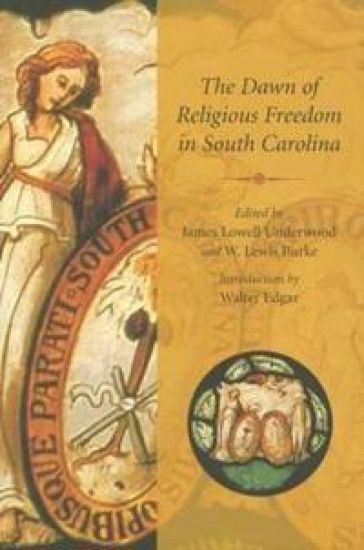
The Dawn of Religious Freedom in South Carolina

The Dawn of Religious Freedom in South Carolina

Orville Vernon Burton; Peter Clarke; Belinda L. Gergel; Richard J. Gergel; David Herr; Alexander Moore; W. Scott Poole

University of South Carolina Press
2006
sidottu
Although South Carolina's colonial charter promised a safe harbor of religious freedom for those who were oppressed, eighteenth-century religious minorities in the colony found their rights were subjugated to those of the Anglicans. ""The Dawn of Religious Freedom in South Carolina"" contains eight essays by historians and legal scholars that trace the quest for religious equality by Protestant dissenters, Huguenots, Jews, Quakers, Afro-Carolinians, and Roman Catholics. Uncovering the historical roots of the separation of church and state, the contributors use South Carolina's experience to illustrate that religious freedom is more secure when widely shared. South Carolina was a beacon of religious freedom when compared to many other North American colonies. The contributors recount the incremental steps that culminated with the 1790 Constitution's grant of ""free exercise and enjoyment of religious profession and worship, without discrimination or preference."" Separate chapters revisit the experiences of the Huguenots, who found themselves caught in a political crossfire between Anglicans and Protestant dissenters; the Quakers, who ultimately left the state because of their inability to reconcile with the principles of a slaveholding society; the Afro-Carolinians, who created ""psychological living space"" through religion while their masters watched nervously for signs of rebellion; and the evangelicals, whose emphasis on equality before God brought ideas about egalitarianism to South Carolina society. The volume's contributors also enumerate Catholic and Jewish efforts to gain religious equality, and recount the leading roles played by such individuals as Jewish patriot Francis Salvador, Catholic bishop John England, and statesman Charles Pinckney.