Kirjailija
Peter Davies
Kirjat ja teokset yhdessä paikassa: 70 kirjaa, julkaisuja vuosilta 1993–2026, suosituimpiin kuuluu Ray Atkins: A Painter's Odyssey. Vertaile teosten hintoja ja tarkista saatavuus suomalaisista kirjakaupoista.
70 kirjaa
Kirjojen julkaisuvuodet: 1993–2026.
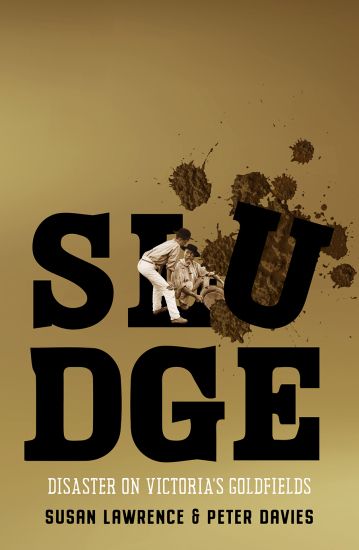
Beautifully illustrated book on one of the UK's leading portrait and figure painters. Paints royalty and well-known public figures
Sludge: Disaster on Victoria's Goldfields
Susan Lawrence; Peter Davies
La Trobe University Press
2019
nidottu
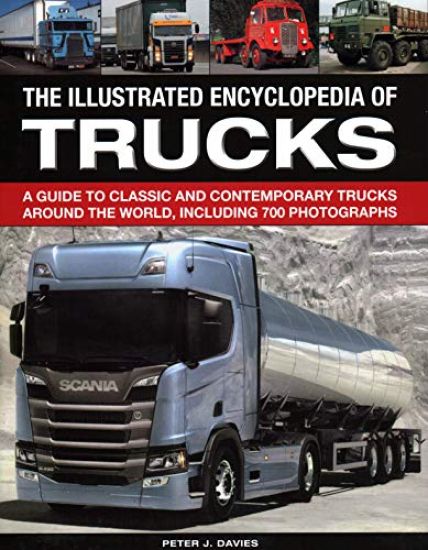
The Illustrated Encyclopedia of Trucks
Peter Davies
Lorenz Books
2018
sidottu
Halvin toimitettuna 23,70 €
UPDATED 2018. This wonderfully illustrated book begins with a history of the truck, covering its origins, evolution, and the early pioneers of truck design and engineering. A wide variety of trucks are featured, with more than 700 photographs, from general load carriers such as box vans and furniture- removal vans, to specialized vehicles such as fire trucks, military trucks and mobile cranes. Trucks from Europe, North America and many other countries are discussed, highlighting differences in design and the manufacturers who made them. Each vehicle is put into historical context, showing its uses, how it reached its current position in the market, or how production resulted in its demise. A history of the truck spans its origins and evolution, from the early pioneers to today's modern load carriers. This is followed by a comprehensive reference to every type of truck: general load carriers, box vans, curtainsiders and tankers, the book features a range of specialized trucks such as concrete mixers, self-loading trucks, furniture-removal vans, refuse trucks, fire trucks, recovery trucks, logging trucks, heavy-haulage trucks, military trucks and mobile cranes. A newly updated photographic A-Z directory of over 280 makes, including all the most successful manufacturers as well as many lesser-known brands.
This book is the first history of UK economic intelligence and offers a new perspective on the evolution of Britain's national intelligence machinery and how it worked during the Cold War. British economic intelligence has a longer pedigree than the Joint Intelligence Committee (JIC) and was the vanguard of intelligence coordination in Whitehall, yet it remains a missing field in intelligence studies. This book is the first history of this core government capability and shows how central it was to the post-war evolution of Whitehall's national intelligence machinery. It places special emphasis on the Joint Intelligence Bureau and Defence Intelligence Staff - two vital organisations in the Ministry of Defence underpinning the whole Whitehall intelligence edifice, but almost totally ignored by historians. Intelligence in Whitehall was not conducted in a parallel universe. This contrasts with the conventional wisdom which accepts the uniqueness of intelligence as a government activity and is symbolised by the historical profile of the JIC. The study draws on the official archives to show that the mantra of the existence of a semi-autonomous UK intelligence community cannot be sustained against the historical evidence of government departments using the machinery of government to advance their traditional priorities. Rivalries within and between agencies and departments, and their determination to resist any central encroachment on their authority, emasculated a truly professional multi-skilled capability in Whitehall at the very moment when it was needed to address emerging global economic issues. This book will be of much interest to students of British government and politics, intelligence studies, defence studies, security studies and international relations in general.
Which type of education should we pay for? How much education should we pay for? Can we buy knowledge about how to improve education? Uniquely presenting a general overview of economic principles applicable to all sectors of education, Paying for Education makes key economic ideas accessible to non-economists, whilst drawing on insights from other social science disciplines. It examines the implications of its analysis, especially for two important areas of policy – paying for teachers and paying for teaching in higher education – in order to highlight some underlying issues and consider alternative policy options, as well as reflect on possible futures. The chapters examine: The value of education for the individual The value of education for society Private and public demands for education Choosing a system to supply education The cost, efficiency and equity of providing educationAnalysing evidence and case studies on a global scale, Paying for Education is an essential read for academics, educational administrators, policy makers, leaders in educational organisations and all of those interested in the future of how we pay for education.
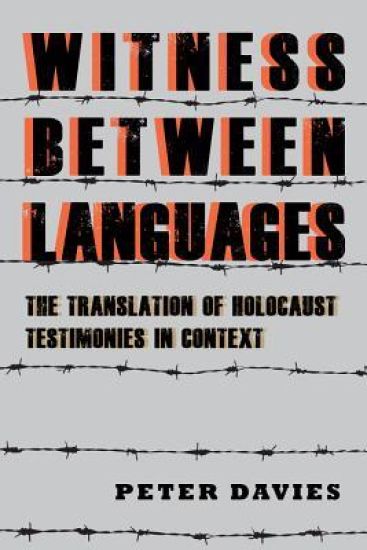
Shows how making translation and its effects visible contributes to a clearer understanding of how knowledge about the Holocaust has been and continues to be created and mediated. A growing body of scholarship is making visible the contribution of translators to the creation, preservation, and transmission of knowledge about the Holocaust. The discussion has tended to be theoretical or to concentrate on exposing the "distorted" translations of texts by important witnesses such as Anne Frank or Elie Wiesel. There is therefore a need for a positive, concrete, and contextually aware approach to the translation of Holocaust testimonies that acknowledges the achievements of translators while being sensitive to the consequences of particular translation strategies. Peter Davies's study proceeds from the assumption that translators are active co-creators whose work does not simply mediate a pre-existing text, but creates a representation of that text for a new readership in a specific context. Translators of Holocaust testimonies, then, provide a form of textual commentary that works through ideas about witnessing, historical truth, and the meaning of the Holocaust. In this way they are important co-creators of knowledge about the Holocaust and its legacy. The study focuses on translations between English and German, and from other languages (principally French, Russian, and Polish) into English and German. It works through a number of case studies, showing how making translation and its effects visible contributes to a clearer understanding of how knowledge about the Holocaust has been and continues to be created and mediated. Peter Davies is Professor of German at the University of Edinburgh.
The Nazi regime in Germany was terrible enough without even accounting for the policy of collaboration. So what extra does collaboration say about Hitler and his plans for Europe? Peter Davies explores the mindset and political attitudes of Hitler and also many other controversial pro-Nazi leaders in Western Europe, Scandanavia, Central and Eastern Europe, and also beyond. Delving into four different "types" of collaboration: political, financial, the Holocaust, and collaboration at a social level, he asks some difficult questions. The story of collaboration is brought up to date, assessing both the legacy and its contemporary parallels.
The pressure on contact time with students and the results required from it are constantly increasing - which means that tutors have to be more and more creative in how they approach their work. This book provides some solutions. 70 Activities for Tutor Groups explores the many and varied ways in which tutors can provoke and encourage meaningful, constructive and focused discussion among their students. It takes the form of a classified and cross-referenced manual of group work activities. For ease of use each activity is presented in a common format: In a nutshell; Aims; What is needed; Time needed; How it works; Good example in action; Diagram; Advantages of this activity; Potential problem(s); Main learning outcome; Variation. The practical, 'low-tech' approach taken by Peter Davies means that these activities (which have all been trialled and are known to work) can be used easily by all tutors, at any level, and in any subject. If you are committed to improving the effectiveness of your work with groups, you need look no further!
This book reports on the largest empirical study of male homosexual behaviour in the UK for thirty years. Important new theories about sexuality are developed, which expose unhelpful stereotypes and challenge outdated assumptions about AIDS.
Nick Adnett and Peter Davies develop an economic analysis of schooling markets, emphasizing both the strengths and weaknesses of orthodox analyses. They explain the economic and social contexts that have generated the widespread desire to reform state schooling and develop a systematic analysis of the key policy components examining both theory and international evidence. The authors employ a unique framework based upon economic analysis that is informed by research performed by educationalists and other social scientists. Markets for Schooling is designed to be accessible and of interest to all researchers, administrators and policy-makers concerned with education and economics.
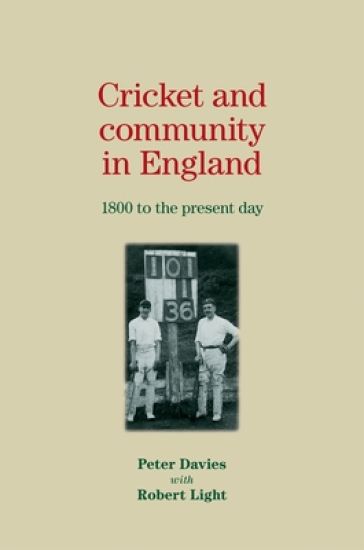
Available in paperback for the first time, Cricket and Community in England: 1800 to the Present Day is a path-breaking enquiry into the social history of the summer game. It is written by two specialist cricket historians and based on extensive primary research. It traces the history of the sport at grassroots level from its origins right up to the present day. It will appeal to the cricket historian and the general sports enthusiast alike. The book has two main goals: to provide readers with an accessible introduction to the history of grassroots cricket in England and to supply a clear overview of the different phases of this history. The structure of book is chronological but also thematic. The six chapters look at such issues as early cricket, the origins of clubs, competition, the two world wars, multiculturalism and cricket in the twenty-first century.
This provocative and non-polemic study explores the value system of the National Front movement in France, and explains the way in which the movement's ideology has been formulated and articulated in the 1980s and 1990s. Also discussing the crucial role of Le Pen, this book provides a fascinating enquiry into the most controversial political party in contemporary France.
An Archaeology of Institutional Confinement
Peter Davies; Penny Crook; Tim Murray
Sydney University Press
2013
nidottu
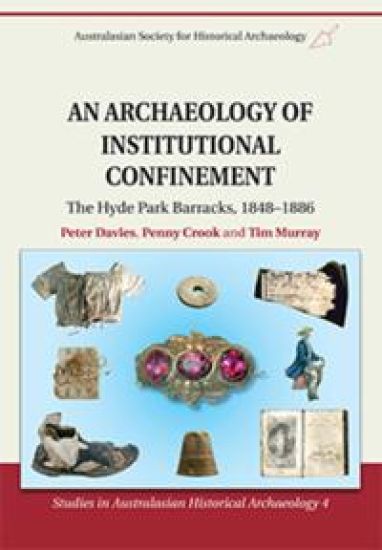
The archaeological assemblage from the Hyde Park Barracks is one of the largest, most comprehensive and best preserved collections of artefacts from any 19th-century institution in the world. Concealed for up to 160 years in the cavities between floorboards and ceilings, the assemblage is a unique archaeological record of institutional confinement, especially of women. The underfloor assemblage dates to the period 1848 to 1886, during which a female Immigration Depot and a Government Asylum for Infirm and Destitute Women occupied the second and third floors of the Barracks. Over the years the women discarded and swept beneath the floor thousands of clothing and textile fragments, tobacco pipes, religious items, sewing equipment, paper scraps and numerous other objects, many of which rarely occur in typical archaeological deposits. These items are presented in detail in this book, and provide unique insight into the private lives of young female migrants and elderly destitute women, most of whom will never be known from historical records.
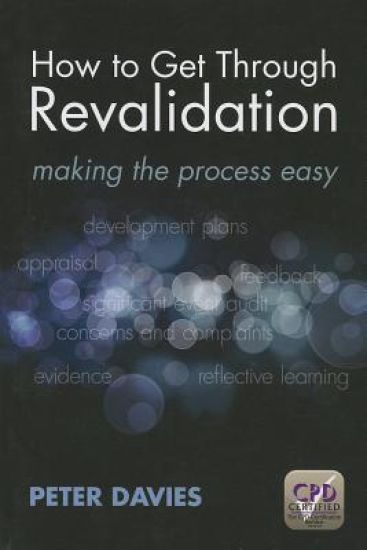
This practical guide offers everything you need to know – what needs to be done, by whom, and by when. With a straight-forward approach it proves that getting through revalidation is a simple task, as long as you understand the key requirements and avoid potential pitfalls along the way. It explains the process and encourages you to explore possibilities for your own personal and professional development.
Lieutenant Colonel Philip Toosey was the senior British officer concerned with the building of the notorious "Bridge over the River Kwai". Toosey understood from the very beginning that the only real issue was how to ensure that as many of his men as possible should survive their captivity. Many thousands who knew how Toosey stood up to their oppressors at great personal risk were incensed by Alec Guinness's brilliant portrayal of 'Colonel Nicholson' in the film version of Boulle's book. This book provides an accurate historical account of the terrible events during which more than 16,000 PoWs died while building the Thai-Burma railway, of which "the bridge" formed an essential part. A memorial to Toosey, this book is also a definitive history of the building of the railway in the context of the Far Eastern theatre of World War II. First published in 1991, this title is part of the Bloomsbury Academic Collections series.
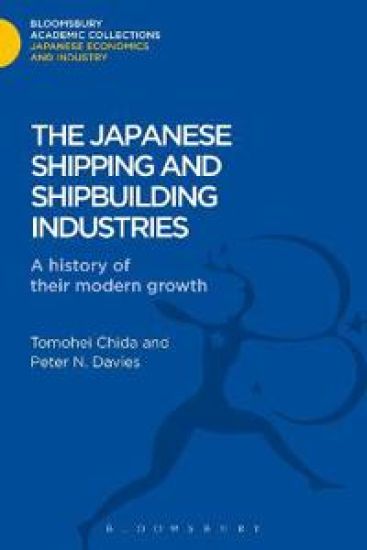
The Japanese Shipping and Shipbuilding Industries
Tomohei Chida; Peter Davies
Bloomsbury Academic
2012
sidottu
This account of the Japanese Shipping Industry treats both the shipping lines and the shipbuilding industry, focusing principally upon the economic developments, following the growth and boom of the 1950s and 60s. The perspective is wide-ranging and the authors relate Japanese shipping not only to the national economy and that of SE Asia but to the world shipping industry as a whole. First published in 1990, this title is part of the Bloomsbury Academic Collections series.
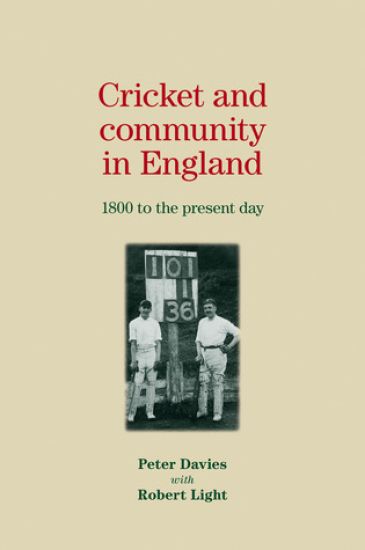
Cricket and Community in England: 1800 to the Present Day is a path-breaking enquiry into the social history of the summer game. It is written by two specialist cricket historians and based on extensive primary research. It traces the history of the sport at grassroots level from its origins right up to the present day. It will appeal to the cricket historian and the general sports enthusiast alike. The book has two main goals: to provide readers with an accessible introduction to the history of grassroots cricket in England and to supply a clear overview of the different phases of this history. The structure of book is chronological but also thematic. The six chapters look at such issues as early cricket, the origins of clubs, competition, the two world wars, multiculturalism and cricket in the twenty-first century.
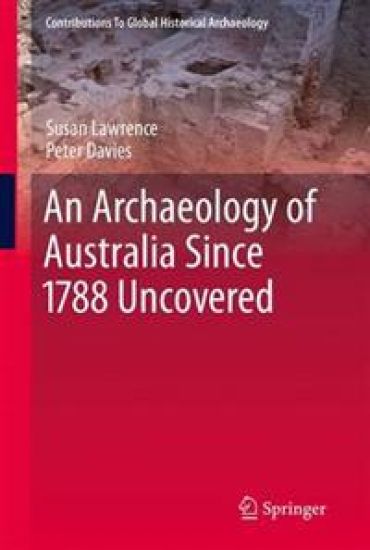
An Archaeology of Australia Since 1788
Susan Lawrence; Peter Davies
Springer-Verlag New York Inc.
2012
nidottu
This volume provides an important new synthesis of archaeological work carried out in Australia on the post-contact period. It draws on dozens of case studies from a wide geographical and temporal span to explore the daily life of Australians in settings such as convict stations, goldfields, whalers' camps, farms, pastoral estates and urban neighbourhoods. The different conditions experienced by various groups of people are described in detail, including rich and poor, convicts and their superiors, Aboriginal people, women, children, and migrant groups. The social themes of gender, class, ethnicity, status and identity inform every chapter, demonstrating that these are vital parts of human experience, and cannot be separated from archaeologies of industry, urbanization and culture contact. The book engages with a wide range of contemporary discussions and debates within Australian history and the international discipline of historical archaeology. The colonization of Australia was part of the international expansion of European hegemony in the eighteenth and nineteenth century. The material discussed here is thus fundamentally part of the global processes of colonization and the creation of settler societies, the industrial revolution, the development of mass consumer culture, and the emergence of national identities. Drawing out these themes and integrating them with the analysis of archaeological materials highlights the vital relevance of archaeology in modern society.
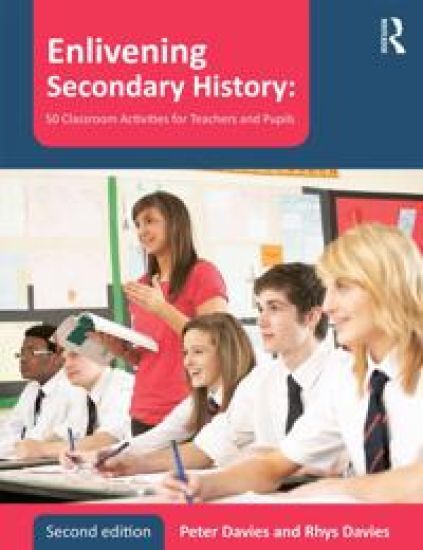
Enlivening Secondary History: 50 Classroom Activities for Teachers and Pupils
Peter Davies; Rhys Davies
Routledge
2012
nidottu
Enlivening Secondary History is the ideal handbook for busy history teachers who want to do something different in their classrooms, but have little time to plan and organise their lessons. Featuring tried-and-tested practical ideas complete with relevant exemplars and step-by-step advice, this best-selling book is a compendium of creative activities to enhance your lessons. For the 11-19 age range, each activity includes links to important topics including the Crusades, the Reformation, the world wars, the Russian Revolution and many more. All the ideas are explained in a clear, user-friendly style, with a breakdown of the time and resources needed for each one. Featuring a brand new expanded section about teaching history through role play, this book also covers: Visuals – picturing the past Numerical data – adding interest Concepts – making them real Primary texts – bringing them alive. Written by practitioners for practitioners, Enlivening Secondary History helps teachers to bring history alive in an imaginative way. It will be an indispensible guide for both experienced and student teachers.