
Kirjailija
Peter Handke
Kirjat ja teokset yhdessä paikassa: 172 kirjaa, julkaisuja vuosilta 1969–2026, suosituimpiin kuuluu Ny Jord 3-4. Vertaile teosten hintoja ja tarkista saatavuus suomalaisista kirjakaupoista.
172 kirjaa
Kirjojen julkaisuvuodet: 1969–2026.
Die Angst des Tormanns beim Elfmeter
Peter Handke
SUHRKAMP VERLAG
2012
sidottu
Halvin toimitettuna 25,70 €
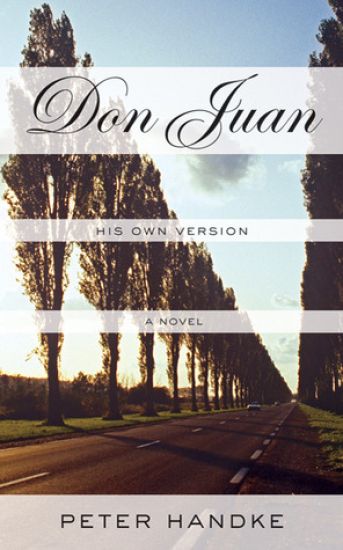
Nobel Prize winner Peter Handke offers a wry and entertaining take on history's most famous seducer as he takes a respite from his stressful existence Don Juan's story--"his own version"--is filtered through the consciousness of an anonymous narrator, a failed innkeeper and chef, into whose solitude Don Juan bursts one day. On each day of the week that follows, Don Juan describes the adventures he experienced on that same day a week earlier. The adventures are erotic, but Handke's Don Juan is more pursued than pursuer. What makes his accounts riveting are the remarkable evocations of places and people, and the nature of his narration. Don Juan: His Own Version is, above all, a book about storytelling and its ability to burst the ordinary boundaries of time and space. In this brief and wry volume, Peter Handke conjures images and depicts the subtleties of human interaction with an unforgettable vividness. Along the way, he offers a sharp commentary on many features of contemporary life.
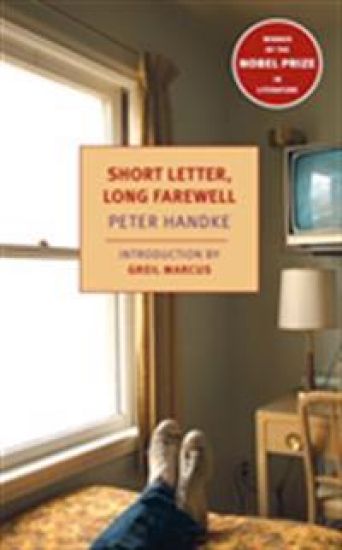
Short Letter, Long Farewell is one the most inventive and exhilarating of the great Peter Handke's novels. Full of seedy noir atmospherics and boasting an air of generalized delirium, the book starts by introducing us to a nameless young German who has just arrived in America, where he hopes to get over the collapse of his marriage. No sooner has he arrived, however, than he discovers that his ex-wife is pursuing him. He flees, she follows, and soon the couple is running circles around each other across the length of America--from Philadelphia to St. Louis to the Arizona desert, and from Portland, Oregon, to L. A. Is it love or vengeance that they want from each other? Everything's spectacularly unclear in a book that is travelogue, suspense story, domestic comedy, and Western showdown, with a totally unexpected Hollywood twist at the end. Above all, Short Letter, Long Farewell is a love letter to America, its landscapes and popular culture, the invitation and the threat of its newness and wildness and emptiness, with the promise of a new life--or the corpse of an old one--lying just around the corner.
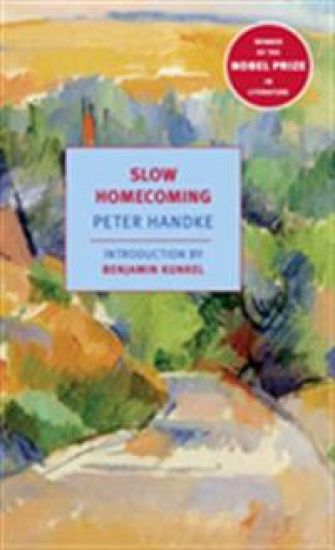
Provocative, romantic, and restlessly exploratory, Peter Handke is one of the great writers of our time. Slow Homecoming, originally published in the late 1970s, is central to his achievement and to the powerful influence he has exercised on other writers, chief among them W. G. Sebald. A novel of self-questioning and self-discovery, Slow Homecoming is a singular odyssey, an escape from the distractions of the modern world and the unhappy consciousness, a voyage that is fraught and fearful but ultimately restorative, ending on an unexpected note of joy. The book begins in America. Writing with the jarring intensity of his early work, Handke introduces Valentin Sorger, a troubled geologist who has gone to Alaska to lose himself in his work, but now feels drawn back home: on his way to Europe he moves in ominous disorientation through the great cities of America. The second part of the book, "The Lesson of Mont Sainte-Victoire," identifies Sorger as a projection of the author, who now writes directly about his own struggle to reconstitute himself and his art by undertaking a pilgrimage to the great mountain that Cézanne painted again and again. Finally, "Child Story" is a beautifully observed, deeply moving account of a new father--not so much Sorger or the author as a kind of Everyman--and his love for his growing daughter.




Am 3. Juni 1959 erschien in der Kärntner Volkszeitung die erste literarische Publikation des noch nicht einmal 17 Jahre alten Peter Handke: eine Erzählung mit dem Titel Der Namenlose. Auf den ersten Roman Die Hornissen (1966) folgten in den sich anschließenden vier Jahrzehnten mehr als sechzig Bücher. Jedes von ihnen erkundet unsere Welt auf je eigene und besondere Weise neu - all diese Bücher zusammen haben unsere Sprache und Wahrnehmung, unser Denken und Handeln radikal verändert.

The Goalie's Anxiety at the Penalty Kick
Peter Handke
Farrar, Straus and Giroux
2007
nidottu
Halvin toimitettuna 20,90 €
The first of Nobel Prize winner Peter Handke's novels to be published in English, The Goalie's Anxiety at the Penalty Kick is a true modern classic that "portrays the...breakdown of a murderer in ways that recall Camus's The Stranger" (The New York Times). The self-destruction of a soccer goalie turned construction worker who wanders aimlessly around a stifling Austrian border town after pursuing and then murdering, almost unthinkingly, a female movie cashier is mirrored by Handke's use of direct, sometimes fractured prose that conveys "at its best a seamless blend of lyricism and horror seen in the runes of a disintegrating world" (Boston Sunday Globe).
Mein Jahr in der Niemandsbucht
Peter Handke
SUHRKAMP VERLAG
2007
pokkari
Halvin toimitettuna 26,50 €
Eine waldige Vorstadtgegend. Ein Jahrzehnt dort. Dann das Jahr. Sieben ferne Freunde. Eine verschwundene Frau. Wer? Wer nicht? Wo? Wo nicht? Der Bahnhofsplatz mit dem Baum, worin die Vögel schlafen. Die Bar der Reisenden. Die Jahreszeiten. Die Pilze. Die Wanderarbeiter. Die Nachbarn. Die Grillen. Kriege, Vulkanausbruch, heiße Quellen. Ein Steinmetz aus dem Mittelalter. Ein kleinlicher Prophet. Das Kind namens Vladimir. Die Fabel vom Lärmmacher, der gesteinigt wird von den Ureinwohnern. Die blaue russische Kirche am Waldrand. Und dann das Wiedersehensfest mit den Freunden in einer Winterrauhnacht kurz vor dem neuen Jahr.
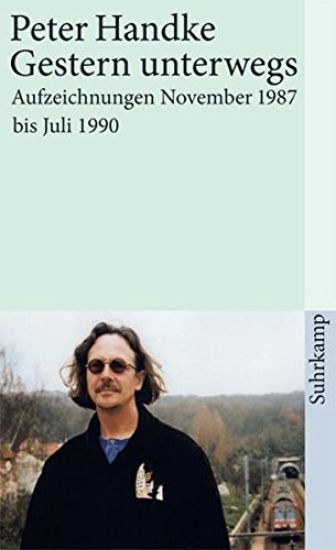
Lieber Leser! Wen es interessiert, der soll wissen, daß ich in den Jahren von "Gestern unterwegs" das Theaterstück "Das Spiel vom Fragen" schrieb, dann den "Versuch über die Müdigkeit", dann das Filmbuch "Die Abwesenheit", dann den "Versuch über die Jukebox"; zuletzt übersetzte ich Shakespeares "A Winter's Tale". P. H., 22. Februar 2005 (es schneit, oder, aus dem Arabischen rückübersetzt: "Es schneit auf die Erde")

Abgeliefert