Kirjojen hintavertailu – 12 859 828 kirjaa ja 27 kauppaa

Kirjailija

Peter Hernon

Kirjat ja teokset yhdessä paikassa: 38 kirjaa, julkaisuja vuosilta 1986–2018, suosituimpiin kuuluu Linking the U.S. National Technical Information Service with Academic and Public Libraries. Vertaile teosten hintoja ja tarkista saatavuus suomalaisista kirjakaupoista.

38 kirjaa

Kirjojen julkaisuvuodet: 1986–2018.

Linking the U.S. National Technical Information Service with Academic and Public Libraries

Linking the U.S. National Technical Information Service with Academic and Public Libraries

Charles R McClure; Peter Hernon; Gary R Purcell

Praeger Publishers Inc
1986
sidottu
Two underlying assumptions of this volume are that academic and public libraries can serve as effective intermediaries between the U. S. National Technical Information Service (NTIS) and library clientele, and that NTIS believes academic and public libraries, as well as their clientele, may comprise markets for expanding the number of people who might use and purchase NTIS information services and products. As such this volume fills a void in the literature regarding the operations and activities of the NTIS. Due to a broad range of factors discussed throughout the volume, academic and public libraries are unable to serve as effective intermediaries between NTIS and library clientele. The link between NTIS and the academic and public library professional community can be improved through a carefully developed and implemented plan.
The Great Rescue

The Great Rescue

Peter Hernon

HarperPaperbacks
2018
nidottu
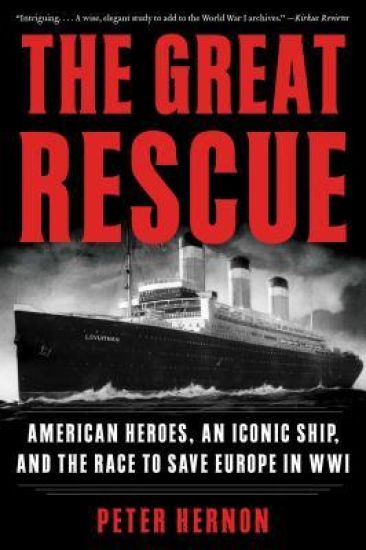
Published in commemoration of the centennial of America’s entry into World War I, the story of the USS Leviathan, the legendary liner turned warship that ferried U. S. soldiers to Europe—a unique war history that offers a fresh, compelling look at this epic time. When war broke out in Europe in August 1914, the new German luxury ocean liner SS Vaterland was interned in New York Harbor, where it remained docked for nearly three years—until the United States officially entered the fight to turn the tide of the war. Seized by authorities for the U. S. Navy once war was declared in April 2017, the liner was renamed the USS Leviathan by President Woodrow Wilson, and converted into an armed troop carrier that transported thousands of American Expeditionary Forces to the battlefields of France. For German U-Boats hunting Allied ships in the treacherous waters of the Atlantic, no target was as prized as the Leviathan, carrying more than 10,000 Doughboys per crossing. But the Germans were not the only deadly force threatening the ship and its passengers. In 1918, a devastating influenza pandemic—the Spanish flu—spread throughout the globe, predominantly striking healthy young adults, including soldiers. Peter Hernon tells the ship’s story across multiple voyages and through the experiences of a diverse cast of participants, including the ship’s captain, Henry Bryan; General John Pershing, commander of the American Expeditionary Force; Congressman Royal Johnson, who voted against the war but enlisted once the resolution passed; Freddie Stowers, a young black South Carolinian whose heroism was ignored because of his race; Irvin Cobb, a star war reporter for the Saturday Evening Post; and Elizabeth Weaver, an army nurse who saw the war’s horrors firsthand; as well as a host of famous supporting characters, including a young Franklin Delano Roosevelt. Thoroughly researched, dramatic, and fast-paced, The Great Rescue is a unique look at the Great War and the diverse lives it touched.
The Great Rescue

The Great Rescue

Peter Hernon

Harper
2017
sidottu
Published in commemoration of the centennial of America's entry into World War I, the story of the USS Leviathan, the legendary liner turned warship that ferried U. S. soldiers to Europe-a unique war history that offers a fresh, compelling look at this epic time. When war broke out in Europe in August 1914, the new German luxury ocean liner SS Vaterland was interned in New York Harbor, where it remained docked for nearly three years-until the United States officially entered the fight to turn the tide of the war. Seized by authorities for the U. S. Navy once war was declared in April 2017, the liner was renamed the USS Leviathan by President Woodrow Wilson, and converted into an armed troop carrier that transported thousands of American Expeditionary Forces to the battlefields of France. For German U-Boats hunting Allied ships in the treacherous waters of the Atlantic, no target was as prized as the Leviathan, carrying more than 10,000 Doughboys per crossing. But the Germans were not the only deadly force threatening the ship and its passengers. In 1918, a devastating influenza pandemic-the Spanish flu-spread throughout the globe, predominantly striking healthy young adults, including soldiers. Peter Hernon tells the ship's story across multiple voyages and through the experiences of a diverse cast of participants, including the ship's captain, Henry Bryan; General John Pershing, commander of the American Expeditionary Force; Congressman Royal Johnson, who voted against the war but enlisted once the resolution passed; Freddie Stowers, a young black South Carolinian whose heroism was ignored because of his race; Irvin Cobb, a star war reporter for the Saturday Evening Post; and Elizabeth Weaver, an army nurse who saw the war's horrors firsthand; as well as a host of famous supporting characters, including a young Franklin Delano Roosevelt. Thoroughly researched, dramatic, and fast-paced, The Great Rescue is a unique look at the Great War and the diverse lives it touched.
Assessing Service Quality

Assessing Service Quality

Peter Hernon; Ellen Altman; Robert Dugan

Facet Publishing
2015
nidottu
Technological progress has meant that the old measures of service quality no longer apply. If libraries are to succeed, they must see themselves in competition with other institutions and sources of information, especially the Web, and make customers feel welcome and valued. This classic book is brought fully up to date as Peter Hernon and Ellen Altman integrate the use of technology into the customer experience. They offer solid, practical ideas for developing a customer service plan that meets the library's customer-focused mission, vision, and goals, challenging librarians to think about customer service in new ways, including:Distance educationUse of library Web sitesPartnerships and consortia for electronic collectionsWays to effectively embrace change for continuous improvement. Readership: Senior librarians, library directors, and trustees will learn how to see the library as the customer does with the aid of dozens of tools to measure service quality - from mystery shoppers and benchmarking to surveys and group interviews.
Managing with Data

Managing with Data

Peter Hernon; Robert E. Dugan; Joseph R. Matthews

ALA Editions
2014
nidottu
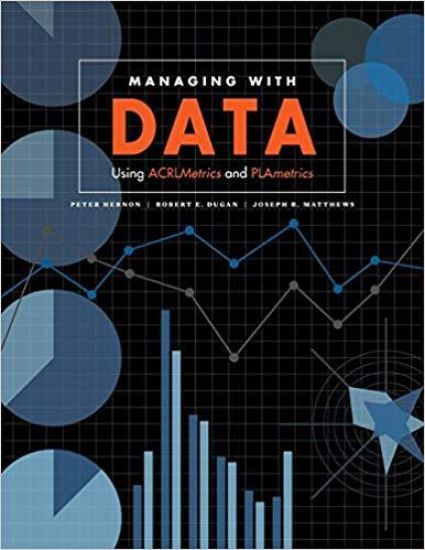
Both the Association of College and Research Libraries (ACRL) and the Public Library Association (PLA) provide important data services. For library managers and administrators, the key to the data s usefulness is knowing how to extract and apply the most relevant information to managing a library and improving accountability. A companion volume to the authors earlier book Getting Started with Evaluation, this guide illustrates how to use the data to support value, collection use, benchmarking, and other best practices. This important resourceIdentifies key metrics in ACRLMetrics and PLAmetricsDemonstrates how to perform techniques for developing and using metricsOffers exercises that illustrate how to produce meaningful metrics and reports, accessible via a free web portalShows how to move towards outcomes assessments while simultaneously embracing valueIncludes numerous examples to guide readers through the data services web interfaces screen-by-screenManagers at academic and public libraries, administrators, and library trustees will find this book a vital tool for accountability and advocacy.
Getting Started with Evaluation

Getting Started with Evaluation

Peter Hernon; Robert E. Dugan; Joseph R. Matthews

ALA Editions
2013
nidottu
Everyone agrees that evaluation of library services is essential, but without a background in research it can be a challenge to apply abstract concepts such as strategic planning, evidence-based decision making, and accountability to real-world situations. Finally library managers have a workbook to help them master key concepts of service quality assessment, offering directed exercises and worksheets to guide them. Firmly rooted in practical application, this book Presents an overview of evaluation and the types of metrics, linking them to strategic planning and infrastructure Examines qualitative versus quantitative measures Shows how to decide which metrics are relevant to one’s own institution, covering benchmarking, best practices, peer group filters, and those metrics that offer a high return on investment Includes pointers for launching and maintaining successful library evaluation through flexibility and smart delegation among library staff Offers advice on marshalling data to effectively communicate the value and impact of a library and its services, no matter the audience Complete with a detailed list of sources for metrics and concrete examples of evaluation in practice, this workbook will be both valuable and immediately useful to managers at academic and public libraries, as well as to library trustees and others interested in assessing service quality.
Information Literacy as a Student Learning Outcome

Information Literacy as a Student Learning Outcome

Laura Saunders; Peter Hernon

Libraries Unlimited Inc
2011
nidottu
This nationwide analysis documents how institutions of higher education are responding to demands for accountability and transparency by implementing and assessing learning goals for information literacy. Stakeholders in higher education across the country—including students, parents, research and policy organizations, and government agencies—are demanding greater accountability and transparency from institutions in how they are promoting quality and improvement in colleges and universities. Indeed, as the cost of tuition rises, colleges and universities as well as the organizations which accredit them are coming under increased scrutiny. Logically, student learning outcomes, assessment, and accreditation are all constantly under the magnifying glass. Information Literacy as a Student Learning Outcome: The Perspective of Institutional Accreditation fills a gap in the current literature by inspecting how institutions nationwide are fulfilling accreditation standards in the area of information literacy. While the bulk of the book looks at institutions accredited by the Middle States Commission on Higher Education, all six of the regional accreditation areas are addressed. The author also conducted campus visits and interviews at selected institutions in order to provide a more in-depth analysis of these institutions' programs for information literacy.
Engaging in Evaluation and Assessment Research

Engaging in Evaluation and Assessment Research

Peter Hernon; Robert E. Dugan; Danuta A. Nitecki

Libraries Unlimited Inc
2011
nidottu
For library managers, this book explains evaluation and assessment research and identifies the components of proper execution, such as planning, decision making, and accountability. Increasingly, libraries must address questions of accountability, efficiency, effectiveness, and impact—the extent to which a program causes positive changes in the target population. All of these issues are important to library managers and those to whom they directly report. With the heightened interest in customer expectations and increased focus on service quality and customer satisfaction, evaluation and assessment research provides the essential methodology for library managers to obtain meaningful answers. Engaging in Evaluation and Assessment Research introduces evaluation and assessment, clearly distinguishing between the two; explains evaluation and assessment research as a formal inquiry process with individual components; and demonstrates the use of the evidence gathered for planning, decision making, and accountability. This book is not another research methods textbook; it is a resource that will provide real knowledge and strategies to expand the library manager's toolkit for operating in the real world. Beyond exposing the reader to the unique culture of research and to different ways of conducting research, the authors also offer advice on how to get published.
Listening to the Customer

Listening to the Customer

Peter Hernon; Joseph R. Matthews

Libraries Unlimited Inc
2011
nidottu
A thorough explanation of how a voice-of-the-customer program for libraries can give customers the opportunity to make their opinions known, enabling libraries to develop services that meet or exceed their patrons' changing expectations. A modern library is much like a business in that it must provide a set of products and services to meet the changing needs and expectations of its customers in order to succeed and survive. With libraries now focusing more on their "customers," Listening to the Customer is a critical resource that provides effective strategies for gathering information from the client perspective in order to meet library patrons' expectations and specific information needs. The voice-of-the-customer program described by Hernon and Matthews involves not only listening to customers, but also maintaining an ongoing dialogue with them. The book addresses different types of customers, assorted methods for gathering evidence, data reporting to stakeholders, and relevant metrics for libraries to report. The authors also devote a chapter to regaining lost customers and discuss leadership techniques and preparation steps to meet an uncertain future. Completely unique in its methodological focus, this book is one of very few titles to address the importance of library customer service in the 21st century.
Assessing Service Quality

Assessing Service Quality

Peter Hernon; Ellen Altman

ALA Editions
2010
nidottu
Because of technology, the old measures of service quality no longer apply. If libraries are to succeed, they must see themselves in competition with other institutions and sources of information--especially the Web--and make customers feel welcome and valued. This classic book is brought fully up to date as Peter Hernon and Ellen Altman integrate the use of technology into the customer experience. They offer solid, practical ideas for developing a customer service plan that meets the library's customer-focused mission, vision, and goals, challenging librarians to think about customer service in new ways, including: Distance education, Use of library Web sites, Partnerships and consortia for electronic collections, Ways to effectively embrace change for continuous improvement, Senior librarians, library directors, and trustees will learn how to see the library as the customer does with the aid of dozens of tools to measure service quality--from mystery shoppers and benchmarking to surveys and group interviews.
Viewing Library Metrics from Different Perspectives

Viewing Library Metrics from Different Perspectives

Robert E. Dugan; Peter Hernon; Danuta A. Nitecki

Libraries Unlimited Inc
2009
nidottu
This guidebook shows academic libraries how to use innovative new performance metrics to achieve greater accountability and higher levels of service. Viewing Library Metrics from Different Perspectives: Inputs, Outputs, and Outcomes helps academic librarians go well beyond the basic guideposts of inputs and outputs to explore a wide range of metrics for measuring their effectiveness and improving performance. Based on their groundbreaking article, "Outcomes Assessment: Not Synonymous with Inputs and Outputs," Robert Dugan and Peter Hernon, along with coauthor Danuta Nitecki, give libraries the tools they need to see beyond their own walls and interpret both outcome and impact metrics from the perspective of the parent institution, the customer, and the stakeholder, as well as the library itself. Viewing Library Metrics from Different Perspectives makes a convincing argument for targeting the right audience with the right metric. The first three chapters introduce key concepts and the relevant literature, and helps libraries make the crucial distinction between assessment and evaluation. Chapters four through nine examine the four perspectives and their attendant metrics. The final chapters discuss how best to present and interpret the results.
Convergence and Collaboration of Campus Information Services

Convergence and Collaboration of Campus Information Services

Ronald R. Powell; Peter Hernon

Libraries Unlimited Inc
2008
nidottu
Convergence and collaboration enable an academic library to be more fully engaged with its campus. In its simplest form, convergence is defined as joint activities of a campus's units to further their shared mission of supporting teaching, learning, and inquiry. Convergence, which involves collaboration in both organizational structures and service delivery, leads to users benefiting from contact with individuals who have relevant expertise. Collaboration also may lead to convergence of collections, thereby enhancing library service to an institution's constituents. Specific examples of convergence/collaboration include centers for teaching excellence, tutor and writing centers, information arcades, facilities for multi-media production and delivery, information and learning commons, cafes, photocopying centers; centers for distance education, participation in the use of course management software (e.g., Blackboard) to make library resources available to classes digitally and to make students more information literate, publishing (e.g., university presses and digital collections, including institutional repositories), counseling and career centers, and services for students for whom English is a secondary language (mostly in community colleges). For anyone interested in how academic libraries can be more closely tied to the various missions of the colleges/universities in which they reside.
Academic Librarians as Emotionally Intelligent Leaders

Academic Librarians as Emotionally Intelligent Leaders

Peter Hernon; Joan Giesecke; Camila A. Alire

Libraries Unlimited Inc
2007
nidottu
Emotional intelligence (EI), as based on the work of Daniel Goleman and his colleagues, has received a lot of attention in the Harvard Business Review and elsewhere as a leadership theory. It is composed of five domains: Knowing your emotions, Managing your emotions, Motivating yourself, Recognizing and understanding other people's emotions, and Managing relationships (managing the emotions of others). Its practitioners become particularly adept at managing the mood and performance of both their organizations and themselves. In Academic Librarians as Emotionally Intelligent Leaders, Hernon and company present a solid overview of EI, its connection to other leadership theories, and its particular application to academic librarianship. By moving beyond basic people skills, they claim, library leaders can come to appreciate not only the unique challenges of personal and organizational growth, but how their own reactions and feelings are perceived by others. Particularly noteworthy is a strong focus on issues of diversity, including a chapter on how librarians of color regularly engage in self-renewal and restoration.
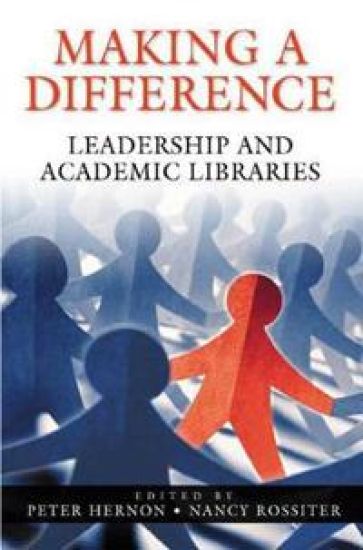
Making a Difference

Making a Difference

Peter Hernon; Nancy Rossiter

Libraries Unlimited Inc
2006
nidottu
Leadership is separate from, but integral to, management; and library directors today and for the foreseeable future can be expected to play an institutional role as they lead the library to contribute towards the mission of their college and university. Similarly, new courses in library leadership now accompany more traditional ones on managing organizations and information resources. However, much of the literature on LIS leadership represents a distilled application of principles and practices borrowed from other disciplines, with few reports of research from the library field. Conceived as a companion to The Next Library Leadership (Libraries Unlimited, 2003), Making a Difference includes not only a discussion of effective attributes, but of issues central to the development of leadership qualities, strategies, and dispositions. Essential reading for anyone interested in advancing the quality of leadership within LIS, particularly academic librarians in or aspiring to positions of managerial leadership.
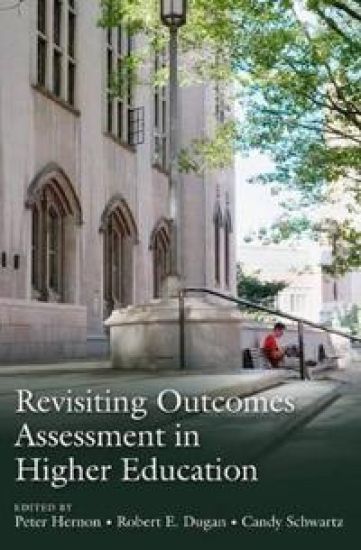
Revisiting Outcomes Assessment in Higher Education

Revisiting Outcomes Assessment in Higher Education

Peter Hernon; Robert E. Dugan; Candy Schwartz

Libraries Unlimited Inc
2006
nidottu
Revisiting Outcomes Assessment in Higher Education complements rather than updates Hernon and Dugan's 2004 Outcomes Assessment in Higher Education. As with its predecessor, it offers a cross-campus diversity of voices: contributors hail from various segments of higher education, including officers of institutional accreditation organizations, an academic vice president, academic deans, a higher education consultant, faculty members, and librarians. Individually, they shed light on how their corner of the higher education universe views, facilitates, and substantiates outcomes assessment. Together, they document what is known about outcomes assessment in the middle of the first decade of the new century, as institutions and their programs take ever firmer steps from anecdotal evidence to more rigorous diagnosis and reporting. The current interest in outcomes assessment represents a major shift in recent decades in attitudes about evaluating education. Outcomes assessment deals not only with assessment, but with accountability, usually in terms of accomplishing goals defined as desirable by the institution in question. It questions the results of educational processes, and focuses the argument on what students, faculty, and administrators demonstrably do. Revisiting Outcomes Assessment in Higher Education complements rather than updates Hernon and Dugan's 2004 Outcomes Assessment in Higher Education. As with its predecessor, it offers a cross-campus diversity of voices: contributors hail from various segments of higher education, including officers of institutional accreditation organizations, an academic vice president, academic deans, a higher education consultant, faculty members, and librarians. Individually, they shed light on how their corner of the higher education universe views, facilitates, and substantiates outcomes assessment. Together, they document what is known about outcomes assessment in the middle of the first decade of the new century, as institutions and their programs take ever-firmer steps from anecdotal evidence to more rigorous diagnosis and reporting. For faculty, administrators, and librarians at all academic institutions; accreditation organizations and associations, including program accreditors; program officials in national associations; and other stakeholders, including members of state and other governments wanting to see what academe is doing to link accountability with continuous quality improvement.
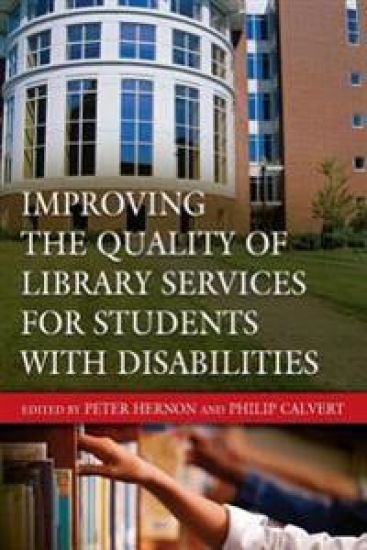
Improving the Quality of Library Services for Students with Disabilities

Improving the Quality of Library Services for Students with Disabilities

Peter Hernon; Philip Calvert

Libraries Unlimited Inc
2005
nidottu
The development and promotion of appropriate services for students with disabilities has been an integral part of the academic library since the 1990s. There remains, however, a dearth of literature—in marketing, library and information science, and other disciplines—that applies quality assessment instruments to existing programs. With this in mind, Hernon and Calvert present two versions of a data collection instrument, designed to compare the expectations of special students with their perceptions of how well a given service met their needs. Descriptions of successful initiatives at a variety of academic libraries are also included. Adaptive technologies. Anti-discrimination laws. Equity and compliance issues. In-house policies (and politics). All of these support, in one form or another, the development and promotion of appropriate services for students with physical, learning, or, increasingly, psychological disabilities. But what of service quality? To date, there is a dearth of literature—in marketing, library and information science, and other disciplines—that applies quality assessment instruments to programs for special student populations. Not until now has anyone compared the expectations of such students with their perceptions of how well a given service meets their needs. Peter Hernon, Philip Calvert, and their colleagues—Kathleen Rogers, Todd K. Herriott, and Ava Gibson—discuss the circumstances affecting services for the disabled, and provide two versions of a data collection instrument, loosely based on SERVQUAL, that individual institutions can modify to reflect their particular needs and situations. International in scope, it incorporates the perspective of university attorneys and compliance officers, as well as descriptions of successful initiatives by senior library administrators in the U. S. (Larry Hardesty, Rush G. Miller, Sarah Hamrick, and Jennifer Lann) and New Zealand (Helen Renwick, Philip Jane, and John Redmayne.) Improving the Quality of Library Services for Students with Disabilities will assist libraries and other service components of academic institutions to adopt a proactive position, as well as challenge staff assumptions of service expectations and information needs.
Terrible Thunder, 2nd Edition

Terrible Thunder, 2nd Edition

Peter Hernon

Garrett County Press
2005
nidottu
On New Year's Eve in New Orleans, 1972 Mark James Essex began one of the most violent and deadly sniper attacks on policemen that any American city had ever seen. It was yet another tragic journey down the road of race hatred, and before it ended one week later, hundreds of heavily armed police and a Marine Corps assault helicopter would be called to a burning downtown hotel to battle phantom gunmen who refused to surrender or to be killed.
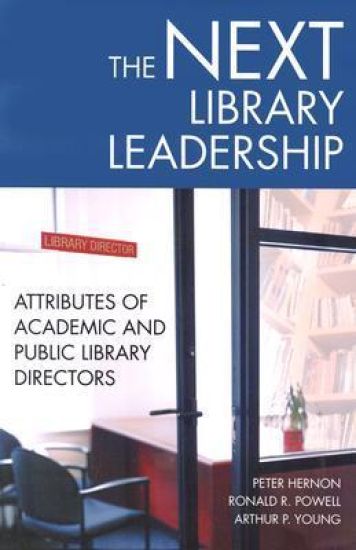
The Next Library Leadership

The Next Library Leadership

Peter Hernon; Ronald R. Powell; Arthur P. Young

Libraries Unlimited Inc
2003
nidottu
This much needed work addresses a topic of increasing importance and urgency: the shortage of individuals attracted to professional careers in librarianship, and the subsequent consequences for leadership positions, particularly library directorship. Through extensive interviews and a thorough review of the existing literature, the authors-all highly respected for their exceptional leadership and contributions to library science-assess what constitutes effective leadership and identify the traits needed by the next generation of academic and public library directors. The authors argue that library directors must be both managers and leaders, and that LIS students and graduates need appropriate support in seeking out upper level positions and exercising leadership. They present tools for assessing leadership and suggest strategies that individuals can use to prepare themselves for leadership positions and the challenges that lie ahead. A detailed bibliography completes the work. An important contribution to the field of library and information science, this eye-opening study is essential reading for anyone in the profession.
U.S. Government on the Web

U.S. Government on the Web

Peter Hernon; Robert E. Dugan; John A. Shuler

Libraries Unlimited Inc
2003
nidottu
The definitive guide to U. S. government information on the Web has been expanded and updated with the latest information from the current administration, including material on the Department of Homeland Security, the Patriot Act, and the E-Government Act of 2002. Peter Hernon, one of the country's foremost authorities on government information, and his colleagues provide additional Web sites and offer valuable strategies for effectively accessing and using government information online. More than a mere directory of Web sites, this authoritative work serves as a cardinal pointer through the government's labyrinthine structure and the myriad information resources available to the public, giving users a clearer understanding of U. S. government agencies and their online publications and services. An essential and regularly updated reference, this guide is a reliable roadmap to a vast and diverse field of important information.