Kirjojen hintavertailu – 12 859 828 kirjaa ja 27 kauppaa

Kirjailija

Peter John

Kirjat ja teokset yhdessä paikassa: 42 kirjaa, julkaisuja vuosilta 2001–2026, suosituimpiin kuuluu Dysprosium Metal Complexes Derived from Bridging Oxygen Donor Ligands. Vertaile teosten hintoja ja tarkista saatavuus suomalaisista kirjakaupoista.

42 kirjaa

Kirjojen julkaisuvuodet: 2001–2026.

The Digital Classroom

The Digital Classroom

Peter John; Steve Wheeler

CRC Press
2015
sidottu
Based on a major research project (the InterActive Project), this book explores and illustrates how digital technologies can transform learning across the curriculum. Using a wide range of educational settings – primary, secondary, school and home – it will help practitioners think about, plan and execute effective learning in their classrooms and beyond. It will show teachers how they can 'harness technology for the future' by covering important topics such as: personalised learningusing ICT for pupils with special needspersonal use of ICT and home-school linksdesigning 'digital' classrooms. By weaving 'evidence based practice' into each chapter, the book will provide extensive guidance, practical advice and insights into working in the 'digital classroom' for all primary and secondary school teachers.
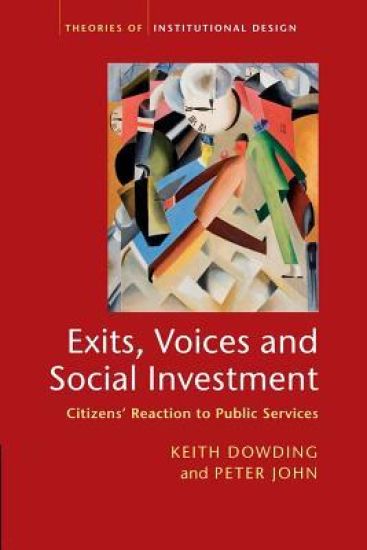
Exits, Voices and Social Investment

Exits, Voices and Social Investment

Keith Dowding; Peter John

Cambridge University Press
2015
pokkari
Over fifty years ago, Albert Hirschman argued that dissatisfied consumers could either voice complaint or exit when they were dissatisfied with goods or services. Loyal consumers would voice rather than exit. Hirschman argued that making exit easier from publicly provided services, such as health or education, would reduce voice, taking the richest and most articulate away and this would lead to the deterioration of public services. This book provides the first thorough empirical study of these ideas. Using a modified version of Hirschman's account, examining private and collective voice, and viewing loyalty as a form of social investment, it is grounded on a dedicated five-year panel study of British citizens. Given government policies over the past decade or more which make exit easier from public providers, this is a timely publication for all those who care about the quality of government services.
Public Policy Investment

Public Policy Investment

Anthony Bertelli; Peter John

Oxford University Press
2013
sidottu
This book addresses one of the enduring questions of democratic government: why do governments choose some public policies but not others? Political executives focus on a range of policy issues, such as the economy, social policy, and foreign policy, but they shift their priorities over time. Despite an extensive literature, it has proven surprisingly hard to explain policy prioritisation. To remedy this gap, this book offers a new approach called public policy investment: governments enhance their chances of getting re-elected by managing a portfolio of public policies and paying attention to the risks involved. In this way, government is like an investor making choices about risk to yield returns on its investments of political capital. The public provides signals about expected political capital returns for government policies, or policy assets, that can be captured through expressed opinion in public polls. Governments can anticipate these signals in the choices they make. Statecraft is the ability political leaders have to consider risk and return in their policy portfolios and do so amidst uncertainty in the public's policy valuation. Such actions represent the public's views conditionally because not every opinion change is a price signal. It then outlines a quantitative method for measuring risk and return, applying it to the case of Britain between 1971 and 2000 and offers case studies illustrating statecraft by prime ministers, such as Edward Heath or Margaret Thatcher. The book challenges comparative scholars to apply public policy investment to countries that have separation of powers, multiparty government, and decentralization.
Dead Medium

Dead Medium

Peter John

Createspace Independent Publishing Platform
2013
pokkari
Dead Medium is a paranormal, dark comedy that turns the concept of clairvoyance and medium-ship on its head. The deathly silence is about to be broken. She disliked the company of others and death did little to warm her spirit. She had led an independent life and she faced death in much the same way. She was finally alone, finally free from the mindless babble of others, at least that's what she thought. May Elizabeth Trump was the rarest of spirits and she was none too happy about it either. She was a dead medium, a ghost who can speak with the living, and her services were to become in great demand. Flung into the limelight and smothered with unwanted attention, May soon discovers that it is not only ghosts with long awaited messages that have taken an interest in her. Something dark was lurking in the shadows, stalking her. Even the dead are not left to rest in peace. Dead Medium: A humorous, supernatural mystery and a unique vision of life after death. Not your average ghost story." The strangest things happen when you're dead." - May Elizabeth Trump." This may come as a shock to you, Mr. Tailor, but ghost stories don't work on ghosts " - Gary Reed." On the really quiet nights, I thought you knew it was me who made the Ouija board spell cake." - Margaret. Bonus Content. The Spirits Of Christmas: A Dead Medium, Short Story, Spin-Off Sequel. Featuring Barbara Smith. A. K. A Madam Smith Of The Circle Of Sacred Seers
Exits, Voices and Social Investment

Exits, Voices and Social Investment

Keith Dowding; Peter John

Cambridge University Press
2012
sidottu
Over fifty years ago, Albert Hirschman argued that dissatisfied consumers could either voice complaint or exit when they were dissatisfied with goods or services. Loyal consumers would voice rather than exit. Hirschman argued that making exit easier from publicly provided services, such as health or education, would reduce voice, taking the richest and most articulate away and this would lead to the deterioration of public services. This book provides the first thorough empirical study of these ideas. Using a modified version of Hirschman's account, examining private and collective voice, and viewing loyalty as a form of social investment, it is grounded on a dedicated five-year panel study of British citizens. Given government policies over the past decade or more which make exit easier from public providers, this is a timely publication for all those who care about the quality of government services.
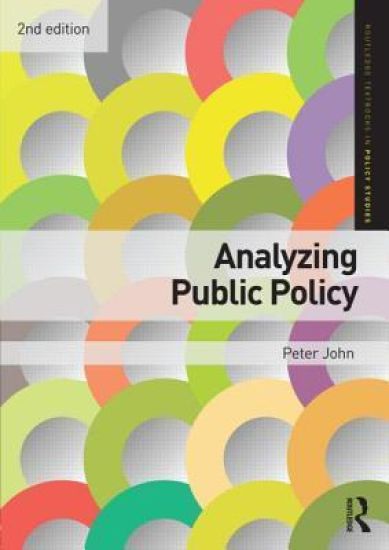
Analyzing Public Policy

Analyzing Public Policy

Peter John

Routledge
2012
nidottu
The fully revised and updated new edition of this textbook continues to provide the most accessible overview of the main approaches in the study of public policy. It seeks to review the most common and widely used frameworks in the study of policy analysis: institutionsgroups and networkssociety and the economyindividual interestsideas. The book explains each one, offers constructive criticisms and explores their claims in the light of a variety of American, British and European examples. Arguing that no one framework offers a comprehensive explanation of public policy; John suggests a synthesis based on different aspects of the approaches, introducing concepts/approaches of advocacy coalitions, punctuated equilibrium and evolution as more effective ways to understand public policy. Combining both a clear summary of debates in public policy and a new and original approach to the subject, this book remains essential reading for students of public policy and policy analysis.
Analyzing Public Policy

Analyzing Public Policy

Peter John

Routledge
2012
sidottu
The fully revised and updated new edition of this textbook continues to provide the most accessible overview of the main approaches in the study of public policy. It seeks to review the most common and widely used frameworks in the study of policy analysis: institutionsgroups and networkssociety and the economyindividual interestsideas. The book explains each one, offers constructive criticisms and explores their claims in the light of a variety of American, British and European examples. Arguing that no one framework offers a comprehensive explanation of public policy; John suggests a synthesis based on different aspects of the approaches, introducing concepts/approaches of advocacy coalitions, punctuated equilibrium and evolution as more effective ways to understand public policy. Combining both a clear summary of debates in public policy and a new and original approach to the subject, this book remains essential reading for students of public policy and policy analysis.
Making Policy Work

Making Policy Work

Peter John

Routledge
2011
sidottu
Many tools are on offer to politicians and other policy-makers when they seek to change policy outcomes. Often they choose to concentrate on one set of tools, but fail to see the costs as well as the benefits – and may not consider the available evidence regarding their effectiveness. This innovative new textbook clearly sets out the main tools of government, and provides an analysis of their efficacy when applied to public problems. Each chapter examines the relative benefits and costs of using a key tool that is available to improve policy outcomes, drawing on a diverse literature, a large number of empirical studies and a range of contexts. Areas covered include: governments and policy outcomeslaw and regulation public spending and taxation bureaucracy and public management institutionsinformation, persuasion and deliberation networks and governance. Offering a clear and comprehensive evaluation, and highlighting the set of powerful tools commonly available, this text encourages students to consider the most effective combination in order to manage key issues successfully. Including a useful glossary of key terms, this book will be of great interest to all students of public policy, administration and management.
Making Policy Work

Making Policy Work

Peter John

Routledge
2011
nidottu
Many tools are on offer to politicians and other policy-makers when they seek to change policy outcomes. Often they choose to concentrate on one set of tools, but fail to see the costs as well as the benefits – and may not consider the available evidence regarding their effectiveness. This innovative new textbook clearly sets out the main tools of government, and provides an analysis of their efficacy when applied to public problems. Each chapter examines the relative benefits and costs of using a key tool that is available to improve policy outcomes, drawing on a diverse literature, a large number of empirical studies and a range of contexts. Areas covered include: governments and policy outcomeslaw and regulation public spending and taxation bureaucracy and public management institutionsinformation, persuasion and deliberation networks and governance. Offering a clear and comprehensive evaluation, and highlighting the set of powerful tools commonly available, this text encourages students to consider the most effective combination in order to manage key issues successfully. Including a useful glossary of key terms, this book will be of great interest to all students of public policy, administration and management.
Improving Classroom Learning with ICT

Improving Classroom Learning with ICT

Rosamund Sutherland; Susan Robertson; Peter John

Routledge
2008
sidottu
Improving Classroom Learning with ICT examines the ways in which ICT can be used in the classroom to enhance teaching and learning in different settings and across different subjects. Weaving together evidence of teachers’ and learners’ experiences of ICT, the authors: explain why the process of integrating ICT is not straightforward; discuss whether hardware and infrastructure alone are sufficient to ensure full integration and exploitation of ICT investment; emphasise the pivotal role that teachers play in supporting learning with ICT across the curriculum; argue that teachers need a greater understanding of how to put ICT to use in teaching and learning; highlight that out-of-school use of ICT has an impact on in-school learning; consider what kinds of professional development are most effective in supporting teachers to use technologies creatively and productively. Case studies are used to illustrate key issues and to elaborate a range of theoretical ideas that can be used in the classroom. This book will be of interest to all those concerned with maximising the benefits of ICT in the classroom.
Improving Classroom Learning with ICT

Improving Classroom Learning with ICT

Rosamund Sutherland; Susan Robertson; Peter John

Routledge
2008
nidottu
Improving Classroom Learning with ICT examines the ways in which ICT can be used in the classroom to enhance teaching and learning in different settings and across different subjects. Weaving together evidence of teachers’ and learners’ experiences of ICT, the authors: explain why the process of integrating ICT is not straightforward; discuss whether hardware and infrastructure alone are sufficient to ensure full integration and exploitation of ICT investment; emphasise the pivotal role that teachers play in supporting learning with ICT across the curriculum; argue that teachers need a greater understanding of how to put ICT to use in teaching and learning; highlight that out-of-school use of ICT has an impact on in-school learning; consider what kinds of professional development are most effective in supporting teachers to use technologies creatively and productively. Case studies are used to illustrate key issues and to elaborate a range of theoretical ideas that can be used in the classroom. This book will be of interest to all those concerned with maximising the benefits of ICT in the classroom.
The Digital Classroom

The Digital Classroom

Peter John; Steve Wheeler

David Fulton Publishers Ltd
2007
nidottu
Based on a major research project (the InterActive Project), this book explores and illustrates how digital technologies can transform learning across the curriculum. Using a wide range of educational settings – primary, secondary, school and home – it will help practitioners think about, plan and execute effective learning in their classrooms and beyond. It will show teachers how they can 'harness technology for the future' by covering important topics such as: personalised learningusing ICT for pupils with special needspersonal use of ICT and home-school linksdesigning 'digital' classrooms. By weaving 'evidence based practice' into each chapter, the book will provide extensive guidance, practical advice and insights into working in the 'digital classroom' for all primary and secondary school teachers.
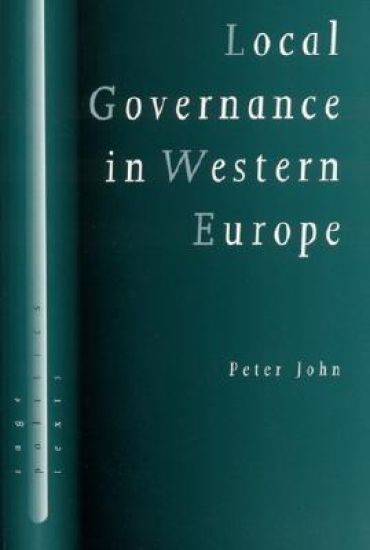
Local Governance in Western Europe

Local Governance in Western Europe

Peter John

SAGE Publications Inc
2001
sidottu
`Its strength lies in combining theoretical insights with an impressive range of empirical material. The analysis is subtle and multi-layered.... This is a timely and important book' - Political Studies `Local governance have gained massive attention among scholars and practitioners during the past several years. Peter John's book fills a void in the literature by tracing the historical roots of local governance and by placing his findings in a comparative perspective' - Professor Jon Pierre, University of Gothenburg, Sweden `Peter John has produced a fascinating and stimulating book in which he assesses current developments in urban politics and local government in Europe and suggests how these changes are leading to different patterns of sub-national territorial politics in the EU today. What he has to say is of important interest to all students of local government; comparative politics and of territorial politics more generally' - Michael Goldsmith, University of Salford `this book offers a fascinating comparative analysis... themes such as New Public Management, globalisation, regionalism and privatisation will be relevant to numerous courses in government, politics, public administration and public policy' - West European Politics This text provides a comprehensive introduction to local government and urban politics in contemporary Western Europe. It is the first book to map and explain the change in local political systems and to place these in comparative context. The book introduces students to the traditional structures and institutions of local government and shows how these have been transformed in response to increased economic and political competition, new ideas, institutional reform and the Europeanization of public policy. At the book's core is the perceived transition from local government to local governance. The book traces this key development thematically across a wide range of West European states including: Belgium, France, Greece, Italy, Germany, the Netherlands, Norway, Portugal, Spain and the United Kingdom.