Kirjojen hintavertailu – 12 903 725 kirjaa ja 27 kauppaa

Kirjailija

Peter Kelly

Kirjat ja teokset yhdessä paikassa: 28 kirjaa, julkaisuja vuosilta 2004–2026, suosituimpiin kuuluu Handbok för informationsdriven vård och AI. Vertaile teosten hintoja ja tarkista saatavuus suomalaisista kirjakaupoista.

28 kirjaa

Kirjojen julkaisuvuodet: 2004–2026.

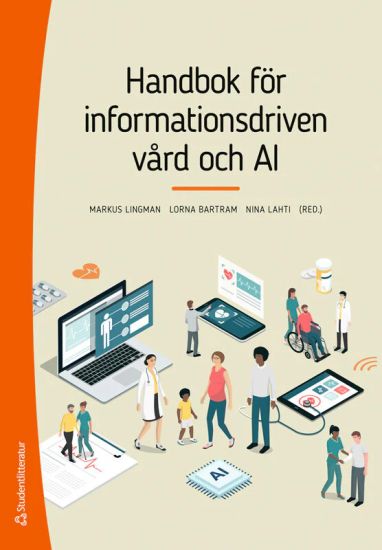
Handbok för informationsdriven vård och AI

Handbok för informationsdriven vård och AI

Markus Lingman; Lorna Bartram; Nina Lahti; Farzaneh Kobra Etminani; Peter Kelly; Magnus Kjellberg; Ola Lövenvald; Jens Nygren; Mattias Ohlsson; Carolina Samuelsson; Torkel Strömsten; Petra Svedberg; Henrik Vennersten

Studentlitteratur AB
2025
nidottu
Vårdens förutsättningar ändras i snabb takt samtidigt som vårdbehovet i en åldrande befolkning ökar i kombination med personalbrist. Att göra ”mer av samma sak” är inte längre en möjlig väg framåt. Nya arbetssätt måste identifieras. Handbok för informationsdriven vård och AI identifierar och beskriver nya möjligheter i kölvattnet av vårdens digitalisering där stora mängder data ständigt skapas. Ur dessa data kan en ny faktabaserad vård och behandling skönjas. Författarna kallar det för informationsdriven vård, där data nyttiggörs genom att systematiskt förädla data till information och insikter som går att agera på, ibland med stöd av AI. Artificiell intelligens arbetar likvärdigt och outtröttligt oavsett situation med skräddarsydda resultat utifrån patienten eller frågeställningen. Boken fokuserar på kunskap som kan implementeras i verklig vård på vägen mot proaktiv precisionssjukvård för att möta nutidens och framtidens klyfta mellan behov och förmåga genom skräddarsydda beslut. Författarna är aktiva inom vård och närliggande forskning och bidrar med ett insidesperspektiv baserat på empiri och vetenskap från vårdsammanhang där förändring redan ägt rum. Målgruppen är studenter på grundnivå och avancerad nivå i samtliga hälso- och sjukvårdsutbildningar. Boken är också högst relevant för alla yrkesverksamma grupper som berörs av detta förändringsarbete.
Youth Arts

Youth Arts

Anna Hickey-Moody; Sophie Hartley; Peter Kelly; Tammy Wong Hulbert; Scott Brook; Rimi Khan; Christen Cornell

Bristol University Press
2026
nidottu
Offering fresh conceptual tools, compelling empirical insights and a transformative model for accrediting skills, Youth Arts shows how partnerships between industry, cultural organisations and youth-led initiatives can reimagine education, diversify pathways into work and support genuine social mobility.
Naziland

Naziland

Peter Kelly

Tamar Publishing Limited
2026
nidottu
A dystopian novel 2024. What does the world look like eighty years after the Nazi victory? Since Hitler won the war in 1942 an uneasy peace has persisted across the world. Germany and Japan run more than half the globe, while America lags behind. Over eighty years later a New York journalist, Richard Johnson, is sent to investigate a suspicious death in America's holiday playground, Cuba. Why has a private investigator been killed, and why have the letters JS been carved into his hand? When Richard gets too close to the truth, he's captured by the Nazis and taken to their Berlin headquarters for interrogation. He escapes, and to keep one step ahead of the Gestapo, he's reliant on the resistance to help him across Europe. Can he get back to America in time to avert the threat he's discovered? He expected trouble, that's what he thrives on, but he didn't expect to be running for his life - and definitely not with a young Jewish girl in tow. A terrifying glimpse of what today's world could look like if things had gone slightly differently.
Young People and Uncertain Futures?

Young People and Uncertain Futures?

James Goring; Peter Kelly

TAYLOR FRANCIS LTD
2025
sidottu
Drawing on Foucault’s ‘genealogical ethos’ and his work on power/knowledge/subjects, this book analyses the ways in which neo-liberal education apparatuses in Australia and other high income economies frame the problem of young people and uncertain futures. The book critically examines the character of the presents and futures of education, training and work, and of the planet, that have been produced in globalising neo-liberal capitalism during the last four decades, and which see in the development of young people’s enterprise and aspiration, the solutions to multiple crises and uncertainties. It analyses how and why young people’s behaviours and dispositions have been made knowable in these ways, and the limits and possibilities that they produce for understanding what young people must be and become. The book draws on post-humanist, feminist studies of techno-science and futures studies to explore the promise of more socially just and sustainable futures for young people. A thought-provoking study for scholars and students of the sociology of education and of youth and society, it will be invaluable for policy makers, governments, NGOs, educators, and undergraduate and postgraduate students interested in young people and the crises of capitalism, earth systems and the biosphere.
Ovid and Plato

Ovid and Plato

Peter Kelly

Cambridge University Press
2025
sidottu
The Roman poet Ovid, while sailing across the Black Sea to Tomis, considered his exile to have cosmic proportions; in the surging waves he sees his world seemingly veering back towards primordial chaos. Throughout his work Ovid seeks to depict the vast heterogeneity of the world, its creation and destruction, and the interconnection between humans and their unstable environment. This book explores how Ovid turns to philosophy, and especially the dialogues of Plato, to find meaning in a world that is fluid, uncertain, and dangerous. Rather than seeking recourse in an exact science of knowledge or a world of Forms beyond the here and now, Ovid sets himself apart from the philosophers. Instead, he highlights the limits of philosophy to capture the changing nature of reality and realigns the boundaries between poetry and science so as to create a more suitable medium for representing our entanglement with this complex world.
On the Problem of Foundation Skills and the Futures of Work
This book provides an analysis of how global capitalism, digital disruption, and new worlds of work have reshaped ideas about language, literacy and numeracy (foundation) skills in a neoliberal foundation skills apparatus in Australia since the 1980s. The book uses Michel Foucault’s genealogical approach to producing critical ‘histories of our present’. From this perspective it examines how these disruptions have transformed what was once a voluntary, not-for-profit community ‘movement’ of education for migrants and marginalised people into a sophisticated government, community, and for-profit training and skills sector which imagines foundation skills learners as choice making consumers.
On the Problem of Foundation Skills and the Futures of Work
This book provides an analysis of how global capitalism, digital disruption, and new worlds of work have reshaped ideas about language, literacy and numeracy (foundation) skills in a neoliberal foundation skills apparatus in Australia since the 1980s. The book uses Michel Foucault’s genealogical approach to producing critical ‘histories of our present’. From this perspective it examines how these disruptions have transformed what was once a voluntary, not-for-profit community ‘movement’ of education for migrants and marginalised people into a sophisticated government, community, and for-profit training and skills sector which imagines foundation skills learners as choice making consumers.
Informal Workers and a Political Economy of Lifelong Learning

Informal Workers and a Political Economy of Lifelong Learning

Seth Brown; Peter Kelly; Scott K. Phillips

Springer International Publishing AG
2024
sidottu
This book makes an innovative, sociologically informed contribution to academic and policy discussions about informal work, skills and training for Lifelong Learning (LLL) and the promise of decent work and just transitions for sustainable development. It does so with an explicit focus on challenges and opportunities as they shape informal economies and the experiences of informal workers in Latin America and the Caribbean, the Middle East and North Africa, Sub-Saharan Africa, Central and Eastern Europe, and the Asia Pacific. The authors highlight historical and contemporary characteristics of informality in different regions from a political economy of LLL perspective. This political economy approach draws on theories of post- and neo- colonialism, space, place and globalisation, critical accounts of curriculum and pedagogy in skills and vocational education and training. The book will appeal to students and scholars of education, particularly adult education and LLL and technical and vocational education and training, as well as sociology, labour economics, and international and sustainable development.
The Self as Enterprise

The Self as Enterprise

Peter Kelly

TAYLOR FRANCIS LTD
2024
nidottu
Twenty first century, flexible capitalism creates new demands for those who work to acknowledge that all aspects of their lives have come to be seen as performance related, and consequently of interest to those who employ them (or fire them). At the start of the 21st century we can identify, borrowing from Max Weber, new work ethics that provide novel ethically slanted maxims for the conduct of a life, and which suggest that the cultivation of the self as an enterprise is the life-long activity that should give meaning, purpose and direction to a life. The book provides an innovative theoretical and methodological approach that draws on the problematising critique of Michel Foucault, the sociological imagination of Zygmunt Bauman and the work influenced by these authors in social theory and social research in the last three decades. The author takes seriously the ambivalence and irony that marks many people’s experience of their working lives, and the demands of work at the start of the 21st century. The book makes an important contribution to the continuing debate about the nature of work related identities and the consequences of the intensification of the work regimes in which these identities are performed and regulated. In a post global financial crisis (GFC) world of sovereign debt, austerity and recession the author’s analysis focuses academic and professional interest on neo-liberal injunctions to imagine ourselves as an enterprise, and to reap the rewards and carry the costs of the conduct of this enterprise.
COVID-19 and the (Broken) Promise of Education for Sustainable Development

COVID-19 and the (Broken) Promise of Education for Sustainable Development

Javed Anwar; Sher Rahmat Khan; Mir Zaman Shah; Seth Brown; Peter Kelly; Scott Phillips

BRILL
2023
sidottu
The book charts the emergence of the COVID-19 pandemic, and the impact that it has had on the lives of young people and their communities, education systems, the teaching profession, and the responses by governments, NGOs, and donor organisations in Pakistan. Drawing on theories of postcolonialism, feminism, and neoliberal globalisation, the authors explore the development of Pakistan as a postcolonial nation-state, and examine the legacies of colonialism in education systems and policies, teacher education and development. The Pakistani authors bring extensive knowledge and experience to this case study of the ‘broken promise’ of education for sustainable development. This mix of theoretical insight and practical experience promises to produce significant policy and development impact in post-COVID-19 Pakistan, South Asia more broadly, and in other postcolonial development contexts around the world as it develops a critique of the UN SDGs as a global and more local framework for development. UPCOMING: Webinar / Launch 10th of May:COVID-19 and the (broken) promise of education for sustainable development: A case study from postcolonial Pakistan.
COVID-19 and the (Broken) Promise of Education for Sustainable Development

COVID-19 and the (Broken) Promise of Education for Sustainable Development

Javed Anwar; Sher Rahmat Khan; Mir Zaman Shah; Seth Brown; Peter Kelly; Scott Phillips

BRILL
2023
nidottu
The book charts the emergence of the COVID-19 pandemic, and the impact that it has had on the lives of young people and their communities, education systems, the teaching profession, and the responses by governments, NGOs, and donor organisations in Pakistan. Drawing on theories of postcolonialism, feminism, and neoliberal globalisation, the authors explore the development of Pakistan as a postcolonial nation-state, and examine the legacies of colonialism in education systems and policies, teacher education and development. The Pakistani authors bring extensive knowledge and experience to this case study of the ‘broken promise’ of education for sustainable development. This mix of theoretical insight and practical experience promises to produce significant policy and development impact in post-COVID-19 Pakistan, South Asia more broadly, and in other postcolonial development contexts around the world as it develops a critique of the UN SDGs as a global and more local framework for development. UPCOMING: Webinar / Launch 10th of May:COVID-19 and the (broken) promise of education for sustainable development: A case study from postcolonial Pakistan.
Art-Based Social Enterprise, Young Creatives and the Forces of Marginalisation

Art-Based Social Enterprise, Young Creatives and the Forces of Marginalisation

Grace McQuilten; Amy Spiers; Kim Humphery; Peter Kelly

Springer International Publishing AG
2022
sidottu
This book analyses the challenges and opportunities faced by art-based social enterprises (ASEs) engaging young creatives in education and training and supporting their pathways to the creative industries. In doing so, it addresses the complex intersecting issues of marginality and entrepreneurship, particularly in relation to young creatives from socially, economically and culturally diverse backgrounds. Drawing on extensive fieldwork and interviews with twelve key organisations, and three in-depth case studies in Australia, the book offers a detailed analysis of using enterprise to engage with the structural challenges of marginality. The book explores the local and global contexts through which art-based social enterprises (ASEs) operate and within which they attempt – often successfully – to improve access to education and work for emerging creatives. It also attends to the findings generated through engaging with the lived experiences of the staff and young creatives involved in our ASE case studies, in order to understand both the challenges and impacts of the ASE model on young people’s education, training, and employment pathways. The book focuses on three broad themes; precarious youth and digital futures, material practice and sustainable economies, and cultural citizenship in the urban fringe. In exploring these themes, the book contributes to debates about the limits, possibilities and challenges that attach to, and emerge from, an ASE model and highlights the ways in which these models can contribute to young people’s well-being, engagement, education and training, and work pathways. More broadly, it examines the possibilities of art as a means of social and cultural engagement. In the context of the precarious future of the creative industries, this book emphasise the ways in which young artists are building alternative economic and cultural models that support both individual pathways and collective change. This bookwill move the field forward with a critical lens that engages closely with experience and the lived realities of juggling multiple priorities of social, economic and artistic goals.
Belonging, Identity, Time and Young People’s Engagement in the Middle Years of School

Belonging, Identity, Time and Young People’s Engagement in the Middle Years of School

Seth Brown; Peter Kelly; Scott K. Phillips

Springer Nature Switzerland AG
2021
nidottu
This book explores the complex ways in which belonging, identity and time are entangled in shaping young people engagement with the middle years of school. The authors argue that these ‘entanglements’ need to be understood in ways that move beyond a focus on why individual young people engage with the middle years. Instead, there should be a focus on the socio-ecologies of particular places, and the ways in which these ecologies shape the possibilities of young people engaging productively in the middle years. Drawing on extensive qualitative data from an outer-urban metropolitan context, this book will appeal to scholars of sociology, education and policy studies.
Belonging, Identity, Time and Young People’s Engagement in the Middle Years of School

Belonging, Identity, Time and Young People’s Engagement in the Middle Years of School

Seth Brown; Peter Kelly; Scott K. Phillips

Springer Nature Switzerland AG
2020
sidottu
This book explores the complex ways in which belonging, identity and time are entangled in shaping young people engagement with the middle years of school. The authors argue that these ‘entanglements’ need to be understood in ways that move beyond a focus on why individual young people engage with the middle years. Instead, there should be a focus on the socio-ecologies of particular places, and the ways in which these ecologies shape the possibilities of young people engaging productively in the middle years. Drawing on extensive qualitative data from an outer-urban metropolitan context, this book will appeal to scholars of sociology, education and policy studies.
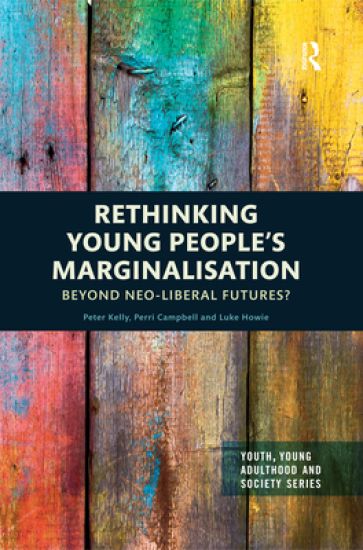
Rethinking Young People’s Marginalisation

Rethinking Young People’s Marginalisation

Peter Kelly; Perri Campbell; Luke Howie

Routledge
2020
nidottu
In the 21st century myriad earth systems – atmospheric systems, ocean systems, land systems, neo-Liberal capitalism – are in crisis. These crises are deeply related. Taking diverse and multiple forms, they have diverse and multiple consequences and are evidenced in such things as war, everyday violence, hate and extremism, global flows of millions of the dispossessed and homeless; and in the precarious, uncertain, and marginal existence of millions more. Rethinking Young People’s Marginalisation is concerned with the experience, affect, and effects of these earth systems crises on: • young people’s life chances, life choices, and life courses• young people’s engagement with education, training, and work• the character of young people’s being and becoming, their genderedembodiment, their participation in cultures of democracy, their resilience,and their marginalisation. Indeed, in setting out to rethink young people’s marginalisation, this insightful volume makes a contribution to troubling key concepts in Youth Studies, primarily: structure and agency; transitions and pathways; gender and embodiment, citizenship, risk, and resilience. It does this by drawing on a variety of critical, theoretical traditions, including Bauman’s engagement with the ambivalence of the human condition; Foucault’s studies of mentalities of government and genealogies of the subject; the critique of the politics of disposability and violence of neo-Liberalism undertaken by Giroux, and the authors of Kilburn Manifesto;Braidotti’s vitalist posthumanism; and Haraway’s figure of the Chthulucene. Analysing the ways in which young people engage in and develop new cultures of democracy, Rethinking Young People’s Marginalisation will appeal to postgraduate students and postdoctoral researchers interested in fields such as Youth Studies, Youth Sociology, Education Studies, and Critical Social Theory.