Kirjailija
Peter Newell
Kirjat ja teokset yhdessä paikassa: 74 kirjaa, julkaisuja vuosilta 2000–2026, suosituimpiin kuuluu Favorite Fairy Tales. Vertaile teosten hintoja ja tarkista saatavuus suomalaisista kirjakaupoista.
74 kirjaa
Kirjojen julkaisuvuodet: 2000–2026.
A House-Boat on the Styx By: John Kendrick Bangs: A House-Boat on the Styx is a fantasy novel written by John Kendrick Bangs in 1895.Illustrated By
Peter Newell; John Kendrick Bangs
Createspace Independent Publishing Platform
2018
nidottu
A House-Boat on the Styx is a fantasy novel written by John Kendrick Bangs in 1895. The original full title was A House-Boat on the Styx: Being Some Account of the Divers Doings of the Associated Shades. The novel was first published by Harper Brothers in 1896 with illustrations by Peter Newell (24 plates). Plot summary The premise of the book is that everyone who has ever died (up to the time in which the book is set, which seems to be about the time of its publication) has gone to Styx, the river that circles the underworld. The book begins with Charon, ferryman of the Styx being startled-and annoyed-by the arrival of a houseboat on the Styx. At first afraid that the boat will put him out of business, he later finds out that he is actually to be appointed the boat's janitor. What follows are eleven more stories (for a total of twelve) which are set on the house boat. There is no central theme, and the purpose of the book appears to be as a literary thought experiment to see what would happen if various famous dead people were put in the same room with each other. Each chapter is a short story featuring various souls from history and mythology. In the twelfth chapter the house boat disappears, leading into the sequel, The Pursuit of the House-Boat..... John Kendrick Bangs (May 27, 1862 - January 21, 1922) was an American author, humorist, editor and satirist. Biography: He was born in Yonkers, New York. His father Francis Nehemiah Bangs was a lawyer in New York City, as was his brother, Francis S. Bangs. He went to Columbia College from 1880 to 1883 where he became editor of Columbia's literary magazine, Acta Columbia, and contributed short anonymous pieces to humor magazines. After graduation in 1883 with a Bachelor of Philosophy degree in Political Science, Bangs entered Columbia Law School but left in 1884 to become Associate Editor of Life under Edward S. Martin. Bangs contributed many articles and poems to the magazine between 1884 and 1888. During this period, Bangs published his first books. In 1888 Bangs left Life to work at Harper's Magazine, Harper's Bazaar and Harper's Young People, though he continued to contribute to Life. From 1889 to 1900 he held the title of Editor of the Departments of Humor for all three Harper's magazines and from 1899 to 1901 served as active editor of Harper's Weekly. Bangs also served for a short time (January-June 1889) as the first editor of Munsey's Magazine and became editor of the American edition of the Harper-owned Literature from January to November 1899. In 1894, Bangs ran for the office of mayor of Yonkers, New York, but was defeated. He also was a member of the Board of Education in Yonkers. He left Harper & Brothers in 1901 and became editor of the New Metropolitan magazine in 1903. In 1904 he was appointed editor of Puck, perhaps the foremost American humor magazine of its day. In this period, he revived his earlier interest in drama. In 1906 he switched his focus to the lecture circuit. During the period between 1901 and 1906, Mr. Bangs was known to have spent at least parts of his summers at the Profile House in Franconia, New Hampshire. He owned one of the 20 connected cottages adjacent to the large hotel, which he sold to Cornelius Newton Bliss in August 1906. As a satirical writer, he was also known in the "Profile Cottage" circles as a jokester and prankster and was frequently the jovial topic of hotel guests and cottage owners alike. In 1918, he lectured for the Young Men's Christian Association and allied troops on the battle front in France during World War In 1886, he married Agnes L. Hyde, with whom he had three sons. Agnes died in 1903. Bangs then married Mary Blakeney Gray of New York in 1904. In 1907 they moved from Yonkers to Ogunquit, Maine. John Kendrick Bangs died from stomach cancer in 1922 at age fifty-nine, in Atlantic City, New Jersey..... Peter Sheaf Hersey Newell (March 5, 1862 - January 15, 1924) was an American artist and writer....
Ghosts I Have Met and Some Others (1898). By: John Kendrick Bangs: With Illustrations By: (Peter Sheaf Hersey) Newell (March 5, 1862 - January 15, 192
Peter Newell; A. B. Frost; Richards F. T.
Createspace Independent Publishing Platform
2018
nidottu
Richards, F. T. (Frederick Thompson), 1864-1921.... Arthur Burdett Frost (January 17, 1851 - June 22, 1928), usually cited as A. B. Frost, was an American illustrator, graphic artist and comics writer. He was also well known as a painter. Frost's work is well known for its dynamic representation of motion and sequence. Frost is considered one of the great illustrators in the "Golden Age of American Illustration". Frost illustrated over 90 books and produced hundreds of paintings; in addition to his work in illustrations, he is renowned for realistic hunting and shooting prints..... Peter Sheaf Hersey Newell (March 5, 1862 - January 15, 1924) was an American artist and writer. He created picture books and illustrated new editions of many children's books..... John Kendrick Bangs (May 27, 1862 - January 21, 1922) was an American author, humorist, editor and satirist. Biography: He was born in Yonkers, New York. His father Francis Nehemiah Bangs was a lawyer in New York City, as was his brother, Francis S. Bangs. He went to Columbia College from 1880 to 1883 where he became editor of Columbia's literary magazine, Acta Columbia, and contributed short anonymous pieces to humor magazines. After graduation in 1883 with a Bachelor of Philosophy degree in Political Science, Bangs entered Columbia Law School but left in 1884 to become Associate Editor of Life under Edward S. Martin. Bangs contributed many articles and poems to the magazine between 1884 and 1888. During this period, Bangs published his first books. In 1888 Bangs left Life to work at Harper's Magazine, Harper's Bazaar and Harper's Young People, though he continued to contribute to Life. From 1889 to 1900 he held the title of Editor of the Departments of Humor for all three Harper's magazines and from 1899 to 1901 served as active editor of Harper's Weekly. Bangs also served for a short time (January-June 1889) as the first editor of Munsey's Magazine and became editor of the American edition of the Harper-owned Literature from January to November 1899. In 1894, Bangs ran for the office of mayor of Yonkers, New York, but was defeated. He also was a member of the Board of Education in Yonkers. He left Harper & Brothers in 1901 and became editor of the New Metropolitan magazine in 1903. In 1904 he was appointed editor of Puck, perhaps the foremost American humor magazine of its day. In this period, he revived his earlier interest in drama. In 1906 he switched his focus to the lecture circuit. During the period between 1901 and 1906, Mr. Bangs was known to have spent at least parts of his summers at the Profile House in Franconia, New Hampshire. He owned one of the 20 connected cottages adjacent to the large hotel, which he sold to Cornelius Newton Bliss in August 1906. As a satirical writer, he was also known in the "Profile Cottage" circles as a jokester and prankster and was frequently the jovial topic of hotel guests and cottage owners alike. In 1918, he lectured for the Young Men's Christian Association and allied troops on the battle front in France during World War In 1886, he married Agnes L. Hyde, with whom he had three sons. Agnes died in 1903. Bangs then married Mary Blakeney Gray of New York in 1904. In 1907 they moved from Yonkers to Ogunquit, Maine. John Kendrick Bangs died from stomach cancer in 1922 at age fifty-nine, in Atlantic City, New Jersey...................

This work has been selected by scholars as being culturally important, and is part of the knowledge base of civilization as we know it. This work was reproduced from the original artifact, and remains as true to the original work as possible. Therefore, you will see the original copyright references, library stamps (as most of these works have been housed in our most important libraries around the world), and other notations in the work. This work is in the public domain in the United States of America, and possibly other nations. Within the United States, you may freely copy and distribute this work, as no entity (individual or corporate) has a copyright on the body of the work. As a reproduction of a historical artifact, this work may contain missing or blurred pages, poor pictures, errant marks, etc. Scholars believe, and we concur, that this work is important enough to be preserved, reproduced, and made generally available to the public. We appreciate your support of the preservation process, and thank you for being an important part of keeping this knowledge alive and relevant.

Transnational Climate Change Governance
Harriet Bulkeley; Liliana B. Andonova; Michele M. Betsill; Daniel Compagnon; Thomas Hale; Matthew J. Hoffmann; Peter Newell; Matthew Paterson; Charles Roger; Stacy D. VanDeveer
Cambridge University Press
2018
pokkari
The world of climate politics is increasingly no longer confined to the activities of national governments and international negotiations. Critical to this transformation of the politics of climate change has been the emergence of new forms of transnational governance that cut across traditional state-based jurisdictions and operate across public and private divides. This book provides the first comprehensive, cutting-edge account of the world of transnational climate change governance. Co-authored by a team of the world's leading experts in the field and based on a survey of sixty case studies, the book traces the emergence, nature and consequences of this phenomenon, and assesses the implications for the field of global environmental politics. It will prove invaluable for researchers, graduate students and policy makers in climate change, political science, international relations, human geography, sociology and ecological economics.

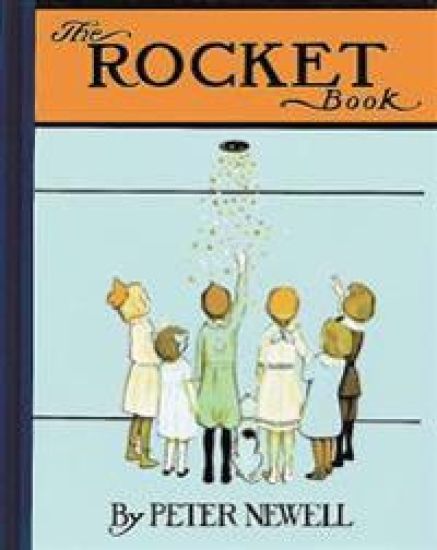
"When Fritz,the Janitor's bad kid,Went snooping in the basement,He found a rock snugly hidBeneath the window casement. He struck a match with one fell swoop;Then, on the concrete kneeling,he lit the rocket and—she—oop! It shot up through the ceiling." Long before Richard Scarry or Dr. Seuss, an American artist delighted a generation of children and their parents with hilarious, topsy-turvy illustrations and slightly subversive tales told in rhyme. This was illustrator/author Peter Newell. Originally published in 1912, The Rocket Book remains as profoundly enjoyable and incredibly popular as ever. This classic work will delight readers of all ages with the story of how a rocket launched from the basement floor of an apartment building and how it interrupts the day. Peter Newell (1862-1924) began his career as an artist drawing portraits, using crayons as his medium. In his fantastic humor, many believe, is the first appearance of the gentle humor of the absurd which The New Yorker has subsequently developed to such a high level.
Peter Newell's Pictures and Rhymes
John Kendrick Bangs; Peter Newell
Reprint Publishing
2016
pokkari
Complete digitally restored reprint (facsimile handmade reproduction) of the original edition of 1903 with excellent resolution and outstanding readability. Memoir by John Kendrick Bangs about Peter Newell. Illustrated with 49 pictures and image-text descriptions by Peter Newell (1862-1924). The layout is +30 % larger as the original for a better readability.
Peter Newell's Pictures and Rhymes: The original edition of 1903
John Kendrick Bangs; Peter Newell
Reprint Publishing
2016
nidottu
Complete digitally restored reprint (facsimile handmade reproduction) of the original edition of 1907 with excellent resolution and outstanding readability. Illustrated by Peter Newell (1862-1924) with 16 pictures and decorative borders by Francis I. Bennett (1876-1943) (handmade reconstructed). The layout is +10 % larger as the original for a better readability. Favorite Fairy Tales: The Childhood Choice of Representative Men and Women. Contains the following tales: Jack the Giant-Killer Cinderella; or the Little Glass Slipper Jack and the Bean-Stalk The Sleeping Beauty in the Wood Little Red Riding-Hood The Ugly Duckling Hop-O'My-Thumb Beauty and the Beast Little Snowdrop The Story of the Three Bears Snow-White and Rose-Red The Wild Swans Aladdin and the Wonderful Lamp Ali Baba and the Forty Thieves The Second Voyage of Sinbad the Sailor The History of Ali Cogia, a Merchant of Bagdad
Favorite Fairy Tales: The Childhood Choice of Representative Men and Women
Peter Newell
Reprint Publishing
2016
nidottu
Complete digitally restored reprint (facsimile handmade reproduction) of the original edition of 1907 with excellent resolution and outstanding readability. Illustrated by Peter Newell (1862-1924) with 16 pictures and decorative borders by Francis I. Bennett (1876-1943) (handmade reconstructed). The layout is ]10 % larger as the original for a better readability. Contains the following tales: Jack the Giant-Killer - Cinderella; or the Little Glass Slipper - Jack and the Bean-Stalk - The Sleeping Beauty in the Wood - Little Red Riding-Hood - The Ugly Duckling - Hop-O'My-Thumb - Beauty and the Beast - Little Snowdrop - The Story of the Three Bears - Snow-White and Rose-Red - The Wild Swans - Aladdin and the Wonderful Lamp - Ali Baba and the Forty Thieves - The Second Voyage of Sinbad the Sailor - The History of Ali Cogia, a Merchant of Bagdad
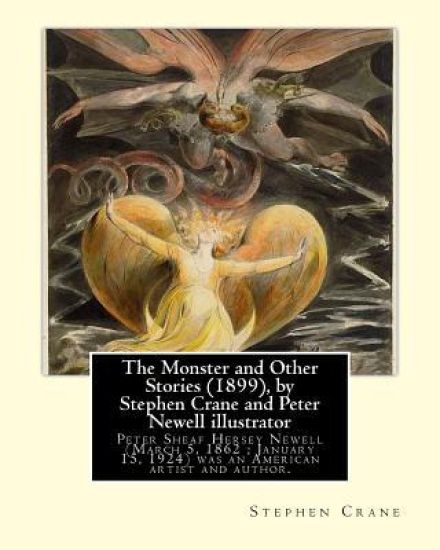
The Monster and Other Stories (1899), by Stephen Crane and Peter Newell: Peter Sheaf Hersey Newell (March 5, 1862 - January 15, 1924) was an American
Peter Newell; Stephen Crane
Createspace Independent Publishing Platform
2016
nidottu
The Monster is an 1898 novella by American author Stephen Crane (1871-1900). The story takes place in the small, fictional town of Whilomville, New York. An African-American coachman named Henry Johnson, who is employed by the town's physician, Dr. Trescott, becomes horribly disfigured after he saves Trescott's son from a fire. When Henry is branded a "monster" by the town's residents, Trescott vows to shelter and care for him, resulting in his family's exclusion from the community. The fictional town of Whilomville, which is used in 14 other Crane stories, was based on Port Jervis, New York, where Crane lived with his family for a few years during his youth. It is thought that he took inspiration from several local men who were similarly disfigured, although modern critics have made numerous connections between the story and the 1892 lynching in Port Jervis of an African-American man named Robert Lewis. A study of prejudice, fear and isolation in a small town, the novella was first published in Harper's Magazine in August 1898. A year later it was included in The Monster and Other Stories-the last collection of Crane's work to be published during his lifetime. After being admonished by his father, Dr. Ned Trescott, for damaging a peony while playing in his family's yard, young Jimmie Trescott visits his family's coachman, Henry Johnson. Henry, who is described as "a very handsome negro", "known to be a light, a weight, and an eminence in the suburb of the town", 20] is friendly toward Jimmie. Later that evening Henry dresses smartly and saunters through town-inciting catcalls from friends and ridicule from the local white men-on his way to call on the young Bella Farragut, who is extremely taken with him. That same evening, a large crowd gathers in the park to hear a band play. Suddenly, the nearby factory whistle blows to alert the townspeople of a fire in the second district of the town; men gather hose-carts and head toward the blaze that is quickly spreading throughout Dr. Trescott's house. Mrs. Trescott is saved by a neighbor, but cannot locate Jimmie, who is trapped inside. Henry appears from the crowd and rushes into the house in search of the boy, finding him unharmed in his bedroom. Unable to retreat the way he came, Henry carries Jimmie, wrapped in a blanket, to the doctor's laboratory and the hidden stairway that leads outside. He discovers the fire has blocked this way out as well and collapses beside Dr. Trescott's desk. A row of nearby jars shatters from the heat, spilling molten chemicals upon Henry's upturned face... Peter Sheaf Hersey Newell (March 5, 1862 - January 15, 1924) was an American artist and author.illustrator
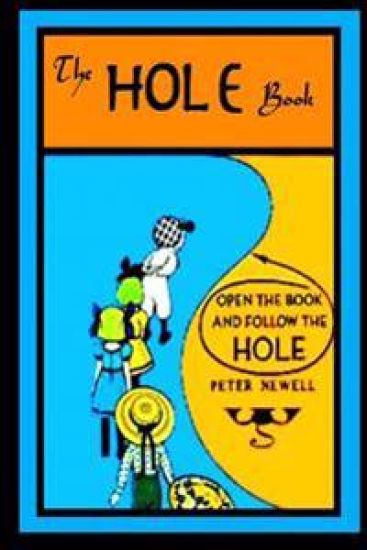
The Hole Book: by Peter Newell
Peter Newell
Createspace Independent Publishing Platform
2016
nidottu
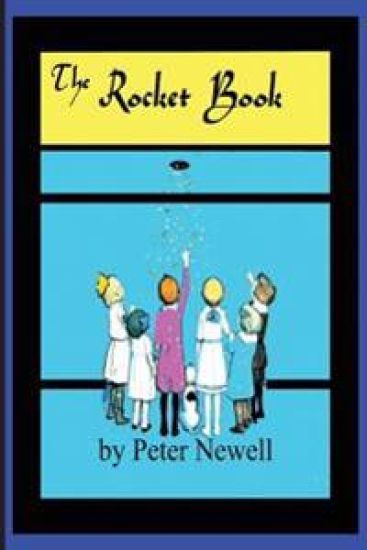
The Rocket Book: written and illustrated by Peter Newell
Peter Newell
Createspace Independent Publishing Platform
2016
nidottu