

Kirjailija
Peter Newell
Kirjat ja teokset yhdessä paikassa: 74 kirjaa, julkaisuja vuosilta 2000–2026, suosituimpiin kuuluu Favorite Fairy Tales. Vertaile teosten hintoja ja tarkista saatavuus suomalaisista kirjakaupoista.
74 kirjaa
Kirjojen julkaisuvuodet: 2000–2026.
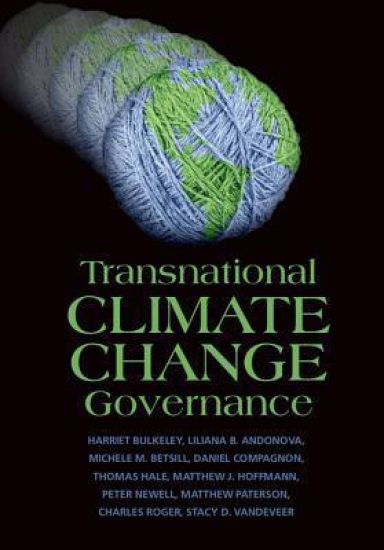
Transnational Climate Change Governance
Harriet Bulkeley; Liliana B. Andonova; Michele M. Betsill; Daniel Compagnon; Thomas Hale; Matthew J. Hoffmann; Peter Newell; Matthew Paterson; Charles Roger; Stacy D. VanDeveer
Cambridge University Press
2014
sidottu
The world of climate politics is increasingly no longer confined to the activities of national governments and international negotiations. Critical to this transformation of the politics of climate change has been the emergence of new forms of transnational governance that cut across traditional state-based jurisdictions and operate across public and private divides. This book provides the first comprehensive, cutting-edge account of the world of transnational climate change governance. Co-authored by a team of the world's leading experts in the field and based on a survey of sixty case studies, the book traces the emergence, nature and consequences of this phenomenon, and assesses the implications for the field of global environmental politics. It will prove invaluable for researchers, graduate students and policy makers in climate change, political science, international relations, human geography, sociology and ecological economics.

The Rocket Book & The Slant Book: Two classic books in rhyme for children
Thomas Hudson; Peter Newell
Createspace Independent Publishing Platform
2014
nidottu





The Parson's Devil: The Life Story of George M. Stearns
Clifton Johnson; Peter Newell
Literary Licensing, LLC
2011
nidottu
Confronting climate change is now understood as a problem of 'decarbonising' the global economy: ending our dependence on carbon-based fossil fuels. This book explores whether such a transformation is underway, how it might be accelerated, and the complex politics of this process. Given the dominance of global capitalism and free-market ideologies, decarbonisation is dependent on creating carbon markets and engaging powerful actors in the world of business and finance. Climate Capitalism assesses the huge political dilemmas this poses, and the need to challenge the entrenched power of many corporations, the culture of energy use, and global inequalities in energy consumption. Climate Capitalism is essential reading for anyone wanting to better understand the challenge we face. It will also inform a range of student courses in environmental studies, development studies, international relations, and business programmes.
Confronting climate change is now understood as a problem of 'decarbonising' the global economy: ending our dependence on carbon-based fossil fuels. This book explores whether such a transformation is underway, how it might be accelerated, and the complex politics of this process. Given the dominance of global capitalism and free-market ideologies, decarbonisation is dependent on creating carbon markets and engaging powerful actors in the world of business and finance. Climate Capitalism assesses the huge political dilemmas this poses, and the need to challenge the entrenched power of many corporations, the culture of energy use, and global inequalities in energy consumption. Climate Capitalism is essential reading for anyone wanting to better understand the challenge we face. It will also inform a range of student courses in environmental studies, development studies, international relations, and business programmes.

Climate for Change: Non-State Actors and the Global Politics of the Greenhouse provides a challenging explanation of the forces that have shaped the international global warming debate. Unlike other books on the politics of climate change, this book concentrates on how non-state actors, such as scientific, environmental and industry groups, as opposed to governmental organisations, affect political outcomes in global fora on climate change. It also provides insights into the role of the media in influencing the agenda. The book draws on a range of analytical approaches to assess and explain the influence of these non-governmental organisations on the course of global climate politics. The book will be of interest to all researchers and policy-makers associated with climate change, and will be used on university courses in international relations, politics and environmental studies.
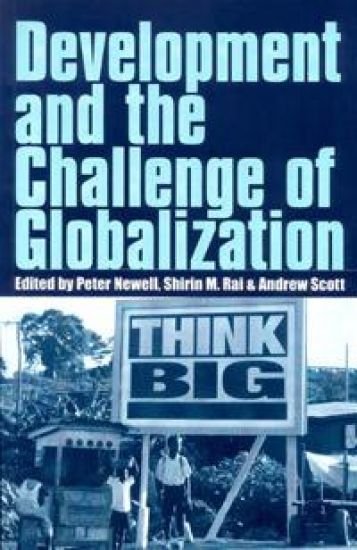
Development and the Challenge of Globalization
Peter Newell; Andrew Scott; Shirin Rai
Practical Action Publishing
2002
nidottu
Understanding globalization is key for the future of development. Increasingly globalized patterns of economic exchange and political interaction shape the possibility of reforms to benefit the poor. There is an urgent need to assess what challenges this new context poses for development. In particular, what are the challenges to the objective of poverty reduction implied by globalization? The aim of this book is to take a critical look at the trends associated with globalization and assess what they mean for traditional practices of development. Going beyond attempts to quantify the pros and cons of globalization and the ideological tenor of much of the polemical debate, the approach is to focus on the actors, institutions and processes by which the relationship between globalization and poverty is mediated. This is important for understanding who the winners and losers from globalization are likely to be, given the current political and economic constraints under which practitioners operate. Such an approach helps to clarify the sense of the obstacles and opportunities that will shape any attempt to promote poverty elimination in a context of globalization. The book explores how the relationship between globalization and poverty is handled by institutions and actors that govern social and economic interactions at every level of society. The focus is on the consequences of globalization, the actors, institutions and movements that are operating in the new global political space, and on the strategies that are being developed to contest the impact of globalization on people's lives. The chapters examine three broad areas: production and exchange in the context of small scale producers; changing gender relations and feminist movements; and the environmental consequences of globalization and the movements that have emerged to challenge these. This reflects the editors' concern with the consequences of globalization as well as the politics of resistance to its negative outcomes.
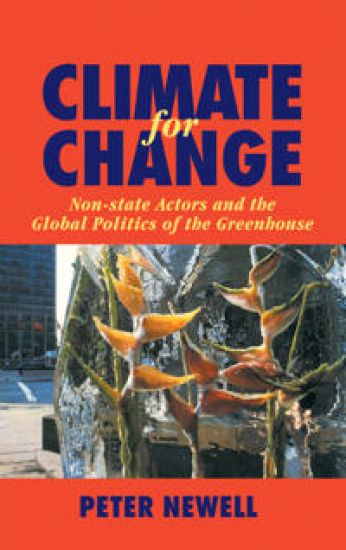
Climate for Change: Non-State Actors and the Global Politics of the Greenhouse provides a challenging explanation of the forces that have shaped the international global warming debate. Unlike other books on the politics of climate change, this book concentrates on how non-state actors, such as scientific, environmental and industry groups, as opposed to governmental organisations, affect political outcomes in global fora on climate change. It also provides insights into the role of the media in influencing the agenda. The book draws on a range of analytical approaches to assess and explain the influence of these non-governmental organisations on the course of global climate politics. The book will be of interest to all researchers and policy-makers associated with climate change, and will be used on university courses in international relations, politics and environmental studies.