
Kirjailija
Peter Selg
Kirjat ja teokset yhdessä paikassa: 89 kirjaa, julkaisuja vuosilta 2004–2026, suosituimpiin kuuluu Selg, P: Die anthroposophische Weltgesellschaft. Vertaile teosten hintoja ja tarkista saatavuus suomalaisista kirjakaupoista.
89 kirjaa
Kirjojen julkaisuvuodet: 2004–2026.
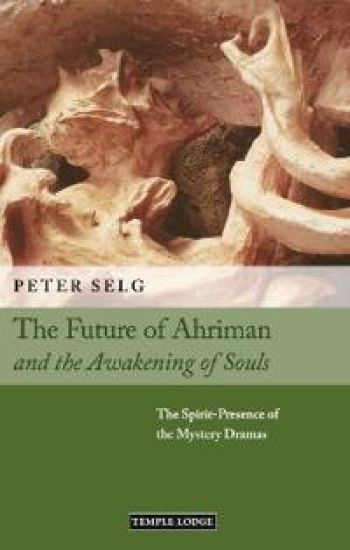
In 1919 Rudolf Steiner spoke about the future physical incarnation of the being of Ahriman. This would take place before 'a part' of the third millennium had passed, and was inevitable - but it was also necessary that people were aware of this event and recognized it, for earthly culture would be destroyed if the world were to fall completely to Ahriman. The situation we find ourselves in today shows Ahriman's unmistakable signature: the rapid destruction of nature, zoonotic diseases and pandemics, huge social inequalities, and the overall dominance of high finance. In this short book Peter Selg presents a timely overview of the challenges we face, beginning with a pithy and concise survey of Steiner's commentary on Ahriman's incarnation and the conditions that would characterize it. This is followed by a study of Ahriman's depiction in the mystery drama The Souls' Awakening. Steiner's remarkable personification of Ahriman on stage - portraying his strategies and activities - provides vital instruction for humanity. Selg concludes with an evaluation of 'the Battle for Human Intelligence' taking place in contemporary culture through materialistic ideas such as transhumanism. In their recent book Covid-19: The Great Reset, for example, Klaus Schwab and Thierry Malleret propose wholesale economic, geopolitical, environmental and technological revisions to society - ideas that need to be understood and confronted in human thought and consciousness. The Future of Ahriman is a crucial aid to comprehending our times.
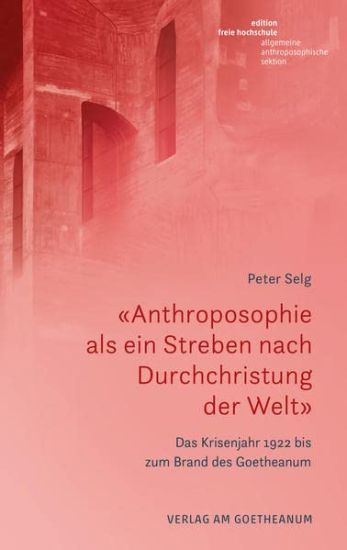
«Anthroposophie als ein Streben nach Durchchristung der Welt»
Peter Selg
Verlag am Goetheanum
2022
pokkari
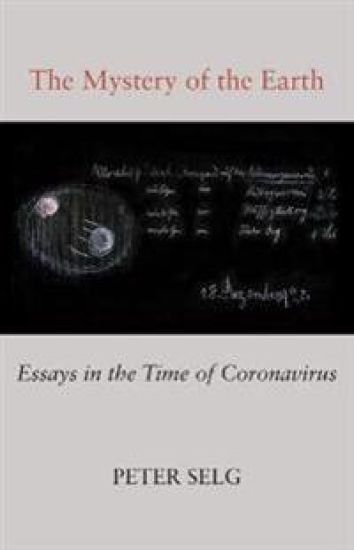
"Rudolf Steiner himself did not just comment critically about the out-of-hand 'fear of bacilli' or the 'obsession with hygiene' as 'modern superstition, ' but also warned about the dangerous reality of 'pathogens of the worst kind' that could become 'destroyers of human life' and bring with 'dreadful epidemics.'" This volume gathers a collection of essays on the medical, sociopolitical, and spiritual dimensions of the Covid crisis, written by Peter Selg between Easter and Pentecost 2020. He offers these essays as a means of orientation and of "explorations" (in Paul Celan's meaning). The author emphasizes in his preface, however, that representatives of Anthroposophy nevertheless have an obligation to speak out on the subject: "If they silence or censor themselves because they do not want to seem in any way negative as a result of their critical reflections, or because even 'before corona' they quickly became the target of various accusations, they lose nothing less than the justification for their existence, their inner identity and credibility, as well as their 'historical conscience'--the crucial meaning of which Rudolf Steiner pointed to time and again and not without reason." C O N T E N T S: Foreword The Mystery of the EarthWhere Are the Sources of Life to Be Found? No Standing StillPerspectives on Epidemic Infectious Diseases in the Work of Rudolf SteinerA Medicalized Society? The Difficult Way to the "Whitsun Path" Appendices Paris and the Fifth Gospel (2019)"The Mystery of the Earth" (1929), by Ita Wegman Notes This book was originally published in German as Mysterium der Erde. Aufs tze zur Corona-Zeit (Verlag des Ita Wegman Instituts, Arlesheim, Switzerland, 2020). An earlier English translation of the essay "A Medicalized Society?" (translated by Thomas O'Keefe and Charles Gunn) first appeared in Deepening Anthroposophy, no. 9.1. In this volume, that translation has been revised.

Unlike other Christian creeds, the creed of The Christian Community is not a statement of belief, but rather a series of assertions that act as a path to a deeper understanding of Christianity. Peter Selg offers an insightful and informative overview of how, in the time leading up to the founding of The Christian Community nearly one hundred years ago, Rudolf Steiner formulated both the creed itself and its founding principles. He also examines the history of Christian creeds ? including the Apostles? Creed and the Nicene Creed ? and compares them to each other. Finally, he explores the ongoing significance of the creed for The Christian Community today.
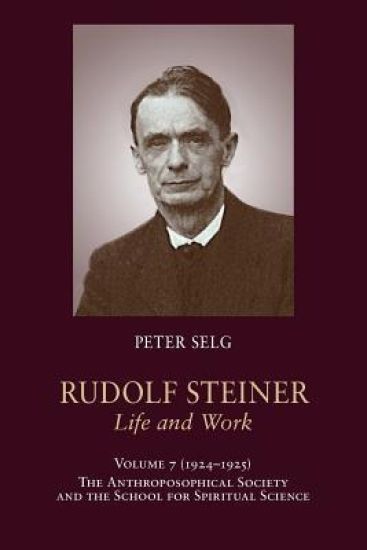
In the seventh and final volume in his comprehensive biography of Rudolf Steiner, Peter Selg describes Steiner's final months on Earth. Although his health was beginning to decline, 1924 was arguably his most productive and fruitful year. It saw a new beginning for the Anthroposophical Society, as well as the beginnings of the Esoteric School and the School for Spiritual Science, both of which continue to constitute the heart of the Society's core mission in the world. The year began with the "Christmas Conference," during which the new mystery stream of the Anthroposophical Society was reborn: "All those experiencing the Christmas Conference, the Michael Conference, in the right way felt transformed, felt how they became different persons, how the spiritual world drew very close--how we were, in fact, within it" (Ita Wegman). The year 1924 also witnessed Rudolf Steiner's series of "Karmic Relationships" lectures, as well as the serialized "Leading Thoughts" published in Das Goetheanum, the weekly newsletter to Anthroposophical Society members, in which he summarized the whole of Anthroposophy in a series of aphoristic food for thought and meditation, supplemented by essays on the Michaelic nature of Anthroposophy. Also serialized in the Goetheanum newsletter were Rudolf Steiner's Autobiography--seventy chapters in his life up to 1907. During that time, too, Steiner clearly defined his spiritual relationships with Ita Wegman, Marie Steiner, and Lili Kolisko and their significant connection to the Society and his spiritual legacy. New initiatives were also planted in the world during this time, including anthroposophically extended medicine and biodynamic agriculture. From his sickbed at the foot of his monumental sculpture--The Representative of Humanity--Steiner also formed plans and a model for rebuilding the Goetheanum in Dornach, Switzerland. Also included in this volume is a lecture by Rudolf Steiner on June 4, 1924, "The Festival of Pentecost."
«Når vi taler om det evige, uforgjengelige i menneskets vesen, til forskjell fra dets forgjengelige legeme, trenger vi - i tillegg til ordet «udødelighet», som peker hen på livets slutt - et annet ord; vi trenger ordet «ufødthet». For på samme måte som vi med vårt evige, åndelige vesen går gjennom dødens port til et annet liv i den åndelige verden, som åndsforskningen kan beskrive, slik trer vi fra de åndelige verdener, før vi unnfanges og fødes, ned til denne fysiske jordtilværelse. Vi går ikke bare som udødelige gjennom dødens port - vi kommer som ufødte gjennom fødselens port. Vi trenger ordet ufødthet i tillegg til ordet udødelighet, hvis vi vil forstå menneskets vesen.» Rudolf Steiner. Boken har tre hovedkapitler: 1. Den «Sixtinske Madonna» og «De ufødtes kor». Rafael og Nelly Sachs. 2. Menneskesjelen og kosmos. Om livet før unnfangelsen. 3. «Fra åndens til jordens fellesskap». Om veien inn i jordtilværelsen. - Med et tillegg av Rudolf Steiner: «Overgangen fra den sjelelig-åndelige tilværelse i menneskets utvikling til den sanselig-fysiske». Oversatt av Terje Christensen og Gunnar Ihlen fra «Ungeborenheit. Die Präexistenz des Menschen und der Weg zur Geburt», Verlag des Ita Wegman Instituts.
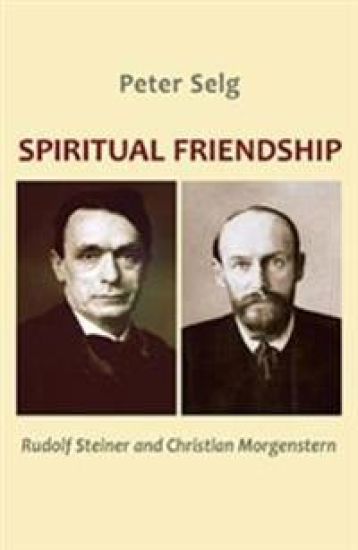
"Their complete understanding of each other and those two great spirits passing into each other created an atmosphere, perceptible to all, that had bearing force and radiated hope for the future." --Marie Steiner-von SiversPeter Selg wrote this remarkable book on the formation of spiritual community and mutual assistance to coincide with the hundredth anniversary of Christian Morgenstern's death on March 31, 1914. Rudolf Steiner was, for Christian Morgenstern, the decisive spiritual teacher and facilitator of the future, both historically and to him as an individual, which is why Morgenstern wished to recommend Steiner for the Nobel Peace Prize. Rudolf Steiner felt great warmth of heart and gratitude toward Christian Morgenstern, his poetic work, and especially his groundbreaking way of working with anthroposophical Spiritual Science. "It is often said that to understand the poet we must go to his home country and understand that Christian Morgenstern is a poet of the spirit. And to understand this poet of the spirit, we must go into the land of spirit, to spirit regions." --Rudolf Steiner
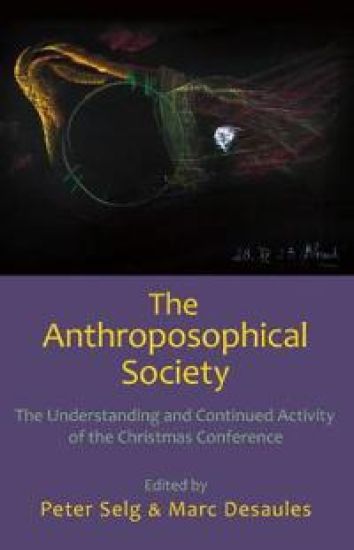
The Anthroposophical Society
Peter Selg; Marc Desaules; Stefano Gasperi; Mario Betti; Johannes Greiner; Gioia Falk
SteinerBooks, Inc
2018
pokkari
In 2014, the Anthroposophical Society in Switzerland launched a series of conferences to deepen the impulse of the 1923 Christmas Conference, the event that Rudolf Steiner referred to as a "festival of consecration" for the "beginning of a turning point of time." The goal of the conferences was to develop a deeper understanding of the Anthroposophical Society's essential task and contribute to shaping its future. This volume presents six talks from the conference of February 2016, the purpose of which was to let the Anthroposophical Society as an archetypal phenomenon speak to us. This society planted a seed of humanity and the model of a legal entity whose future potential and perspectives are yet to be discovered. It is a social organism that exhorts us to put our karma in order, carry what is close to our hearts into the world, and by doing so experience the presence and support of the divine spirit. These edited transcriptions of six lectures--by Peter Selg, Stefano Gasperi, Mario Betti, Johannes Greiner, Gioia Falk, and Marc Desaules--encourage us to move closer to a deeper existential relationship to the Anthroposophical Society and movement, experienced through others and discovered within ourselves.
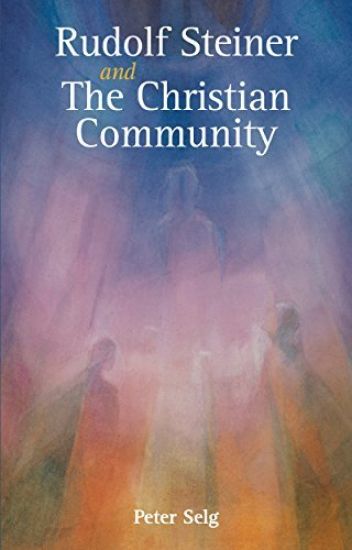
The relationship between The Christian Community and the Anthroposophical Society is complex and often misunderstood. Christian Community priests work out of an understanding of anthroposophy, and it was undoubtedly Steiner's theological lecture courses which led to the formation of the movement. Nonetheless questions remain, which Peter Selg examines closely in this unique book.-- Steiner's work emphasises the importance of finding the spiritual in everyday life. So why did he help found a 'Sunday church'?-- In his lectures, Steiner spoke about a 'spiritual communion' without physical matter. So why is there any need for a sacramental communion with real bread and wine, as practiced in The Christian Community?-- In a much-quoted lecture after the founding of The Christian Community, Steiner said that anthroposophists should have no need of the new religious movement. But on another occasion he said he wished greatly that the movement should succeed. How can these be understood and reconciled? This long-overdue book is a significant exploration of Steiner's legacy which should have far-reaching implications for mutual understanding and cooperation between The Christian Community and the wider anthroposophical world.
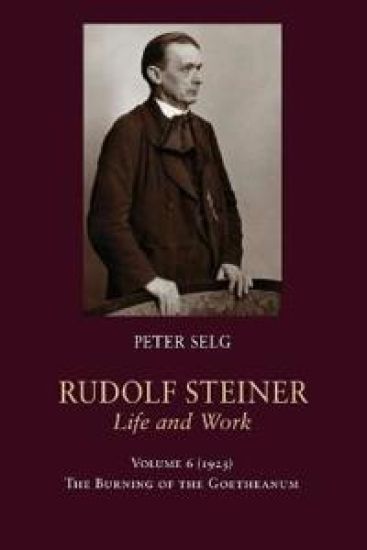
"Try to become one with the world--that will be the best and most important 'program.' It is something that cannot be contained in statutes but needs to burn in our hearts as a flame." --Rudolf Steiner In 1923, Central Europe was still in disarray and social chaos created by the polarizing events of World War I. In volume 6 of his seven-volume biography of Rudolf Steiner, Peter Selg focuses on one of the most tragic years for the anthroposophical movement, including especially the rise of nationalism and the seeds of hatred spawned by Adolf Hitler and his followers. The very beginning of that pivotal year began with the destruction of the nearly finished Goetheanum building in Dornach, Switzerland, delivering a heavy blow to the Anthroposophical Society and to Rudolf Steiner, both spiritually and on a personal level. It was evident that the fire had been caused by arson, and Steiner immediately expressed determination to rebuild and move forward, despite the friction in the Anthroposophical Society and the movement as a whole. Steiner noted, "It will not be viable if things continue as before," suggesting that the Society needed to be suffused with the "will to wake up...because then it can inspire an awakening of the present civilization as a whole." He devoted the remainder of 1923--indeed, his life--to that cause.
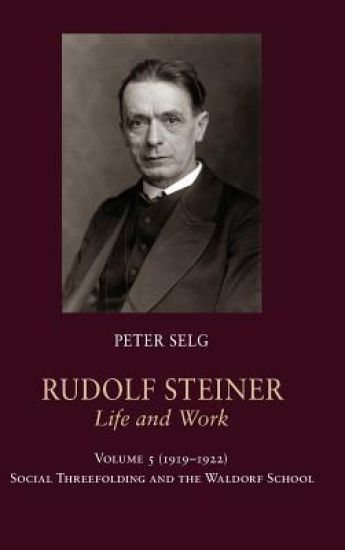
"Try to become one with the world--that will be the best and most important 'program.' It is something that cannot be contained in statutes but needs to burn in our hearts as a flame." --Rudolf Steiner Following the widespread destruction of World War I, Europe in 1918 was faced with political, economic, and social chaos, especially in Germany. In volume 5 of his seven-volume biography of Rudolf Steiner, Peter Selg focuses on the three years following the "Great War" and Steiner's efforts to help restructure society in a way that might avoid a recurrence of such a terrible calamity in the future. He saw the root sociopolitical and spiritual causes of the devastation and sought to change the flawed worldviews and impulses that led to the hubris behind the World War. Rudolf Steiner thus began to concentrate on various means to renew and invigorate society, both through immediate measures--especially in his plan for a "threefold social order"--and through the new form of pedagogy that came to fruition with the Waldorf education movement. Steiner saw that a renewed form of education was necessary to the development of peaceful and healthy social conditions in the future. This education was intended to help children grow into responsible, free, and imaginative adults. This was a time of intense work for Rudolf Steiner, including a full schedule of travel and lectures, reaching out to political leaders, training teachers for the new schools, and working with theologians and ministers toward religious renewal. Rudolf Steiner, Life and Work, Seven Volumes Vol. 1. (1861-1890): Childhood, Youth, and Study Years (ISBN: 9781621480822 Pbk - ISBN: 9781621480839 Hbk) Vol. 2. (1890-1900): Weimar and Berlin (ISBN: 9781621480853 Pbk - ISBN: 9781621480860 Hbk) Vol. 3. (1900-1914): Spiritual Science and Spiritual Community (ISBN: 9781621480884 Pbk - ISBN: 9781621480891 Hbk) Vol. 4. (1914-1918): The Years of World War I (ISBN: 9781621481577 Pbk - ISBN: 9781621481584 Hbk) Vol. 5. (1919-1922): Social Threefolding and the Waldorf School (ISBN: 9781621481935 Pbk - ISBN: 9781621481942 Hbk) Vol. 6. (1923): The Burning of the Goetheanum (ISBN: 9781621482192 Pbk - ISBN: 9781621482208 Hbk) Vol. 7. (1924-1925): The Anthroposophical Society and the School for Spiritual Science (ISBN: 9781621482321 Pbk - ISBN: 9781621482338 Hbk)