Kirjojen hintavertailu – 12 903 725 kirjaa ja 27 kauppaa

Kirjailija

Peter Selg

Kirjat ja teokset yhdessä paikassa: 89 kirjaa, julkaisuja vuosilta 2004–2026, suosituimpiin kuuluu Selg, P: Die anthroposophische Weltgesellschaft. Vertaile teosten hintoja ja tarkista saatavuus suomalaisista kirjakaupoista.

89 kirjaa

Kirjojen julkaisuvuodet: 2004–2026.

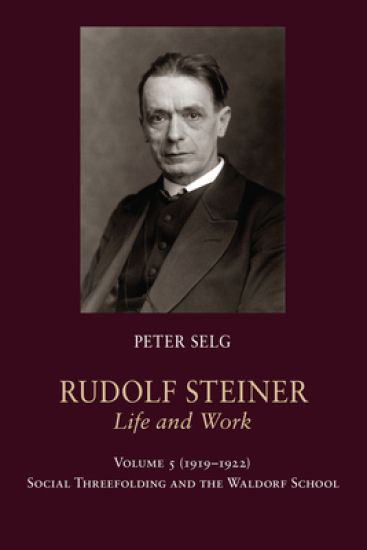
Rudolf Steiner, Life and Work

Rudolf Steiner, Life and Work

Peter Selg

Rudolf Steiner Press
2017
pokkari
"Try to become one with the world--that will be the best and most important 'program.' It is something that cannot be contained in statutes but needs to burn in our hearts as a flame." --Rudolf SteinerFollowing the widespread destruction of World War I, Europe in 1918 was faced with political, economic, and social chaos, especially in Germany. In volume 5 of his seven-volume biography of Rudolf Steiner, Peter Selg focuses on the three years following the "Great War" and Steiner's efforts to help restructure society in a way that might avoid a recurrence of such a terrible calamity in the future. He saw the root sociopolitical and spiritual causes of the devastation and sought to change the flawed worldviews and impulses that led to the hubris behind the World War. Rudolf Steiner thus began to concentrate on various means to renew and invigorate society, both through immediate measures--especially in his plan for a "threefold social order"--and through the new form of pedagogy that came to fruition with the Waldorf education movement. Steiner saw that a renewed form of education was necessary to the development of peaceful and healthy social conditions in the future. This education was intended to help children grow into responsible, free, and imaginative adults. This was a time of intense work for Rudolf Steiner, including a full schedule of travel and lectures, reaching out to political leaders, training teachers for the new schools, and working with theologians and ministers toward religious renewal. Rudolf Steiner, Life and Work, Seven VolumesVol. 1. (1861-1890): Childhood, Youth, and Study Years(ISBN: 9781621480822 Pbk - ISBN: 9781621480839 Hbk)Vol. 2. (1890-1900): Weimar and Berlin(ISBN: 9781621480853 Pbk - ISBN: 9781621480860 Hbk)Vol. 3. (1900-1914): Spiritual Science and Spiritual Community(ISBN: 9781621480884 Pbk - ISBN: 9781621480891 Hbk)Vol. 4. (1914-1918): The Years of World War I(ISBN: 9781621481577 Pbk - ISBN: 9781621481584 Hbk)Vol. 5. (1919-1922): Social Threefolding and the Waldorf School(ISBN: 9781621481935 Pbk - ISBN: 9781621481942 Hbk)Vol. 6. (1923): The Burning of the Goetheanum(ISBN: 9781621482192 Pbk - ISBN: 9781621482208 Hbk)Vol. 7. (1924-1925): The Anthroposophical Society and the School for Spiritual Science(ISBN: 9781621482321 Pbk - ISBN: 9781621482338 Hbk)
Elisabeth Vreede

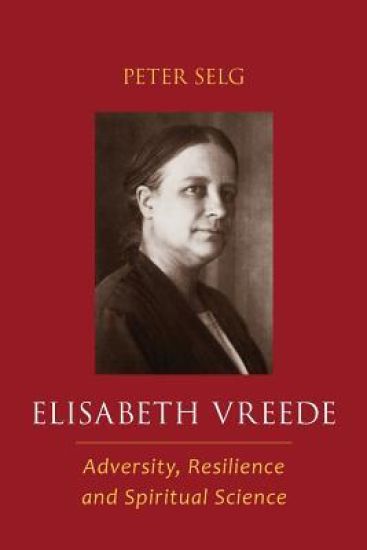
Elisabeth Vreede

Peter Selg

Rudolf Steiner Press
2017
pokkari
Rudolf Steiner entrusted the Esoteric Section and the Mathematics and Astronomy Section at the Goetheanum in Dornach, Switzerland, to Elisabeth Vreede (1879-1943) because of her special abilities. He commented, "Miss. Vreede is one of the people who best understands my lectures." Elisabeth Vreede was recognized as the "esoterically educated" member of Steiner's governing body. Nevertheless, in 1935 she was stripped of all her positions at the Goetheanum in Dornach and prevented from resuming them. Lili Kolisko wrote of her, "Dr. Elisabeth Vreede was a member of the Executive Council whose opinion was considered of very little or--one could almost say--no importance." Herbert Hahn wrote to Elisabeth Vreede, "I feel we must thank your loyal custodial task and your unfailing enthusiasm for all of Anthroposophy for much, much more than we can grasp at this time." This book--employing numerous, previously unpublished documents dealing with tragic misunderstandings in the anthroposophical movement--offers testimony to the greatness of this singular individual. C O N T E N T SForeword1. "All of Heaven seemed to be called down" (1879-1913): The Way to Rudolf Steiner2. "Dr. Steiner was very pleased with my lectures" (1914-1923)Dornach3. "Tested to the ultimate degree" (1924-1925): The Christmas Conference and the Esoteric Executive Council4. "Executive Council's Idylls" (1925-1935): The Decade after Rudolf Steiner's Death5. "May soul live in this house" (1935-1943): The Final Years Appendices: Elisabeth Vreede: The Christmas and Michael Impulses: Lecture at the Opening of the Second Goetheanum, 1928Elisabeth Vreede: Isis-Sophia, Christmas Essay, 1928This book was originally published in German as Elisabeth Vreede: 1879-1943 (Verlag des Ita Wegman Instituts, 2009).
The Child as a Sense Organ

The Child as a Sense Organ

Peter Selg

SteinerBooks, Inc
2017
pokkari
The initial period of childhood is essentially about adapting to and incarnating on Earth and establishing a provisional balance between the "spiritual" and the "physical," between the prenatal cosmic and the earthly factors. During this time, according to Rudolf Steiner, "all the forces of a child's organization emanate from the neurosensory system. . . . By bringing respiration into harmony with neurosensory activity, we draw the spirit-soul element into the child's physical life." Peter Selg investigates how children's early experience of the world begins as an undifferentiated sensory relationship to their phenomenological environment. This aspect of a child's incarnation leads to leaning through imitation and to the process of recognizing "the Other" as a separate entity with which to interact. In this cogent work, Peter Selg describes the early stages of childhood from the perspectives of conventional scientific and spiritual-scientific-- anthropological and anthroposophic--research with the purpose of encouraging a new educational attitude in working with young children. In his numerous references to early childhood development, this was Rudolf Steiner's most important and urgent purpose.
The Warmth Meditation

The Warmth Meditation

Peter Selg

SteinerBooks, Inc
2016
pokkari

Halvin toimitettuna 20,20 €

Rudolf Steiner wrote the text of the "Warmth Meditation" on two sheets of A4 paper in neat handwriting and without revisions or corrections, complete with two small, sketch-like drawings. He gave the meditation to the medical student Helene von Grunelius in early 1923 and "described it as the way for medical practitioners to behold the etheric Christ." It was intended for use by her and her circle of friends in their medical studies. The warmth meditation became their central esoteric medical meditation and has been maintained and practiced by countless individuals during the past eight decades, becoming for many the existential core of their therapeutic practice and perspective. Peter Selg's insightful book describes the historical context of meditation and some of its spiritual implications. Included are reproductions of the original meditation as written down by Rudolf Steiner and Ita Wegman.
The Michael School

The Michael School

Peter Selg

SteinerBooks, Inc
2016
pokkari
When Rudolf Steiner embarked on the esoteric lessons of the First Class in the newly founded Esoteric School at the Goetheanum, he suggested that the School for Spiritual Science as an esoteric institution had, in the years preceding the Christmas Foundation Meeting of 1923, become estranged from its intrinsic task. This volume closely investigates those matters--to which Steiner referred only briefly--tracing the development of Rudolf Steiner's idea of the School in relation to the Michael community, which he first discussed at length in his lectures on karma, given in parallel to the First Class lessons. This book also describes Ita Wegman's path and her mission in connection with these undertakings.
Rudolf Steiner, Life and Work

Rudolf Steiner, Life and Work

Peter Selg

SteinerBooks, Inc
2016
nidottu
In volume 4, Peter Selg continues his thorough and careful exploration into Rudolf Steiner's life and work, focusing on the period of 1914 to 1918 and World War I. Steiner experienced the assassination in Sarajevo as a deeply serious tragedy that would inevitably lead to war and lamented the widespread reluctance to regard such critical events with the appropriate earnestness and concern. Steiner saw the dark time of World War I as largely the result of mounting economic tensions between England and Germany, marked by unsustainably materialistic and nationalistic thinking. In his view, the prevalent social concepts resisted evolution toward a form of society that would enable a long-term future peace; he would soon propose his alternative in the form of the "threefold nature of the social organism." The core idea of this concept is that, to maintain societal health, sovereign and mutually interdependent relations must be upheld among the three principal domains of social life--the political, economic, and cultural-spiritual realms. Rudolf Steiner felt strongly that the threefold concept would be the only hope for lasting peace in war-torn Europe and devoted tremendous energy to promoting and clarifying his "threefold idea." In the end, his many attempts to reach out to those capable of bringing this idea to realization did not succeed, though certain high-ranking individuals did reach out to Steiner for counsel. Volume 4 describes a dramatic period during which Rudolf Steiner showed competence and devotion in his attempts to communicate and implement a long-term path to peaceful relations in Europe. His lectures during this time focused heavily on themes of inwardly accompanying those who have died; caring for the wounded; the importance of selflessly experiencing the full tragic reality of world events; and the vital importance of truthfulness in journalism. He regarded the deficiency of truthful reporting to be so dire that he considered founding a news organization in Switzerland. Steiner's deep concern for the tragedy that had befallen Europe, for the many lives violently cut short, and for the political exploitation attempted in the aftermath of the war, led him to imbue his anthroposophic activity with a fundamentally new gesture, focusing on practical contributions to society in a way never before attempted in the anthroposophical movement. This volume is a translation from German of the first chapter of Rudolf Steiner. 1861 - 1925: Lebens- und Werkgeschichte. Band 2: 1914 - 1922 (Ita Wegman Institut, 2012).
Rudolf Steiner, Life and Work

Rudolf Steiner, Life and Work

Peter Selg

SteinerBooks, Inc
2016
sidottu
In volume 4, Peter Selg continues his thorough and careful exploration into Rudolf Steiner s life and work, focusing on the period of 1914 to 1918 and World War I. Steiner experienced the assassination in Sarajevo as a deeply serious tragedy that would inevitably lead to war and lamented the widespread reluctance to regard such critical events with the appropriate earnestness and concern. Steiner saw the dark time of World War I as largely the result of mounting economic tensions between England and Germany, marked by unsustainably materialistic and nationalistic thinking. In his view, the prevalent social concepts resisted evolution toward a form of society that would enable a long-term future peace; he would soon propose his alternative in the form of the threefold nature of the social organism. The core idea of this concept is that, to maintain societal health, sovereign and mutually interdependent relations must be upheld among the three principal domains of social life the political, economic, and cultural-spiritual realms. Rudolf Steiner felt strongly that the threefold concept would be the only hope for lasting peace in war-torn Europe and devoted tremendous energy to promoting and clarifying his threefold idea. In the end, his many attempts to reach out to those capable of bringing this idea to realization did not succeed, though certain high-ranking individuals did reach out to Steiner for counsel. Volume 4 describes a dramatic period during which Rudolf Steiner showed competence and devotion in his attempts to communicate and implement a long-term path to peaceful relations in Europe. His lectures during this time focused heavily on themes of inwardly accompanying those who have died; caring for the wounded; the importance of selflessly experiencing the full tragic reality of world events; and the vital importance of truthfulness in journalism. He regarded the deficiency of truthful reporting to be so dire that he considered founding a news organization in Switzerland. Steiner s deep concern for the tragedy that had befallen Europe, for the many lives violently cut short, and for the political exploitation attempted in the aftermath of the war, led him to imbue his anthroposophic activity with a fundamentally new gesture, focusing on practical contributions to society in a way never before attempted in the anthroposophical movement. This volume is a translation from German of the first chapter of Rudolf Steiner. 1861 - 1925: Lebens- und Werkgeschichte. Band 2: 1914 - 1922 (Ita Wegman Institut, 2012). "
The Sufferings of the Nathan Soul

The Sufferings of the Nathan Soul

Peter Selg

SteinerBooks, Inc
2016
pokkari
"Humanity must embark upon a conscious grasp of today's events. For this reason, we must come to know Christ better, and this is connected with insight into the nature of the human being, Jesus of Nazareth" (Rudolf Steiner). On 1 June 1914, Rudolf Steiner spoke in Basel for the last time before the outbreak of World War I, and for the last time ever in all his lectures and writings about the Nathan soul and its relationship with the Mystery of Golgotha. This internal lecture, given only for members of the Anthroposophical Society, concluded a series of profound Christological reflections begun on September 20, 1913, at the laying of the foundation stone for the St. John's building (the first Goetheanum) in nearby Dornach and culminating (four weeks before the Sarajevo assassination that sparked the Great War) in the motif of "selflessness," whose importance for the future Steiner stressed with great and unmistakable emphasis. This study by Peter Selg--first published on the centennial of the outbreak of World War I--focuses on the development of key motifs in Steiner's lectures in the immediate prewar period: the "Fifth Gospel," the Nathan soul, and Christ's act of sacrifice. Also contained here is the entire text of Rudolf Steiner's lecture in Basel on June 1, 1914, whose important words of introduction have appeared only once before, in the Goetheanum newsletter in 1936. CONTENTS Foreword 1. Rudolf Steiner: "The Four Christ Sacrifices and the Culture of Selflessness" (Basel, June 1, 1914) 2. Peter Selg: Preludes to the Mystery of Golgotha: The account given in Basel, and the culmination of anthroposophic Christology before the outbreak of World War I
Rudolf Steiner, Life and Work

Rudolf Steiner, Life and Work

Peter Selg

SteinerBooks, Inc
2015
pokkari
This third volume of Peter Selg's comprehensive presentation of Rudolf Steiner's life and work begins with Steiner's invitation to lecture in the Theosophical Society during the summer of 1900. From the outset of his theosophical involvement, Steiner was resolved to serve and develop the Western path to the spirit, traversed in full, conscious clarity of thought. He was therefore critical of the tendency to avoid the modern standards of a sound knowledge process in matters of spirituality and esotericism, and instead emphasized the importance of idealist philosophy as groundwork for understanding spiritual cognition.
Rudolf Steiner ja Christian Rosenkreutz

Rudolf Steiner ja Christian Rosenkreutz

Peter Selg

SUOMEN ANTROPOSOFINEN LIITTO
2015
sidottu

Halvin toimitettuna 29,00 €

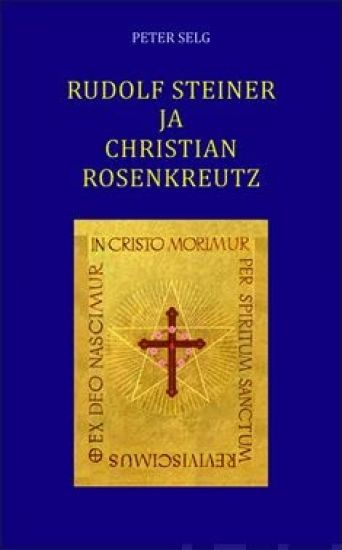
Rudolf Steiner puhui useissa esitelmissään antroposofisen hengentieteen suhteesta rosenkreutsilaisuuteen, mutta harvoin nimellä Christian Rosenkreutz tunnetusta henkilöstä itsestään. Hän sanoi: Christian Rosenkreutzin olemuksesta puhuminen edellyttää suurta luottamusta henkisen elämän mysteereihin ei luottamusta henkilöön vaan henkisen elämän suuriin salaisuuksiin. Rudolf Steiner kutsui Christian Rosenkreutzia yhdeksi ihmiskunnan suurista johtajista, jonka oli ja on johdettava henkinen liike nykyaikaan ja tulevaisuuteen. Hän painotti Rosenkreutzin olevan kristillisyyden suuri opettaja.
Rudolf Steiner, Life and Work

Rudolf Steiner, Life and Work

Peter Selg

SteinerBooks, Inc
2014
nidottu
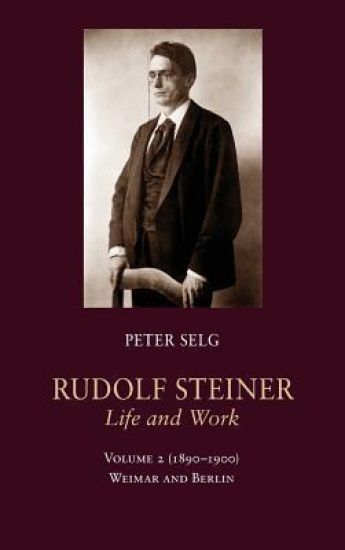
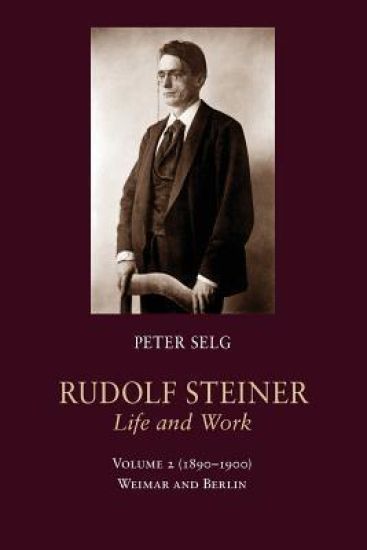
"It makes no sense to stop where Goethe stood. Yet we cannot progress unless we absorb Goethe deeply and allow ourselves to be wholly inspired by the impulses he brought into the world. This cannot be achieved as quickly as people today would like this to happen. There is nothing for it; anyone who was careless enough to live at the end of the nineteenth century must bear it." --Rudolf Steiner, July 18, 1891The first chapter of this volume looks at Rudolf Steiner's years in Weimar, beginning with his work at the Goethe Archives editing Goethe's scientific works. It was in this capacity that Steiner was able to comprehend the great spiritual depth of Goethe's life and work, which became the foundation for his own lifework. This chapter also looks at his social circles and the writing and publication of his works Truth and Knowledge (CW 3) and The Philosophy of Freedom (CW 4). It also highlights his encounter with the work of Friedrich Nietzsche, his visits to the Nietzsche Archives in Naumburg, and the writing of his book Friedrich Nietzsche: Fighter for Freedom (CW 5). Rudolf Steiner's time in Weimar comes to a close with the creation of his second book on Goethe: Goethe's World View (CW 6), a fruit of his work at the Archives. The second chapter focuses on Rudolf Steiner's time in Berlin, where he worked as editor of a cultural periodical, Magazin f r Litteratur, and accepted a position as lecturer at the Workers' School. There he was able to grow into his capacity as a teacher and where, although he encountered many ideological challenges, his insight into historical development found wide appreciation among students. The third chapter covers the turn of the century and Rudolf Steiner's inner transition to speaking and writing more openly of his esoteric observations on the evolution of consciousness, the "I," and the training of cognition. His decisive 1899 essay, Individualism in Philosophy, marked this impulse, followed by invitations to lecture freely before the Theosophical Society, where Rudolf Steiner presented the esoteric nature of Goethe's fairy tale and the content of what later became his own books Mystics after Modernism (CW 7) and Christianity as Mystical Fact and the Mysteries of Antiquity (CW 8). Rudolf Steiner, Life and Work, volume 2 is a translation from German of chapters 4 and 5 of Rudolf Steiner. 1861-1925: Lebens- und Werkgeschichte. Band 1: 1861-1914 (Ita Wegman Institut, 2012).
Rudolf Steiner, Life and Work

Rudolf Steiner, Life and Work

Peter Selg

SteinerBooks, Inc
2014
nidottu
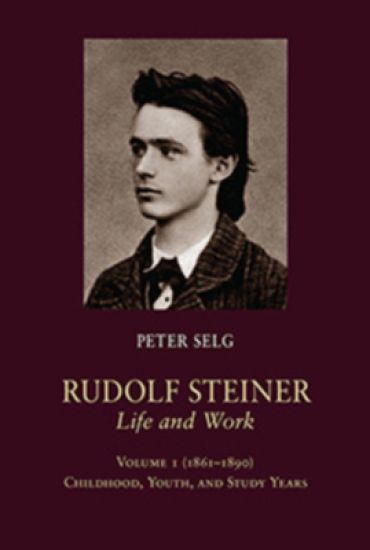
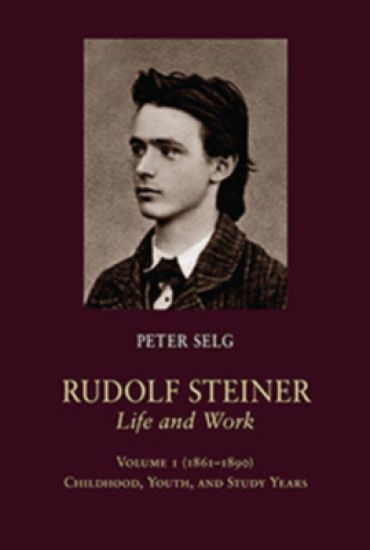
"I have never in my life pursued personal ambitions, nor will I in future." --Rudolf Steiner To acknowledge and understand Rudolf Steiner's unique achievement and life's work, one must be able to accept that the founder and spiritual researcher of Anthroposophy was "a citizen of two worlds"--both the spiritual and the physical. Anthroposophy teaches that this duality, rather than being a quality reserved for special individualities, is inherent to human nature. According to Rudolf Steiner, it is a central aspect of being human, even in times when the suprasensory aspect of humanity is eclipsed (for ordinary day consciousness) and almost eliminated by certain civilizations. The interest in Rudolf Steiner's person and essence, in his attitude toward life and work, will continue to grow in the decades and centuries that lie ahead, both within and outside the anthroposophical movement. It will take hold of entirely different groups of people, including those who come with spiritual questions or discover them in times of need. Rudolf Steiner's work grew to be "one unique effort of bringing courage to human beings" (Michael Bauer). This is the first of seven comprehensive volumes on Rudolf Steiner's "being, intentions, and journey." It presents Rudolf Steiner from childhood and youth through his doctorate degree and up to the time of his work for the Goethe Archives as editor of Goethe's scientific writings. By considering his formative years in depth, we come to understand better the roots and development of Rudolf Steiner's later spiritual research and teachings. -- -- -- "In the summer of 1881, Rudolf Steiner visited Felix Koguzki twice in his village. He saw the cottage that was full of medicinal herbs and the library, and he met Koguzki's wife and his children, whose development Koguzki recorded so impressively in his diary. 'God's blessing is everything, ' was written above the door of Koguzki's cottage in Trumau, where he prepared his herbal teas. Richard Koguzki wrote about his father, 'With all his spiritual openness, he was pious and devout. Goethe said: "Who ne'er his bread in sorrow ate, Who ne'er the mournful midnight hours Weeping upon his bed has sate, He knows you not, ye Heavenly Powers." He knew them.'" --Peter Selg (chapter 2)
Rudolf Steiner, Life and Work

Rudolf Steiner, Life and Work

Peter Selg

SteinerBooks, Inc
2014
sidottu
This is the first of seven volumes that offer the most comprehensive biography to date of Rudolf Steiner (1861-1925), founder of Anthroposophy (or Spiritual Science) and the Anthroposophical Society, which today has branches around the world. His unique genius gave rise to new impulses in education, medicine, agriculture, the arts, economics, and religion. Volume 1 presents Rudolf Steiner's life from birth and youth, through his doctorate degree and work as editor of Goethe's scientific works for the Goethe Archives.
Destiny of the Michael Community

Destiny of the Michael Community

Peter Selg

SteinerBooks, Inc
2014
nidottu
In two related studies, Peter Selg tracks the groundbreaking of the first Goetheanum on September 20, 1913, in the context of what is known as the "Michael movement," the primary active impulse brought by Rudolf Steiner in 1924, which explicitly indicates the anthroposophic movement and its official society. The author shows the fundamental importance of this beginning in Dornach. He illuminates the fateful goal of the "School for Spiritual Science" through Rudolf Steiner's karma lectures, not only providentially in the sense that it involved individualities, but also with regard to the future development of human civilization. This monograph builds on Peter Selg's book Rudolf Steiner's Foundation Stone Meditation: And the Destruction of the Twentieth Century and Sergei O. Prokofieff's Rudolf Steiner's Sculptural Group: A Revelation of the Spiritual Purpose of Humanity and the Earth. Originally published in German as Grundstein zur Zukunft. Vom Schicksal der Michael-Gemeinschaft (Verlag des Ita Wegman Instituts, 2013).
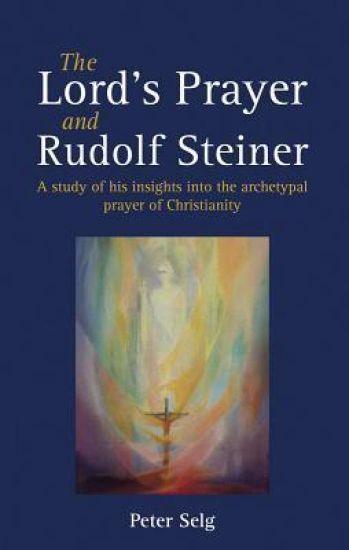
The Lord's Prayer and Rudolf Steiner
'Your will be done, on earth as it is in heaven.'Rudolf Steiner once called the Lord's Prayer the 'greatest initiation prayer', and he spoke about it many times, also referring to it as the central prayer of Christian experience. This book is, however, the first time that all of Steiner's comments, accounts and perspectives have been brought together in one place, presenting the full scope and depth of his ideas. Along the way, Peter Selg reveals some surprising insights into the spiritual history and mission of Christianity.
Honoring Life

Honoring Life

Sergei O. Prokofieff; Peter Selg

SteinerBooks, Inc
2014
nidottu
A Consideration from an Anthroposophical Point of ViewThe reflections in this book by Peter Selg and Sergei Prokofieff on the soul-spiritual, ethical, and medical-therapeutic issues surrounding physician-assisted suicide (and suicide as such) will provoke one's thought, feeling, and volition. Its inspiration arises from both Rudolf Steiner and the Hippocratic Oath. Peter Selg begins by showing how Rudolf Steiner views the principle of life as immanent spirit and the living medium of the "I," or individuality and as inviolable and wise beyond our understanding. It is the sacred task of healing always to attend to, honor, and serve life in this sense--to affirm, enhance, and strengthen the life forces of the sick. As Rudolf Steiner puts it, "The will to heal must always function as therapeutically as possible...even when one thinks that the sick person is incurable." These words were spoken before the full consummation of materialist, technologically enhanced medicine, but Rudolf Steiner, as Peter Selg shows, was well aware of the dangers related to the direction of modern medicine. Sergei Prokofieff links the initiatory origins of Hippocratic medicine in the Mysteries with the return of the Mystery origin of medicine and healing in Anthroposophic medicine. Turning to Steiner's spiritual research, he considers suicide to be an "illness" of our time and examines the spiritual consequences of suicide for the after-death experiences of those who have taken their own lives--specifically, that suicide results in the soul's profound disorientation. He goes on to show how suicide makes the after-death experience of Christ infinitely more difficult, as it does the "resurrection of the spirit" and the relation to the spiritual world. Far from being a "free" act, Prokofieff concludes, suicide is quite the opposite. Anyone seeking insight into suicide will find in this book a profound and esoteric introduction to this controversial problem.
Crisis in the Anthroposophical Society

Crisis in the Anthroposophical Society

Sergei O. Prokofieff; Peter Selg

Temple Lodge Publishing
2013
nidottu
Why is it so difficult actually to understand and implement the "intentions of the Christmas Conference" (in Rudolf Steiner's words), which represent a very concrete answer to the Anthroposophical Society's identity crisis'? - Peter Selg More than 100 years after its founding, the Anthroposophical Society faces serious questions - some of an existential nature - regarding its purpose and tasks in the present day. On 30 March 2012, in the course of the Society's Annual General Meeting in Dornach, both Sergei Prokofieff and Peter Selg gave lectures in which they addressed difficult issues relating to the General Anthroposophical Society and its global headquarters, the Goetheanum in Switzerland. These lectures were met with a mixture of enthusiastic support and stern disapproval. They are reproduced here in full - together with supplementary material that helps broaden and deepen their themes - in order for each and every interested individual to have access to them. 'The intention of my lecture was to draw attention to the fact that the recent development of the Goetheanum is no longer heading in the right direction; rather, it is heading in a direction that can be considered neither in the spirit intended by Rudolf Steiner, nor of service to anthroposophy. Before it is too late, this direction must be altered... Otherwise, the Goetheanum is in danger of being degraded to spiritual "insignificance", and of becoming a mere combination of museum and conference centre.' - Sergei O. Prokofieff