Kirjojen hintavertailu – 12 859 818 kirjaa ja 27 kauppaa

Kirjailija

Peter Sloterdijk

Kirjat ja teokset yhdessä paikassa: 101 kirjaa, julkaisuja vuosilta 1988–2026, suosituimpiin kuuluu Ny Jord 3-4. Vertaile teosten hintoja ja tarkista saatavuus suomalaisista kirjakaupoista.

101 kirjaa

Kirjojen julkaisuvuodet: 1988–2026.

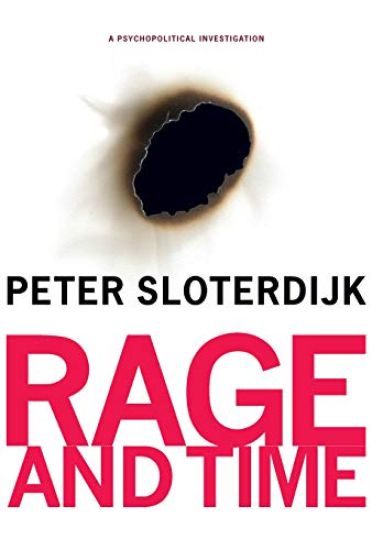
Rage and Time

Rage and Time

Peter Sloterdijk

Columbia University Press
2010
sidottu
While ancient civilizations worshipped strong, active emotions, modern societies have favored more peaceful attitudes, especially within the democratic process. We have largely forgotten the struggle to make use of thymos, the part of the soul that, following Plato, contains spirit, pride, and indignation. Rather, Christianity and psychoanalysis have promoted mutual understanding to overcome conflict. Through unique examples, Peter Sloterdijk, the preeminent posthumanist, argues exactly the opposite, showing how the history of Western civilization can be read as a suppression and return of rage. By way of reinterpreting the Iliad, Alexandre Dumas's Count of Monte Cristo, and recent Islamic political riots in Paris, Sloterdijk proves the fallacy that rage is an emotion capable of control. Global terrorism and economic frustrations have rendered strong emotions visibly resurgent, and the consequences of violent outbursts will determine international relations for decades to come. To better respond to rage and its complexity, Sloterdijk daringly breaks with entrenched dogma and contructs a new theory for confronting conflict. His approach acknowledges and respects the proper place of rage and channels it into productive political struggle.
Derrida, an Egyptian

Derrida, an Egyptian

Peter Sloterdijk

Polity Press
2009
sidottu
Shortly before his death in 2004, Jacques Derrida expressed two paradoxical convictions: he was certain that he would be forgotten the very day he died, yet at the same time certain that something of his work would survive in the cultural memory. This text by Peter Sloterdijk - one of the major figures of contemporary philosophy - makes a contribution of its own to the preservation and continuation of Derrida's unique and powerful work. In this brief but illuminating text, Sloterdijk offers a series of recontextualizations of Derrida's work by exploring the connections between Derrida and seven major thinkers, including Hegel, Freud and Thomas Mann. The leitmotif of this exploration is the role that Egypt and the Egyptian pyramid plays in the philosophical imagination of the West, from the exodus of Moses and the Jews to the conceptualization of the pyramid as the archetype of the cumbersome objects that cannot be taken along by the spirit on its return to itself. 'Egyptian' is the term for all constructs that can be subjected to deconstruction - except for the pyramind, that most Egyptian of edifices, which stands in its place, unshakeable for all time, because its form is the undeconstructible remainder of a construction that is built to look as it would after its own collapse.
Derrida, an Egyptian

Derrida, an Egyptian

Peter Sloterdijk

Polity Press
2009
nidottu
Shortly before his death in 2004, Jacques Derrida expressed two paradoxical convictions: he was certain that he would be forgotten the very day he died, yet at the same time certain that something of his work would survive in the cultural memory. This text by Peter Sloterdijk - one of the major figures of contemporary philosophy - makes a contribution of its own to the preservation and continuation of Derrida's unique and powerful work. In this brief but illuminating text, Sloterdijk offers a series of recontextualizations of Derrida's work by exploring the connections between Derrida and seven major thinkers, including Hegel, Freud and Thomas Mann. The leitmotif of this exploration is the role that Egypt and the Egyptian pyramid plays in the philosophical imagination of the West, from the exodus of Moses and the Jews to the conceptualization of the pyramid as the archetype of the cumbersome objects that cannot be taken along by the spirit on its return to itself. 'Egyptian' is the term for all constructs that can be subjected to deconstruction - except for the pyramind, that most Egyptian of edifices, which stands in its place, unshakeable for all time, because its form is the undeconstructible remainder of a construction that is built to look as it would after its own collapse.
God's Zeal

God's Zeal

Peter Sloterdijk

Polity Press
2009
nidottu
The conflicts between the three great monotheistic religions ? Christianity, Judaism and Islam ? are shaping our world more than ever before. In this important new book Peter Sloterdijk returns to the origins of monotheism in order to shed new light on the conflict of the faiths today. Following the polytheism of the ancient civilizations of the Egyptians, Hittites and Babylonians, Jewish monotheism was born as a theology of protest, as a religion of triumph within defeat. While the religion of the Jews remained limited to their own people, Christianity unfolded its message with proclamations of universal truth. Islam raised this universalism to a new level through a military and political mode of expansion. Sloterdijk examines the forms of conflict that arise between the three monotheisms by analyzing the basic possibilities stemming from anti-Paganism, anti-Judaism, anti-Islamism and anti-Christianism. These possibilities were augmented by internal rifts: a defining influence within Judaism was a separatism with defensive aspects, in Christianity the project of expansion through mission, and in Islam the Holy War.
God's Zeal

God's Zeal

Peter Sloterdijk

Polity Press
2009
sidottu
The conflicts between the three great monotheistic religions ? Christianity, Judaism and Islam ? are shaping our world more than ever before. In this important new book Peter Sloterdijk returns to the origins of monotheism in order to shed new light on the conflict of the faiths today. Following the polytheism of the ancient civilizations of the Egyptians, Hittites and Babylonians, Jewish monotheism was born as a theology of protest, as a religion of triumph within defeat. While the religion of the Jews remained limited to their own people, Christianity unfolded its message with proclamations of universal truth. Islam raised this universalism to a new level through a military and political mode of expansion. Sloterdijk examines the forms of conflict that arise between the three monotheisms by analyzing the basic possibilities stemming from anti-Paganism, anti-Judaism, anti-Islamism and anti-Christianism. These possibilities were augmented by internal rifts: a defining influence within Judaism was a separatism with defensive aspects, in Christianity the project of expansion through mission, and in Islam the Holy War.
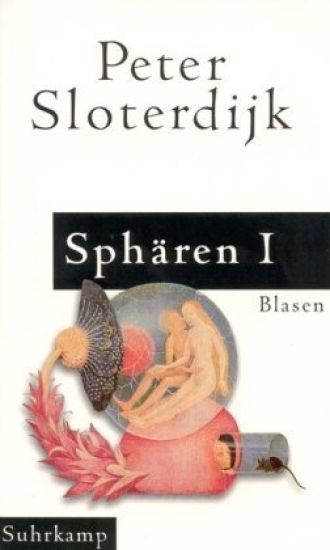
Sphären 1. Blasen

Sphären 1. Blasen

Peter Sloterdijk

SUHRKAMP VERLAG
2009
nidottu
Eventmarketing gehört heute zu den wichtigsten Instrumenten der Kommunikationspolitik. Die Eventbranche boomt und in den Unternehmen ebenso wie in den Agenturen werden immer mehr Fachkräfte benötigt, die sich mit sehr komplexen Anforderungen auseinander setzen müssen. Eine wesentliche Voraussetzung für das erfolgreiche Management von Events ist, dass alle Beteiligten - Veranstalter, Agenturen, Dienstleister und Zulieferer - dieselbe Sprache sprechen. Das "Eventmarketing-Lexikon" dient all jenen, die mit der Planung, Organisation und Realisierung von Events beruflich zu tun haben, als Nachschlagewerk bei Definitionsfragen sowie als Praxisratgeber, der sich an den Anforderungen im Projektalltag orientiert. Mit über 3.000 Fachbegriffe ist das Lexikon ein unverzichtbares Hilfsmittel für Eventmanager und Verantwortliche in Agenturen und Unternehmen. Systemvoraussetzungen für Windows: Hardware: - PC mit Pentium oder leistungsfähiger - mind. 64 MB freier Arbeitsspeicher (RAM) - mind. 1 MB Festplattenspeicher (HDD) - CD-ROM-Laufwerk Software: Betriebssystem Windows 98/Me/200/XP
Im Weltinnenraum des Kapitals

Im Weltinnenraum des Kapitals

Peter Sloterdijk

SUHRKAMP VERLAG
2009
pokkari
Unangefochten umspannt der Kapitalismus den Globus, doch geht er mit seinen Bewohnern unterschiedlich um: Während anderthalb Milliarden Globalisierungsgewinner eine Komfortzone bewohnen, einen "Weltinnenraum", dessen Grenzen unsichtbar, aber hart und abweisend sind wie die Wände des Londoner Kristallpalastes, dem Ort der ersten Weltausstellung 1851, steht die doppelte Zahl von Menschen ausgeschlossen vor der Tür. Peter Sloterdijk philosophiert darüber, und er erzählt davon, und dank seiner "Unerschrockenheit in Stil und Inhalt" (Der Bund) gelingt es ihm, auch im 21. Jahrhundert noch etwas Grundstürzendes über Globalisierung zu sagen. Nach dem großen Erfolg der Sphären- Trilogie das nächste große Werk - und Wagnis - von Peter Sloterdijk. Peter Sloterdijk, geboren 1947, ist Professor für Ästhetik und Philosophie an der Hochschule für Gestaltung in Karlsruhe und lehrt an der Akademie der Bildenden Künste in Wien.
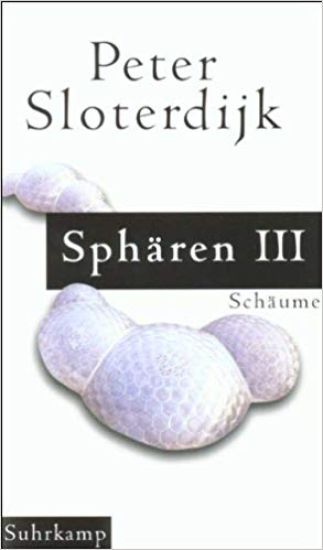
Sphären 3. Plurale Sphärologie

Sphären 3. Plurale Sphärologie

Peter Sloterdijk

SUHRKAMP VERLAG
2008
nidottu
Die Reinzucht des Dachshundes begann um 1850. Damit zählt er zu den ältesten in Deutschland gezüchteten Rassen. Als Jagdhund ist er furchtlos und mutig, als Familienhund anhänglich und treu. Haus und Hof und die Habe seines Herrn verteidigt er bis aufs Blut. Kindern ist er ein verlässlicher Kumpel, vorausgesetzt sie behandeln ihn als Freund. Dank seiner Größe und geringen Bellfreudigkeit ist er auch sehr gut für ein Leben in der Stadt geeignet. Der heutige Dachshund kommt in den drei Größen "Standard", "Zwerg" und "Kaninchen" sowie in den drei Haarvarietäten "kurz", "lang" und "rau" vor.
Selbstversuch

Selbstversuch

Carlos Oliveira; Peter Sloterdijk

Carl Hanser Verlag
2008
nidottu
Peter Sloterdijk hat in seinen Büchern gezeigt, wie sich Zeitphysiognomien zur Kenntlichkeit bringen lassen. Naheliegend genug also, ihm einmal eine Tour de force in Sachen Zeitdiagnostik abzuverlangen. Carlos Oliveira ist es zu verdanken, daß daraus ein fulminanter Dialog geworden ist, ebenso diszipliniert wie spielerisch, voll treffender Beobachtungen: ein Durchgang durch die unübersichtlichen Lebens-, Liebes- und Bewußtseinslagen kurz vor dem Jahrtausendende - und zugleich ein Rückblick auf Sloterdijks Biographie.
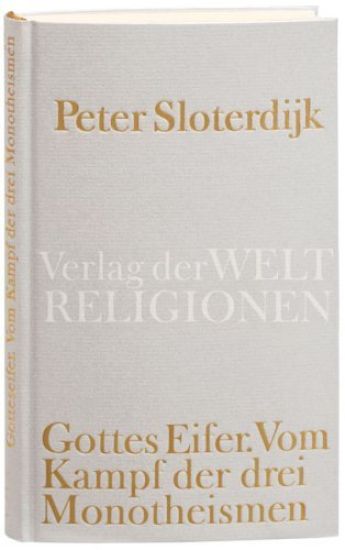
Gottes Eifer

Gottes Eifer

Peter Sloterdijk

Verlag der Weltreligionen
2008
sidottu
Die Konflikte zwischen den Religionen, die einen gemeinsamen Ursprung haben, also den abrahamischen Religionen, bestimmen unsere Gegenwart in bisher nicht gekanntem Maß. In der Gegenwart sind die drei Religionen aufgefordert, so demonstriert Sloterdijk anhand einer Neuinterpretation von Lessings Ringparabel, von friedlicher Koexistenz auf Gespräch umzustellen, Eiferkollektive müssen Parteien einer Zivilgesellschaft werden.
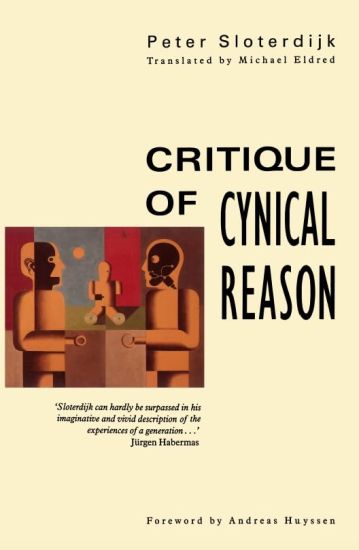
Critique of Cynical Reason

Critique of Cynical Reason

Peter Sloterdijk

Verso Books
1988
nidottu
When it was first published in West Germany, this book provoked both critical acclaim and widespread consternation, especially among the 1960s generation whose hopes for social change had crumbled and faded. Cynicism, so central to the mood of a generation and the source of much of the antirationalist impulse visible in all Western countries, has remained submerged throughout the debate about modernity and postmodernity. Sloterdijk's investigation of the role of cynicism in the postmodern 1970s and 1980s finds it to be the dominant mode in contemporary culture and in personal and institutional settings. Sloterdijk defines cynicism as 'enlightened false consciousness', a sensibility which is 'well off and miserable at the same time', able to function in the workaday world yet assailed by doubt and paralysis. Oscillating provocatively between Frankfurt and Paris and between a number of different styles and modes of expression, the Critique of Cynical Reason is a philosophical pastiche which offers, in the words of Andreas Huyssen, 'a postmodernism of resistance.'