Kirjojen hintavertailu – 12 859 818 kirjaa ja 27 kauppaa

Kirjailija

Peter Sloterdijk

Kirjat ja teokset yhdessä paikassa: 101 kirjaa, julkaisuja vuosilta 1988–2026, suosituimpiin kuuluu Ny Jord 3-4. Vertaile teosten hintoja ja tarkista saatavuus suomalaisista kirjakaupoista.

101 kirjaa

Kirjojen julkaisuvuodet: 1988–2026.

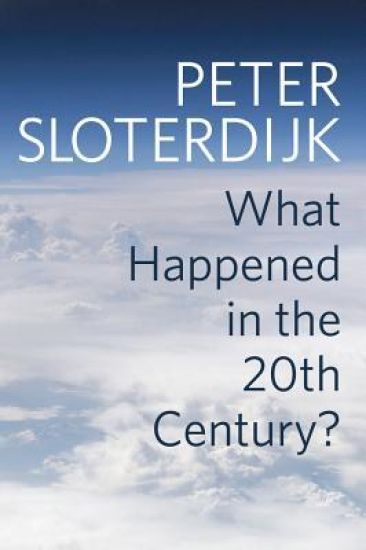
What Happened in the Twentieth Century?

What Happened in the Twentieth Century?

Peter Sloterdijk

Polity Press
2018
nidottu
When we look back from the vantage point of the 21st century and ask ourselves what the previous century was all about, what do we see? Our first inclination is to focus on historical events: the 20th century was the age of two devastating world wars, of totalitarian regimes and terrible atrocities like the Holocaust – “the age of extremes,” to use Hobsbawm’s famous phrase. But in this new book, the philosopher Peter Sloterdijk argues that we will never understand the 20th century if we focus on events and ideologies. Rather, in his view, the predominant motif of the 20th century is what Badiou called a passion for the real, which manifests itself as the will to actualize the truth directly in the here and now. Drawing on his Spheres trilogy, Sloterdijk interprets the actualization of the real in the 20th century as a passion for economic and technological “antigravitation”. The rise of consumerism and the easing of the burdens of human life by the constant deployment of new technologies have killed off the kind of radicalism that was rooted in the belief that power would rise from a material base of production. If the 20th century can still inspire us today, it is because the fundamental shift that it brought about opened the way for a critique of extremist reason, a post-Marxist theory of enrichment and a general economy of energy resources based on excess and dissipation. While developing his highly original interpretation of the 20th century, Sloterdijk also addresses a series of related topics including the meaning of the Anthropocene, the domestication of humans and the significance of the sea. The volume also includes major new pieces on Derrida and on Heidegger’s politics. This work, by one of the most original thinkers today will appeal to students and scholars across the humanities and social sciences, as well as anyone interested in philosophy and critical theory.
What Happened in the Twentieth Century?

What Happened in the Twentieth Century?

Peter Sloterdijk

Polity Press
2018
sidottu
When we look back from the vantage point of the 21st century and ask ourselves what the previous century was all about, what do we see? Our first inclination is to focus on historical events: the 20th century was the age of two devastating world wars, of totalitarian regimes and terrible atrocities like the Holocaust – “the age of extremes,” to use Hobsbawm’s famous phrase. But in this new book, the philosopher Peter Sloterdijk argues that we will never understand the 20th century if we focus on events and ideologies. Rather, in his view, the predominant motif of the 20th century is what Badiou called a passion for the real, which manifests itself as the will to actualize the truth directly in the here and now. Drawing on his Spheres trilogy, Sloterdijk interprets the actualization of the real in the 20th century as a passion for economic and technological “antigravitation”. The rise of consumerism and the easing of the burdens of human life by the constant deployment of new technologies have killed off the kind of radicalism that was rooted in the belief that power would rise from a material base of production. If the 20th century can still inspire us today, it is because the fundamental shift that it brought about opened the way for a critique of extremist reason, a post-Marxist theory of enrichment and a general economy of energy resources based on excess and dissipation. While developing his highly original interpretation of the 20th century, Sloterdijk also addresses a series of related topics including the meaning of the Anthropocene, the domestication of humans and the significance of the sea. The volume also includes major new pieces on Derrida and on Heidegger’s politics. This work, by one of the most original thinkers today will appeal to students and scholars across the humanities and social sciences, as well as anyone interested in philosophy and critical theory.

The Aesthetic Imperative

The Aesthetic Imperative

Peter Sloterdijk

Polity Press
2017
nidottu
In this wide-ranging book, renowned philosopher and cultural theorist Peter Sloterdijk examines art in all its rich and varied forms: from music to architecture, light to movement, and design to typography. Moving between the visible and the invisible, the audible and the inaudible, his analyses span the centuries, from ancient civilizations to contemporary Hollywood. With great verve and insight he considers the key issues that have faced thinkers from Aristotle to Adorno, looking at art in its relation to ethics, metaphysics, society, politics, anthropology and the subject. Sloterdijk explores a variety of topics, from the Greco-Roman invention of postcards to the rise of the capitalist art market, from the black boxes and white cubes of modernism to the growth of museums and memorial culture. In doing so, he extends his characteristic method of defamiliarization to transform the way we look at works of art and artistic movements. His bold and original approach leads us away from the well-trodden paths of conventional art history to develop a theory of aesthetics which rejects strict categorization, emphasizing instead the crucial importance of individual subjectivity as a counter to the latent dangers of collective culture. This sustained reflection, at once playful, serious and provocative, goes to the very heart of Sloterdijk’s enduring philosophical preoccupation with the aesthetic. It will be essential reading for students and scholars of philosophy and aesthetics and will appeal to anyone interested in culture and the arts more generally.
The Aesthetic Imperative

The Aesthetic Imperative

Peter Sloterdijk

Polity Press
2017
sidottu
In this wide-ranging book, renowned philosopher and cultural theorist Peter Sloterdijk examines art in all its rich and varied forms: from music to architecture, light to movement, and design to typography. Moving between the visible and the invisible, the audible and the inaudible, his analyses span the centuries, from ancient civilizations to contemporary Hollywood. With great verve and insight he considers the key issues that have faced thinkers from Aristotle to Adorno, looking at art in its relation to ethics, metaphysics, society, politics, anthropology and the subject. Sloterdijk explores a variety of topics, from the Greco-Roman invention of postcards to the rise of the capitalist art market, from the black boxes and white cubes of modernism to the growth of museums and memorial culture. In doing so, he extends his characteristic method of defamiliarization to transform the way we look at works of art and artistic movements. His bold and original approach leads us away from the well-trodden paths of conventional art history to develop a theory of aesthetics which rejects strict categorization, emphasizing instead the crucial importance of individual subjectivity as a counter to the latent dangers of collective culture. This sustained reflection, at once playful, serious and provocative, goes to the very heart of Sloterdijk’s enduring philosophical preoccupation with the aesthetic. It will be essential reading for students and scholars of philosophy and aesthetics and will appeal to anyone interested in culture and the arts more generally.
Not Saved

Not Saved

Peter Sloterdijk

Polity Press
2016
nidottu
One can rightly say of Peter Sloterdijk that each of his essays and lectures is also an unwritten book. That is why the texts presented here, which sketch a philosophical physiognomy of Martin Heidegger, should also be characterized as a collected renunciation of exhaustiveness. In order to situate Heidegger's thought in the history of ideas and problems, Peter Sloterdijk approaches Heidegger's work with questions such as: If Western philosophy emerged from the spirit of the polis, what are we to make of the philosophical suitability of a man who never made a secret of his stubborn attachment to rural life? Is there a provincial truth of which the cosmopolitan city knows nothing? Is there a truth in country roads and cabins that would be able to undermine the universities with their standardized languages and globally influential discourses? From where does this odd professor speak, when from his professorial chair in Freiburg he claims to inquire into what lies beyond the history of Western metaphysics? Sloterdijk also considers several other crucial twentieth-century thinkers who provide some needed contrast for the philosophical physiognomy of Martin Heidegger. A consideration of Niklas Luhmann as a kind of contemporary version of the Devil's Advocate, a provocative critical interpretation of Theodor Adorno's philosophy that focuses on its theological underpinnings and which also includes reflections on the philosophical significance of hyperbole, and a short sketch of the pessimistic thought of Emil Cioran all round out and deepen Sloterdijk's attempts to think with, against, and beyond Heidegger. Finally, in essays such as "Domestication of Being" and the "Rules for the Human Park," which incited an international controversy around the time of its publication and has been translated afresh for this volume, Sloterdijk develops some of his most intriguing and important ideas on anthropogenesis, humanism, technology, and genetic engineering.
Not Saved

Not Saved

Peter Sloterdijk

Polity Press
2016
sidottu
One can rightly say of Peter Sloterdijk that each of his essays and lectures is also an unwritten book. That is why the texts presented here, which sketch a philosophical physiognomy of Martin Heidegger, should also be characterized as a collected renunciation of exhaustiveness. In order to situate Heidegger's thought in the history of ideas and problems, Peter Sloterdijk approaches Heidegger's work with questions such as: If Western philosophy emerged from the spirit of the polis, what are we to make of the philosophical suitability of a man who never made a secret of his stubborn attachment to rural life? Is there a provincial truth of which the cosmopolitan city knows nothing? Is there a truth in country roads and cabins that would be able to undermine the universities with their standardized languages and globally influential discourses? From where does this odd professor speak, when from his professorial chair in Freiburg he claims to inquire into what lies beyond the history of Western metaphysics? Sloterdijk also considers several other crucial twentieth-century thinkers who provide some needed contrast for the philosophical physiognomy of Martin Heidegger. A consideration of Niklas Luhmann as a kind of contemporary version of the Devil's Advocate, a provocative critical interpretation of Theodor Adorno's philosophy that focuses on its theological underpinnings and which also includes reflections on the philosophical significance of hyperbole, and a short sketch of the pessimistic thought of Emil Cioran all round out and deepen Sloterdijk's attempts to think with, against, and beyond Heidegger. Finally, in essays such as "Domestication of Being" and the "Rules for the Human Park," which incited an international controversy around the time of its publication and has been translated afresh for this volume, Sloterdijk develops some of his most intriguing and important ideas on anthropogenesis, humanism, technology, and genetic engineering.
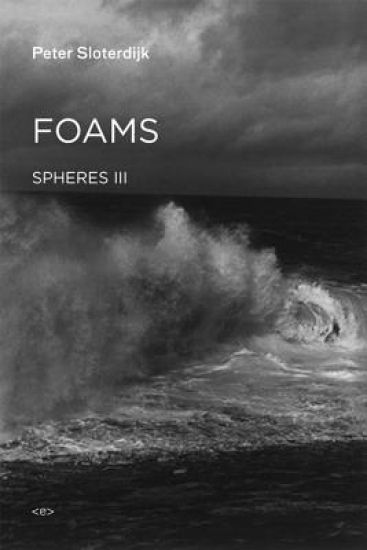
Foams

Foams

Peter Sloterdijk

Semiotext (E)
2016
sidottu

Halvin toimitettuna 33,30 €

The final volume in Peter Sloterdijk's celebrated Spheres trilogy, on the phenomenology of community and its spatial peripheries." So the One Orb has imploded-now the foams are alive."-from FoamsFoams completes Peter Sloterdijk's celebrated Spheres trilogy: his 2,500-page "grand narrative" retelling of the history of humanity, as related through the anthropological concept of the "Sphere." For Sloterdijk, life is a matter of form and, in life, sphere formation and thought are two different labels for the same thing. The trilogy also offers his corrective answer to Martin Heidegger's Being and Time, reformulating it into a lengthy meditation on Being and Space-a shifting of the question of who we are to a more fundamental question of where we are. In this final volume, Sloterdijk's "plural spherology" moves from the historical perspective on humanity of the preceding two volumes to a philosophical theory of our contemporary era, offering a view of life through a multifocal lens. If Bubbles was Sloterdijk's phenomenology of intimacy, and Globes his phenomenology of globalization, Foams could be described as his phenomenology of spatial plurality: how the bubbles that we form in our duality bind together to form what sociological tradition calls "society." Foams is an exploration of capsules, islands, and hothouses that leads to the discovery of the foam city. The Spheres trilogy ultimately presents a theology without a God-a spatial theology that requires no God, whose death therefore need not be of concern. As with the two preceding volumes, Foams can be read on its own or in relation to the rest of the trilogy.
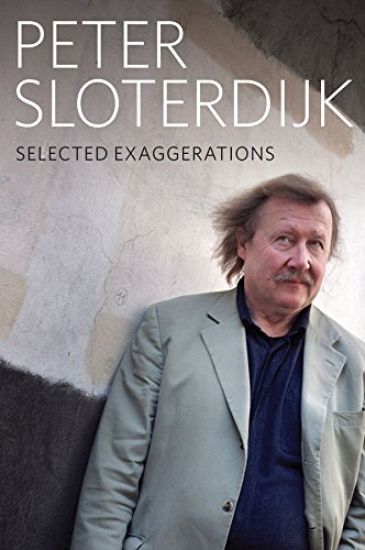
Selected Exaggerations

Selected Exaggerations

Peter Sloterdijk

Polity Press
2016
nidottu
Peter Sloterdijk’s reputation as one of the most original thinkers of our time has grown steadily since the early 1980s. This volume of over thirty conversations and interviews spanning two decades illuminates the multiple interconnections of his life and work. In these wide-ranging dialogues Sloterdijk gives his views on a variety of topics, from doping to doxa, design to dogma, media to mobility and the financial crisis to football. Here we encounter Sloterdijk from every angle: as he expounds his ideas on the philosophical tradition and the latest strands of contemporary thought, as he analyses the problems of our age and as he provides a new and startling perspective on everyday events. Through exaggeration, Sloterdijk draws our attention to crucial issues and controversies and makes us aware of their implications for society and the individual. Always eager to share his knowledge and erudition, he reveals himself equally at home in ancient Babylon, in the channels of the mass media and on the ethical and moral terrain of religion, education or genetic engineering. Appealing both to the seasoned reader of Sloterdijk and to the curious newcomer, these dialogues offer fresh insight into the intellectual and political events of recent decades. They also give us glimpses of Sloterdijk’s own life story, from his early passionate love of reading and writing to his journeys in East and West, his commitment to Europe and his acceptance and enjoyment of the role of a public intellectual and philosopher in the twenty-first century.
Selected Exaggerations

Selected Exaggerations

Peter Sloterdijk

Polity Press
2016
sidottu
Peter Sloterdijk’s reputation as one of the most original thinkers of our time has grown steadily since the early 1980s. This volume of over thirty conversations and interviews spanning two decades illuminates the multiple interconnections of his life and work. In these wide-ranging dialogues Sloterdijk gives his views on a variety of topics, from doping to doxa, design to dogma, media to mobility and the financial crisis to football. Here we encounter Sloterdijk from every angle: as he expounds his ideas on the philosophical tradition and the latest strands of contemporary thought, as he analyses the problems of our age and as he provides a new and startling perspective on everyday events. Through exaggeration, Sloterdijk draws our attention to crucial issues and controversies and makes us aware of their implications for society and the individual. Always eager to share his knowledge and erudition, he reveals himself equally at home in ancient Babylon, in the channels of the mass media and on the ethical and moral terrain of religion, education or genetic engineering. Appealing both to the seasoned reader of Sloterdijk and to the curious newcomer, these dialogues offer fresh insight into the intellectual and political events of recent decades. They also give us glimpses of Sloterdijk’s own life story, from his early passionate love of reading and writing to his journeys in East and West, his commitment to Europe and his acceptance and enjoyment of the role of a public intellectual and philosopher in the twenty-first century.
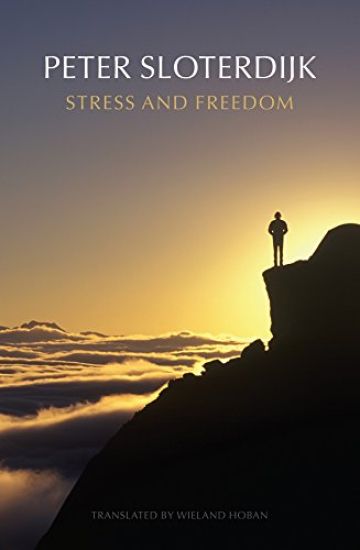
Stress and Freedom

Stress and Freedom

Peter Sloterdijk

Polity Press
2015
sidottu
In this short book Peter Sloterdijk offers a genealogy of the concept of freedom from Ancient Greece to the present day. This genealogy is part of a broader theory of the large political body, according to which Sloterdijk argues that political communities arise in response to a form of anxiety or stress. Through a highly original reading of Rousseau?s late Reveries of a Solitary Walker, Sloterdijk shows that, for Rousseau, the modern subject emerges as a subject free of all stress, unburdened by the cares of the world. Most of modern philosophy, and above all German Idealism, is an attempt to reign back Rousseau?s useless and anarchical subject and anchor it in the cares of the world, in the task of having to produce both the world and itself. In the light of this highly original account, Sloterdijk develops his own distinctive account of freedom, where freedom is conceptualized as the availability for the improbable. This important text, in which Sloterdijk develops his account of freedom and the modern subject, will be of great interest to students and scholars in philosophy and the humanities and to anyone interested in contemporary philosophy and critical theory.
Stress and Freedom

Stress and Freedom

Peter Sloterdijk

Polity Press
2015
nidottu
In this short book Peter Sloterdijk offers a genealogy of the concept of freedom from Ancient Greece to the present day. This genealogy is part of a broader theory of the large political body, according to which Sloterdijk argues that political communities arise in response to a form of anxiety or stress. Through a highly original reading of Rousseau?s late Reveries of a Solitary Walker, Sloterdijk shows that, for Rousseau, the modern subject emerges as a subject free of all stress, unburdened by the cares of the world. Most of modern philosophy, and above all German Idealism, is an attempt to reign back Rousseau?s useless and anarchical subject and anchor it in the cares of the world, in the task of having to produce both the world and itself. In the light of this highly original account, Sloterdijk develops his own distinctive account of freedom, where freedom is conceptualized as the availability for the improbable. This important text, in which Sloterdijk develops his account of freedom and the modern subject, will be of great interest to students and scholars in philosophy and the humanities and to anyone interested in contemporary philosophy and critical theory.
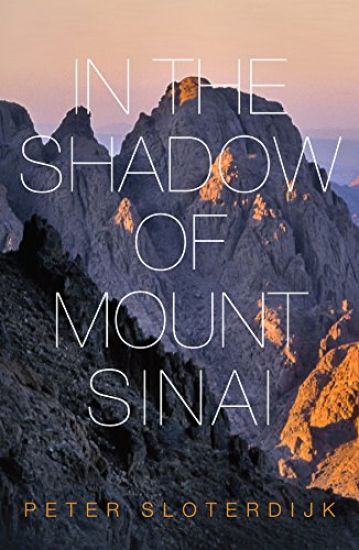
In The Shadow of Mount Sinai

In The Shadow of Mount Sinai

Peter Sloterdijk

Polity Press
2015
sidottu
In this short book Peter Sloterdijk clarifies his views on religion and its role in pre-modern and modern societies. He begins by returning to the Mount Sinai episode in the Book of Exodus, where he identifies the emergence of what he calls the ? Sinai Schema?. At the core of monotheism is the logic of belonging to a community of confession, of being a true believer - this is what Sloterdijk calls the Sinai Schema. To be a member of a people means that you submit to the beliefs of the community just as you submit to its language. Monotheism is predicated on the logic of one God who demands your utmost loyalty. Hence at the core of monotheism is also the fear of apotheosis, of heresy, of heterodoxy. So monotheism is associated first and foremost with a certain kind of internal violence Ð namely, a violence against those who violate their membership through a break in loyalty and trust. On the basis of this analysis of the inner logic of monotheism, Sloterdijk retraces its historical legacy and shows how this account enables us to understand why we react so nervously today to all forms of fundamentalism - whether that of radical Islamists, the Catholic Pius Brotherhood or evangelical sects in the USA
In The Shadow of Mount Sinai

In The Shadow of Mount Sinai

Peter Sloterdijk

Polity Press
2015
nidottu
In this short book Peter Sloterdijk clarifies his views on religion and its role in pre-modern and modern societies. He begins by returning to the Mount Sinai episode in the Book of Exodus, where he identifies the emergence of what he calls the ? Sinai Schema?. At the core of monotheism is the logic of belonging to a community of confession, of being a true believer - this is what Sloterdijk calls the Sinai Schema. To be a member of a people means that you submit to the beliefs of the community just as you submit to its language. Monotheism is predicated on the logic of one God who demands your utmost loyalty. Hence at the core of monotheism is also the fear of apotheosis, of heresy, of heterodoxy. So monotheism is associated first and foremost with a certain kind of internal violence Ð namely, a violence against those who violate their membership through a break in loyalty and trust. On the basis of this analysis of the inner logic of monotheism, Sloterdijk retraces its historical legacy and shows how this account enables us to understand why we react so nervously today to all forms of fundamentalism - whether that of radical Islamists, the Catholic Pius Brotherhood or evangelical sects in the USA
Globes

Globes

Peter Sloterdijk

Semiotext (E)
2014
sidottu
The second, and longest, volume in Peter Sloterdijk's celebrated Spheres trilogy, on the world history and philosophy of globalization. All history is the history of struggles for spheric expansion.-from GlobesIn Globes-the second, and longest, volume in Peter Sloterdijk's celebrated magnum opus Spheres trilogy-the author attempts nothing less than to uncover the philosophical foundations of the political history-the history of humanity-of the last two thousand years. The first, well-received volume of the author's Spheres trilogy, Bubbles, dealt with microspheres: the fact that individuals, from the fetal stage to childhood, are never alone, because they always incorporate the Other into themselves and align themselves with it. With Globes, Sloterdijk opens up a history of the political world using the morphological models of the orb and the globe, and argues that all previous statements about globalization have suffered from shortsightedness. For him, globalization begins with the ancient Greeks, who represented the whole world through the shape of the orb. With the discovery of America and the first circumnavigations of the earth, the orb was replaced by the globe. This second globalization is currently giving way to the third, which we are living through today, as the general virtuality of all conditions leads to a growing spatial crisis. Peter Sloterdijk tells here the true story of globalization: from the geometrization of the sky in Plato and Aristotle to the circumnavigation of the last orb-the earth-by ships, capital, and signals.
You Must Change Your Life

You Must Change Your Life

Peter Sloterdijk

Polity Press
2014
nidottu

Halvin toimitettuna 32,30 €

In his major investigation into the nature of humans, Peter Sloterdijk presents a critique of myth - the myth of the return of religion. For it is not religion that is returning; rather, there is something else quite profound that is taking on increasing significance in the present: the human as a practising, training being, one that creates itself through exercises and thereby transcends itself. Rainer Maria Rilke formulated the drive towards such self-training in the early twentieth century in the imperative 'You must change your life'. In making his case for the expansion of the practice zone for individuals and for society as a whole, Sloterdijk develops a fundamental and fundamentally new anthropology. The core of his science of the human being is an insight into the self-formation of all things human. The activity of both individuals and collectives constantly comes back to affect them: work affects the worker, communication the communicator, feelings the feeler. It is those humans who engage expressly in practice that embody this mode of existence most clearly: farmers, workers, warriors, writers, yogis, rhetoricians, musicians or models. By examining their training plans and peak performances, this book offers a panorama of exercises that are necessary to be, and remain, a human being.