Kirjailija
Peter Trudgill
Kirjat ja teokset yhdessä paikassa: 33 kirjaa, julkaisuja vuosilta 1979–2023, suosituimpiin kuuluu 'Norwegian as a normal language' and other studies in Scandinavian linguistics. Vertaile teosten hintoja ja tarkista saatavuus suomalaisista kirjakaupoista.
33 kirjaa
Kirjojen julkaisuvuodet: 1979–2023.
English is one of the most widely-spoken languages in the world, with native-speaking communities at the furthest ends of the earth. However, just three thousand years ago, the language-which-became-English was not spoken anywhere in Britain. Trudgill, one of the foremost authorities on the English language, takes us on a remarkable journey through the history of English to show how it grew to become the global phenomenon that we know today. Over ten short, easily digestible chapters, he traces its development and global spread, starting with the earliest genesis of English five thousand years ago, exploring its expansion in the British Isles, and finishing with an overview of how the language looks today, including its use in an increasingly digital world. Particular attention is paid to the native-speaker varieties of English from all around the world, and the relationship between colonial varieties of English and indigenous languages.

Now in Paperback
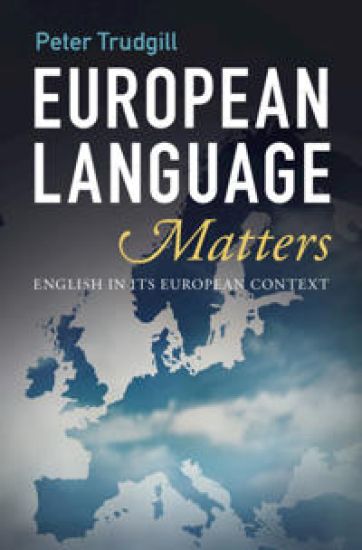
Why do Greek lorries have Metaphorés written on the side? Is it grammatically correct to say 'the best team won' after a football match? What is the difference between manly, male, masculine and macho? Bringing together Peter Trudgill's highly popular columns for the New European, this fascinating collection explores how English has been influenced, both linguistically and culturally, by its neighbouring languages in Europe. English is very much a European language and Trudgill delves in to the rich linguistic legacy that links all European languages. The bite-sized pieces are grouped together in thematically arranged sections, to allow the reader to dip in and out at will, and cover a wide range of topics, from the etymology of words, to illuminating pieces on grammar. Written in an engaging and lively style, and full of intriguing facts about language and languages in Europe, this book will appeal to both language specialists and to general readers with no prior experience.
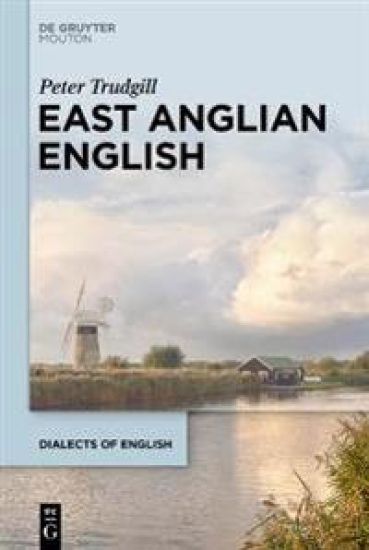
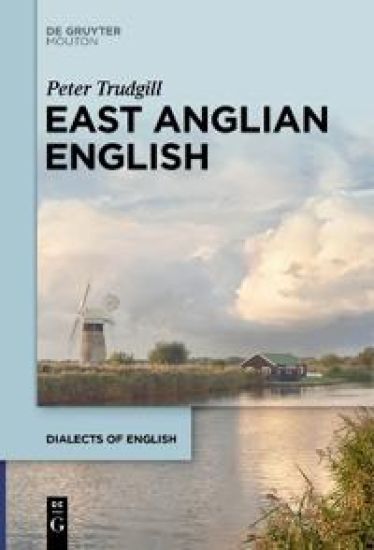
This book is the first full-scale scientific study of East Anglian English. The author is a native East Anglian sociolinguist and dialectologist who has devoted decades to the study of the speechways of Norfolk, Suffolk, Cambridgeshire and Essex. He examines their relationships to other varieties of English in Britain, as well as their contributions to the formation of American English and Southern Hemisphere Englishes.
Were Stone-Age languages really more complex than their modern counterparts? Was Basque actually once spoken over all of Western Europe? Were Welsh-speaking slaves truly responsible for the loss of English morphology? This latest collection of Peter Trudgill's most seminal articles explores these questions and more. Focused around the theme of sociolinguistics and language change across deep historical millennia (the Palaeolithic era to the Early Middle Ages), the essays explore topics in historical linguistics, dialectology, sociolinguistics, language change, linguistic typology, geolinguistics, and language contact phenomena. Each paper is fully updated for this volume, and includes linking commentaries and summaries, for easy cross-reference. This collection will be indispensable to academic specialists and graduate students with an interest in the sociolinguistic aspects of historical linguistics.
'Norwegian as a normal language' and other studies in Scandinavian linguistics
Peter Trudgill
Novus
2018
nidottu
From Peter Trudgill's foreword: The papers in this volume [...] were published over a period of more than 40 years, between 1973 and 2016, during which time my views and interests have of course changed and, hopefully, developed. The older pieces may perhaps therefore be of historical interest. Some of the chapters in this book are lengthy papers where I have worked out my ideas about language change and language structure through an examination of the Scandinavian languages. There are others which are briefer and lighter pieces; and the final section of the book consists of reviews and essays which are even briefer. I hope that at least some readers will find at least some of these contributions of at least some interest.
This collection consists of 15 articles by an international group of linguists and 7 essays by the editors, tackling a broad range of issues and representing some of the most authoritative work in English dialect grammar. Individual chapters cover the full international range of English dialects, from the centre of Sydney to the shores of Newfoundland, and from the Scottish borders to the Appalachian Mountains. Soundly based on empirical research, they are rich in data of great interest in itself, but no article is merely descriptive. The editors have selected papers for their value in contributing to the reader's broader understanding of the theoretical issues concerning dialectology as a whole. As a result, dialectology is presented as a major scholarly discipline drawing creatively on such areas as linguistics, sociology, psychology, history, geography and even philosophy. These and other themes are explored in a wide-ranging Introduction by the editors, which sets the individual pieces and the subject in context for the reader.
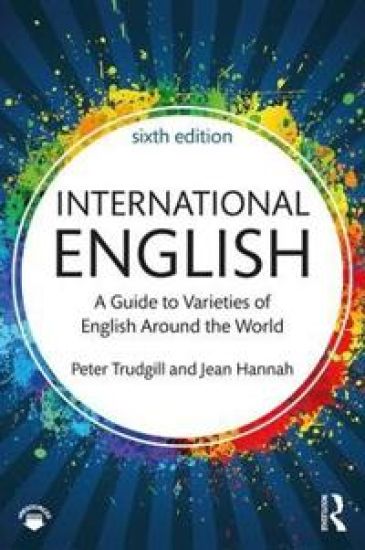
From Singapore to Scotland, Canada to the Channel Islands, Namibia to New Zealand and beyond, International English takes you on a fascinating journey through the varieties of English spoken around the world. Comparisons across the varieties provide a comprehensive guide to differences in phonetics, phonology, grammar and vocabulary, making this a useful resource for teachers of English as a foreign language and linguistics students alike. This sixth edition has been thoroughly updated to include the following: new sections on the Death of RP, Estuary English, Multicultural London English, the Dublin accent and Fijian English;updated material on RP phonology, New Zealand English phonology, Australian English lexis, North American English lexis and the Northern Cities Chain Shift;revised and updated references and bibliography. This textbook comes with free-to-download MP3 files at www.routledge.com/9781138233690, which demonstrate the different varieties featured in the book – ideal for use in class, at home or on the move. International English remains a key and indispensable resource for teachers and students, and is essential reading for anyone studying varieties of English in a global context.
International English
Peter Trudgill; Jean Hannah
Routledge
2017
nidottu
Halvin toimitettuna 54,10 €
From Singapore to Scotland, Canada to the Channel Islands, Namibia to New Zealand and beyond, International English takes you on a fascinating journey through the varieties of English spoken around the world. Comparisons across the varieties provide a comprehensive guide to differences in phonetics, phonology, grammar and vocabulary, making this a useful resource for teachers of English as a foreign language and linguistics students alike. This sixth edition has been thoroughly updated to include the following: new sections on the Death of RP, Estuary English, Multicultural London English, the Dublin accent and Fijian English;updated material on RP phonology, New Zealand English phonology, Australian English lexis, North American English lexis and the Northern Cities Chain Shift;revised and updated references and bibliography. This textbook comes with free-to-download MP3 files at www.routledge.com/9781138233690, which demonstrate the different varieties featured in the book – ideal for use in class, at home or on the move. International English remains a key and indispensable resource for teachers and students, and is essential reading for anyone studying varieties of English in a global context.
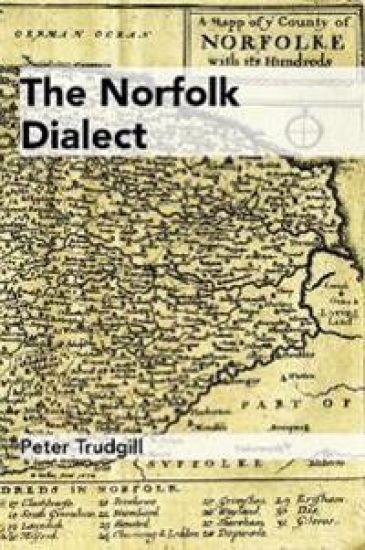
Based on Peter Trudgill's weekly column in the Eastern Daily Press newspaper, this book has two overall messages. The first is that language is a fascinating and enjoyable phenomenon which not enough people know enough about. The second is that we should not discriminate negatively against individuals and groups because of their accent, dialect or native language. Linguistic prejudice, known as 'linguicism', is more publicly and shamelessly demonstrated than racism and sexism, as is 'prescriptivism', the practice of elevating one language or language variety as 'better' than another. Written in an entertaining and accessible style, Trudgill's columns support the language of ordinary people and explore topics such as nonstandard versus standard dialects; vernacular (everyday) language as opposed to politically correct language; informal vocabulary as opposed to business-school jargon; and minority versus majority languages. Each article is also accompanied by notes designed for students and those unfamiliar with the East Anglian setting.
English Accents and Dialects is an essential guide to contemporary social and regional varieties of English spoken in the British Isles today. Together with invaluable overviews of numerous regional accents and dialects, this fifth edition provides a detailed description of key features of Received Pronounciation (RP) as well as several major non-standard varieties of English. Key features:main regional differences are followed by a survey of speech in over 20 areas of the UK and Ireland, audio samples of which are available to download at www.routledge.com/cw/hughesrecent findings on London English, Aberdeen English and Liverpool Englishcontains new entries on Hull, Manchester, Carlisle, Middlesbrough, Southampton, London West Indian, Lancashire and the Shetlandsadditional exercises with answers online accompany the new varieties clear maps throughout for locating particular accents and dialects. This combination of reference manual and practical guide makes this fifth edition of English Accents and Dialects a highly useful resource providing a comprehensive and contemporary coverage of speech in the UK and Ireland today.
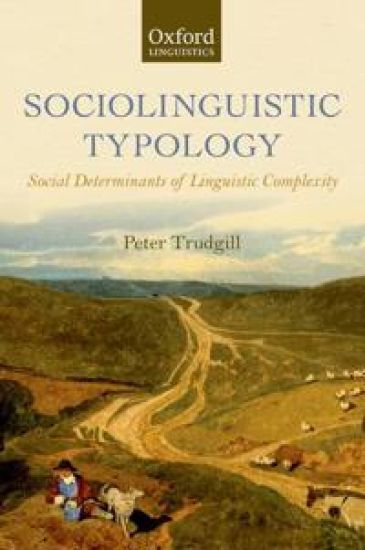
Peter Trudgill looks at why human societies at different times and places produce different kinds of language. He considers how far social factors influence language structure and compares languages and dialects spoken across the globe, from Vietnam to Nigeria, Polynesia to Scandinavia, and from Canada to Amazonia. Modesty prevents Pennsylvanian Dutch Mennonites using the verb wotte ('want'); stratified society lies behind complicated Japanese honorifics; and a mountainous homeland suggests why speakers of Tibetan-Burmese Lahu have words for up there and down there. But culture and environment don't explain why Amazonian Jarawara needs three past tenses, nor why Nigerian Igbo can make do with eight adjectives, nor why most languages spoken in high altitudes do not exhibit an array of spatial demonstratives. Nor do they account for some languages changing faster than others or why some get more complex while others get simpler. The author looks at these and many other puzzles, exploring the social, linguistic, and other factors that might explain them and in the context of a huge range of languages and societies. Peter Trudgill writes readably, accessibly, and congenially. His book is jargon-free, informed by acute observation, and enlivened by argument: it will appeal to everyone with an interest in the interactions of language with culture, environment, and society.
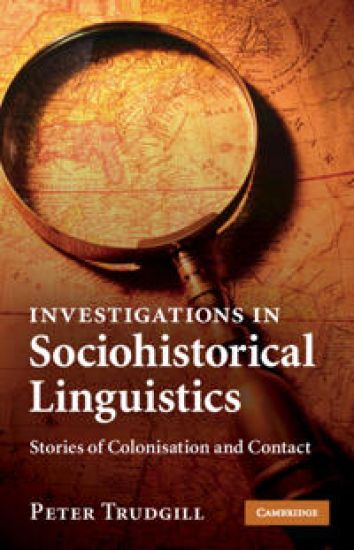
Investigations in Sociohistorical Linguistics
Peter Trudgill
Cambridge University Press
2010
sidottu
In the last five hundred years or so, the English language has undergone remarkable geographical expansion, bringing it into contact with other languages in new locations. It also caused different regional dialects of the language to come into contact with each other in colonial situations. This book is made up of a number of fascinating tales of historical-sociolinguistic detection. These are stories of origins - of a particular variety of English or linguistic feature - which together tell a compelling general story. In each case, Trudgill presents an intriguing puzzle, locates and examines the evidence, detects clues that unravel the mystery, and finally proposes a solution. The solutions are all original, often surprising, sometimes highly controversial. Providing a unique insight into how language contact shapes varieties of English, this entertaining yet rigorous account will be welcomed by students and researchers in linguistics, sociolinguistics and historical linguistics.