Kirjojen hintavertailu – 12 903 725 kirjaa ja 27 kauppaa

Kirjailija

Pier Paolo Pasolini

Kirjat ja teokset yhdessä paikassa: 41 kirjaa, julkaisuja vuosilta 1986–2027, suosituimpiin kuuluu St. Paul. Vertaile teosten hintoja ja tarkista saatavuus suomalaisista kirjakaupoista.

41 kirjaa

Kirjojen julkaisuvuodet: 1986–2027.

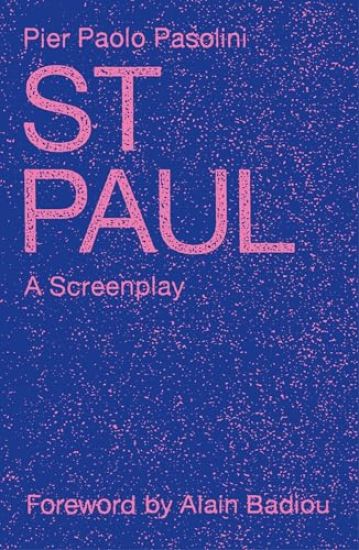
St. Paul

St. Paul

Pier Paolo Pasolini; Ward Blanton

Verso Books
2025
nidottu

Halvin toimitettuna 24,90 €

Presented here for the first time in English is a remarkable screenplay about the apostle Paul by Pier Paolo Pasolini, legendary filmmaker, novelist, poet, and radical intellectual activist. Written between the appearance of his renowned film Teorema and the shocking, controversial Salò, or the 120 Days of Sodom, St Paul was deemed too risky for investors. At once a political intervention and cinematic breakthrough, the script forces a revolutionary transformation on the contemporary legacy of Paul. In Pasolini's kaleidoscope, we encounter fascistic movements, resistance fighters, and faltering revolutions, each of which reflects on aspects of the Pauline teachings. From Jerusalem to Wall Street and Greenwich Village, from the rise of SS troops to the death of Martin Luther King, Jr, here- as Alain Badiou writes in the foreword-"Paul's text crosses all these circumstances intact, as if it had foreseen them all." This is a key addition to the growing debate around St Paul and to the proliferation of literature centred on the current turn to religion in philosophy and critical theory, which embraces contemporary figures such as Alain Badiou, Slavoj Zizek and Giorgio Agamben.
The City of Mist

The City of Mist

Pier Paolo Pasolini

Rare Bird Books
2026
nidottu
Milan, 1959. New Year's Eve. A mob of teenage bullies roams the town. Self-styled teddy boys, they arm-wrestle, rob, flirt, and fight. In the background, a brutal city that becomes alive at night with the lights of skyscrapers and the howls of bikers. The City of Mist is the tale of a night of desperate and cruel bravado: it begins with the assault of a man in his car, continues with a theft committed in a church at the outskirts of Milan, and finally culminates with the aggression of a gay man and a shocking, brutal death. Made into a movie in 1963, but never released because deemed too violent, this previously unpublished screenplay aptly shows the vividness, the intensity, and the poetic sensitivity for which Pier Paolo Pasolini is worldwide famous.
I virkeligheden laver vi film ved at leve

I virkeligheden laver vi film ved at leve

Pier Paolo Pasolini

Antipyrine, Forlaget
2024
nidottu
Filmen er det mest substantielt tvetydige, man kan forestille sig. Af denne grund: Film er en uendelig sekvens, der udtrykker virkeligheden med virkeligheden. Der er altid foran enhver af os et muligt og virtuelt filmkamera, med uudtømmeligt chassis, som “filmer” vores liv, fra vi fødes, til vi dør. For hele vores FØRSTE OG RENE sprog er vores væren, virkelighed i virkeligheden.
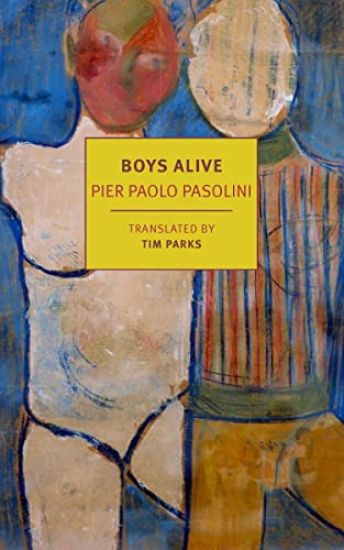
Boys Alive

Boys Alive

Pier Paolo Pasolini

New York Review Books
2023
pokkari
A daring novel, once widely censored, about the scrappy, harrowing, and inventive lives of Rome's unhoused youth by one of Italy's greatest film directors. Boys Alive, published in 1955, was Pier Paolo Pasolini's first novel and remains his best-known work of fiction. He'd moved to Rome a few years before, after finding himself embroiled in a provincial sex scandal, and the impact of the city on Pasolini--its lively, aggressive dialect, its postwar squalor and violence--was accompanied by a new awareness that for him respectability was no longer an option: "Like it or not, I was tarred with the brush of Rimbaud . . . or even Oscar Wilde." Urgently looking for teaching work, walk-on parts in films, literary journalism, anything to achieve independence and security, he was drawn to other outcasts who cared nothing for bourgeois values, who lived intensely, carelessly, refusing to be hampered by scruple and convention. This was the context in which he began to work on a novel, and though socialism was the intellectual and artistic fashion of the day and Pasolini was a socialist, his book was completely free of any sentimental or patronizing concern for the plight of the underprivileged. Pasolini revels in the vitality of the squalor he so lavishly and energetically evokes. In Boys Alive, he devotes his native lyricism and vast literary resources to conjuring up an urban inferno as vast and hideous as it is colorful and dynamic. There is no grand plot, but Pasolini's narrative voice moves like a heat-seeking missile, infallibly locking onto situations of great intensity, conflict and comedy. Possessing nothing, his young characters fight to survive and to live. At all costs they must have fun; boredom is death. And if food and fun must be paid for, then money will be found: looting, hustling, scavenging, stealing. Once found it is immediately squandered on sharp clothes and shoes, drunk away, gambled away, or simply lost. Boasting and exhibitionism are the norm, and every boy aspires to be the toughest, the shrewdest, the most unscrupulous punk on the block. As each new episode begins--a warehouse heist, an evening's gambling, a search for sex--the reader can only tremble, waiting for disaster to strike. Everything is up in the air. Nothing is predictable. Tim Parks' new translation of Pasolini's early masterpiece brings out the salt and intelligence of this vital and never less than scandalous work of art.

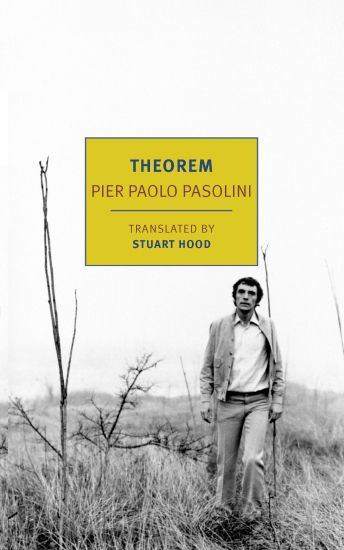
Theorem

Theorem

Pier Paolo Pasolini

New York Review Books
2023
pokkari

Halvin toimitettuna 20,30 €

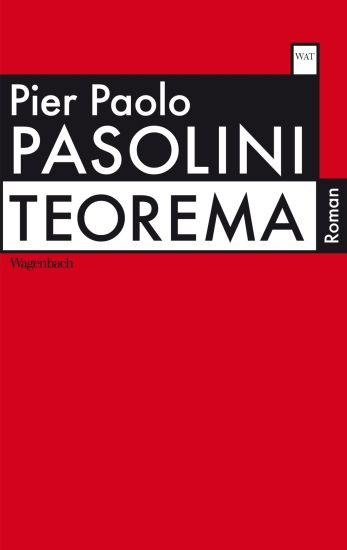
This tale about seduction, obsession, and family is one of director Pier Paolo Pasolini's most fascinating creations, based on his most transcendent film of the same name. Theorem, Pier Paolo Pasolini's third novel, could not be more different from the author and filmmaker's first novel, Boys Alive. The book began as a poem, then took shape as a film, also called Theorem, which stands as one of Pasolini's most elegant and enigmatic works for the cinema, before turning at last into a novel that bears little resemblance to any other novel. In short prose chapters interspersed with stark passages of poetry, Pasolini tells a story of transfiguration and trauma. To the suburban mansion of a prosperous Milanese businessman comes a mysterious and beautiful young man who invites himself to stay there. From the beginning he exercises a strange fascination on the inhabitants of the house, and soon every one, from the busy father to the frustrated mother, from the yearning daughter to the weak-willed son to the house maid from the country, is sleeping with him. Then, as mysteriously as he appeared, the infatuating young man is gone. How will these people he has touched so deeply adapt to his absence? Is there a passage out of the spiritual desert of modern capitalism to an awakening, as sensual as it is spiritual? Only questions remain at the end of a book that is at once a bedroom comedy, a political intervention, and a religious parable.
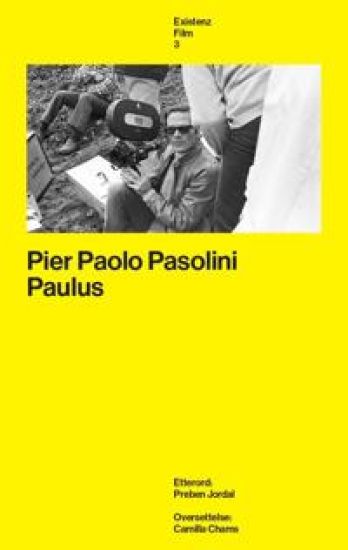
Paulus

Paulus

Pier Paolo Pasolini; Preben Jordal

Existenz forlag
2023
nidottu
«Paulus» er Pier Paolo Pasolinis ufilmatiserte manus til et uhyre ambisiøst prosjekt om Paulus. Den berømte apostelen fra det første århundret etter vår tidsregning blir i denne boka flyttet fram til det tyvende århundret. Paulus' radikale kritikk av samfunnets konvensjoner blir dermed aktuell på ny. Pier Paolo Pasolini (1922-1975) var en italiensk dikter, filmskaper, romanforfatter og offentlig intellektuell. Bokserien Existenz Film presenterer filosofiske og litterære tekster som ønsker å bidra til diskusjonen om film som medium og løfte filmen inn i den større samtalen om kultur. «Paulus» er tredje bok i serien.
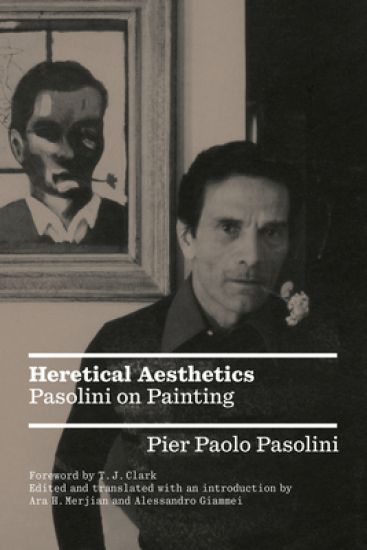
Heretical Aesthetics

Heretical Aesthetics

Pier Paolo Pasolini

Verso Books
2023
nidottu
One of Europe's most mythologized Marxist intellectuals of the 20th century, Pier Paolo Pasolini was not only a poet, filmmaker, novelist, and political martyr. He was also a keen critic of painting. An intermittently practicing artist in his own right, Pasolini studied under the distinguished art historian Roberto Longhi, whose lessons marked a life-long affinity for figurative painting and its centrality to a particular cinematic sensibility. Pasolini set out wilfully to "contaminate" art criticism with semiotics, dialectology, and film theory, penning catalogue essays and exhibition reviews alongside poems, autobiographical meditations, and public lectures on painting. His fiercely idiosyncratic blend of Communism and classicism, localism and civic universalism, iconophilia and aesthetic "heresy," animated and antagonized Cold War culture like few European contemporaries. This book offers numerous texts previously available only in Italian, each accompanied by an editorial note elucidating its place in the tumultuous context of post-war Italian culture. Prefaced by the renowned art historian T. J. Clark, a historical essay on Pasolini's radical aesthetics anchors the anthology. One hundred years after his birth, Heretical Aesthetics sheds light on one of the most consequential aspects of Pasolini's intellectual life, further illuminating a vast cinematic and poetic corpus along the way.
La rabbia / Anger

La rabbia / Anger

Pier Paolo Pasolini

Tenement Press
2022
pokkari
Written in response to producer Gastone Ferranti's request for his comments on a set of newsreel items, the poet would respond with a montage of his own. Via the unfolding of a chrysalis of images, in La rabbia (1963), Pasolini's lens pans over Soviet repression in Hungary; the Cuban revolution; (the utopian object of) space exploration; political imprisonment in Algeria; the liberation of the former European colonies; the election of Pope John xxiii; the prospect of revolution in Africa and the Middle East; in Europe and in Latin America... Here, we've a panoply of photorealist intimations. The death of Marilyn Monroe crests as an idea in this tidal pooling of reflections, as the poet's line lights out for conceptual rhymes and counterpoints. In Viti's translation, the weave of prose and poetry that forms La rabbia portrays the vitality of Pasolini's work in its capacity to speak to both the specifics of his contexts, the character of our own present tense, and the ironic fact of a life lived against the gulf of discontent in its myriad forms. Here, we've a startling confrontation of a revolutionary struggle in stasis set in lines that crystallise in a rallying call against blindness. Alongside a first, unabridged English language translation of Pasolini's 'Sequences, ' the Tenement Press publication of La rabbia also includes an introduction by Roberto Chiesi (cultural director of the Centro Studi-Archivio Pier Paolo Pasolini, Cineteca di Bologna), and an afterword by storyteller, novelist, essayist, and screenwriter, John Berger.