

Kirjailija
Pierre Bourdieu
Kirjat ja teokset yhdessä paikassa: 141 kirjaa, julkaisuja vuosilta 1964–2026, suosituimpiin kuuluu Free Exchange. Vertaile teosten hintoja ja tarkista saatavuus suomalaisista kirjakaupoista.
141 kirjaa
Kirjojen julkaisuvuodet: 1964–2026.
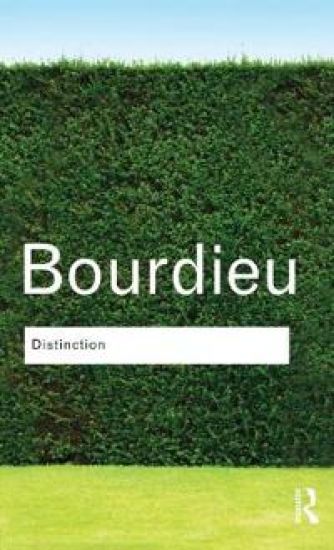
No judgement of taste is innocent - we are all snobs. Pierre Bourdieu’s Distinction brilliantly illuminates the social pretentions of the middle classes in the modern world, focusing on the tastes and preferences of the French bourgeoisie. First published in 1979, the book is at once a vast ethnography of contemporary France and a dissection of the bourgeois mind. In the course of everyday life we constantly choose between what we find aesthetically pleasing, and what we consider tacky, merely trendy, or ugly. Taste is not pure. Bourdieu demonstrates that our different aesthetic choices are all distinctions - that is, choices made in opposition to those made by other classes. This fascinating work argues that the social world functions simultaneously as a system of power relations and as a symbolic system in which minute distinctions of taste become the basis for social judgement.
In 1988, the renowned sociologist Pierre Bourdieu and the leading historian Roger Chartier met for a series of lively discussions that were broadcast on French public radio. Published here for the first time, these conversations are an accessible and engaging introduction to the work of these two great thinkers, who discuss their work and explore the similarities and differences between their disciplines with the clarity and frankness of the spoken word. Bourdieu and Chartier discuss some of the core themes of Bourdieu’s work, such as his theory of fields, his notions of habitus and symbolic power and his account of the relation between structures and individuals, and they examine the relevance of these ideas to the study of historical events and processes. They also discuss at length Bourdieu’s work on culture and aesthetics, including his work on Flaubert and Manet and his analyses of the formation of the literary and artistic fields. Reflecting on the differences between sociology and history, Bourdieu and Chartier observe that while history deals with the past, sociology is dealing with living subjects who are often confronted with discourses that speak about them, and therefore it disrupts, disconcerts and encounters resistance in ways that few other disciplines do. This unique dialogue between two great figures is a testimony to the richness of Bourdieu’s thought and its enduring relevance for the humanities and social sciences today.
In 1988, the renowned sociologist Pierre Bourdieu and the leading historian Roger Chartier met for a series of lively discussions that were broadcast on French public radio. Published here for the first time, these conversations are an accessible and engaging introduction to the work of these two great thinkers, who discuss their work and explore the similarities and differences between their disciplines with the clarity and frankness of the spoken word. Bourdieu and Chartier discuss some of the core themes of Bourdieu’s work, such as his theory of fields, his notions of habitus and symbolic power and his account of the relation between structures and individuals, and they examine the relevance of these ideas to the study of historical events and processes. They also discuss at length Bourdieu’s work on culture and aesthetics, including his work on Flaubert and Manet and his analyses of the formation of the literary and artistic fields. Reflecting on the differences between sociology and history, Bourdieu and Chartier observe that while history deals with the past, sociology is dealing with living subjects who are often confronted with discourses that speak about them, and therefore it disrupts, disconcerts and encounters resistance in ways that few other disciplines do. This unique dialogue between two great figures is a testimony to the richness of Bourdieu’s thought and its enduring relevance for the humanities and social sciences today.
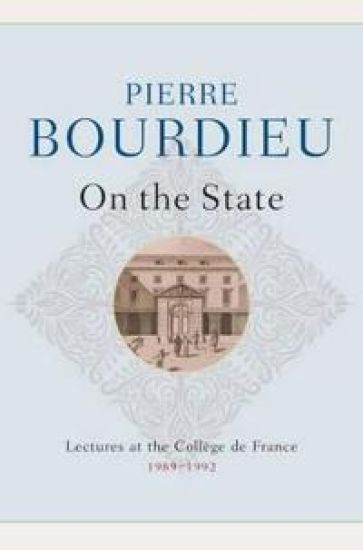
What is the nature of the modern state? How did it come into being and what are the characteristics of this distinctive field of power that has come to play such a central role in the shaping of all spheres of social, political and economic life? In this major work the great sociologist Pierre Bourdieu addresses these fundamental questions. Modifying Max Weber’s famous definition, Bourdieu defines the state in terms of the monopoly of legitimate physical and symbolic violence, where the monopoly of symbolic violence is the condition for the possession and exercise of physical violence. The state can be reduced neither to an apparatus of power in the service of dominant groups nor to a neutral site where conflicting interests are played out: rather, it constitutes the form of collective belief that structures the whole of social life. The ‘collective fiction’ of the state Ð a fiction with very real effects - is at the same time the product of all struggles between different interests, what is at stake in these struggles, and their very foundation. While the question of the state runs through the whole of Bourdieu’s work, it was never the subject of a book designed to offer a unified theory. The lecture course presented here, to which Bourdieu devoted three years of his teaching at the Collège de France, fills this gap and provides the key that brings together the whole of his research in this field. This text also shows ‘another Bourdieu’, both more concrete and more pedagogic in that he presents his thinking in the process of its development. While revealing the illusions of ‘state thought’ designed to maintain belief in government being oriented in principle to the common good, he shows himself equally critical of an ‘anti-institutional mood’ that is all too ready to reduce the construction of the bureaucratic apparatus to the function of maintaining social order. At a time when financial crisis is facilitating the hasty dismantling of public services, with little regard for any notion of popular sovereignty, this book offers the critical instruments needed for a more lucid understanding of the wellsprings of domination.
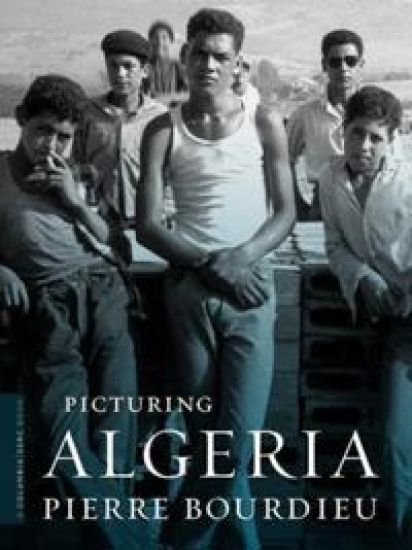
As a soldier in the French army, Pierre Bourdieu took thousands of photographs documenting the abject conditions and suffering (as well as the resourcefulness, determination, grace, and dignity) of the Algerian people as they fought in the Algerian War (1954-1962). Sympathizing with those he was told to regard as "enemies," Bourdieu became deeply and permanently invested in their struggle to overthrow French rule and the debilitations of poverty. Upon realizing the inability of his education to make sense of this wartime reality, Bourdieu immediately undertook the creation of a new ethnographic-sociological science based on his experiences-one that became synonymous with his work over the next few decades and was capable of explaining the mechanics of French colonial aggression and the impressive, if curious, ability of the Algerians to resist it. This volume pairs 130 of Bourdieu's photographs with key excerpts from his related writings, very few of which have been translated into English. Many of these images, luminous aesthetic objects in their own right, comment eloquently on the accompanying words even as they are commented upon by them. Bourdieu's work set the standard for all subsequent ethnographic photography and critique. This volume also features a 2001 interview with Bourdieu, in which he speaks to his experiences in Algeria, its significance on his intellectual evolution, his role in transforming photography into a means for social inquiry, and the duty of the committed intellectual to participate in an increasingly troubled world.
Eine illegitime Kunst
Pierre Bourdieu; Luc Boltanski; Robert Castel
Europäische Verlagsanst.
2014
nidottu
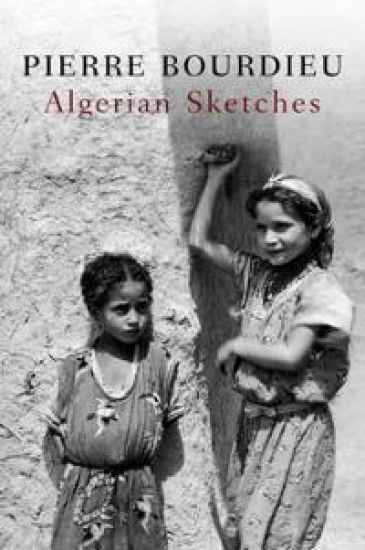
In the late 1950s, like tens of thousands of young men of his generation, Pierre Bourdieu, having recently passed the agrégation in philosophy, found himself immersed in the Algerian war. Motivated by an impulse that, as he himself says, ‘was civic rather than political’, nothing seemed more important to him than to understand the Algerian situation and provide the elements that would enable others to come to an informed judgement about it. In extremely tough conditions and along with a small group of students, Bourdieu undertook a series of studies across an Algeria that was tightly patrolled by the army, leading him to discover the shocking reality of the resettlement camps and to analyse the mechanisms of destruction of Algerian society of which they were emblematic. To achieve the objectives he had set himself, Bourdieu had to carry out a genuine intellectual conversion, acquiring an ethnographic understanding of Algerian society, learning sociological analysis at a breakneck pace and inventing new instruments - both theoretical and empirical - that would enable him to understand the relations of domination specific to colonialism. These new tools also enabled him to analyse the nature of the crisis that the war had both produced and manifested. This unique volume brings together the first texts written by Bourdieu in the midst of the Algerian conflict, as well as later writings and interviews in which he returns to the topic of Algeria and the decisive role it played in the development of his work.
In the late 1950s, like tens of thousands of young men of his generation, Pierre Bourdieu, having recently passed the agrégation in philosophy, found himself immersed in the Algerian war. Motivated by an impulse that, as he himself says, ‘was civic rather than political’, nothing seemed more important to him than to understand the Algerian situation and provide the elements that would enable others to come to an informed judgement about it. In extremely tough conditions and along with a small group of students, Bourdieu undertook a series of studies across an Algeria that was tightly patrolled by the army, leading him to discover the shocking reality of the resettlement camps and to analyse the mechanisms of destruction of Algerian society of which they were emblematic. To achieve the objectives he had set himself, Bourdieu had to carry out a genuine intellectual conversion, acquiring an ethnographic understanding of Algerian society, learning sociological analysis at a breakneck pace and inventing new instruments - both theoretical and empirical - that would enable him to understand the relations of domination specific to colonialism. These new tools also enabled him to analyse the nature of the crisis that the war had both produced and manifested. This unique volume brings together the first texts written by Bourdieu in the midst of the Algerian conflict, as well as later writings and interviews in which he returns to the topic of Algeria and the decisive role it played in the development of his work.

Schriften 07: Politik. Schriften zur Politischen Ökonomie 2
Pierre Bourdieu
SUHRKAMP VERLAG
2012
pokkari

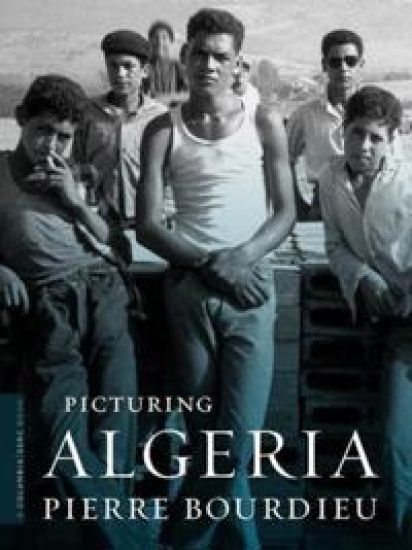
As a soldier in the French army, Pierre Bourdieu took thousands of photographs documenting the abject conditions and suffering (as well as the resourcefulness, determination, grace, and dignity) of the Algerian people as they fought in the Algerian War (1954-1962). Sympathizing with those he was told to regard as "enemies," Bourdieu became deeply and permanently invested in their struggle to overthrow French rule and the debilitations of poverty. Upon realizing the inability of his education to make sense of this wartime reality, Bourdieu immediately undertook the creation of a new ethnographic-sociological science based on his experiences-one that became synonymous with his work over the next few decades and was capable of explaining the mechanics of French colonial aggression and the impressive, if curious, ability of the Algerians to resist it. This volume pairs 130 of Bourdieu's photographs with key excerpts from his related writings, very few of which have been translated into English. Many of these images, luminous aesthetic objects in their own right, comment eloquently on the accompanying words even as they are commented upon by them. Bourdieu's work set the standard for all subsequent ethnographic photography and critique. This volume also features a 2001 interview with Bourdieu, in which he speaks to his experiences in Algeria, its significance on his intellectual evolution, his role in transforming photography into a means for social inquiry, and the duty of the committed intellectual to participate in an increasingly troubled world.
Kunst oder Geld? Das Werk als Text . Der Sinn der Geschichte. Die staatliche Konstruktion des Geistes. Interessenfreiheit als Leidenschaft. Das Lachen der Bischöfe. Die Theorie der theoretischen Sicht.

* Bourdieu is well known as one of the most original and influential thinkers in the social sciences. * This book is one of the only things he wrote on the media - the bulk of the text is about television and the book includes an important essay about journalism.
A surprising bestseller when it was first published in France, this little book by Pierre Bourdieu offers a brilliant critique of television and its consequences for social and political life. Rather than simply denouncing television as a misrepresentation or trivialization of the social world, Bourdieu shows that television journalists are part of a journalistic field that shapes their actions and imposes a particular vision on the public, a vision that is grounded in the very structure of the journalistic field and that, through a variety of mechanisms specific to this field, produces a general disenchantment with politics.
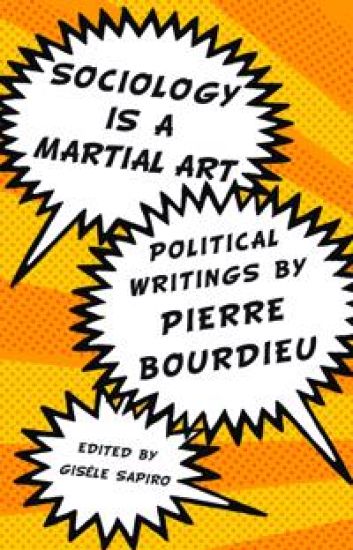
An accessible survey of this seminal thinker's most influential writings. It includes the full text of his short books Acts of Resistance, Firing Back, and On Television, in addition to key articles, interviews, and speeches, all of which introduce the reader to Bourdieu's innovative approach to sociology as a mode of political intervention. Edited and with an introduction by noted French sociologist Gis le Sapiro, Sociology Is a Martial Art will become this generation's indispensable introduction to Bourdieu's work.


No judgement of taste is innocent - we are all snobs. Pierre Bourdieu’s Distinction brilliantly illuminates the social pretentions of the middle classes in the modern world, focusing on the tastes and preferences of the French bourgeoisie. First published in 1979, the book is at once a vast ethnography of contemporary France and a dissection of the bourgeois mind. In the course of everyday life we constantly choose between what we find aesthetically pleasing, and what we consider tacky, merely trendy, or ugly. Taste is not pure. Bourdieu demonstrates that our different aesthetic choices are all distinctions - that is, choices made in opposition to those made by other classes. This fascinating work argues that the social world functions simultaneously as a system of power relations and as a symbolic system in which minute distinctions of taste become the basis for social judgement.