

Kirjailija
Plato
Kirjat ja teokset yhdessä paikassa: 1 115 kirjaa, julkaisuja vuosilta 1821–2026, suosituimpiin kuuluu Ion. Vertaile teosten hintoja ja tarkista saatavuus suomalaisista kirjakaupoista.
1 115 kirjaa
Kirjojen julkaisuvuodet: 1821–2026.
Together these two dialogues contain Plato’s most important work on poetry and beauty.
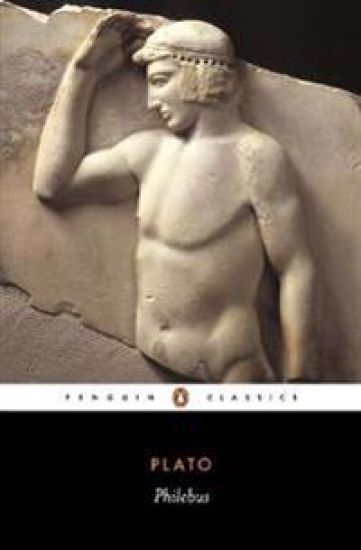
Taking the form of a discussion between the hedonist Philebus, his naïve disciple Protarchus and Socrates, Philebus is a compelling consideration of the popular belief that pleasure is the greatest attainable good. Here, Socrates speculates on the differing intensities of both pleasure and pain; explores the notion that they can be divided into pure and impure types; considers the relationship between the one and the many; and establishes knowledge as a far higher goal. A profound argument that true fulfillment can only be achieved by the pursuit of beauty, truth and moderation, Philebus is among the earliest and most fascinating explorations of one of the most fundamental human questions: how to lead a good life.
"Meno (Second Edition)".
Plato's Symposium is the most literary of all his works and one which all students of classics are likely to want to read whether or not they are studying Plato's philosophy. But the reader does need help in appreciating both the artistry and the arguments, and in comprehending the social and cultural background against which the 'praise of love' is delivered. Sir Kenneth Dover provides here a sympathetic and modern edition of the kind that is long overdue. It consists of an introduction, the Greek text accompanied by a very abbreviated critical apparatus, and a commentary on the text which is intended to elucidate the Greek, to make the philosophical argument intelligible, and to relate the content of what is said to the concepts and assumptions of contemporary morality and society. An edition for students of Greek in universities and the upper forms of schools.
The Gorgias is a vivid introduction to central problems of moral and political philosophy. In answer to an eloquent attack on morality as conspiration of the weak against the strong, Plato develops his own doctrine, insisting that the benefits of being moral always outweigh any benefits to be won from immorality. He applies his views to such questions as the errors of democracy, the role of the political expert in society, and the justification of punishment. In the notes to this translation, Professor Irwin discusses the historical and social context of the dialogue, expounds and criticizes the arguments, and tries above all to suggest the questions a modern reader ought to raise about Plato's doctrines.
Euthyphro; Apology of Socrates; Crito
"Phaedo (Second Edition)".
A clear accurate translation of one of Plato's most facinating dialogues, with an extensive philosophical commentary.
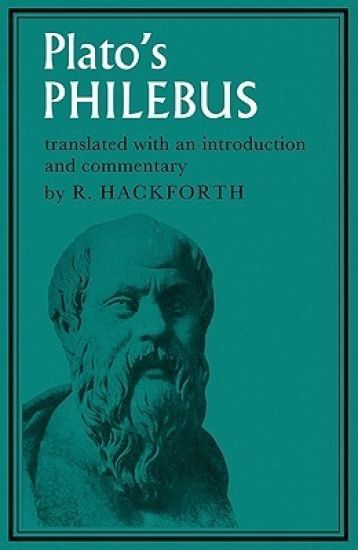
This translation with introduction and commentary of Plato's Philebus was originally issued under the title Plato's Examination of Pleasure and first reprinted as Plato's Philebus. This dialogue, generally agreed to be one of Plato's latest and most sophisticated, analyses in detail the nature of pleasure – its meaning, its varieties and importance. Professor Hackforth here translates the dialogue for the student and general reader. There is a running commentary on the course of the argument and the meaning of key Greek terms and a full introduction to explain the philosophical background and the place of this work among Plato's writings.
The dialogue begins with a playful discussion of erotic passion, then extends the theme to consider the nature of inspiration, love and knowledge. The centerpiece is the myth of the charioteer - the famous and moving account of the vision, fall and incarnation of the soul. Professor Hackforth here translates the dialogue for the student and general reader. There is a running commentary on the course of the argument and the meaning of the key Greek terms, and a full intoduction to explain the philosophical background and the place of this work among Plato’s writings.
Essestially an inquiry into morality, the Republic is the central work of the Western world's most famous philosopher. Containing crucial arguments and insights into many other areas of philosophy, it is also a literary masterpiece: the philosophy is presented for the most part for ordinary readers, who are carried along by the wit and intensity of the dialogue and by Plato's unforgettable images of the human condition. This new, lucid translation is complemented by full explanatory notes and an up-to-date critical introduction.
A compilation of the essential works of Plato in one paperback volume: The Republic, The Symposium, Parmenides, Euthyphro, Apology, Crito, and Phaedo.
Timaeus. Critias. Cleitophon. Menexenus. Epistles
Plato
LOEB
1929
sidottu
Halvin toimitettuna 37,20 €
On the creation of the world, and the destruction of Atlantis. Plato, the great philosopher of Athens, was born in 427 BC. In early manhood an admirer of Socrates, he later founded the famous school of philosophy in the grove Academus. Much else recorded of his life is uncertain; that he left Athens for a time after Socrates’ execution is probable; that later he went to Cyrene, Egypt, and Sicily is possible; that he was wealthy is likely; that he was critical of “advanced” democracy is obvious. He lived to be 80 years old. Linguistic tests including those of computer science still try to establish the order of his extant philosophical dialogues, written in splendid prose and revealing Socrates’ mind fused with Plato’s thought. In Laches, Charmides, and Lysis, Socrates and others discuss separate ethical conceptions. Protagoras, Ion, and Meno discuss whether righteousness can be taught. In Gorgias, Socrates is estranged from his city’s thought, and his fate is impending. The Apology (not a dialogue), Crito, Euthyphro, and the unforgettable Phaedo relate the trial and death of Socrates and propound the immortality of the soul. In the famous Symposium and Phaedrus, written when Socrates was still alive, we find the origin and meaning of love. Cratylus discusses the nature of language. The great masterpiece in ten books, the Republic, concerns righteousness (and involves education, equality of the sexes, the structure of society, and abolition of slavery). Of the six so-called dialectical dialogues Euthydemus deals with philosophy; metaphysical Parmenides is about general concepts and absolute being; Theaetetus reasons about the theory of knowledge. Of its sequels, Sophist deals with not-being; Politicus with good and bad statesmanship and governments; Philebus with what is good. The Timaeus seeks the origin of the visible universe out of abstract geometrical elements. The unfinished Critias treats of lost Atlantis. Unfinished also is Plato’s last work, Laws, a critical discussion of principles of law which Plato thought the Greeks might accept. The Loeb Classical Library edition of Plato is in twelve volumes.
Charmides. Alcibiades. Hipparchus. Lovers. Theages. Minos. Epinomis
Plato
LOEB
1927
sidottu
Halvin toimitettuna 38,50 €
Mostly doubtful dialogues. Plato, the great philosopher of Athens, was born in 427 BC. In early manhood an admirer of Socrates, he later founded the famous school of philosophy in the grove Academus. Much else recorded of his life is uncertain; that he left Athens for a time after Socrates’ execution is probable; that later he went to Cyrene, Egypt, and Sicily is possible; that he was wealthy is likely; that he was critical of “advanced” democracy is obvious. He lived to be 80 years old. Linguistic tests including those of computer science still try to establish the order of his extant philosophical dialogues, written in splendid prose and revealing Socrates’ mind fused with Plato’s thought. In Laches, Charmides, and Lysis, Socrates and others discuss separate ethical conceptions. Protagoras, Ion, and Meno discuss whether righteousness can be taught. In Gorgias, Socrates is estranged from his city’s thought, and his fate is impending. The Apology (not a dialogue), Crito, Euthyphro, and the unforgettable Phaedo relate the trial and death of Socrates and propound the immortality of the soul. In the famous Symposium and Phaedrus, written when Socrates was still alive, we find the origin and meaning of love. Cratylus discusses the nature of language. The great masterpiece in ten books, the Republic, concerns righteousness (and involves education, equality of the sexes, the structure of society, and abolition of slavery). Of the six so-called dialectical dialogues Euthydemus deals with philosophy; metaphysical Parmenides is about general concepts and absolute being; Theaetetus reasons about the theory of knowledge. Of its sequels, Sophist deals with not-being; Politicus with good and bad statesmanship and governments; Philebus with what is good. The Timaeus seeks the origin of the visible universe out of abstract geometrical elements. The unfinished Critias treats of lost Atlantis. Unfinished also is Plato’s last work, Laws, a critical discussion of principles of law which Plato thought the Greeks might accept. The Loeb Classical Library edition of Plato is in twelve volumes.
Final thoughts on an ideal constitution. Plato, the great philosopher of Athens, was born in 427 BC. In early manhood an admirer of Socrates, he later founded the famous school of philosophy in the grove Academus. Much else recorded of his life is uncertain; that he left Athens for a time after Socrates’ execution is probable; that later he went to Cyrene, Egypt, and Sicily is possible; that he was wealthy is likely; that he was critical of “advanced” democracy is obvious. He lived to be 80 years old. Linguistic tests including those of computer science still try to establish the order of his extant philosophical dialogues, written in splendid prose and revealing Socrates’ mind fused with Plato’s thought. In Laches, Charmides, and Lysis, Socrates and others discuss separate ethical conceptions. Protagoras, Ion, and Meno discuss whether righteousness can be taught. In Gorgias, Socrates is estranged from his city’s thought, and his fate is impending. The Apology (not a dialogue), Crito, Euthyphro, and the unforgettable Phaedo relate the trial and death of Socrates and propound the immortality of the soul. In the famous Symposium and Phaedrus, written when Socrates was still alive, we find the origin and meaning of love. Cratylus discusses the nature of language. The great masterpiece in ten books, the Republic, concerns righteousness (and involves education, equality of the sexes, the structure of society, and abolition of slavery). Of the six so-called dialectical dialogues Euthydemus deals with philosophy; metaphysical Parmenides is about general concepts and absolute being; Theaetetus reasons about the theory of knowledge. Of its sequels, Sophist deals with not-being; Politicus with good and bad statesmanship and governments; Philebus with what is good. The Timaeus seeks the origin of the visible universe out of abstract geometrical elements. The unfinished Critias treats of lost Atlantis. Unfinished also is Plato’s last work, Laws, a critical discussion of principles of law which Plato thought the Greeks might accept. The Loeb Classical Library edition of Plato is in twelve volumes.
Final thoughts on an ideal constitution. Plato, the great philosopher of Athens, was born in 427 BC. In early manhood an admirer of Socrates, he later founded the famous school of philosophy in the grove Academus. Much else recorded of his life is uncertain; that he left Athens for a time after Socrates’ execution is probable; that later he went to Cyrene, Egypt, and Sicily is possible; that he was wealthy is likely; that he was critical of “advanced” democracy is obvious. He lived to be 80 years old. Linguistic tests including those of computer science still try to establish the order of his extant philosophical dialogues, written in splendid prose and revealing Socrates’ mind fused with Plato’s thought. In Laches, Charmides, and Lysis, Socrates and others discuss separate ethical conceptions. Protagoras, Ion, and Meno discuss whether righteousness can be taught. In Gorgias, Socrates is estranged from his city’s thought, and his fate is impending. The Apology (not a dialogue), Crito, Euthyphro, and the unforgettable Phaedo relate the trial and death of Socrates and propound the immortality of the soul. In the famous Symposium and Phaedrus, written when Socrates was still alive, we find the origin and meaning of love. Cratylus discusses the nature of language. The great masterpiece in ten books, the Republic, concerns righteousness (and involves education, equality of the sexes, the structure of society, and abolition of slavery). Of the six so-called dialectical dialogues Euthydemus deals with philosophy; metaphysical Parmenides is about general concepts and absolute being; Theaetetus reasons about the theory of knowledge. Of its sequels, Sophist deals with not-being; Politicus with good and bad statesmanship and governments; Philebus with what is good. The Timaeus seeks the origin of the visible universe out of abstract geometrical elements. The unfinished Critias treats of lost Atlantis. Unfinished also is Plato’s last work, Laws, a critical discussion of principles of law which Plato thought the Greeks might accept. The Loeb Classical Library edition of Plato is in twelve volumes.