Kirjojen hintavertailu – 12 859 819 kirjaa ja 27 kauppaa

Kirjailija

Proclus

Kirjat ja teokset yhdessä paikassa: 42 kirjaa, julkaisuja vuosilta 1968–2019, suosituimpiin kuuluu Commentaires Sur Le Timee Livre 4. Vertaile teosten hintoja ja tarkista saatavuus suomalaisista kirjakaupoista.

42 kirjaa

Kirjojen julkaisuvuodet: 1968–2019.

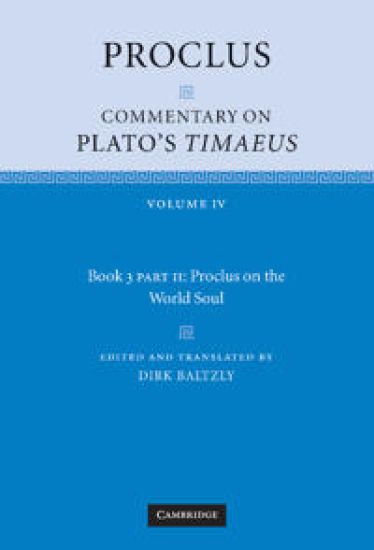
Proclus: Commentary on Plato's Timaeus, Part 2, Proclus on the World Soul
In the present volume Proclus describes the 'creation' of the soul that animates the entire universe. This is not a literal creation, for Proclus argues that Plato means only to convey the eternal dependence of the World Soul upon higher causes. In his exegesis of Plato's text, Proclus addresses a range of issues in Pythagorean harmonic theory, as well as questions about the way in which the World Soul knows both forms and the visible reality that comprises its body. This part of Proclus' Commentary is particularly responsive to the interpretive tradition that precedes it. As a result, this volume is especially significant for the study of the Platonic tradition from the earliest commentators onwards.
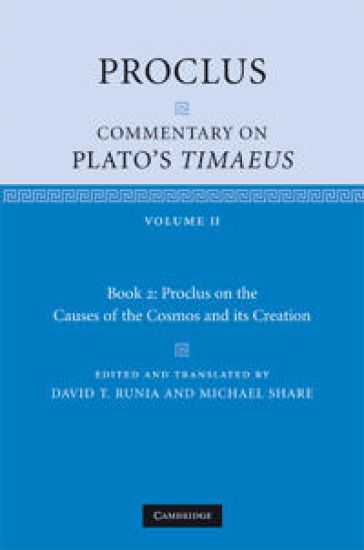
Proclus: Commentary on Plato's Timaeus: Volume 2, Book 2: Proclus on the Causes of the Cosmos and its Creation
This volume of Proclus' commentary on Plato's Timaeus records Proclus' exegesis of Timaeus 27a–31b, in which Plato first discusses preliminary matters that precede his account of the creation of the universe, and then moves to the account of the creation of the universe as a totality. For Proclus this text is a grand opportunity to reflect on the nature of causation as it relates to the physical reality of our cosmos. The commentary deals with many subjects that have been of central interest to philosophers from Plato's time onwards, such as the question whether the cosmos was created in time, and the nature of evil as it relates to physical reality and its ontological imperfection.
Proclus: Commentary on Plato's Timaeus: Volume 1, Book 1: Proclus on the Socratic State and Atlantis
Proclus' Commentary on Plato's dialogue Timaeus is arguably the most important commentary on a text of Plato, offering unparalleled insights into eight centuries of Platonic interpretation. This edition offers the first new English translation of the work for nearly two centuries, building on significant recent advances in scholarship on Neoplatonic commentators. It provides an invaluable record of early interpretations of Plato's dialogue, while also presenting Proclus' own views on the meaning and significance of Platonic philosophy. The present volume, the first in the edition, deals with what may be seen as the prefatory material of the Timaeus. In it Socrates gives a summary of the political arrangements favoured in the Republic, and Critias tells the story of how news of the defeat of Atlantis by ancient Athens had been brought back to Greece from Egypt by the poet and politician Solon.
Proclus: Commentary on Plato's Timaeus: Volume 3, Book 3, Part 1, Proclus on the World's Body
Proclus' Commentary on Plato's dialogue Timaeus is arguably the most important commentary on a text of Plato, offering unparalleled insights into eight centuries of Platonic interpretation. This edition offered the first new English translation of the work for nearly two centuries, building on significant advances in scholarship on Neoplatonic commentators. It provides an invaluable record of early interpretations of Plato's dialogue, while also presenting Proclus' own views on the meaning and significance of Platonic philosophy. The present volume, the third in the edition, offers a substantial introduction and notes designed to help readers unfamiliar with this author. It presents Proclus' version of Plato's account of the elements and the mathematical proportions which bind together the body of the world.
Proclus, Sur Le Premier Alcibiade de Platon: Tome II
L'Alcibiade est sans doute l'un des dialogues platoniciens qui a ete le plus lu et le plus apprecie dans l'antiquite: a preuve les multiples citations que l'on en trouve un peu partout ou encore le fait exceptionnel que l'on en a conserve deux commentaires neoplatoniciens. C'est que jamais, a la difference des modernes, les anciens n'ont doute de l'authenticite de ce dialogue, dans lequel certains voyaient meme, comme Jamblique, un resume parfait de la philosophie de Platon.
Proclus, Sur Le Premier Alcibiade de Platon: Tome I
L'Alcibiade est sans doute l'un des dialogues platoniciens qui a ete le plus lu et le plus apprecie dans l'antiquite: a preuve les multiples citations que l'on en trouve un peu partout ou encore le fait exceptionnel que l'on en a conserve deux commentaires neoplatoniciens. C'est que jamais, a la difference des modernes, les anciens n'ont doute de l'authenticite de ce dialogue, dans lequel certains voyaient meme, comme Jamblique, un resume parfait de la philosophie de Platon.
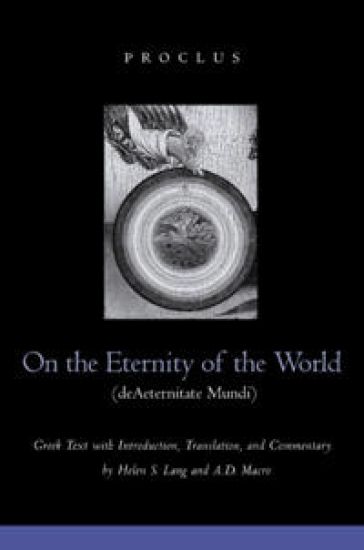
On the Eternity of the World de Aeternitate Mundi

On the Eternity of the World de Aeternitate Mundi

Proclus

University of California Press
2002
sidottu
In the fifth century A. D., Proclus served as head of the Academy in Athens that had been founded 900 years earlier by Plato. Proclus was the last great systematizer of Greek philosophy, and his work exerted a powerful influence in late antiquity, in the Arab world, and in the Renaissance. His treatise On the Eternity of the World formed the basis for virtually all later arguments for the eternity of the world and for the existence of God; consequently, it lies at the heart of neoplatonic philosophy and the controversy between pagans and Christians at the end of antiquity. Proclus's eighteen Arguments were quoted within John Philoponus' polemic against him, written in the sixth century; but the opening pages of the sole extant manuscript, which contained the first Argument, have been lost. In this book, Helen Lang and A. D. Macro present the seventeen Arguments preserved by Philoponus and translate them as an independent work. The first Argument, which survives in Arabic, is also included and makes this the only complete edition of On the Eternity of the World since antiquity. This bilingual edition comprises the seventeen Arguments (II-XVIII) in Greek and English, along with an introduction, synopses, and detailed notes which help readers with or without Greek to understand them philosophically and historically. Two appendices complete the volume: the Arabic text of the first Argument, also with English translation and notes, and the first modern edition of an important Latin translation from the Renaissance. In a valuable introduction, Lang and Macro examine the complex history of these Arguments. Together with its excellent annotations, and English and Greek texts en face, the publication of Proclus's On the Eternity of the Worldmakes available an influential work by a major figure in the history of late Greek philosophy.
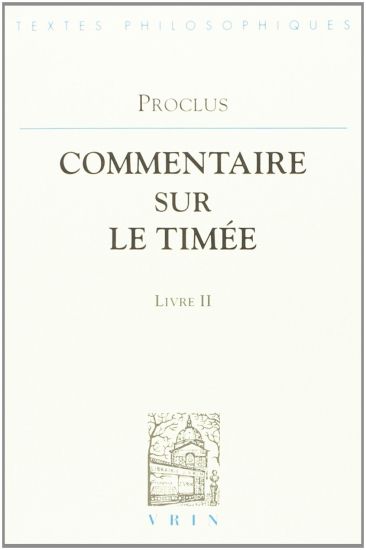
Proclus: Commentaires Sur Le Timee Livre 2

Proclus: Commentaires Sur Le Timee Livre 2

Proclus

Librarie Philosophique J. Vrin
1998
nidottu
Dans l'Ecole neoplatonicienne d'Athenes (Ve -VIe siecle ap. J.-C.), le degre le plus eleve de l'enseignement de la philosophie consistait a expliquer le Timee et le Parmenide. Le Timee etait le texte par excellence pour etudier la philosophie de la Nature. Le Commentaire de Proclus sur ce dialogue platonicien est evidemment le fruit de cet enseignement. D'apres Marinus, successeur de Proclus a la direction de l'Ecole, ce commentaire est le premier ecrit publie, mais il ne fait aucun doute que le texte conserve a ete l'objet de plusieurs annees d'enseignement au cours desquelles il n'a fait que s'accroitre. Malheureusement nous n'avons conserve de ce volumineux travail que le premier tiers, soit cinq livres qui couvrent l'Introduction (Tim. 17a-27b, resume de la Republique et mythe de l'Atlantide) et la premiere partie (Tim. 27c-47e, qui concerne le Monde en tant que creation de l'Intellect, et les dix dons qu'il fait au Monde). Mais nous savons que Proclus avait commente le dialogue entier puisqu'une partie de la fin (Tim. 89e-90c) a ete retrouvee en arabe dans la traduction d'Hunain Ibn Ishaq. Marinus (Proclus ou Sur le bonheur 13.16-17) caracterise ce commentaire comme veritablement elegant et rempli de science .
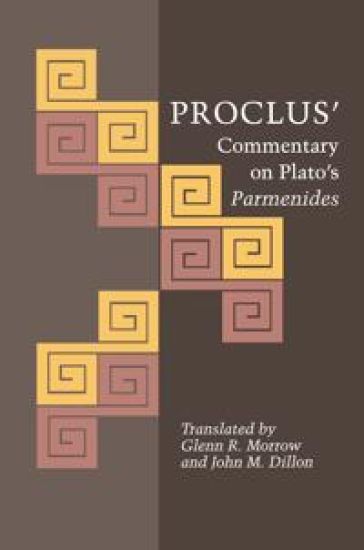
Proclus' Commentary on Plato's Parmenides

Proclus' Commentary on Plato's Parmenides

Proclus

Princeton University Press
1992
pokkari
This is the first English translation of Proclus' commentary on Plato's Parmenides. Glenn Morrow's death occurred while he was less than halfway through the translation, which was completed by John Dillon. A major work of the great Neoplatonist philosopher, the commentary is an intellectual tour de force that greatly influenced later medieval and Renaissance thought. As the notes and introductory summaries explain, it comprises a full account of Proclus' own metaphysical system, disguised, as is so much Neoplatonic philosophy, in the form of a commentary.
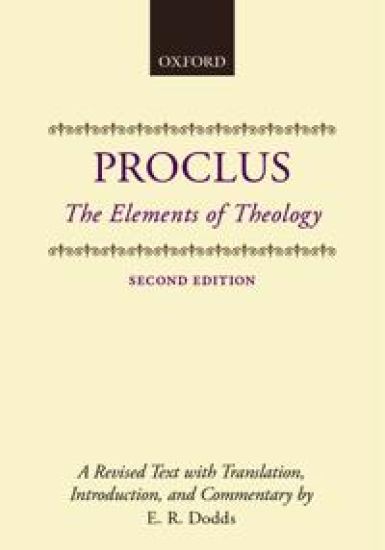
The Elements of Theology

The Elements of Theology

Proclus

Clarendon Press
1992
nidottu

Halvin toimitettuna 47,40 €

Proclus' Elements of Theology is a concise summa of the Neoplatonic system in its fully developed form; and for the student of late Greek thought second in importance only to the Enneads of Plotinus. Professor Dodds has provided a critical text based on a personal examination of some forty manuscripts, together with an English translation and a philosophical and linguistic commentary. First published in 1933, this second edition includes an Appendix of Addenda et Corrigenda and is widely regarded and respected as the definitive edition of the text today.
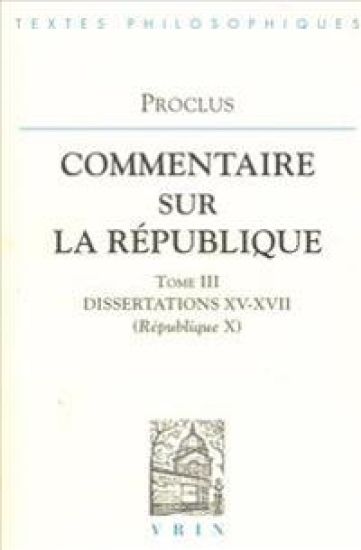
Proclus: Commentaires Sur La Republique Dissertations XV-XVII (Republique X)
Le Commentaire de Proclus sur la Republique de Platon ne suit pas le texte platonicien phrase a phrase, comme les Commentaires sur l'Alcibiade ou sur le Timee, mais il offre une succession de dix-sept dissertations dans l'ordre des livrees de la Republique. Deux d'entres elles sont tres etendues: la sixieme qui est une defense d'Homere contre Platon et la seizieme sur le mythe d'Er, qui est adressee a Marinus, le disciple de Proclus, auteur de la Vita Procli. Cette derniere dissertation, de l'aveu meme de son auteur, rapporte et discute plusieurs fois les opinions de Porphyre. Proclus y a retenu et traite en detail deux sujets: l'entree de l'ame dans le corps et le crime horrible de manger ses propres enfants. La dix-septieme dissertation sur les critiques d'Aristote contre la Republique dans le deuxieme livre du Politique, est incomplete. Le traducteur a propose une division du texte et a donne d'abondantes notes qui forment une sorte de commentaire perpetuel.