Kirjojen hintavertailu – 12 859 828 kirjaa ja 27 kauppaa

Kirjailija

Quansheng Chen

Kirjat ja teokset yhdessä paikassa: 16 kirjaa, julkaisuja vuosilta 2020–2026, suosituimpiin kuuluu Advanced Technologies for Physical Properties Measurement of Food and its Processing. Vertaile teosten hintoja ja tarkista saatavuus suomalaisista kirjakaupoista.

16 kirjaa

Kirjojen julkaisuvuodet: 2020–2026.

Advanced Technologies for Physical Properties Measurement of Food and its Processing

Advanced Technologies for Physical Properties Measurement of Food and its Processing

Hao Lin; Lei Zhang; Quansheng Chen; Man Zhou; Leiqing Pan; Qin Ouyang; Solomon Yao-Say Selorm Adade; Yanyu Li

Springer Nature Switzerland AG
2025
sidottu
This book provides a comprehensive overview of the physical properties of foods and the cutting-edge technologies employed to measure them. Delving into key topics such as optical, thermal, acoustic, rheological, and textural properties, it provides a detailed examination of principles, measurement methods, and applications in food quality evaluation. While it discusses advanced technologies such as near-infrared spectroscopy, computer vision, spectral imaging, acoustic resonance analysis, electronic noses/tongues/eyes, and multi-sensor data fusion in detail, the book also introduces intelligent equipment design and real-time quality monitoring systems for the food industry, including emerging technologies like 4D printing and terahertz technology. The book also addresses critical questions about the application of these technologies in real-world scenarios, making it a must-read for those seeking to understand and apply the latest advancements in food science. This book is an invaluable resource for undergraduate and graduate students, researchers, and professionals in food science and engineering. It helps readers understand the principles of various non-destructive food quality measurement techniques and applies them to in-situ evaluation and in-field monitoring. It also serves as both a textbook and a reference guide, enabling readers to understand and apply advanced measurement and processing techniques for in-situ evaluation and in-field monitoring. By providing a thorough understanding of the principles and applications of food physical properties, this book ensures that its audience remains at the forefront of technological advancements in the field. The book contains several chapters originally written in the Chinese language. The translation was done with the help of artificial intelligence. A subsequent human revision was done primarily in terms of content.
Advanced Technologies for Physical Properties Measurement of Food and its Processing

Advanced Technologies for Physical Properties Measurement of Food and its Processing

Hao Lin; Zhang Lei; Quansheng Chen; Man Zhou; Leiqing Pan; Qin Ouyang; Solomon Yao-Say Selorm Adade; Yanyu Li

Springer Nature Switzerland AG
2026
Nidottu
This book provides a comprehensive overview of the physical properties of foods and the cutting-edge technologies employed to measure them. Delving into key topics such as optical, thermal, acoustic, rheological, and textural properties, it provides a detailed examination of principles, measurement methods, and applications in food quality evaluation. While it discusses advanced technologies such as near-infrared spectroscopy, computer vision, spectral imaging, acoustic resonance analysis, electronic noses/tongues/eyes, and multi-sensor data fusion in detail, the book also introduces intelligent equipment design and real-time quality monitoring systems for the food industry, including emerging technologies like 4D printing and terahertz technology. The book also addresses critical questions about the application of these technologies in real-world scenarios, making it a must-read for those seeking to understand and apply the latest advancements in food science. This book is an invaluable resource for undergraduate and graduate students, researchers, and professionals in food science and engineering. It helps readers understand the principles of various non-destructive food quality measurement techniques and applies them to in-situ evaluation and in-field monitoring. It also serves as both a textbook and a reference guide, enabling readers to understand and apply advanced measurement and processing techniques for in-situ evaluation and in-field monitoring. By providing a thorough understanding of the principles and applications of food physical properties, this book ensures that its audience remains at the forefront of technological advancements in the field. The book contains several chapters originally written in the Chinese language. The translation was done with the help of artificial intelligence. A subsequent human revision was done primarily in terms of content.
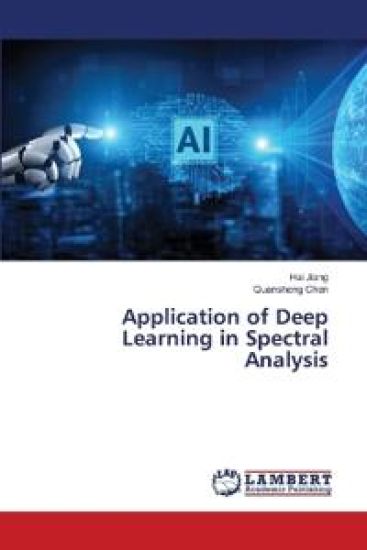
Application of Deep Learning in Spectral Analysis

Application of Deep Learning in Spectral Analysis

Hui Jiang; Quansheng Chen

Lap Lambert Academic Publishing
2024
pokkari
The deep learning approach combined with spectroscopic sensing techniques has shown great potential for quality evaluation of food and agro-products. Current advances in deep learning-based qualitative analysis include variety identification, geographical origin detection, adulteration recognition, and bruise detection, whereas quantitative analysis includes multiple component content prediction for fruits, grains, and crops. The main advantage of deep learning approach is the decreasing the dependence on human domain knowledge by end-to-end analysis and the improved precision and generalizability. This book discusses the current challenges of conventional chemometric methods and the emerging deep learning approach for spectral analysis. The research on exploring the learning mechanism of the 'black box' deep learning model is discussed. This book focuses on the application of deep learning approaches on quality evaluation of food and agro-products, lessons from current studies, and future perspectives.
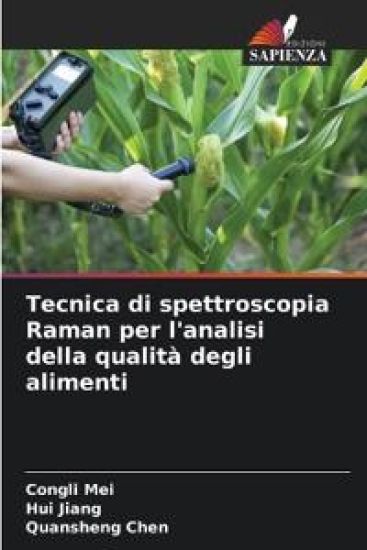
Tecnica di spettroscopia Raman per l'analisi della qualità degli alimenti

Tecnica di spettroscopia Raman per l'analisi della qualità degli alimenti

Congli Mei; Hui Jiang; Quansheng Chen

Edizioni Sapienza
2024
pokkari
La tecnica della spettroscopia Raman stata ampiamente esplorata nella progettazione di test accurati, trasparenti e conclusivi per la sicurezza alimentare e il controllo di qualit . La sua combinazione con algoritmi chemiometrici fondamentale per garantire campagne alimentari sicure. Il libro sottolinea l'importanza delle pratiche di monitoraggio degli alimenti utilizzando modelli di regressione multivariata. L'applicabilit delle diverse modalit chemiometriche per il monitoraggio di pesticidi, additivi alimentari e illeciti, metalli pesanti, agenti patogeni e relativi metaboliti in spettroscopia Raman trattata in pollame, olio, bevande e altre matrici alimentari selezionate. Viene esaminata la sua pertinenza per la discriminazione nel monitoraggio e nell'autenticazione della qualit e della sicurezza degli alimenti. Infine, vengono presentati i limiti, le sfide principali e le prospettive. L'elaborazione chemiometrica degli spettri, implementata con una fase di pretrattamento del campione pi semplice o meno complicata, rende la tecnica della spettroscopia Raman un approccio potenziale che dovrebbe consentire la rilevazione simultanea e rapida di pi analiti nelle matrici alimentari.
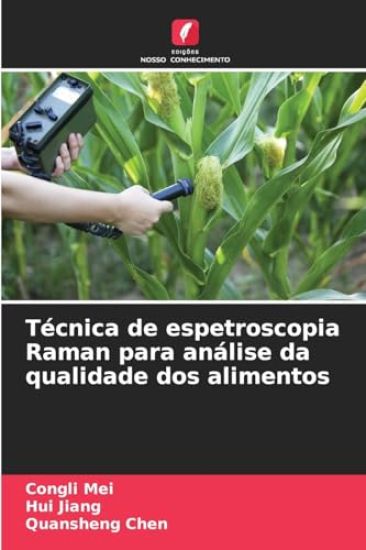
Técnica de espetroscopia Raman para análise da qualidade dos alimentos

Técnica de espetroscopia Raman para análise da qualidade dos alimentos

Congli Mei; Hui Jiang; Quansheng Chen

Edicoes Nosso Conhecimento
2024
pokkari
A t cnica de espetroscopia Raman tem sido amplamente explorada na conce o de ensaios de seguran a alimentar e de controlo de qualidade precisos, transparentes e conclusivos. A sua hifeniza o com algoritmos quimiom tricos fundamental para garantir campanhas de seguran a alimentar. O livro real a a import ncia das pr ticas de monitoriza o alimentar utilizando modelos de regress o multivariada. A aplicabilidade dos diferentes modos quimiom tricos para monitorizar pesticidas, aditivos alimentares e il citos, metais pesados, agentes patog nicos e os seus metabolitos na espetroscopia Raman abordada em aves de capoeira, leos, bebidas e outras matrizes alimentares selecionadas. examinada a sua pertin ncia para a discrimina o na monitoriza o e autentica o da qualidade e seguran a dos alimentos. Por ltimo, s o tamb m abordadas as limita es, os principais desafios e as perspectivas. Os espectros de processamento quimiom trico implementados com uma fase de pr -tratamento da amostra mais simples ou n o complicada fazem da t cnica de espetroscopia Raman uma abordagem potencial que se espera que permita a dete o simult nea e r pida de v rios analitos em matrizes alimentares.
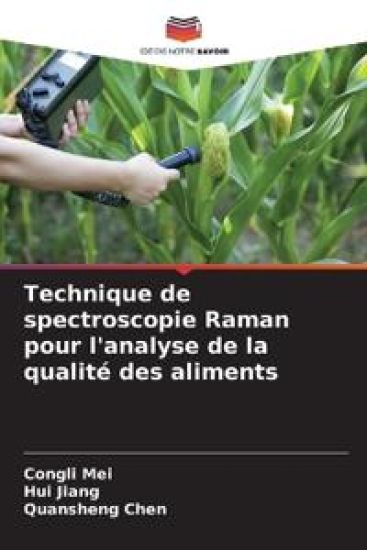
Technique de spectroscopie Raman pour l'analyse de la qualité des aliments

Technique de spectroscopie Raman pour l'analyse de la qualité des aliments

Congli Mei; Hui Jiang; Quansheng Chen

Editions Notre Savoir
2024
pokkari
La technique de la spectroscopie Raman a t largement explor e dans la conception d'essais pr cis, transparents et concluants en mati re de s curit alimentaire et de contr le de la qualit . Sa combinaison avec les algorithmes chimiom triques permet de garantir la s curit des campagnes alimentaires. L'ouvrage met l'accent sur l'importance des pratiques de surveillance des aliments l'aide de mod les de r gression multivari s. L'applicabilit des diff rents modes de chimiom trie la surveillance des pesticides, des additifs alimentaires et illicites, des m taux lourds, des agents pathog nes et de leurs m tabolites par spectroscopie Raman est couverte pour la volaille, l'huile, les boissons et d'autres matrices alimentaires s lectionn es. La pertinence de la discrimination dans le contr le et l'authentification de la qualit et de la s curit des aliments est examin e. Enfin, il pr sente galement les limites, les principaux d fis et les perspectives. Le traitement chimiom trique des spectres mis en oeuvre avec une tape de pr traitement des chantillons plus simple ou sans complication fait de la technique de spectroscopie Raman une approche potentielle qui devrait permettre la d tection simultan e et rapide de plusieurs analytes dans les matrices alimentaires.
Raman-Spektroskopie-Technik für die Analyse der Lebensmittelqualität

Raman-Spektroskopie-Technik für die Analyse der Lebensmittelqualität

Congli Mei; Hui Jiang; Quansheng Chen

Verlag Unser Wissen
2024
pokkari
Die Technik der Raman-Spektroskopie wurde ausgiebig f r die Entwicklung genauer, transparenter und aussagekr ftiger Tests zur Lebensmittelsicherheit und Qualit tskontrolle erforscht. Ihre Verkn pfung mit chemometrischen Algorithmen ist f r die Gew hrleistung sicherer Lebensmittelkampagnen von entscheidender Bedeutung. Das Buch unterstreicht die Bedeutung der Lebensmittel berwachung mit Hilfe multivariater Regressionsmodelle. Die Anwendbarkeit der verschiedenen chemometrischen Methoden zur berwachung von Pestiziden, Lebensmittel- und illegalen Zusatzstoffen, Schwermetallen, Krankheitserregern und deren Metaboliten in der Raman-Spektroskopie wird an Gefl gel, l, Getr nken und anderen ausgew hlten Lebensmittelmatrices behandelt. Ihre Relevanz f r die Unterscheidung bei der berwachung und Authentifizierung von Lebensmittelqualit t und -sicherheit wird untersucht. Schlie lich werden auch die Grenzen, die wichtigsten Herausforderungen und die Perspektiven behandelt. Die chemometrische Verarbeitung von Spektren, die mit einer einfacheren oder gar keiner komplizierten Probenvorbehandlung einhergeht, macht die Raman-Spektroskopie zu einem potenziellen Ansatz, von dem erwartet wird, dass er den gleichzeitigen und schnellen Nachweis mehrerer Analyten in Lebensmittelmatrizes erm glicht.
Tecnologia de imagiologia de odores para monitorização do risco da qualidade e segurança alimentar
A qualidade e a seguran a dos alimentos um problema estrat gico global importante para o desenvolvimento econ mico, a estabilidade social e a independ ncia do Estado do nosso pa s. Como melhorar a qualidade e a seguran a dos alimentos em todas as fases do processo de circula o, a fim de garantir, melhorar a seguran a da qualidade dos gr os no mercado extraordin ria. A tecnologia de imagem odor fera uma nova tecnologia de dete o estabelecida atrav s da imita o do sistema olfativo dos mam feros, que inclui um conjunto de sensores colorim tricos, uma c mara de rea o, um sistema de aquisi o de imagens e de processamento de dados. Esta tecnologia pode detetar e distinguir uma variedade de subst ncias qu micas atrav s da rea o de corantes qu micos com gases vol teis das subst ncias testadas em m ltiplas unidades de dete o. Tem uma elevada sensibilidade e pode identificar e distinguir com exatid o amostras reais complexas, revelando um grande potencial de aplica o na an lise da qualidade dos alimentos. Este livro resume o progresso da aplica o da tecnologia de imagiologia de odores na monitoriza o dos riscos para a qualidade e seguran a dos alimentos, discute os problemas existentes nesta tecnologia e aguarda as perspectivas da sua aplica o na monitoriza o dos riscos para a qualidade e seguran a dos alimentos.
Geruchsbildgebende Technologie für die Risikoüberwachung von Lebensmittelqualität und -sicherheit
Die Qualit t und Sicherheit von Lebensmitteln ist ein wichtiges strategisches Gesamtproblem im Zusammenhang mit der wirtschaftlichen Entwicklung, der sozialen Stabilit t und der staatlichen Unabh ngigkeit unseres Landes. Die Verbesserung der Qualit t und Sicherheit von Lebensmitteln in allen Phasen des Verkehrsprozesses, um die Sicherheit der Getreidequalit t auf dem Markt zu gew hrleisten und zu verbessern, ist von au erordentlicher Bedeutung. Die Odor-Imaging-Technologie ist eine neue Sensortechnologie, die durch die Nachahmung des Geruchssystems von S ugetieren entwickelt wurde und ein kolorimetrisches Sensorarray, eine Reaktionskammer, eine Bilderfassung und ein Datenverarbeitungssystem umfasst. Diese Technologie kann eine Vielzahl von chemischen Substanzen durch die Reaktion von chemischen Farbstoffen mit fl chtigen Gasen der getesteten Substanzen in mehreren Sensoreinheiten erkennen und unterscheiden. Sie verf gt ber eine hohe Empfindlichkeit und kann echte komplexe Proben genau identifizieren und unterscheiden und bietet ein gro es Anwendungspotenzial f r die Analyse der Lebensmittelqualit t. Dieses Buch fasst die Fortschritte bei der Anwendung der Geruchsbildgebungstechnologie bei der berwachung der Lebensmittelqualit t und des Sicherheitsrisikos zusammen, er rtert die bestehenden Probleme dieser Technologie und gibt einen Ausblick auf ihre Anwendungsm glichkeiten bei der berwachung der Lebensmittelqualit t und des Sicherheitsrisikos.
Tecnologia di imaging degli odori per il monitoraggio del rischio della qualità e della sicurezza degli alimenti
La qualit e la sicurezza degli alimenti sono un importante problema strategico generale che riguarda lo sviluppo economico, la stabilit sociale e l'indipendenza del nostro Paese. Come migliorare la qualit e la sicurezza degli alimenti in tutte le fasi del processo di circolazione, al fine di garantire e migliorare la sicurezza della qualit dei cereali sul mercato di straordinaria importanza. La tecnologia di imaging degli odori una nuova tecnologia di rilevamento nata dall'imitazione del sistema olfattivo dei mammiferi, che comprende un array di sensori colorimetrici, una camera di reazione, un sistema di acquisizione delle immagini e di elaborazione dei dati. Questa tecnologia in grado di rilevare e distinguere una variet di sostanze chimiche attraverso la reazione dei coloranti chimici con i gas volatili delle sostanze testate in pi unit di rilevamento. Ha un'elevata sensibilit e pu identificare e distinguere con precisione campioni reali complessi, mostrando un grande potenziale applicativo nell'analisi della qualit degli alimenti. Questo libro riassume i progressi applicativi della tecnologia di imaging degli odori nel monitoraggio della qualit e della sicurezza degli alimenti, discute i problemi esistenti di questa tecnologia e ne prospetta le prospettive di applicazione nel monitoraggio della qualit e della sicurezza degli alimenti.
Advanced Nondestructive Detection Technologies in Food

Advanced Nondestructive Detection Technologies in Food

Quansheng Chen; Hao Lin; Jiewen Zhao

SPRINGER VERLAG, SINGAPORE
2022
nidottu
This book comprehensively introduces non-destructive methods for food quality (i.e. external, internal, sensory, components, and microbiological indicators) detection, through optics, acoustics, chemistry, imaging, and bionic sensing. It highlights in-situ detection of food quality and safety, including principles, signal processing, and analysis of data, non-destructive detection system, and application in the food industry for each method. First, this book introduces the principles and characteristics of various food non-destructive methods. As non-destructive measurements always involve obtaining big data for each testing, this book also describes in detail the signal and big data processing for each non-destructive method. The chapters also introduce the rapid portable detection equipment for food and agricultural products developed in recent years, as well as the intelligent monitoring equipment in the process of food processing. Relevant application cases are provided to help readers better understanding how to apply non-destructive technology for food quality detection. In the noninvasive measurement of food quality, this book has a systematic introduction of the detection principle, data processing, and rapid detection system, in-field detection case studies. This book is novel and practical and can be used as a professional textbook for undergraduates majoring in food science and engineering. It can also be used as a reference book for scientific research and technical personnel engaged in the field of food quality and safety detection.
Advanced Nondestructive Detection Technologies in Food

Advanced Nondestructive Detection Technologies in Food

Quansheng Chen; Hao Lin; Jiewen Zhao

Springer Verlag, Singapore
2021
sidottu
This book comprehensively introduces non-destructive methods for food quality (i.e. external, internal, sensory, components, and microbiological indicators) detection, through optics, acoustics, chemistry, imaging, and bionic sensing. It highlights in-situ detection of food quality and safety, including principles, signal processing, and analysis of data, non-destructive detection system, and application in the food industry for each method. First, this book introduces the principles and characteristics of various food non-destructive methods. As non-destructive measurements always involve obtaining big data for each testing, this book also describes in detail the signal and big data processing for each non-destructive method. The chapters also introduce the rapid portable detection equipment for food and agricultural products developed in recent years, as well as the intelligent monitoring equipment in the process of food processing. Relevant application cases are provided to help readers better understanding how to apply non-destructive technology for food quality detection. In the noninvasive measurement of food quality, this book has a systematic introduction of the detection principle, data processing, and rapid detection system, in-field detection case studies. This book is novel and practical and can be used as a professional textbook for undergraduates majoring in food science and engineering. It can also be used as a reference book for scientific research and technical personnel engaged in the field of food quality and safety detection.