
Kirjailija
R D Blackmore
Kirjat ja teokset yhdessä paikassa: 227 kirjaa, julkaisuja vuosilta 1993–2026, suosituimpiin kuuluu Christowell: A Dartmoor Tale, in Three Volumes,. Vertaile teosten hintoja ja tarkista saatavuus suomalaisista kirjakaupoista.
Nimi esiintyy myös muodoissa: R. D. Blackmore, R.D. Blackmore
227 kirjaa
Kirjojen julkaisuvuodet: 1993–2026.

Time, my grandfather used to say, stood still in that glen of his. But the truth of the saying did not survive his death, and the first daisies had scarcely withered on his grave before a new world was knocking at the gate. That was thirty years ago, and to-day the revolution is complete. The parish name has been changed; the white box of a kirk which served the glen for more than two centuries has been rebuilt in red suburban gothic; a main railway line now runs down the Aller, and the excellent summer service brings holiday-makers from a hundred miles distant: houses and shops have clustered under the Hill of Deer; there may be found a well-reputed boarding school for youth, two inns-both of them reformed-a garage, and a bank agent. The centre of importance has moved from the old village to the new town by the station, and even the old village is no more a clachan of thatched roofs straggling by a burnside. Some enemy of the human race has taught the burn to run straight like a sewer, and has spanned it with a concrete bridge, while the thatch of the houses has been replaced by slates of a metallic green.
Tales From the Telling-House
R. D. Blackmore
Createspace Independent Publishing Platform
2018
nidottu
Sometimes of a night, when the spirit of a dream flits away for a waltz with the shadow of a pen, over dreary moors and dark waters, I behold an old man, with a keen profile, under a parson's shovel hat, riding a tall chestnut horse up the western slope of Exmoor, followed by his little grandson upon a shaggy and stuggy pony. In the hazy folds of lower hills, some four or five miles behind them, may be seen the ancient Parsonage, where the lawn is a russet sponge of moss, and a stream tinkles under the dining-room floor, and the pious rook, poised on the pulpit of his nest, reads a hoarse sermon to the chimney-pots below. There is the home not of rooks alone, and parson, and dogs that are scouring the moor; but also of the patches of hurry we can see, and the bevies of bleating haste, converging by force of men and dogs towards the final rendezvous, the autumnal muster of the clans of wool.
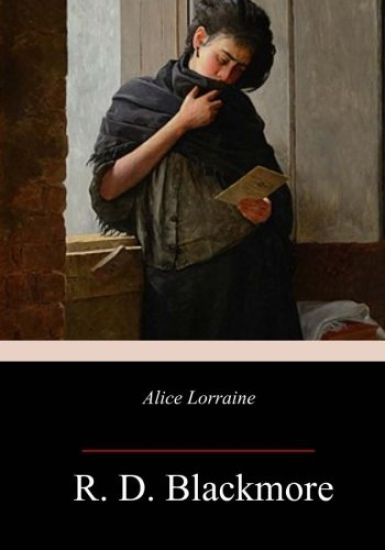
Alice Lorraine: a tale of the South Downs is a sensation novel by R. D. Blackmore, published in 1875. Set in Sussex and Spain during the Napoleonic Wars, the novel recounts the divergent tales of the eponymous heroine and her brother in their efforts to save the noble Lorraine family from ruin. Plot summaryThe story is set in the early years of the 19th century. The hero and heroine, brother and sister, are children of Sir Roland Lorraine, representative of a very ancient family. Hilary, while studying for the bar in London, falls in love with the daughter of a Kentish farmer, the sister of his fellow-pupil. He confesses his folly to his father, who at once buys for him a commission in a regiment of foot on service in Spain. The young man distinguishes himself at Badajos, and is on the high road to fame, when he falls under the spell of a Spanish countess, and forgets for a time his promise to the Kentish girl. Through the countess's treachery he loses 50,000, military funds, with which he is entrusted, and leaves the army. Meantime his sister has been fighting a severe battle at home-defending herself against a plot to make her the wife of a drunken fellow named Chapman. Hilary comes home; Mabel, the Kentish girl, is sent for, and matters are serene with all but Alice on the day appointed for her wedding. When the hour for the ceremony approaches, she walks out and throws herself into the river, is carried a mile, rescued and resuscitated... Richard Doddridge Blackmore (7 June 1825 - 20 January 1900), known as R. D. Blackmore, was one of the most famous English novelists of the second half of the nineteenth century. He won acclaim for vivid descriptions and personification of the countryside, sharing with Thomas Hardy a Western England background and a strong sense of regional setting in his works. Blackmore, often referred to as the "Last Victorian," was a pioneer of the movement in fiction that continued with Robert Louis Stevenson and others. He has been described as "proud, shy, reticent, strong-willed, sweet-tempered, and self-centred." Apart from his novel Lorna Doone, which has enjoyed continuing popularity, his work has gone out of print. BiographyRichard Doddridge Blackmore was born on 7 June 1825 at Longworth in Berkshire (now Oxfordshire), one year after his elder brother Henry (1824-1875), where his father, John Blackmore, was Curate-in-charge of the parish. His mother died a few months after his birth - the victim of an outbreak of typhus which had occurred in the village. After this loss John Blackmore moved to Bushey, Herts, then to his native Devon, first to Kings Nympton, then Culmstock, Tor Mohun and later to Ashford, in the same county. 2] Richard, however, was taken by his aunt, Mary Frances Knight, and after her marriage to the Rev. Richard Gordon, moved with her to Elsfield rectory, near Oxford. His father married again in 1831, whereupon Richard returned to live with him. Having spent much of his childhood in the lush and pastoral "Doone Country" of Exmoor, and along the Badgworthy Water (where there is now a memorial stone in Blackmore's honour), Blackmore came to love the very countryside he immortalised in Lorna Doone.
Lorna Doone: A Romance Of Exmoor
R. D. Blackmore
Createspace Independent Publishing Platform
2018
nidottu
Excerpt from Lorna Doone: A Romance of Exmoor A novel that has stood the test of time so well as Mr. Blackmore's charming story of Lor-na Doone scarcely needs a preface. Certainly no word of introduction is necessary to testify to its exquisite humor, its dramatic force, its under-current of poetic feeling, its fine touches of landscape-painting, and the novelty and interest of its subject. Since it first appeared in 1869 all these have be come as household words, only, perhaps, all the admirers of Lorna Doone have not had the good fortune to wander through the romantic and picturesque region where the scene of the story is laid. To travel in North Devon, and over its border into Somerset (the Summerland, as the 'old Northmen call it), is to be confronted with the scenes of the novel at every turn for Mr. Blackmore has so suc cessfully woven the legends Of the whole countryside into his story that one grows to believe it a veritable history, and is as disappointed to find traces Of the romancer's own hand here and there as to find the hills and valleys laid bare of the forests which adorned them in the time of the Doones. About the Publisher Forgotten Books publishes hundreds of thousands of rare and classic books. Find more at www.forgottenbooks.com This book is a reproduction of an important historical work. Forgotten Books uses state-of-the-art technology to digitally reconstruct the work, preserving the original format whilst repairing imperfections present in the aged copy. In rare cases, an imperfection in the original, such as a blemish or missing page, may be replicated in our edition. We do, however, repair the vast majority of imperfections successfully; any imperfections that remain are intentionally left to preserve the state of such historical works.
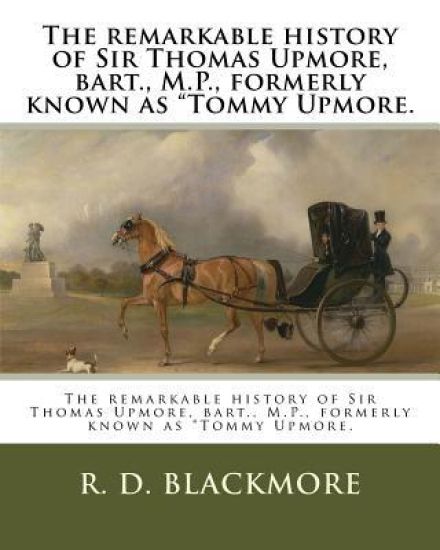
The remarkable history of Sir Thomas Upmore, bart., M.P., formerly known as "Tommy Upmore.
R. D. Blackmore
Createspace Independent Publishing Platform
2018
nidottu
An English novelist, known professionally as R. D. Blackmore, was one of the most famous English novelists of the second half of the nineteenth century. He won acclaim for vivid descriptions and personification of the countryside, sharing with Thomas Hardy a Western England background and a strong sense of regional setting in his works. Best known for his novel, Lorna Doone.
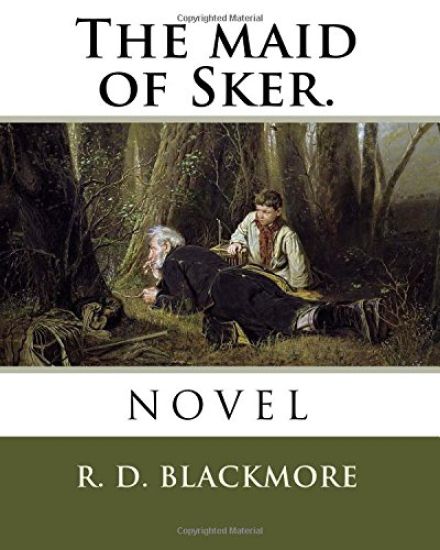
The title of the novel comes from a Welsh ballad known as The Maid of Sker (Welsh: Y Ferch o'r Sger), although the content of the ballad bears little relation to the plot of the novel. Blackmore was also familiar with Sker House near Porthcawl. 3] Blackmore's mother was from Nottage Court near Porthcawl, Glamorgan, and Blackmore spent part of his childhood with his aunt in Nottage. The stark form of Sker House is a central image for Blackmore. 2] Blackmore began writing the novel while he was still a student at Oxford University. He graduated in 1847, but the book was not completed and published until 1872, three years after Lorna Doone An English novelist, known professionally as R. D. Blackmore, was one of the most famous English novelists of the second half of the nineteenth century. He won acclaim for vivid descriptions and personification of the countryside, sharing with Thomas Hardy a Western England background and a strong sense of regional setting in his works. Best known for his novel, Lorna Doone..
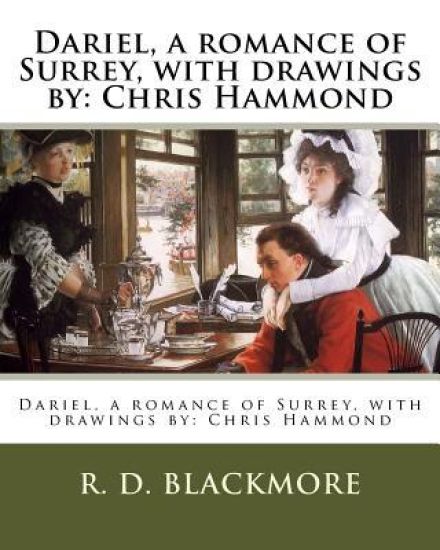
Dariel, a romance of Surrey, with drawings by: Chris Hammond
R. D. Blackmore
Createspace Independent Publishing Platform
2018
nidottu
An English novelist, known professionally as R. D. Blackmore, was one of the most famous English novelists of the second half of the nineteenth century. He won acclaim for vivid descriptions and personification of the countryside, sharing with Thomas Hardy a Western England background and a strong sense of regional setting in his works. Best known for his novel, Lorna Doone.
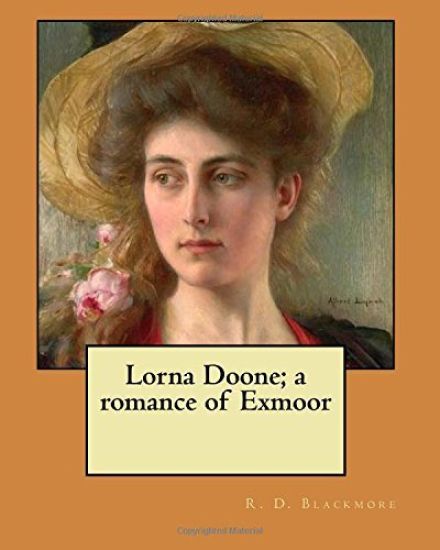
Lorna Doone; a romance of Exmoor
R. D. Blackmore
Createspace Independent Publishing Platform
2018
nidottu
Richard Doddridge Blackmore (7 June 1825 - 20 January 1900), known as R. D. Blackmore, was one of the most famous English novelists of the second half of the nineteenth century. He won acclaim for vivid descriptions and personification of the countryside, sharing with Thomas Hardy a Western England background and a strong sense of regional setting in his works. Blackmore, often referred to as the "Last Victorian", was a pioneer of the movement in fiction that continued with Robert Louis Stevenson and others. He has been described as "proud, shy, reticent, strong-willed, sweet-tempered, and self-centred." Apart from his novel Lorna Doone, which has enjoyed continuing popularity, his work has gone out of print.
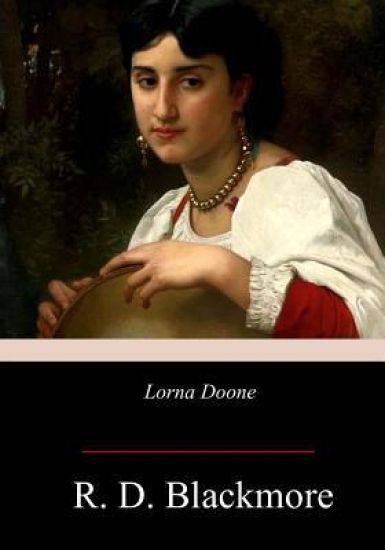
Lorna Doone: A Romance of Exmoor
R. D. Blackmore
Createspace Independent Publishing Platform
2017
nidottu
Lorna Doone: A Romance of Exmoor By R. D. Blackmore
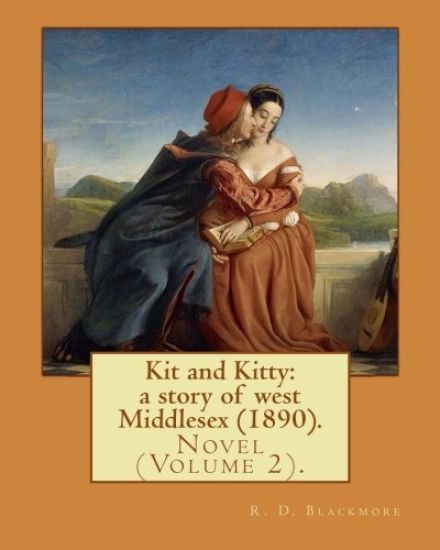
Kit and Kitty: a story of west Middlesex (1890). By: R. D. Blackmore (Volume 2): Kit and Kitty: a story of west Middlesex is a three-
R. D. Blackmore
Createspace Independent Publishing Platform
2017
nidottu
Kit and Kitty: a story of west Middlesex is a three-volume novel by R. D. Blackmore published in 1890. It is set near Sunbury-on-Thames in Middlesex. Plot The novel is set in and around "Uncle Corny's" garden near Sunbury-on-Thames. The story turns on the love of Kit, the market-gardener's nephew, for Kitty, the daughter of a good but foolish scientific man, who has succeeded in making his own and his daughter's life miserable by marrying a second wife. This lady and her son Donovan are the villains of the story, and by their machinations poor Kit and Kitty are separated and made miserable. The course of true love is thwarted both before and after marriage: Kitty, for example, being stolen from her bridegroom during the honeymoon. Poetic justice is amply wreaked in the end on all ill-doers in an accumulation of horrors, including a parricide, a suicide, a leper husband returned to claim his wife, and her collapse from the shock into paralysis and imbecility...... Richard Doddridge Blackmore (7 June 1825 - 20 January 1900), known as R. D. Blackmore, was one of the most famous English novelists of the second half of the nineteenth century. He won acclaim for vivid descriptions and personification of the countryside, sharing with Thomas Hardy a Western England background and a strong sense of regional setting in his works. Blackmore, often referred to as the "Last Victorian", was a pioneer of the movement in fiction that continued with Robert Louis Stevenson and others. He has been described as "proud, shy, reticent, strong-willed, sweet-tempered, and self-centred." Apart from his novel Lorna Doone, which has enjoyed continuing popularity, his work has gone out of print. Biography: Richard Doddridge Blackmore was born on 7 June 1825 at Longworth in Berkshire (now Oxfordshire), one year after his elder brother Henry (1824-1875), where his father, John Blackmore, was Curate-in-charge of the parish. His mother died a few months after his birth - the victim of an outbreak of typhus which had occurred in the village. After this loss John Blackmore moved to Bushey, Herts, then to his native Devon, first to Kings Nympton, then Culmstock, Tor Mohun and later to Ashford, in the same county. Richard, however, was taken by his aunt, Mary Frances Knight, and after her marriage to the Rev. Richard Gordon, moved with her to Elsfield rectory, near Oxford. His father married again in 1831, whereupon Richard returned to live with him. Having spent much of his childhood in the lush and pastoral "Doone Country" of Exmoor, and along the Badgworthy Water (where there is now a memorial stone in Blackmore's honour), Blackmore came to love the very countryside he immortalised in Lorna Doone.............
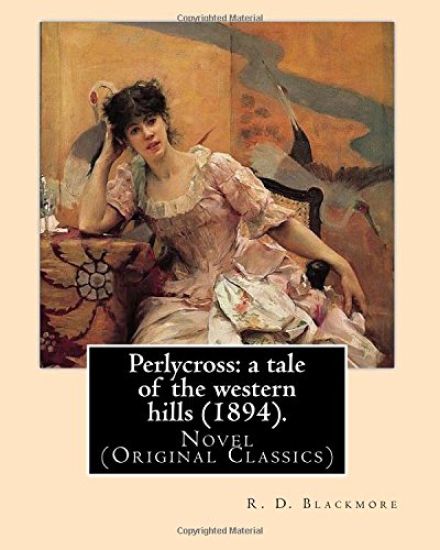
Perlycross: a tale of the western hills (1894). By: R. D. Blackmore (Original Classics).: Perlycross: a tale of the western hills
R. D. Blackmore
Createspace Independent Publishing Platform
2017
nidottu
Perlycross was Blackmore's penultimate novel, published when he was 69 years old. It recalls his childhood years when his father held the post of curate at Culmstock in Devon in 1835. Blackmore portrays his father in the story as the widowed Rev. Penniloe. The villages in the novel, Perlycombe, Perlycross and Perliton, represent the real villages of Hemyock, Culmstock and Uffculme respectively. Perlycross: a tale of the western hills is a three-volume novel by R. D. Blackmore published in 1894. The story is set in eastern Devon around 1830. Plot Sir Thomas Waldron, the squire of Perlycross, is suffering from a terminal disease. The news is kept from him and his family so long as possible, and his death comes as a great shock. Sir Thomas was aware that Dr. Jemmy Fox has fallen in love with his daughter Inez, and expresses to his friend Rev. Philip Penniloe his approval of the match should the girl herself care for the doctor. On the very night of the squire's funeral it is found that the grave has been rifled and the body stolen. The only man with a clue to the mystery is a blacksmith who has been called up late at night by a mysterious party with a cart. He declares, on first telling of this, that he saw Dr. Fox with the cart, and this makes people suspect that Dr. Fox performed the sacrilege for medical purposes. Fox finds himself pointed at and shunned by nearly everybody in the parish of Perlycross. Lady Waldron, who never liked Fox, eagerly adopts the story. He has however, an alibi, as at the time of the occurrence he had been summoned to a distant place where his father was ill. Penniloe and others remain staunch to him, and one or two of the villagers take his side. Fox tries to see Lady Waldron, but she refuses him admittance; he, however, meets Inez, and not only finds that she does not believe the calumny, but that she reciprocates his affections. Time passes, and there is no clue found to the mystery; everybody is worried over it, especially, of course, Lady Waldron and her daughter, Dr. Fox, and Mr. Penniloe. The mystery is only resolved on the return of Sir Thomas's son from abroad, as he proves to be the means of finding the solution........ Richard Doddridge Blackmore (7 June 1825 - 20 January 1900), known as R. D. Blackmore, was one of the most famous English novelists of the second half of the nineteenth century. He won acclaim for vivid descriptions and personification of the countryside, sharing with Thomas Hardy a Western England background and a strong sense of regional setting in his works. Blackmore, often referred to as the "Last Victorian", was a pioneer of the movement in fiction that continued with Robert Louis Stevenson and others. He has been described as "proud, shy, reticent, strong-willed, sweet-tempered, and self-centred." Apart from his novel Lorna Doone, which has enjoyed continuing popularity, his work has gone out of print. Biography: Richard Doddridge Blackmore was born on 7 June 1825 at Longworth in Berkshire (now Oxfordshire), one year after his elder brother Henry (1824-1875), where his father, John Blackmore, was Curate-in-charge of the parish. His mother died a few months after his birth - the victim of an outbreak of typhus which had occurred in the village. After this loss John Blackmore moved to Bushey, Herts, then to his native Devon, first to Kings Nympton, then Culmstock, Tor Mohun and later to Ashford, in the same county. Richard, however, was taken by his aunt, Mary Frances Knight, and after her marriage to the Rev. Richard Gordon, moved with her to Elsfield rectory, near Oxford. His father married again in 1831, whereupon Richard returned to live with him. Having spent much of his childhood in the lush and pastoral "Doone Country" of Exmoor, and along the Badgworthy Water (where there is now a memorial stone in Blackmore's honour), Blackmore came to love the very countryside he immortalised in Lorna Doone. ...........
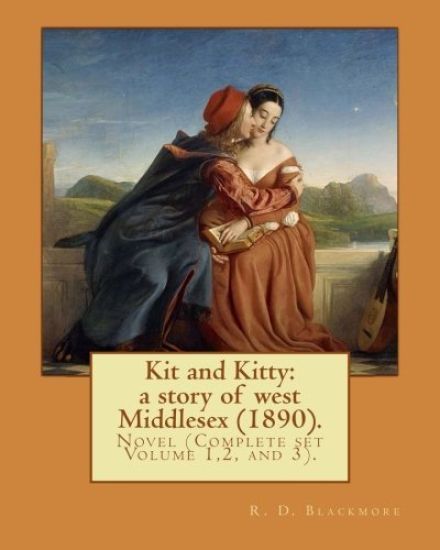
Kit and Kitty: a story of west Middlesex (1890). By: R. D. Blackmore (Complete set Volume 1,2 and 3).: Kit and Kitty: a story of west
R. D. Blackmore
Createspace Independent Publishing Platform
2017
nidottu
Kit and Kitty: a story of west Middlesex is a three-volume novel by R. D. Blackmore published in 1890. It is set near Sunbury-on-Thames in Middlesex. Plot The novel is set in and around "Uncle Corny's" garden near Sunbury-on-Thames. The story turns on the love of Kit, the market-gardener's nephew, for Kitty, the daughter of a good but foolish scientific man, who has succeeded in making his own and his daughter's life miserable by marrying a second wife. This lady and her son Donovan are the villains of the story, and by their machinations poor Kit and Kitty are separated and made miserable. The course of true love is thwarted both before and after marriage: Kitty, for example, being stolen from her bridegroom during the honeymoon. Poetic justice is amply wreaked in the end on all ill-doers in an accumulation of horrors, including a parricide, a suicide, a leper husband returned to claim his wife, and her collapse from the shock into paralysis and imbecility......... Richard Doddridge Blackmore (7 June 1825 - 20 January 1900), known as R. D. Blackmore, was one of the most famous English novelists of the second half of the nineteenth century. He won acclaim for vivid descriptions and personification of the countryside, sharing with Thomas Hardy a Western England background and a strong sense of regional setting in his works. Blackmore, often referred to as the "Last Victorian", was a pioneer of the movement in fiction that continued with Robert Louis Stevenson and others. He has been described as "proud, shy, reticent, strong-willed, sweet-tempered, and self-centred." Apart from his novel Lorna Doone, which has enjoyed continuing popularity, his work has gone out of print. Biography: Richard Doddridge Blackmore was born on 7 June 1825 at Longworth in Berkshire (now Oxfordshire), one year after his elder brother Henry (1824-1875), where his father, John Blackmore, was Curate-in-charge of the parish. His mother died a few months after his birth - the victim of an outbreak of typhus which had occurred in the village. After this loss John Blackmore moved to Bushey, Herts, then to his native Devon, first to Kings Nympton, then Culmstock, Tor Mohun and later to Ashford, in the same county. Richard, however, was taken by his aunt, Mary Frances Knight, and after her marriage to the Rev. Richard Gordon, moved with her to Elsfield rectory, near Oxford. His father married again in 1831, whereupon Richard returned to live with him. Having spent much of his childhood in the lush and pastoral "Doone Country" of Exmoor, and along the Badgworthy Water (where there is now a memorial stone in Blackmore's honour), Blackmore came to love the very countryside he immortalised in Lorna Doone.
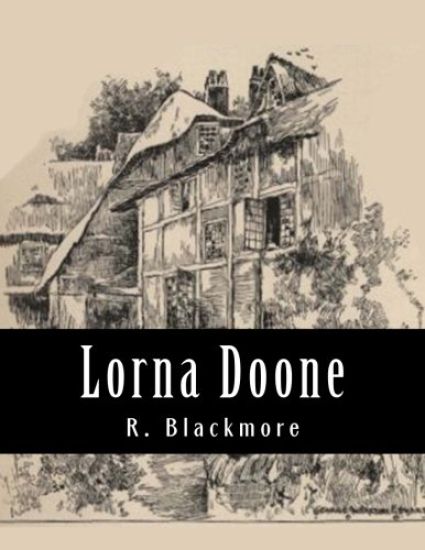

Kit and Kitty: a story of west Middlesex (1890). By: R. D. Blackmore (Volume 3).: Kit and Kitty: a story of west Middlesex is a three
R. D. Blackmore
Createspace Independent Publishing Platform
2017
nidottu
Kit and Kitty: a story of west Middlesex is a three-volume novel by R. D. Blackmore published in 1890. It is set near Sunbury-on-Thames in Middlesex. Plot The novel is set in and around "Uncle Corny's" garden near Sunbury-on-Thames. The story turns on the love of Kit, the market-gardener's nephew, for Kitty, the daughter of a good but foolish scientific man, who has succeeded in making his own and his daughter's life miserable by marrying a second wife. This lady and her son Donovan are the villains of the story, and by their machinations poor Kit and Kitty are separated and made miserable. The course of true love is thwarted both before and after marriage: Kitty, for example, being stolen from her bridegroom during the honeymoon. Poetic justice is amply wreaked in the end on all ill-doers in an accumulation of horrors, including a parricide, a suicide, a leper husband returned to claim his wife, and her collapse from the shock into paralysis and imbecility........ Richard Doddridge Blackmore (7 June 1825 - 20 January 1900), known as R. D. Blackmore, was one of the most famous English novelists of the second half of the nineteenth century. He won acclaim for vivid descriptions and personification of the countryside, sharing with Thomas Hardy a Western England background and a strong sense of regional setting in his works. Blackmore, often referred to as the "Last Victorian", was a pioneer of the movement in fiction that continued with Robert Louis Stevenson and others. He has been described as "proud, shy, reticent, strong-willed, sweet-tempered, and self-centred." Apart from his novel Lorna Doone, which has enjoyed continuing popularity, his work has gone out of print. Biography: Richard Doddridge Blackmore was born on 7 June 1825 at Longworth in Berkshire (now Oxfordshire), one year after his elder brother Henry (1824-1875), where his father, John Blackmore, was Curate-in-charge of the parish. His mother died a few months after his birth - the victim of an outbreak of typhus which had occurred in the village. After this loss John Blackmore moved to Bushey, Herts, then to his native Devon, first to Kings Nympton, then Culmstock, Tor Mohun and later to Ashford, in the same county. Richard, however, was taken by his aunt, Mary Frances Knight, and after her marriage to the Rev. Richard Gordon, moved with her to Elsfield rectory, near Oxford. His father married again in 1831, whereupon Richard returned to live with him. Having spent much of his childhood in the lush and pastoral "Doone Country" of Exmoor, and along the Badgworthy Water (where there is now a memorial stone in Blackmore's honour), Blackmore came to love the very countryside he immortalised in Lorna Doone..............
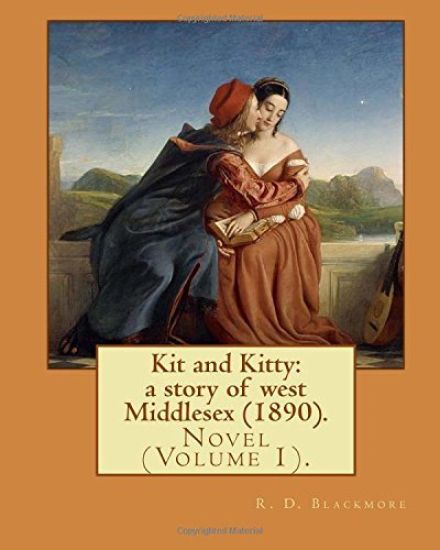
Kit and Kitty: a story of west Middlesex (1890). By: R. D. Blackmore (Volume 1).: Kit and Kitty: a story of west Middlesex is a three
R. D. Blackmore
Createspace Independent Publishing Platform
2017
nidottu
Kit and Kitty: a story of west Middlesex is a three-volume novel by R. D. Blackmore published in 1890. It is set near Sunbury-on-Thames in Middlesex. Plot The novel is set in and around "Uncle Corny's" garden near Sunbury-on-Thames. The story turns on the love of Kit, the market-gardener's nephew, for Kitty, the daughter of a good but foolish scientific man, who has succeeded in making his own and his daughter's life miserable by marrying a second wife. This lady and her son Donovan are the villains of the story, and by their machinations poor Kit and Kitty are separated and made miserable. The course of true love is thwarted both before and after marriage: Kitty, for example, being stolen from her bridegroom during the honeymoon. Poetic justice is amply wreaked in the end on all ill-doers in an accumulation of horrors, including a parricide, a suicide, a leper husband returned to claim his wife, and her collapse from the shock into paralysis and imbecility....... Richard Doddridge Blackmore (7 June 1825 - 20 January 1900), known as R. D. Blackmore, was one of the most famous English novelists of the second half of the nineteenth century. He won acclaim for vivid descriptions and personification of the countryside, sharing with Thomas Hardy a Western England background and a strong sense of regional setting in his works. Blackmore, often referred to as the "Last Victorian", was a pioneer of the movement in fiction that continued with Robert Louis Stevenson and others. He has been described as "proud, shy, reticent, strong-willed, sweet-tempered, and self-centred." Apart from his novel Lorna Doone, which has enjoyed continuing popularity, his work has gone out of print. Biography: Richard Doddridge Blackmore was born on 7 June 1825 at Longworth in Berkshire (now Oxfordshire), one year after his elder brother Henry (1824-1875), where his father, John Blackmore, was Curate-in-charge of the parish. His mother died a few months after his birth - the victim of an outbreak of typhus which had occurred in the village. After this loss John Blackmore moved to Bushey, Herts, then to his native Devon, first to Kings Nympton, then Culmstock, Tor Mohun and later to Ashford, in the same county. Richard, however, was taken by his aunt, Mary Frances Knight, and after her marriage to the Rev. Richard Gordon, moved with her to Elsfield rectory, near Oxford. His father married again in 1831, whereupon Richard returned to live with him. Having spent much of his childhood in the lush and pastoral "Doone Country" of Exmoor, and along the Badgworthy Water (where there is now a memorial stone in Blackmore's honour), Blackmore came to love the very countryside he immortalised in Lorna Doone................
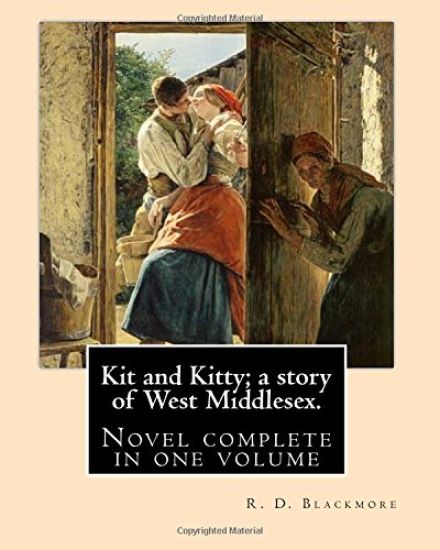
Kit and Kitty; a story of West Middlesex. By: R. D. Blackmore: Kit and Kitty: a story of west Middlesex is a three-volume novel by R. D. Blackmore pub
R. D. Blackmore
Createspace Independent Publishing Platform
2017
nidottu
Kit and Kitty: a story of west Middlesex is a three-volume novel by R. D. Blackmore published in 1890. It is set near Sunbury-on-Thames in Middlesex. Plot The novel is set in and around "Uncle Corny's" garden near Sunbury-on-Thames. The story turns on the love of Kit, the market-gardener's nephew, for Kitty, the daughter of a good but foolish scientific man, who has succeeded in making his own and his daughter's life miserable by marrying a second wife. This lady and her son Donovan are the villains of the story, and by their machinations poor Kit and Kitty are separated and made miserable. The course of true love is thwarted both before and after marriage: Kitty, for example, being stolen from her bridegroom during the honeymoon. Poetic justice is amply wreaked in the end on all ill-doers in an accumulation of horrors, including a parricide, a suicide, a leper husband returned to claim his wife, and her collapse from the shock into paralysis and imbecility........ Richard Doddridge Blackmore (7 June 1825 - 20 January 1900), known as R. D. Blackmore, was one of the most famous English novelists of the second half of the nineteenth century. He won acclaim for vivid descriptions and personification of the countryside, sharing with Thomas Hardy a Western England background and a strong sense of regional setting in his works. Blackmore, often referred to as the "Last Victorian", was a pioneer of the movement in fiction that continued with Robert Louis Stevenson and others. He has been described as "proud, shy, reticent, strong-willed, sweet-tempered, and self-centred." Apart from his novel Lorna Doone, which has enjoyed continuing popularity, his work has gone out of print. Biography: Richard Doddridge Blackmore was born on 7 June 1825 at Longworth in Berkshire (now Oxfordshire), one year after his elder brother Henry (1824-1875), where his father, John Blackmore, was Curate-in-charge of the parish. His mother died a few months after his birth - the victim of an outbreak of typhus which had occurred in the village. After this loss John Blackmore moved to Bushey, Herts, then to his native Devon, first to Kings Nympton, then Culmstock, Tor Mohun and later to Ashford, in the same county. Richard, however, was taken by his aunt, Mary Frances Knight, and after her marriage to the Rev. Richard Gordon, moved with her to Elsfield rectory, near Oxford. His father married again in 1831, whereupon Richard returned to live with him. Having spent much of his childhood in the lush and pastoral "Doone Country" of Exmoor, and along the Badgworthy Water (where there is now a memorial stone in Blackmore's honour), Blackmore came to love the very countryside he immortalised in Lorna Doone............

Erema; or, my father's sin (1877). By: R. D. Blackmore (Complete in one volume): The novel is narrated by a teenage girl called Erema whose father esc
R. D. Blackmore
Createspace Independent Publishing Platform
2017
nidottu
Erema; or, my father's sin is a three-volume novel by R. D. Blackmore published in 1877. The novel is narrated by a teenage girl called Erema whose father escaped from England having been charged with a murder he did not commit. Erema has grown up in exile with her father, and the story begins in California in the 1850s. Plot The novel is narrated by the heroine of the story. Erema is the child of a Captain Castlewood, who had been imprisoned on a charge of murdering his father, an English peer, had made his escape from jail while the enquiry was pending, and spent the rest of his life in a miserable exile. His six children had died of diphtheria while he was in prison, and his wife had quickly followed them, leaving only Erema, a newborn infant, to share her father's exile and disgrace. Hand-in-hand these two have wandered together over the earth, till Erema has become a girl of fifteen, and fate brings the luckless pair to California. Here, in a wild parched region of desert, the father dies, and Erema is left solitary. But at this point of her story she is rescued and taken in hand by an old countryman of her father's, Sampson Gundry, who with his grandson, young Ephraim, works a sawmill in the district. He owns a stretch of country along the banks of the swift Blue River. He made a fortune, not by gold-digging, though the very soil he trod on sparkled with nuggets, but by cutting wood. He takes in the orphan child and rears her as his own. 4] In time Erema picks up the story of her father's life-the accusation of murder that had driven him abroad, but which had never been either proved or contradicted. At last she is determined to devote as much of her own life as shall be found necessary to clearing his memory from all shame and blame. With this purpose she crosses the Atlantic, visits her birthplace, and sets to work to hunt out the mystery. By a series of chances she succeeds in discovering the real murderer, and establishes the fact that her father was not only innocent of the crime, but had acted in silence a hero's part. Moreover, by the death of the reigning Lord Castlewood, her cousin, she comes into the family title and estates. Having completed her self-imposed mission, she sets out on her way back to California and the sawmill; reaches the other side of the Atlantic in time to help in nursing the sick and wounded in the civil war; and among them finds her old friends, Sampson Gundry and his grandson, arrayed on opposite sides in the war. The young peeress concludes her romantic history by becoming the wife of the sawyer's grandson.... Richard Doddridge Blackmore (7 June 1825 - 20 January 1900), known as R. D. Blackmore, was one of the most famous English novelists of the second half of the nineteenth century. He won acclaim for vivid descriptions and personification of the countryside, sharing with Thomas Hardy a Western England background and a strong sense of regional setting in his works. Blackmore, often referred to as the "Last Victorian", was a pioneer of the movement in fiction that continued with Robert Louis Stevenson and others. He has been described as "proud, shy, reticent, strong-willed, sweet-tempered, and self-centred." Apart from his novel Lorna Doone, which has enjoyed continuing popularity, his work has gone out of print..........