Kirjojen hintavertailu – 12 903 725 kirjaa ja 27 kauppaa

Kirjailija

R D Blackmore

Kirjat ja teokset yhdessä paikassa: 227 kirjaa, julkaisuja vuosilta 1993–2026, suosituimpiin kuuluu Christowell: A Dartmoor Tale, in Three Volumes,. Vertaile teosten hintoja ja tarkista saatavuus suomalaisista kirjakaupoista.

Nimi esiintyy myös muodoissa: R. D. Blackmore, R.D. Blackmore

227 kirjaa

Kirjojen julkaisuvuodet: 1993–2026.

Mary Anerley; a Yorkshire tale. By: R. D. Blackmore (Complete in one volume).: Mary Anerley: a Yorkshire tale is a three-volume novel by R. D. Blackmo
Mary Anerley: a Yorkshire tale is a three-volume novel by R. D. Blackmore published in 1880. The novel is set in the rugged landscape of Yorkshire's North Riding and the sea-coast of its East Riding. Plot introduction The story of Mary Anerley opens in the year 1801, at Scargate Hall, "in the wildest and most rugged part of the wild and rough North Riding"; the first chapter being practically a prologue, which sets forth the strangely dramatic death of Squire Philip Yordas just after he had made a will disinheriting his son Duncan. Thus Scargate Hall, when first described to the reader, is the property two sisters, Philippa Yordas and Eliza Carnaby. Mr. Jellicorse, the family lawyer, comes by chance upon evidence of a fatal flaw in the sisters' title to the estate, and rides over to make them acquainted with this unpleasant fact. In the sixth chapter of the book we are introduced to Anerley Farm, a place about a hundred and twenty miles from Scargate Hall, and the home of Mary Anerley. As Mary rides down the hollow of the Dyke on the same morning on which Mr. Jellicorse leaves Scargate Hall, she falls in with a man who is running for his life from other men who are pursuing him and shooting at him. Acting on the impulse of a moment, she shows him a place where he can hide. This man is Robin Lyth, who as a child was found washed ashore in a little cove north of Flamborough Head, and raised by foster parents. He is on the run from Captain Carroway, a coastguard officer. Love blossoms between Mary and Robin Lyth, but many obstacles interfere with true love's course...... Richard Doddridge Blackmore (7 June 1825 - 20 January 1900), known as R. D. Blackmore, was one of the most famous English novelists of the second half of the nineteenth century. He won acclaim for vivid descriptions and personification of the countryside, sharing with Thomas Hardy a Western England background and a strong sense of regional setting in his works. Blackmore, often referred to as the "Last Victorian", was a pioneer of the movement in fiction that continued with Robert Louis Stevenson and others. He has been described as "proud, shy, reticent, strong-willed, sweet-tempered, and self-centred." Apart from his novel Lorna Doone, which has enjoyed continuing popularity, his work has gone out of print. Biography: Richard Doddridge Blackmore was born on 7 June 1825 at Longworth in Berkshire (now Oxfordshire), one year after his elder brother Henry (1824-1875), where his father, John Blackmore, was Curate-in-charge of the parish. His mother died a few months after his birth - the victim of an outbreak of typhus which had occurred in the village. After this loss John Blackmore moved to Bushey, Herts, then to his native Devon, first to Kings Nympton, then Culmstock, Tor Mohun and later to Ashford, in the same county. 2] Richard, however, was taken by his aunt, Mary Frances Knight, and after her marriage to the Rev. Richard Gordon, moved with her to Elsfield rectory, near Oxford. His father married again in 1831, whereupon Richard returned to live with him. Having spent much of his childhood in the lush and pastoral "Doone Country" of Exmoor, and along the Badgworthy Water (where there is now a memorial stone in Blackmore's honour), Blackmore came to love the very countryside he immortalised in Lorna Doone. ......
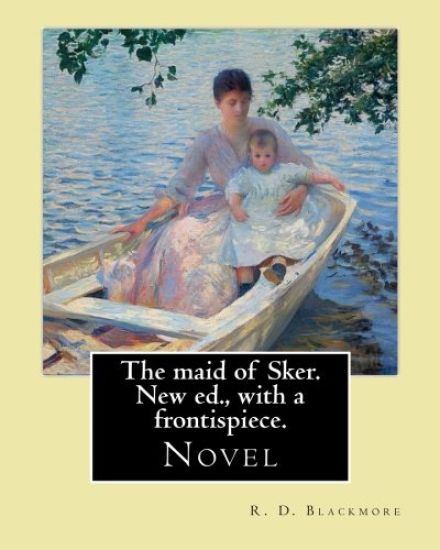
The maid of Sker. New ed., with a frontispiece. By: R. D. Blackmore: Blackmore considered The Maid of Sker to be his best novel.The Maid of Sker is se
Blackmore considered The Maid of Sker to be his best novel. Plot: The Maid of Sker is set at the end of the 18th century, and the story is told by Davy Llewellyn, an old fisherman. The story concerns a two-year-old girl who drifts in a boat onto a beach in Glamorganshire in the calm before a storm. The little girl calls herself Bardie. Llewellyn is tempted to keep the girl, but decides to give her up and keeps the boat for himself. He quarters the pretty child in a simple, but well-to-do, household in his neighbourhood. As she grows up he dotes upon her so far as he can. He watches anxiously over her fortunes, partly or principally because he thinks his own may be bound up with them. It is clear from the refinement of the girl's manners, and from the fineness of her clothes she was washed ashore in, that she is no common child. Davy joins the crew of a ketch trading between Barnstaple and Porthcawl. Whilst in Devon, he encounters several characters who hold the key to solving the mystery of the maid of Sker. These include Sir Philip Bampfylde who spends most of his time looking for his two grandchildren who have mysteriously disappeared; Parson Chowne, a parson of demoniac wickedness and craft who works his will for many years in the north of Devon, defying God, man, and the law; and Captain Drake Bamfylde who is under suspicion of having made away with the children of his elder brother, and heirs to the family property. Old Davy gradually unravels the mystery and sets matters right, although many distractions delay him including an extended period at sea in which Blackmore gives a graphic account of the Battle of the Nile............. Richard Doddridge Blackmore (7 June 1825 - 20 January 1900), known as R. D. Blackmore, was one of the most famous English novelists of the second half of the nineteenth century. He won acclaim for vivid descriptions and personification of the countryside, sharing with Thomas Hardy a Western England background and a strong sense of regional setting in his works. Blackmore, often referred to as the "Last Victorian", was a pioneer of the movement in fiction that continued with Robert Louis Stevenson and others. He has been described as "proud, shy, reticent, strong-willed, sweet-tempered, and self-centred." Apart from his novel Lorna Doone, which has enjoyed continuing popularity, his work has gone out of print. Biography: Richard Doddridge Blackmore was born on 7 June 1825 at Longworth in Berkshire (now Oxfordshire), one year after his elder brother Henry (1824-1875), where his father, John Blackmore, was Curate-in-charge of the parish. His mother died a few months after his birth - the victim of an outbreak of typhus which had occurred in the village. After this loss John Blackmore moved to Bushey, Herts, then to his native Devon, first to Kings Nympton, then Culmstock, Tor Mohun and later to Ashford, in the same county. 2] Richard, however, was taken by his aunt, Mary Frances Knight, and after her marriage to the Rev. Richard Gordon, moved with her to Elsfield rectory, near Oxford. His father married again in 1831, whereupon Richard returned to live with him. Having spent much of his childhood in the lush and pastoral "Doone Country" of Exmoor, and along the Badgworthy Water (where there is now a memorial stone in Blackmore's honour), Blackmore came to love the very countryside he immortalised in Lorna Doone...........
George Bowring: A Tale of Cader Idris

George Bowring: A Tale of Cader Idris

R. D. Blackmore

Createspace Independent Publishing Platform
2015
nidottu
Richard Doddridge Blackmore (1825-1900), referred to most commonly as R. D. Blackmore, was one of the most famous English novelists of his generation. Over the course of his career, Blackmore achieved a close following around the world. He won literary merit and acclaim for his vivid descriptions and personification of the countryside, sharing with Thomas Hardy a Western England background and a strong sense of regional setting in his works. Noted for his eye for and sympathy with nature, critics of the time described this as one of the most striking features of his writings. He acted as pioneer of the new Romantic Movement in fiction. His magnum opus Lorna Doone (1869) enjoyed considerable popularity since it was published. Blackmore's reputation rests chiefly upon this romantic work, in spite of the fact that it was not his favourite. His works also include Mary Anerley (1880) and Slain by the Doones (1895).