

Kirjailija
Rainer Maria Rilke
Kirjat ja teokset yhdessä paikassa: 657 kirjaa, julkaisuja vuosilta 1927–2026, suosituimpiin kuuluu Auguste Rodin. Vertaile teosten hintoja ja tarkista saatavuus suomalaisista kirjakaupoista.
Nimi esiintyy myös muodoissa: Rainer María Rilke
657 kirjaa
Kirjojen julkaisuvuodet: 1927–2026.


Histoires du bon Dieu"", constitue un phare dans le monde du livre, comblant le foss entre le pass et le pr sent. Autrefois consid r parmi les livres anciens, cet ouvrage classique, comme tant de livres anciens et oubli s, a fa onn notre compr hension de la culture et de l'histoire. exemple remarquable de livres d'histoire qui ont influenc des g n rations, et maintenant, gr ce au d vouement d'Alpha Editions, votre diteur de livres de confiance, il rena t dans un format frais et l gant. Nous avons soigneusement retap , remani et am lior ce livre pour qu'il soit bien plus qu'un simple titre lire. Vous pouvez d sormais profiter de pages claires et faciles lire, sans num risation floue ni texte d color . En choisissant cette dition, vous investissez dans plus qu'un livre: vous sauvegardez un h ritage. Votre soutien maintient en vie un morceau remarquable du patrimoine humain, garantissant que ses le ons et ses inspirations continuent de r sonner dans le futur.
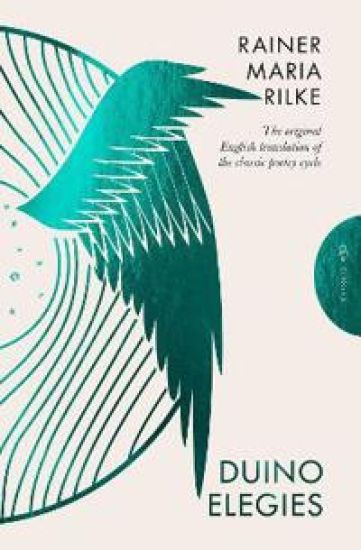
The captivating original English translation of Rilke's landmark poetry cycle, by Vita and Edward Sackville-West In 1931, Virginia and Leonard Woolf's Hogarth Press published a beautiful edition of Rainer Maria Rilke's Duino Elegies, in English translation by the writers Vita and Edward Sackville-West. This marked the English debut of Rilke's masterpiece, which would go on to influence countless poets, musicians and artists across the English-speaking world. Now published for the first time in 90 years, the Sackville-Wests' translation is both a fascinating historical document and a magnificent blank-verse rendering of Rilke's poetry cycle. Featuring a new introduction from critic Lesley Chamberlain, this reissue casts one of European literature's great masterpieces in fresh light. Part of the Pushkin Press Classics series: timeless storytelling by icons of literature, hand-picked from around the globe. Translated by Vita Sackville-West and Edward Sackville-West Rainer Maria Rilke (1875-1926) is considered one of the greatest German-language writers to have ever lived. He is best known for his Duino Elegies, Sonnets to Orpheus, and The Notebooks of Malte Laurids Brigge.
Long hailed as a masterwork of modern German literature, The Book of Hours (1905) marks the origin of Rainer Maria Rilke’s distinctive voice and vision—where clarity of diction meets unexpected imagery, where first-person poetry discovers its full lyric possibility. In these audacious poems, a devout but intimately candid speaker addresses an ultimately unknowable deity. “What will you do, God, when I die?” Rilke’s speaker asks, passing through love, fear, guilt, anger, bewilderment, loneliness, tenderness and exaltation in his search for meaning. In this dual-language edition, Edward Snow, “the most trustworthy and exhilarating of Rilke’s contemporary translators” (Michael Dirda, The Washington Post), makes Rilke’s achievement accessible as never before in English. Snow combines striking fidelity to the German text with an uncanny ability to convey not just its tones and cadences but the captivating psychological presence that animates Rilke’s best poems. Mystical and moving, The Book of Hours retains its power to astonish.


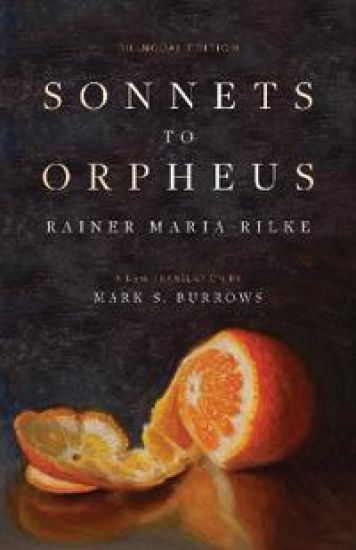
Sonnets to Orpheus
Rainer Maria Rilke
Monkfish Book Publishing Company
2024
pokkari
Halvin toimitettuna 25,00 €
On the centennial of the first appearance (1923) of Rilke's Sonnets to Orpheus, award-winning translator Mark Burrows reveals their depth and meaning with a brilliant new introduction and translation. This new translation captures the lyric beauty of Rilke's poems, honoring their syntactic peculiarities and grammatical complexities as few translators have dared to do. Burrows' versions maintain the essential strangeness of language and abruptness of metaphor by which the sonnets attain their distinctive character in German. Burrows' approach replicates what one reviewer describes as the poems' "dazzling obscurity," refusing to resolve the deliberate difficulties Rilke's formulations present. The effect invites readers to linger with these sonnets, allowing themselves to be shaped in their encounter with them.
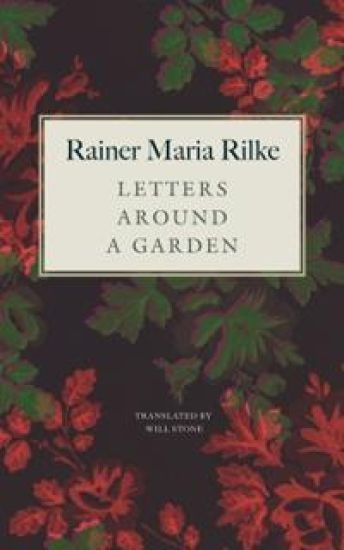
An intimate glimpse into the life and letters of Rainer Maria Rilke, one of the most important poets of the twentieth century. In July 1921, displaced European poet Rainer Maria Rilke sequestered himself in the chateau of Muzot, a thirteenth-century medieval tower perched in the vineyards above the town of Sierre in the Canton Valais, Switzerland. In this sun-flooded landscape of the Rhone Valley, he found beguiling echoes of Spain and his beloved Provence. Here, the Duino Elegies were famously completed and the Sonnets to Orpheus followed. During this time, Rilke’s correspondence also bloomed, and Letters around a Garden collects some of those letters together into English for the first time. One intriguing exchange from 1924 to 1926 was with a young aristocratic Swiss woman Antoinette de Bonstetten, a passionate horticulturist who had been recommended as a potential advisor for the redesign and upkeep of the Muzot rose garden. In twenty-two precious letters originally written in French, Rilke relishes the prospect of their elusive meeting, keenly discusses the plans for his garden, and wittily laments the trials of his plants. Beyond the encomium for Paul Valéry and poignant memory of place are passages of exquisite writing, in which Rilke evokes with trademark sensitivity the delicate relationship between the changing seasons and the natural world of his adopted region. We also witness the loving relationship evolve between these sometime-fugitive correspondents and how questions of solitariness and companionship impinge on one who faces unaccustomed challenges as his health tragically declines.
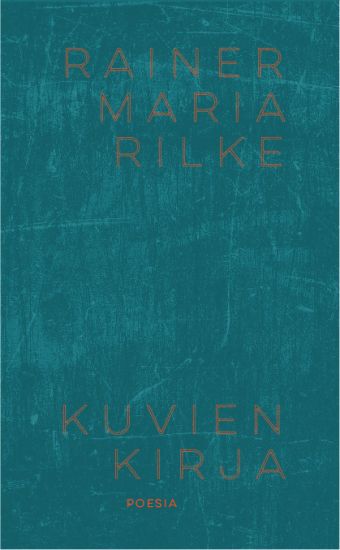
Kuvien kirja
Rainer Maria Rilke; Arja Meski
Osuuskunta Poesia
2024
sidottu
Halvin toimitettuna 29,60 €
Kuvien kirja (Das Buch der Bilder) heijastaa Rainer Maria Rilken kehitystä runoilijana hänen varhaistuotannostaan aina Uusien runojen (Neue Gedichte)ilmestymisen vuoteen 1907 saakka. Hänessä oli herännyt kaipuu nähdä esineiden, luomusten sieluun, ja niin hän kehitti edelleen ajatustaan esineiden muuntamisesta taiteeksi, näkyvän muuntamisesta näkymättömäksi. Vaikka Rilke toteutti esinerunouttaan varsinaisesti vasta Pariisissa, etenkin keskimmäisen luomiskautensa (1902-1910) myöhemmissä teoksissa, esinerunous on silti jo vahvasti läsnä myös Kuvien kirjassa, hänen taiteilijatiensä siirtymäteoksessa. Kuvien kirjan runoissa Rilke kaivautuu maisemakokemuksiin, lapsuusmuistoihin, vanhoihin legendoihin ja kaupunkien näkymättömiin hahmoihin, syrjittyihin. Rilken kuvien ja maisemien hienonhienot muutokset, maan ihmeiden hiukkastason siirtymät, antavat kirjalle kestävää merkitystä. Teos sisältää myös suomentaja Arja Meskin laajan kommentaarin, joka taustoittaa runojen syntyhistoriaa, tulkintatraditiota ja Rilken arkkiteemojen kypsymistä luomiskaudesta toiseen.

In seinen Schweizer Jahren schuf Rilke eine Reihe von Doppelgedichten in deutscher und franzosischer Sprache. Trotz gleicher Motive folgen sie ihrer je eigenen Inspiration. Im vorliegenden Band werden sie erstmals gemeinsam prasentiert und im Nachwort anhand eines Gedichtpaars ausfuhrlich beleuchtet. Zum besseren Vergleich enthalt der Band neue, textnahe Ubersetzungen der franzosischen Gedichte. Durant ses annees en Suisse, Rilke a cree une serie de poemes doubles, rediges a la fois en francais et en allemand. S'ils partagent des themes semblables, ces poemes suivent des inspirations diverses. Ce livre les presente ensemble pour la premiere fois; sur la base d'une paire de poemes, une postface eclaire ces oeuvres de maniere detaillee. Afin de faciliter la comparaison, le volume propose aussi une nouvelle traduction des poemes ecrits en francais, proche du texte original.

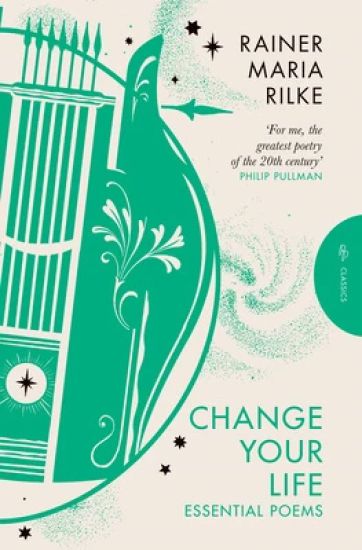
Rainer Maria Rilke developed one of the most singular poetic styles of the twentieth century. Visionary yet always anchored in the real world, his poems give profound expression to fundamental questions of love and death, of the chaos of the modern world as well as the spiritual consolation of art and nature. Change Your Life draws from across Rilke's career to offer a comprehensive view of his most essential poetry, featuring major selections from the great Duino Elegies and Sonnets to Orpheus alongside less frequently anthologised work. In these dazzling new translations by acclaimed poet Martyn Crucefix, Rilke's poems beguile with fresh insight and mystery.
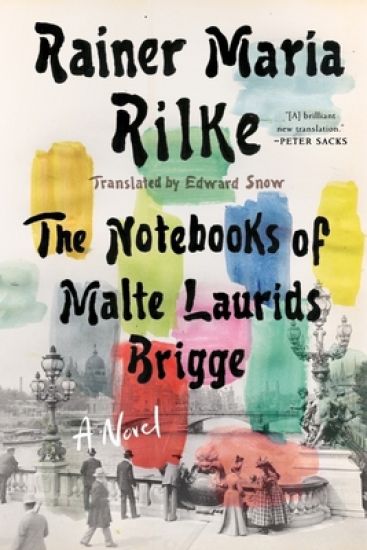
A ground-breaking masterpiece of early European modernism originally published in 1910, The Notebooks of Malte Laurids Brigge unspools the vivid reflections of the titular young Danish nobleman and poet. From his Paris garret, Brigge records his encounters with the city and its outcasts, muses on his family history and lays bare his earliest experiences of fear, tenderness and desolation. With a poet’s feel for language and a keen instinct for storytelling, Rainer Maria Rilke forges a dazzlingly fractured coming-of-age narrative, kaleidoscopic in its alternation of vivid present encounters and equally alive memories of childhood. Strikingly contemporary, The Notebooks of Malte Laurids Brigge reveals a writer metabolising his own experiences to yield still-essential questions about fiction and reality, empathy and psychosis, and—above all—life, love and death. In a fascinating introduction, award-winning translator Edward Snow explores the overlaps between Rilke’s experiences and those of his protagonist, and shows with granular attention the novel’s capacity for nuance and sympathy. Snow’s exquisite translation captures as never before the astonishing cadences and musical clarity of the poet’s prose. It reveals The Notebooks of Malte Laurids Brigge as an urgent contemporary achievement, more than one hundred years after it was written.




Das Leben ist eine Herrlichkeit: Gesammelte Werke
Rainer Maria Rilke
Nikol Verlagsges.mbH
2023
sidottu