Kirjailija
Ralph Waldo Emerson
Kirjat ja teokset yhdessä paikassa: 994 kirjaa, julkaisuja vuosilta 1836–2026, suosituimpiin kuuluu Essays by Ralph Waldo Emerson. Vertaile teosten hintoja ja tarkista saatavuus suomalaisista kirjakaupoista.
Nimi esiintyy myös muodoissa: Ralph Waldo. Emerson
994 kirjaa
Kirjojen julkaisuvuodet: 1836–2026.
Reproduction of the original: May-Day by Ralph Waldo Emerson
Reproduction of the original: Nature by Ralph Waldo Emerson
Reproduction of the original: Representative Men by Ralph Waldo Emerson
Reproduction of the original: May-Day by Ralph Waldo Emerson
Reproduction of the original: Poems by Ralph Waldo Emerson
Reproduction of the original: Representative Men by Ralph Waldo Emerson
Reproduction of the original: Essays by Ralph Waldo Emerson
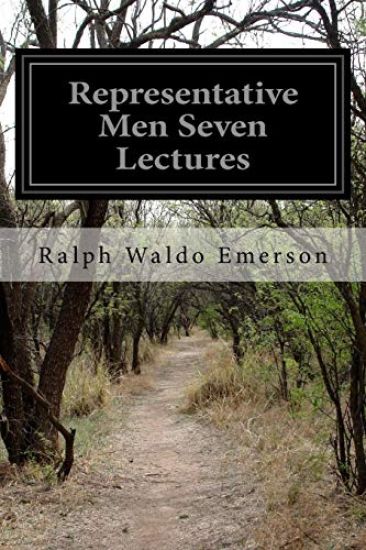
Representative Men Seven Lectures
Ralph Waldo Emerson
Createspace Independent Publishing Platform
2018
nidottu
This collection of literature attempts to compile many of the classic works that have stood the test of time and offer them at a reduced, affordable price, in an attractive volume so that everyone can enjoy them.
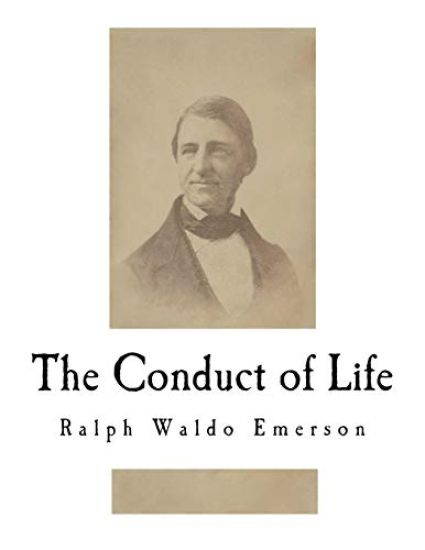
The Conduct of Life is a collection of essays by Ralph Waldo Emerson published in 1860 and revised in 1876. In this volume, Emerson sets out to answer "the question of the times: " "How shall I live?". It is composed of nine essays, each preceded by a poem. These nine essays are largely based on lectures Emerson held throughout the country, including for a young, mercantile audience in the lyceums of the Midwestern boomtowns of the 1850s. The Conduct of Life has been named as both one of Emerson's best works and one of his worst. It was one of Emerson's most successful publications and has been identified as a source of influence for a number of writers, including Friedrich Nietzsche
Friendship: An essay by Ralph Waldo Emerson. Ralph Waldo Emerson (May 25, 1803 - April 27, 1882) was an American essayist, lecturer, philosopher, and poet who led the transcendentalist movement of the mid-19th century. He was seen as a champion of individualism and a prescient critic of the countervailing pressures of society, and he disseminated his thoughts through dozens of published essays and more than 1,500 public lectures across the United States. Emerson gradually moved away from the religious and social beliefs of his contemporaries, formulating and expressing the philosophy of transcendentalism in his 1836 essay "Nature". Following this work, he gave a speech entitled "The American Scholar" in 1837, which Oliver Wendell Holmes Sr. considered to be America's "intellectual Declaration of Independence."
Heroism: An essay by Ralph Waldo Emerson. Ralph Waldo Emerson (May 25, 1803 - April 27, 1882) was an American essayist, lecturer, philosopher, and poet who led the transcendentalist movement of the mid-19th century. He was seen as a champion of individualism and a prescient critic of the countervailing pressures of society, and he disseminated his thoughts through dozens of published essays and more than 1,500 public lectures across the United States. Emerson gradually moved away from the religious and social beliefs of his contemporaries, formulating and expressing the philosophy of transcendentalism in his 1836 essay "Nature". Following this work, he gave a speech entitled "The American Scholar" in 1837, which Oliver Wendell Holmes Sr. considered to be America's "intellectual Declaration of Independence."
Self-Reliance by Ralph Waldo Emerson. "Self-Reliance" is an 1841 essay written by American transcendentalist philosopher and essayist Ralph Waldo Emerson. It contains the most thorough statement of one of Emerson's recurrent themes: the need for each individual to avoid conformity and false consistency, and follow their own instincts and ideas. It is the source of one of Emerson's most famous quotations: "A foolish consistency is the hobgoblin of little minds, adored by little statesmen and philosophers and divines." This essay is an analysis into the nature of the "aboriginal self on which a universal reliance may be grounded." "Man is his own star; and the soul that can Render an honest and a perfect man, Commands all light, all influence, all fate; Nothing to him falls early or too late. Our acts our angels are, or good or ill, Our fatal shadows that walk by us still."
Nature by Ralph Waldo Emerson. "Nature" is an essay written by Ralph Waldo Emerson, and published by James Munroe and Company in 1836. In the essay Emerson put forth the foundation of transcendentalism, a belief system that espouses a non-traditional appreciation of nature. Transcendentalism suggests that the divine, or God, suffuses nature, and suggests that reality can be understood by studying nature. Emerson's visit to the Mus um National d'Histoire Naturelle in Paris inspired a set of lectures he later delivered in Boston which were then published. Philosophically considered, the universe is composed of Nature and the Soul. Strictly speaking, therefore, all that is separate from us, all which Philosophy distinguishes as the NOT ME, that is, both nature and art, all other men and my own body, must be ranked under this name, NATURE. In enumerating the values of nature and casting up their sum, I shall use the word in both senses; - in its common and in its philosophical import. In inquiries so general as our present one, the inaccuracy is not material; no confusion of thought will occur. Nature, in the common sense, refers to essences unchanged by man; space, the air, the river, the leaf. Art is applied to the mixture of his will with the same things, as in a house, a canal, a statue, a picture. But his operations taken together are so insignificant, a little chipping, baking, patching, and washing, that in an impression so grand as that of the world on the human mind, they do not vary the result.
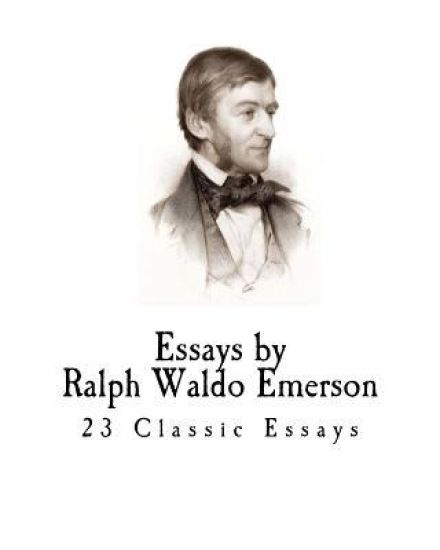
Essays by Ralph Waldo Emerson
Ralph Waldo Emerson

Createspace Independent Publishing Platform
2018
nidottu
The Complete Ralph Waldo Emerson by Ralph Waldo Emerson. 23 Classic Essays. Ralph Waldo Emerson was an American essayist, lecturer, philosopher, and poet who led the transcendentalist movement of the mid-19th century. He was seen as a champion of individualism and a prescient critic of the countervailing pressures of society, and he disseminated his thoughts through dozens of published essays and more than 1,500 public lectures across the United States. Emerson gradually moved away from the religious and social beliefs of his contemporaries, formulating and expressing the philosophy of transcendentalism in his 1836 essay "Nature". Following this work, he gave a speech entitled "The American Scholar" in 1837, which Oliver Wendell Holmes Sr. considered to be America's "intellectual Declaration of Independence."
Representative Men Ralph Waldo Emerson Ralph Waldo Emerson was one of the most influential figures in America during the 19th century. This audiobook, Representative Men, gives an account of how he understood genius, its place in society, its mechanism, and the historical accounts that supported his views. It is fitting that a man of such influence be remembered through his account of greatness in others. In this work, he provides in this work a novel view of the function of history and intelligence. Emerson shows how the great men of history have stood upon the shoulders of those who have prepared the way. He poignantly explores the historical foundation necessary for works of genius to shine out and make a mark upon the times. The full narration of this work is preceded by a lecture-by-lecture summary. The summary also includes a biography of Emerson himself, as well as background information about the work. Also included are an overview, synopsis, and analysis of the text. The summary is concluded by a section which explores the historical context, social impact, and criticisms of Emerson and his work. We are delighted to publish this classic book as part of our extensive Classic Library collection. Many of the books in our collection have been out of print for decades, and therefore have not been accessible to the general public. The aim of our publishing program is to facilitate rapid access to this vast reservoir of literature, and our view is that this is a significant literary work, which deserves to be brought back into print after many decades. The contents of the vast majority of titles in the Classic Library have been scanned from the original works. To ensure a high quality product, each title has been meticulously hand curated by our staff. Our philosophy has been guided by a desire to provide the reader with a book that is as close as possible to ownership of the original work. We hope that you will enjoy this wonderful classic work, and that for you it becomes an enriching experience.