Kirjailija
Ralph Waldo Emerson
Kirjat ja teokset yhdessä paikassa: 994 kirjaa, julkaisuja vuosilta 1836–2026, suosituimpiin kuuluu Essays by Ralph Waldo Emerson. Vertaile teosten hintoja ja tarkista saatavuus suomalaisista kirjakaupoista.
Nimi esiintyy myös muodoissa: Ralph Waldo. Emerson
994 kirjaa
Kirjojen julkaisuvuodet: 1836–2026.
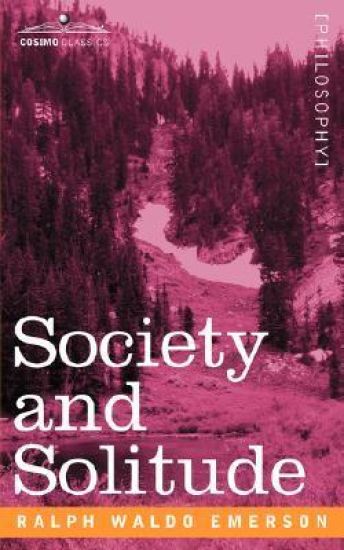
Perhaps no writer has so dramatically shaped the course of American philosophy as Ralph Waldo Emerson, whose meditations on spirituality, freedom, and the power of knowledge have informed and inspired generations of activists, scholars, and Published in 1870, Society and Solitude is Emerson's last great work, a collection of lectures he delivered on tour, in which he found profound insight on such seemingly prosaic topics as Art, Eloquence, Domestic Life, Books, Courage, Success, and "A man builds a fine house; and now he has a master, and a task for life; he is to furnish, watch, show it, and keep it in repair, the rest of his days," says Emerson in his lecture here on "Works and Days." Such penetrating wit and American poet and philosopher RALPH WALDO EMERSON (1803-1882) was a driving force behind the Transcendental Movement of the early 18th century. He studied at Harvard Divinity School; however, after a crisis of faith embraced individualism, rejected aut
Compensation and Self-Reliance
Ralph Waldo Emerson
Cosimo Classics
2005
pokkari
Halvin toimitettuna 24,10 €
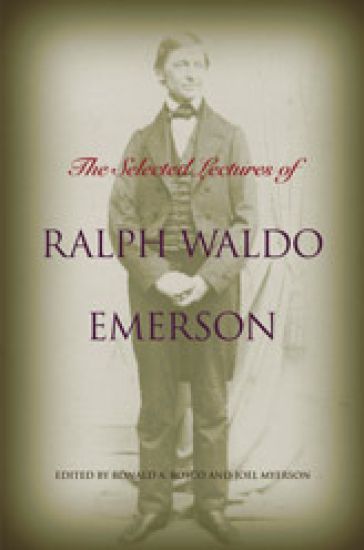
The Selected Lectures of Ralph Waldo Emerson
Ralph Waldo Emerson
University of Georgia Press
2005
pokkari
This is the first and only comprehensive selection of lectures by Ralph Waldo Emerson, his era’s most prominent American man of letters and one of the foremost architects of our intellectual culture. Based on authoritative texts selected and edited by Ronald A. Bosco and Joel Myerson—the most experienced Emerson editors working today—these twenty-five addresses collectively exemplify the lecture style for which Emerson was famed in his day. Best known to his contemporaries as a lecturer, Emerson delivered some 1,500 addresses over the course of his career. Because his most important ideas were worked out in his lectures, they provide the best record we have of his evolving thought—and thus are a key to our understanding of his essays and other printed works. Gathered here are lectures on American culture, literary theory and aesthetics, moral and, as Emerson called it, "intellectual" philosophy, and social and political reform. They are taken from speaking engagements in the United States and the British Isles over the period 1833-1871, during which Emerson often spent four to six months a year on the lecture circuit; lectures from the earliest years of Emerson’s career (1833-1842) have been newly edited for this volume. The volume’s introduction draws on contemporary accounts to describe Emerson’s idiosyncratic but utterly memorable manner of speaking. A headnote provides context to the composition and delivery of each lecture, and footnotes identify Emerson’s allusions to persons, places, occasions, quotations, and books. "By examining his lectures and how they were delivered," say Bosco and Myerson, "we can look into the laboratory of Emerson’s intellectual and compositional process and see his published writings gestating."
Essays and Poems by Ralph Waldo Emerson (Barnes & Noble Classics Series)
Ralph Waldo Emerson
Fine Communications,US
2005
pokkari
Purchase one of 1st World Library's Classic Books and help support our free internet library of downloadable eBooks. Visit us online at www.1stWorldLibrary. ORG - - It chanced during one winter, a few years ago, that our cities were bent on discussing the theory of the Age. By an odd coincidence, four or five noted men were each reading a discourse to the citizens of Boston or New York, on the Spirit of the Times. It so happened that the subject had the same prominence in some remarkable pamphlets and journals issued in London in the same season. To me, however, the question of the times resolved itself into a practical question of the conduct of life. How shall I live? We are incompetent to solve the times. Our geometry cannot span the huge orbits of the prevailing ideas, behold their return, and reconcile their opposition. We can only obey our own polarity. 'Tis fine for us to speculate and elect our course, if we must accept an irresistible dictation.
With suggestions form influential thinkers and authors, IN PRAISE OF BOOKS can help those who are developing a personal library or reading list. Ralph Waldo Emerson contributed an Atlantic Monthly essay to this volume, in which he recommended his favorite writers and texts. He named Homer, Shakespeare, Herodotus, Dante, Spenser, Bacon, Dickens, and Thackeray as among his most cherished authors. Sir John Lubbock also shared his love of books -- "How thankful we ought to be for these inestimable blessings, for this numberless host of friends who never weary, betray, or forsake us!" he wrote -- before recommending the works of Confuciu Also included are quotes about reading and books from Socrates ("Employ your time in improving yourself by other men's writings; so you shall come easily by what others have labored hard for"), Niccolo Machiavelli ("I forget every v
Ralph Waldo Emerson is one of the best-loved figures in nineteenth-century American literature. Though he earned his central place in our culture as an essayist and philosopher, since his death his reputation as a poet has grown as well. Known for challenging traditional thought and for his faith in the individual, Emerson was the chief spokesman for the Transcendentalist movement. His poems speak to his most passionately held belief: that external authority should be disregarded in favor of one's own experience. From the embattled farmers who "fired the shot heard round the world" in the stirring "Concord Hymn," to the flower in "The Rhodora," whose existence demonstrates "that if eyes were made for seeing, / Then Beauty is its own excuse for being," Emerson celebrates the existence of the sublime in the human and in nature. Combining intensity of feeling with his famous idealism, Emerson's poems reveal a moving, more intimate side of the man revered as the Sage of Concord.
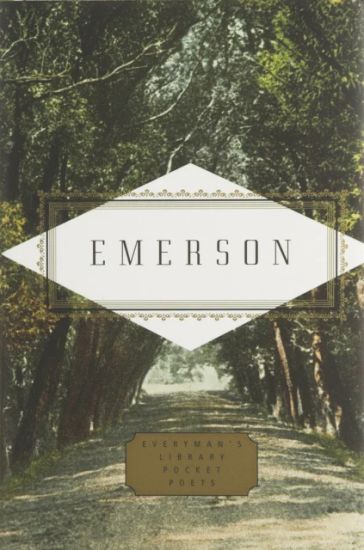
From the embattled farmers who "fired the shot heard round the world" in the stirring "Concord Hymn," to the flower in "The Rhodora," whose existence demonstrates "that if eyes were made for seeing, / Then Beauty is its own excuse for being," Emerson celebrates the existence of the sublime in the human and in nature.
Natural History of Intellect and Other Papers
Ralph Waldo Emerson
KESSINGER PUBLISHING CO
2004
pokkari