Kirjojen hintavertailu – 12 876 058 kirjaa ja 26 kauppaa

Kirjailija

René Chartrand

Kirjat ja teokset yhdessä paikassa: 62 kirjaa, julkaisuja vuosilta 1988–2024, suosituimpiin kuuluu Napoleon's Guns 1792–1815 (1). Vertaile teosten hintoja ja tarkista saatavuus suomalaisista kirjakaupoista.

Nimi esiintyy myös muodoissa: Rene Chartrand

62 kirjaa

Kirjojen julkaisuvuodet: 1988–2024.

The Forts of Colonial North America

The Forts of Colonial North America

René Chartrand

Osprey Publishing
2011
nidottu
This book takes a detailed look at the fortifications of various types that were built from the times of the earliest British settlements in North America in the late 16th century until the end of the Seven Years' War, when France ceded New France to Britain. It begins with a study of the forts built by colonists on Roanoke Island between 1585 and 1590, and the famous settlements in Jamestown (Virginia) from 1607. It moves on to cover the British settlements that followed in New England, Nova Scotia and other points on the North American coast, as well as the Dutch fortified settlements in what are now the states of New York, Connecticut and New Jersey, and the Swedish forts in Delaware between 1638 and 1655.
The Forts of New France

The Forts of New France

René Chartrand

Osprey Publishing
2010
nidottu
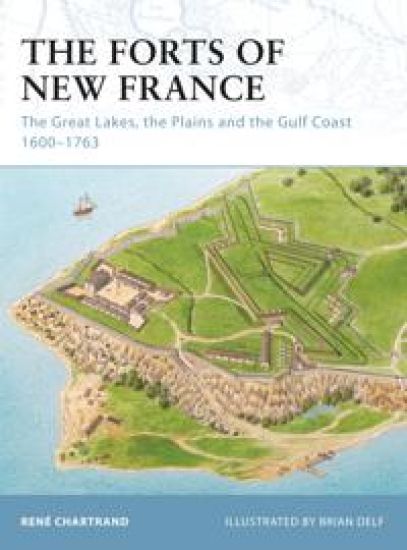
New France consisted of the area colonized and ruled by France in North America from the 16th to the 18th centuries. This title, which follows on from "Fortress 27: French Fortresses in North America 1534-1763: Quebec, Montreal, Louisbourg and New Orleans" and "Fortress 75: The Forts of New France in Northeast America 1600-1763", takes a look at the forts guarding the frontier defenses of New France from the Great Lakes, down the Mississippi River to the Gulf of Mexico. Among the sites examined are forts Crevecoeur (Ilinois), Biloxi (on the Mississippi), St Jean-Baptiste (Louisiana), Natchitoches (Louisiana), de Chartres (on the Mississippi), Conde (Alabama), and Toulouse (Alabama).
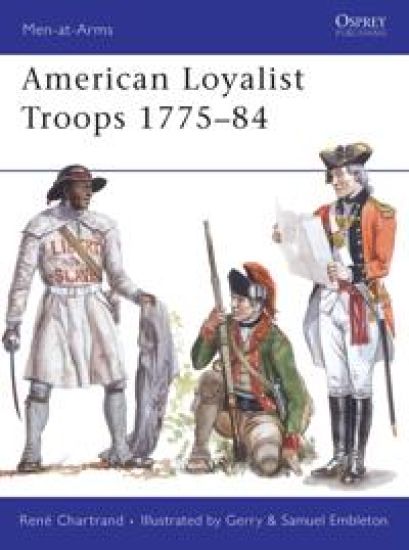
American Loyalist Troops 1775–84

American Loyalist Troops 1775–84

René Chartrand

Osprey Publishing
2008
nidottu
In the American Revolutionary War, there were at times as many American volunteers in the field fighting for King George as against him. In total something between 30,000 and 50,000 of these Tories served in dozens of units, on all fronts from Canada to Florida, and many regiments distinguished themselves in battle. After the final British defeat the survivors and their families withdrew, many into Canada, where they continued to provide a loyal militia to defend the Crown territory. This book will provide up-dated and comprehensive information on unit identities, commanders, strengths, areas of enlistment, combat record, tactics, uniforms and equipment.
The Forts of New France in Northeast America 1600–1763
This book takes a look at the lengthy chain of forts built by the French to guard the frontier in the American northeast, including Sorel, Chambly, St Jean, Carillon (Ticonderoga), Duquesne (Pittsburgh, PA), and Vincennes. These forts were of two types: the major stone forts, and other forts made of wood and earth, all of which varied widely in style from Vauban-type elements to cabins surrounded by a stockade. Some forts, such as Chambly, looked more like medieval castles in their earliest incarnations. René Chartrand examines the different types of forts built by the French, describing the strategic vision that led to their construction, their impact upon the British colonies and the Native American nations of the interior, and the French military technology that went into their construction.
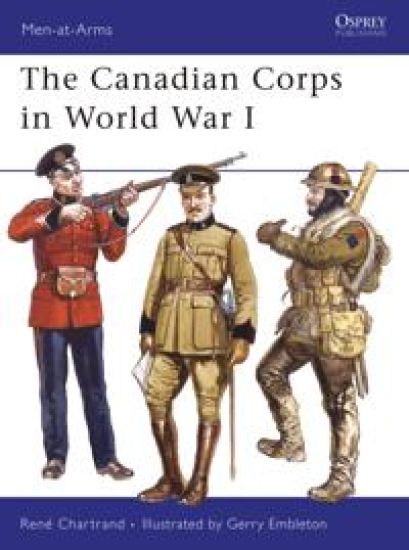
The Canadian Corps in World War I

The Canadian Corps in World War I

René Chartrand

Osprey Publishing
2007
nidottu
This book describes the organization, lists the units and illustrates the uniforms and equipment of the four Canadian divisions which earned an elite reputation on the Western Front in 1915-18. Canada's 600,000 troops-of whom more than 66,000 died and nearly 150,000 were wounded- represented an extraordinary contribution to the British Empire's struggle. On grim battlefields from the Ypres Salient to the Somme, and from their stunning victory at Vimy Ridge to the final triumphant 'Hundred Days' advance of autumn 1918, Canada's soldiers proved themselves to be a remarkable army in their own right, founding a national tradition.
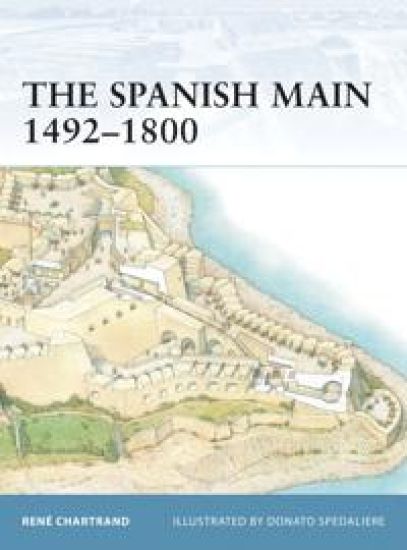
The Spanish Main 1492–1800

The Spanish Main 1492–1800

René Chartrand

Osprey Publishing
2006
nidottu
The Spanish possessions in the West Indies and the Central American and Mexican coast - was the envy of Englishmen, Frenchmen and Dutchmen from the 16th to the 19th centuries. To counter their assaults as well as those of pirates, the Spanish built an outstanding system of fortifications - much of which still stands today. This title will cover the three main periods of development including the first "castles" in Americas based on medieval styles built to protect against marauding adventurers including Sir Francis Drake. Later these forts were adapted to reflect the improved power of artillery. Following the fall of Havana to the British in 1762, the defences of the Spanish Main were revealed as outmoded and a complete reconstruction of them was ordered in the final stage of development as tremendous Vauban-style fortifications were created.
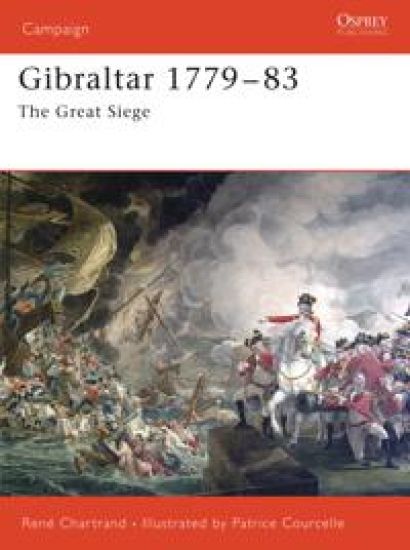
Gibraltar 1779–1783

Gibraltar 1779–1783

René Chartrand

Osprey Publishing
2006
nidottu
A detailed, illustrated account of France and Spain's attempt to capture the Gibraltar peninsula from Britain during the American Revolutionary War. After Spain declared war on Britain on 21 June 1779, Gibraltar was besieged by land and sea for four years. The centrepiece of the siege was the dramatic assault by supposedly invincible battering ships and the author reveals how these floating phenomena were countered by British engineering ingenuity and sheer resolve. In this detailed account of the siege, Rene Chartrand examines the Franco-Spanish and British forces as well as the personalities and plans that would contribute to a vital British victory at a time when British fortunes elsewhere in the world were on the wane.
French Fortresses in North America 1535–1763

French Fortresses in North America 1535–1763

René Chartrand

Osprey Publishing
2005
nidottu
This title provides a detailed examination of the defenses of the three largest fortified cities in Canada - Quebec, Montreal and Louisbourg - and also covers New Orleans in America. Quebec City is the best known and most impressive of the sites covered, and was the strongest of the fortresses of New France: besieged twice by the British (1690 and 1759) and once by the French (1760), it was captured in 1759 by General James Wolfe. Montreal was also strongly fortified and its strategic location ensured its prominence in the fur trade early on. Fortress Louisbourg was built as a large fortified naval station between 1720 and 1743 and saw significant combat action.
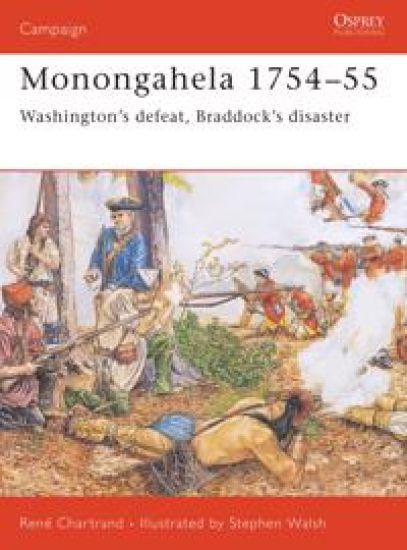
Monongahela 1754–55

Monongahela 1754–55

René Chartrand

Osprey Publishing
2004
nidottu
This book examines the first military encounters of the Seven Years' War. When the French built forts along the Ohio River valley to support their claims to the area, a clash with the British became inevitable, and when in 1753 they refused to evacuate the region, British thoughts turned to eviction. Tensions rose further when a party of French negotiators were killed by Washington, and in retaliation, French troops besieged Washington at Fort Necessity. Despite Washington's eventual release, an uproar ensued, leading to the battle at Monongahela River where the French and Indians ambushed Braddock's army. This book focuses on battle tactics, causes and consequences of these events.
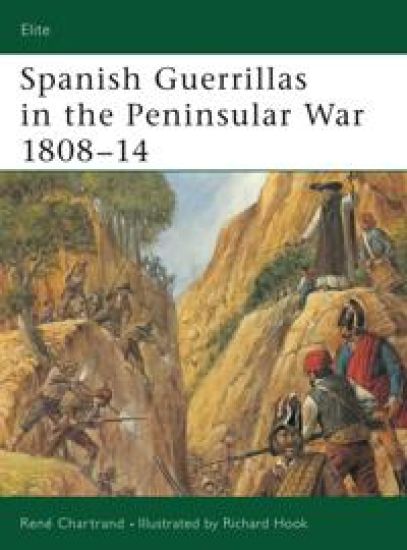
Spanish Guerrillas in the Peninsular War 1808–14
During 1812, Wellington's ability to advance and overcome a numerically superior enemy was due to the constant activity of the Spanish guerrillas that diverted French military resources and attention away from fighting the British. In fact, less than a third of the French force could be tasked with confronting Wellington, the rest being used to counter guerrilla activity, or the threat of it. This book brings to life the formation, tactics and experiences of the Spanish guerrilla forces that fought Napoleon's army. Using much unpublished source material, it forms a vivid description of the events and the people who dictated them.
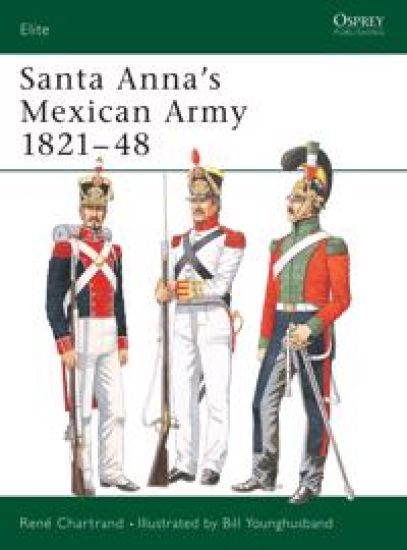
Santa Anna’s Mexican Army 1821–48

Santa Anna’s Mexican Army 1821–48

René Chartrand

Osprey Publishing
2004
nidottu
This book covers the army that fought the Texans at the Alamo and San Jacinto, and was poised to fight the US in the Mexican-American War of 1846-48. It was far from negligible and on the eve of the latter war a correspondent from the London Times judged it superior to the US Army. That it did not prove to be so was perhaps in large due to the failngs of its major commander during this period, the notorious General (later President) Santa Anna, "the Napoleon of the West".
American War of Independence Commanders

American War of Independence Commanders

René Chartrand

Osprey Publishing
2003
nidottu
The American War of Independence was a milestone in American history. When the governor of Massachusetts sent British soldiers to seize arms and ammunition collected by the colonists the local militia resisted. This was to be the start of an eight-year war which was fought, not just by the British and the Americans, but by the Germans, Spanish and French as well. This book details the appearance, careers and personalities of commanders on both sides. It covers such figures as George Washington and Lord Cornwallis along with some equally interesting, but lesser known, figures such as Admiral Solano and Thaddeus Kosciuszko.
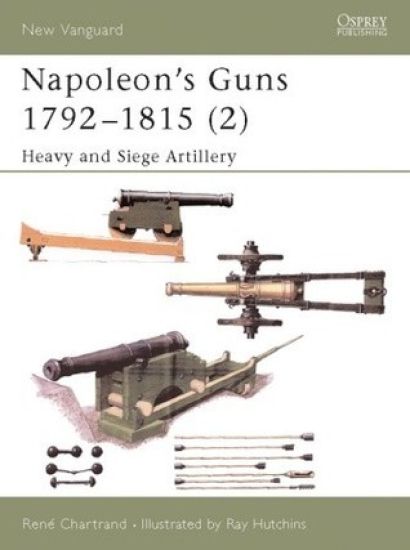
Napoleon's Guns 1792–1815 (2)

Napoleon's Guns 1792–1815 (2)

René Chartrand

Osprey Publishing
2003
nidottu
This volume is the second half of the story of the French artillery during the Revolutionary and Napoleonic Wars. It covers the howitzers, mortars and large siege (16- and 24-pdrs) and garrison (8- and 12-pdrs) guns, placing a special emphasis on their role, technical significance and operational use. The introduction of the Gribeauval system put in place a collection of mortars and large guns that were lighter and more manageable than those previously used, while offering first class hitting power.
Napoleon's Guns 1792–1815 (1)

Napoleon's Guns 1792–1815 (1)

René Chartrand

Osprey Publishing
2003
nidottu
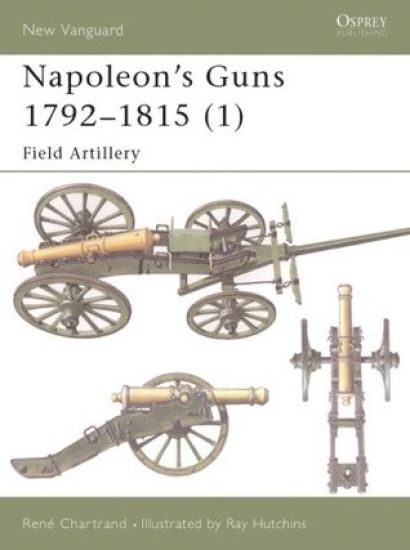
Napoleon, as a young artilleryman, was trained with the Gribeauval system, created to standardise the French field artillery. He remained faithful to this system throughout the Revolutionary and Napoleonic Wars, only introducing a few minor changes. The consistency of the Gribeauval system, along with Napoleon's personal preference for artillery ensured that the French artillery had a strong advantage over their opponents, possessing considerably more guns than any other army. This volume will deal with 4-, 8- and 12-pdr guns, light 1-pdr guns and later innovations such as the 6-pdr gun, which were used with great success by Napoleon in Italy, Germany and Austria.
Colonial American Troops 1610–1774 (3)

Colonial American Troops 1610–1774 (3)

René Chartrand

Osprey Publishing
2003
nidottu
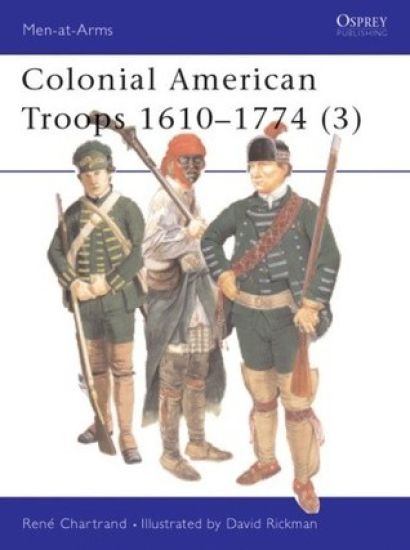
This work concludes the three-part mini-series that describes the history of the local forces raised in the 13 original colonies of eastern North America. From the earliest English settlements the survival of the infant colonies depended upon these militias and they included conventional line regiments, provincial units, militias, and the legendary Rangers. They fought in many frontier campaigns against the Indians, French and Spanish, including: King Philip's War (1675-78); Queen Anne's War (1702-13); the Tuscarora War (1711-12); the Yamassee War (1715-28); King George's War (1740-48); the climactic French/Indian War (1754-63); and Pontiac's Rebellion which followed final victory over the French.
Colonial American Troops 1610–1774 (2)

Colonial American Troops 1610–1774 (2)

René Chartrand

Osprey Publishing
2002
nidottu
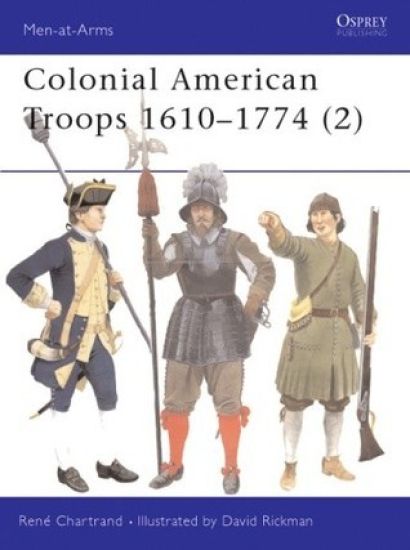
This book describes the dramatic and colourful history of the provincial units which were raised in the 13 original American colonies. They were raised to protect themselves from the Indians as well as to fight alongside British regular troops during the climatic French/Indian War of 1754-1763 and against Pontiac's Rebellion which followed final victory over the French. Units raised include the Virginia Regiment (in which George Washington served), and the 'Ranger Companies' of forest guerrillas such as that led by the legendary Robert Rogers. These units were the seeds from which grew the future American army of the Revolutionary War.
Colonial American Troops 1610–1774 (1)

Colonial American Troops 1610–1774 (1)

René Chartrand

Osprey Publishing
2002
nidottu
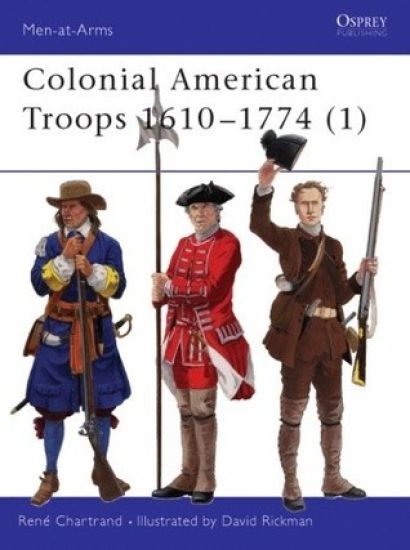
This volume tells the story of how, almost from the first arrival of French and English colonists in eastern North America in the 16th century, the settlers were forced to raise militias to protect themselves from the Indians. French and English soon made alliances with different tribes and fought alongside them against their Native American and European enemies during a long series of frontier wars. In the absence of more than tiny forces of European troops it was the colonists themselves who had to bear the brunt of the periodic fighting. Remote forts were planted on the vital waterways and along the advancing frontiers and these were often the objectives of long, dangerous expeditions through the wilderness.
Fuentes de Oñoro 1811

Fuentes de Oñoro 1811

René Chartrand

Osprey Publishing
2002
nidottu
In 1811, the French again took the offensive in the peninsula. Soult moved to Badajoz and Massena advanced to relieve Almeida which Wellington had invested. At Fuentes de Onoro Massena and Wellington's armies clashed in a hard-fought contest. The attacks of the French cavalry were thwarted by the stalwart resistance of the British infantry in square. Wellington lost 1800 men, Massna 2700 but the French failed to break Wellington's siege of Almeida and were forced to withdraw. Massena was relieved of his command in disgrace to be relieved by Marshal Marmont. This book features the full story of the construction of the lines of Torres Vedras, the most massive undertakings of military engineering in the whole of the Napoleonic wars.
Canadian Forces in World War II

Canadian Forces in World War II

René Chartrand

Osprey Publishing
2001
nidottu
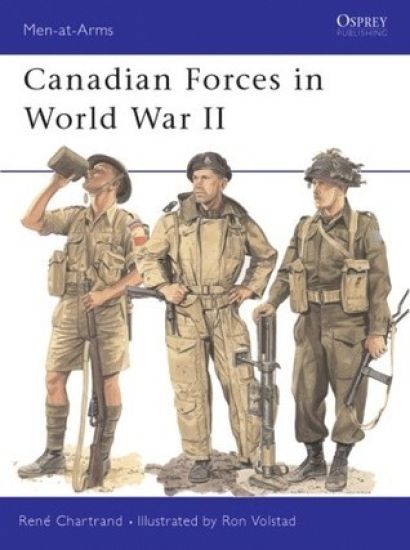
Canada was the first Commonwealth ally to come to Britain's aid in 1940, and until final victory Canadian troops fought alongside the British and later the US armies. The Canadian divisions earned a high reputation on the battlefields of Italy, Normandy and North-West Europe, and others fought in the Far East. This is an illustrated study of their uniforms, weapons and equipment, with many battlefield photographs, and eight colour plates by famous Canadian military illustrator Ron Volstad. Navy, Airforce, tank crews and paratroopers are all discussed in detail.
Bussaco 1810

Bussaco 1810

René Chartrand

Osprey Publishing
2001
nidottu
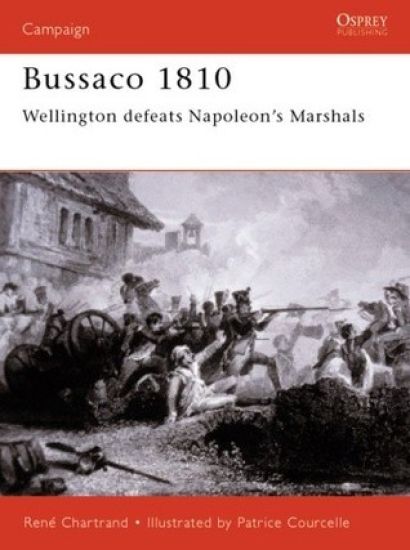
By 1810 Viscount Wellington had been forced onto the defensive. Napoleon was not about to give up and ordered a third massive invasion of Portugal. Wellington was now faced by 80,000 men of the Army of Portugal under Marshal Massena. At Bussaco on 27 September the British/Portuguese force offered battle. They had taken up a strong defensive position on high ground. Massena was perhaps too confident; the determined attacks of the French were all repulsed with the loss of 4500 French casualties against less than 1300 for the Anglo-Portuguese. This title shows how Bussaco was both a stinging defeat for the French army, and a demonstration of the courage and quality of the newly reorganized Portuguese army. It includes coverage of the construction of the defence lines around Lisbon - a masterpiece of military engineering.