Kirjojen hintavertailu – 12 876 058 kirjaa ja 26 kauppaa

Kirjailija

René Chartrand

Kirjat ja teokset yhdessä paikassa: 62 kirjaa, julkaisuja vuosilta 1988–2024, suosituimpiin kuuluu Napoleon's Guns 1792–1815 (1). Vertaile teosten hintoja ja tarkista saatavuus suomalaisista kirjakaupoista.

Nimi esiintyy myös muodoissa: Rene Chartrand

62 kirjaa

Kirjojen julkaisuvuodet: 1988–2024.

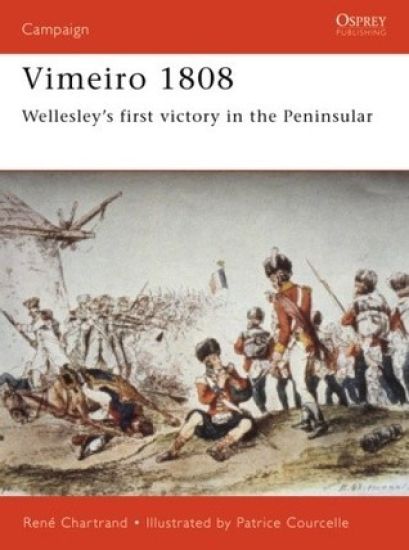
Vimeiro 1808

Vimeiro 1808

René Chartrand

Osprey Publishing
2001
nidottu
In August 1808, a 14,000-man British army landed at Figura da Fozin Portugal under the future Wellington, Sir Arthur Wellesley. General Andoche Junot had 25,000 French troops in Portugal but these were scattered trying to contain the Portuguese. A 6,000-strong French force under General de Laborde was sent against the British. Wellesley outmanoeuvred his opponent and, at Rolica on 17 August, defeated the French. The suprized French mustered a further 13,000 men and hoped to defeat the British quickly as more troops were arriving from England. Junot met Wellesley (16,000 British, 2,000 Portuguese) at Vimeiro on 21 August.
The Portuguese Army of the Napoleonic Wars (3)

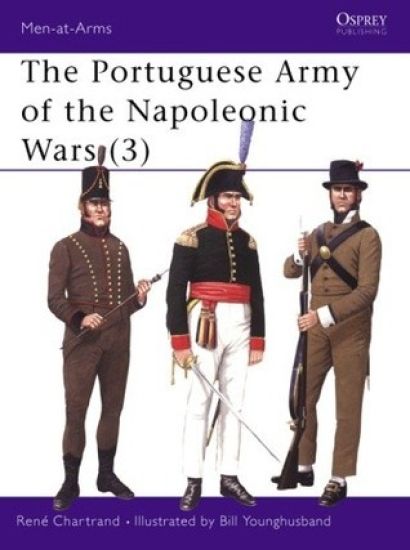
The Portuguese Army of the Napoleonic Wars (3)

René Chartrand

Osprey Publishing
2001
nidottu
Rene Chartrand examines the background to the ancient alliances of Britain and Portugal in this, the concluding volume of a three part Men-at-Arms mini-series. He investigates the formative events of the War of the Oranges, the army reforms of 1806, and the French invasion of Portugal in 1807 that resulted in massive aid and equipment being given to the Portuguese by the British. 'The Portuguese Army of the Napoleonic Wars 'concludes with a detailed description of the service, battle record and uniform of each regular regiment in the Pennisular War from 1808 to 1814.
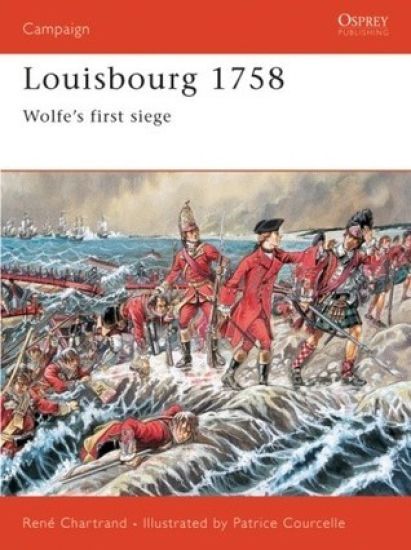
Louisbourg 1758

Louisbourg 1758

René Chartrand

Osprey Publishing
2000
nidottu
Featuring information from a previously unpublished journal, an illustrated account of this strategically important battle in Canada. Louisbourg represented a major threat to Anglo-American plans to invade Canada. Bypassing it would leave an immensely powerful enemy base astride the Anglo-American lines of communication – Louisbourg had to be taken. Faced with strong beach defences and rough weather, it took six days to land the troops, and it was only due to a stroke of daring on the part of a young brigadier named James Wolfe, who managed to turn the French beach position, that this was achieved. The story is largely based on firsthand accounts from the journals of several participants, including French Governor Drucour's, whose excellent account has never been published.
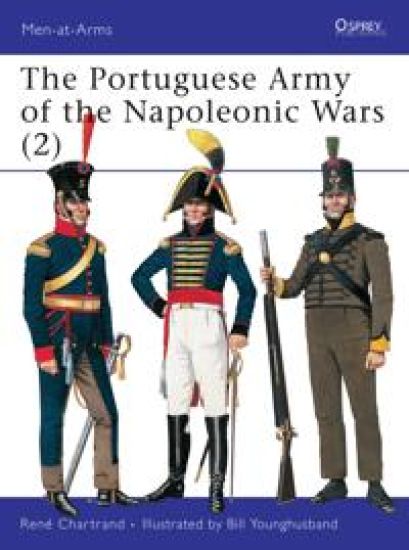
The Portuguese Army of the Napoleonic Wars (2)

The Portuguese Army of the Napoleonic Wars (2)

René Chartrand

Osprey Publishing
2000
nidottu
The second instalment in a remarkable three-part study that transformed the research material available to the English-speaking student of the Peninsular War. Most know that Wellington's Portuguese troops were praised as the 'fighting cocks' of his army; fewer appreciate that they represented between half and one-third of his entire forces. René Chartrand's primary research in Portuguese and British archives now offers a wealth of important new material on the uniforms of these troops. This second volume covers the light infantry, cavalry, specialist corps and several supporting military and civilian departments
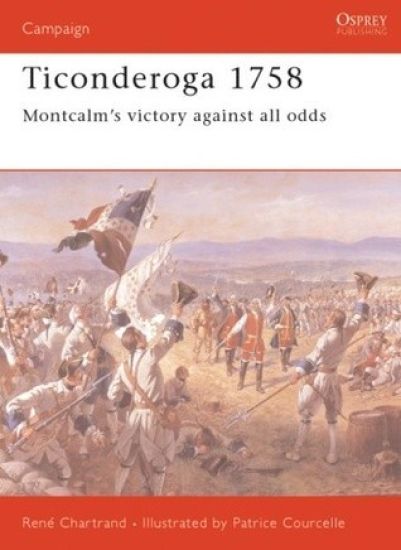
Ticonderoga 1758

Ticonderoga 1758

René Chartrand

Osprey Publishing
2000
nidottu
A detailed, illustrated account of France's unexpectedly won battle at Ticonderoga. On 5 July 1758 General Abercromby's expedition against Fort Carillon set off from its camp. Within hours, tragedy struck. Some rangers ran into a French scouting party and in the fierce skirmish that followed Lord Howe, the darling of the army, was shot through the heart. The army was shattered at the loss, but Abercromby went to pieces. He decided to attack Montcalm's completed breastworks head-on. Battalion after battalion was sacrificed, the most famous of these hopeless assaults being that of the Black Watch. With the failure of his plan and the exhaustion of his army Abercromby retreated to the foot of Lake George – Montcalm had saved Canada, with Abercromby's help. René Chartrand describes the skirmish as it unfolded, including profiles of the commanders and key aspects of their plans.
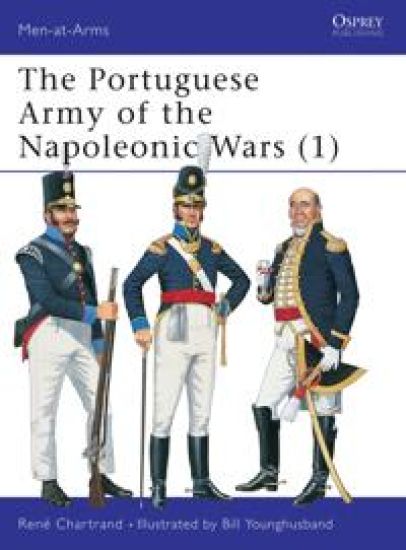
The Portuguese Army of the Napoleonic Wars (1)

The Portuguese Army of the Napoleonic Wars (1)

René Chartrand

Osprey Publishing
2000
nidottu
Osprey are confident in boasting that this remarkable three-part study will transform the research material available to the English-speaking student of the Peninsular War. Most know that Wellington's Portuguese troops were praised as the 'fighting cocks' of his army; fewer appreciate that they represented between half and one-third of his entire forces. Similarly, most uniform historians have been limited to a few half-understood paintings by Dighton, and brief notes from secondary sources. René Chartrand's recent primary research in Portuguese and British archives now offers a wealth of important new material. An excellent book groundbreaking in its originality.
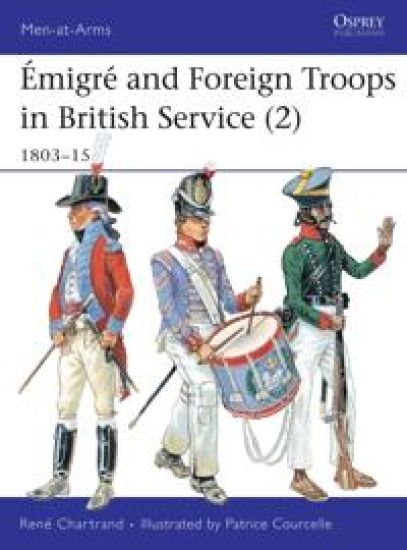
Émigré and Foreign Troops in British Service (2)
Following his study of the astonishing range of French Royalist and foreign mercenary units employed by Britain in the period 1793–1802 (Men-at-Arms 328), the author describes often for the first time in an English language publication the part played by their successors during the crucial years of the Napoleonic Wars. He covers not only relatively well-recorded units, such as Roll's, Meuron's and Watteville's Swiss corps, but also the unjustly neglected Italians, Corsicans and Greeks, and such exotica as the African and Ceylon regiments. Uniform details of nearly 40 corps are based on impressive primary research, and this book and its companion volume make a genuinely new contribution to Napoleonic studies.
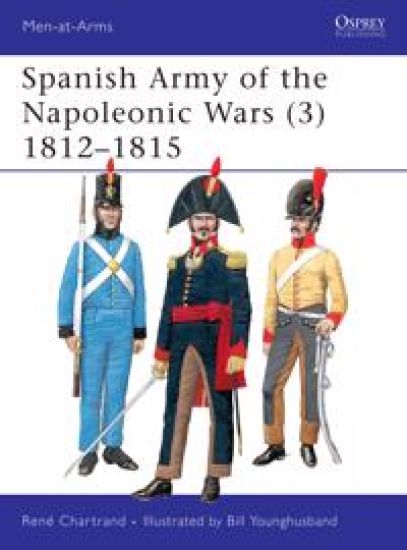
Spanish Army of the Napoleonic Wars (3)

Spanish Army of the Napoleonic Wars (3)

René Chartrand

Osprey Publishing
1999
nidottu
This volume – covering the final years of the Peninsular War and the long trek over the Pyrenees into France – concludes the author's remarkable in-depth study of the army that fought alongside Wellington's redcoats throughout the Peninsular War. Prior to 1813 it was the Spanish armies that bore the brunt of the fighting and this text – based on primary research in Spanish and British archives which will be new to most readers – fills a large and long-standing gap in our knowledge of those Napoleonic campaigns which have always fascinated English-speaking students of the period.
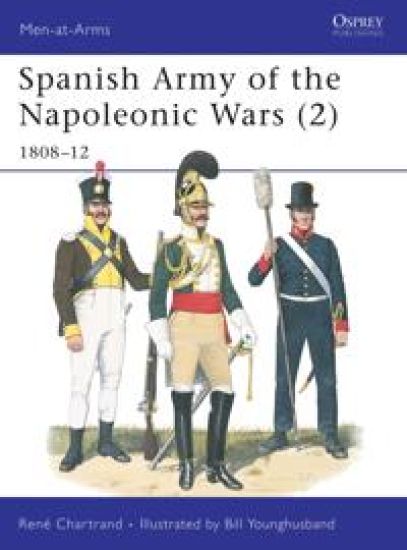
Spanish Army of the Napoleonic Wars (2)

Spanish Army of the Napoleonic Wars (2)

René Chartrand

Osprey Publishing
1999
nidottu
The French 'invasion by stealth' of her uneasy ally Spain, and the final proclamation of Napoleon's brother Joseph as king, led to the spontaneous outbreak of a war of resistance in May 1808 that would rage for six years. Despite Napoleon's clear advantage, the Spanish Army was never completely destroyed, their stubborn resistance typified by epic sieges at Zaragoza and Gerona and nationwide guerrilla warfare. The second of three volumes, this book examines the history, uniforms and equipment of the Spanish Army who, with the help of guerrillas and 'armed peasantry', stood up to Napoleon's Grand Army against all odds.
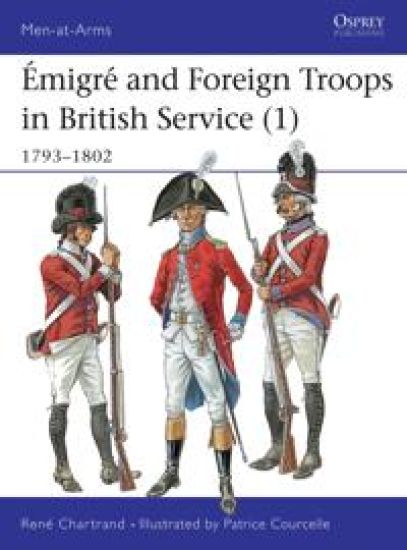
Émigré and Foreign Troops in British Service (1)
Following the French Revolution in 1789, members of the aristocracy were increasingly persecuted, and many of them fled abroad. These exiles became known collectively as 'émigrés', and despite initial confusions and indecision, many of them were taken into British service. This fine text by René Chartrand examines the organisation, uniforms and insignia of the Émigré troops in British service from 1793 to 1802, accompanied by plenty of illustrations including eight full page colour plates by Patrice Courcelle.
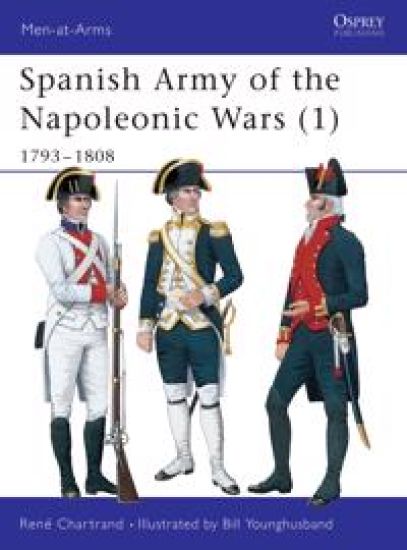
Spanish Army of the Napoleonic Wars (1)

Spanish Army of the Napoleonic Wars (1)

René Chartrand

Osprey Publishing
1998
nidottu
The Spanish Army was transformed during the 18th century by an influx of progressive officers who modernised and expanded it. It was closely modelled on the French armies of Louis XIV and Louis XV in tactical doctrine, organisation, armament and uniforms. In battle, they were often brave to the point of carelessness, and were thus sometimes difficult to control. The army also had several Swiss and Walloon regiments, less given to all-out attacks, but renowned for their steadiness under fire. In this first of three volumes, Réne Chartrand examines the organisation and uniforms of the Spanish Army of the Napoleonic Wars.
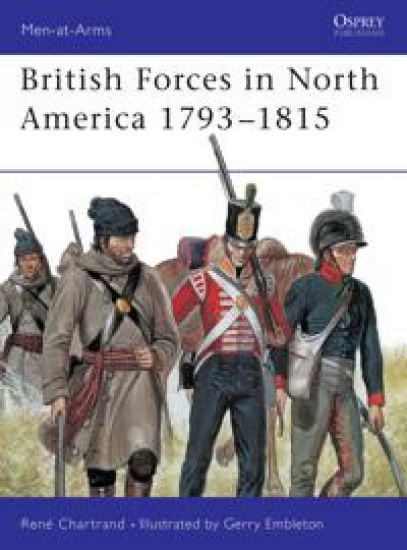
British Forces in North America 1793–1815

British Forces in North America 1793–1815

René Chartrand

Osprey Publishing
1998
nidottu
This volume details the uniforms, organisation and equipment of all the Canadian and British units that defended British North America during the tense years in the run up to war with the United States. The colourful Fencible and Provincial Regiments are featured along with the Glengarry Light Infantry and Canadian Voltigeurs.
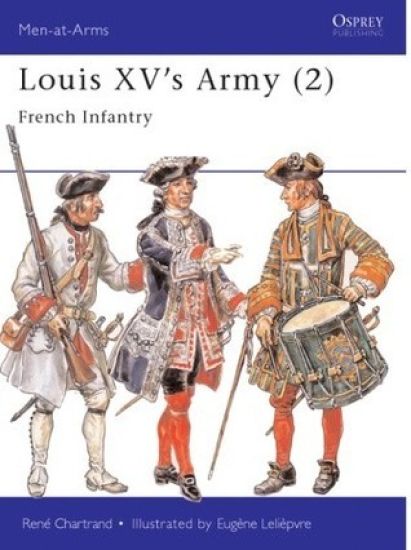
Louis XV's Army (2)

Louis XV's Army (2)

René Chartrand

Osprey Publishing
1997
nidottu
In Louis XV's army the classification of 'French' infantry denoted troops recruited from men born and raised in France. These regiments were called, naturally enough, infanterie francaise as opposed to the mercenary 'foreign' infantry recruited elsewhere. Making up the bulk of the army, all officers and men were to be of the Roman Catholic faith, the official state religion. Regimental recruiting parties went to towns and villages looking for likely young volunteers, inducing them to enlist with the usual promises – quick money, fast women, good wines and great glory.
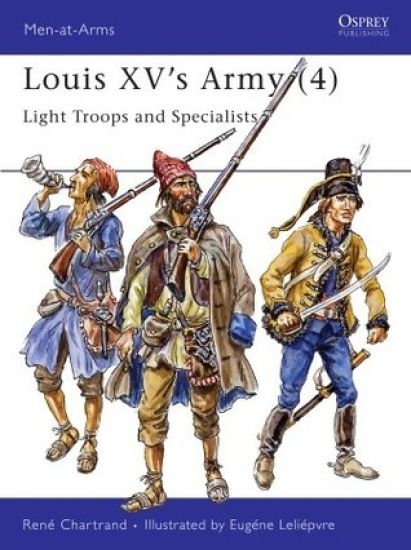
Louis XV's Army (4)

Louis XV's Army (4)

René Chartrand

Osprey Publishing
1997
nidottu
The emergence of light troops at the time of Louis XV's reign is a sign of the search for better intelligence of the enemy and rapid tactical moves on battlefields. This fourth instalment of René Chartrand's review of Louis XV's army reveals an extraordinary variety of units, most now long forgotten, who had a dazzling assortment of uniforms, equipment and weapons, as is revealed by this interesting text and its numerous accompanying illustrations, which include eight full page colour plates by Eugène Lelièpvre.
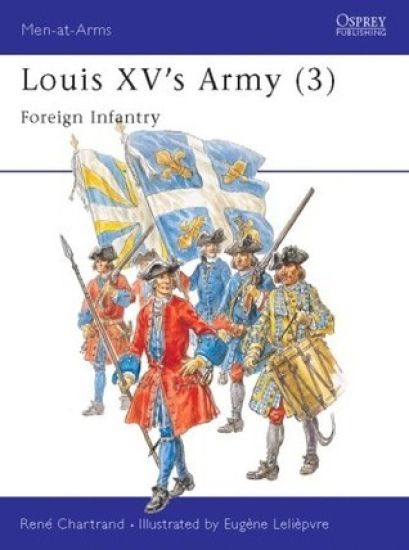
Louis XV's Army (3)

Louis XV's Army (3)

René Chartrand

Osprey Publishing
1997
nidottu
On account of long-standing tradition as well as sheer numbers, the importance of foreign regiments in the French army had become considerable by the time of Louis XV. Since the Middle Ages, the rulers of France had called upon mercenaries from various neighbouring nations to form units which were often among the finest in the army. In this third of five volumes covering the army of Louis XV [Men-at-Arms 296, 302, 304, 308 & 313], René Chartrand examines the organisation and uniforms of the foreign infantry and artillery troops in a text containing a wealth of illustrations including eight full page colour plates by Eugène Lelièpvre.
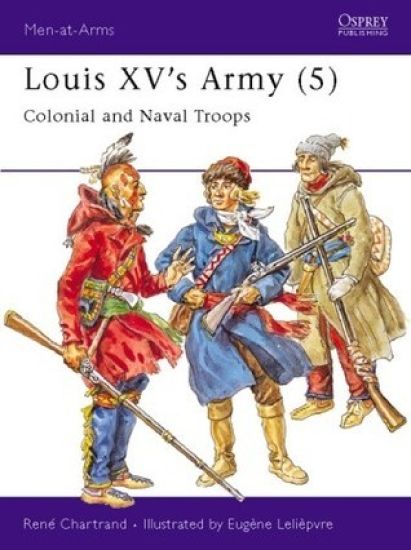
Louis XV's Army (5)

Louis XV's Army (5)

René Chartrand

Osprey Publishing
1997
nidottu
In 1715 France had a sizeable overseas empire in America, Africa and Asia, its colonies garrisoned by thousands of regular officers and soldiers who belonged to the Navy's colonial establishment or by the French East India Company's troops. Though these troops are not usually covered in histories of the French forces, since the end of the 17th century, they saw considerable action against the enemy overseas. This last volume in a series of five (Men-at-Arms 296, 302, 304, 308 and 313) details the uniforms, arms and accoutrements of Louis XV's colonial and naval troops. The text is accompanied by numerous photographs and illustrations, including eight full colour plates.
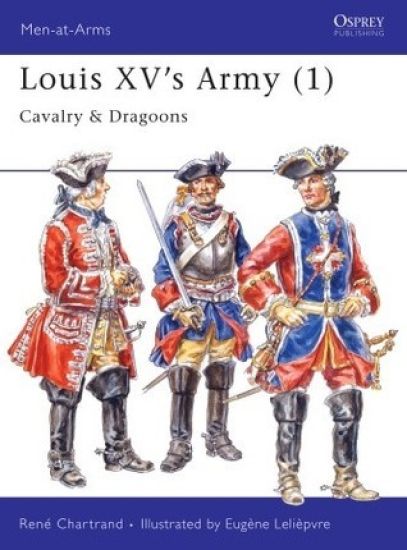
Louis XV's Army (1)

Louis XV's Army (1)

René Chartrand

Osprey Publishing
1996
nidottu
France had a population of between 22 and 25 million at this time, and maintained the largest standing army in Europe. In peacetime it might have amounted to about 200,000 men; in times of war, it could be anything up to half a million. A substantial part of Louis XV's army consisted of numerous regiments of guard cavalry, heavy cavalry and dragoon regiments, which were considered the best and noblest part. These many units form the subject matter in this first of five fascinating volumes [Men-at-Arms 296, 302, 304, 308 & 313] by René Chartrand covering the army of Louis XV's.
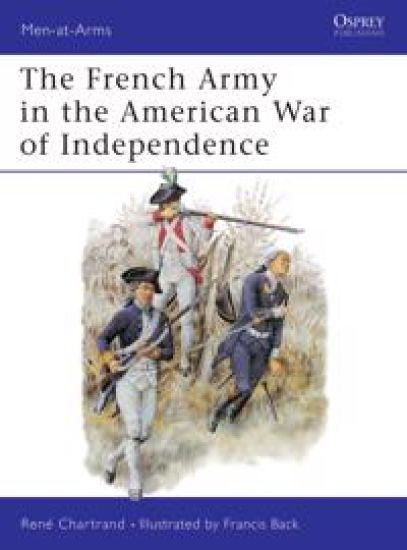
The French Army in the American War of Independence
The French forces that fought during the American War of Independence were, to a large extent, a product of the disasters of the Seven Years' War (1756-1763). During that war the fleet had been swept off the oceans, and nearly all colonies had been lost. Sweeping reforms were demanded. From the end of 1762 a series of royal orders dictated by common sense and good planning were signed by the king, and a vast reorganisation was started, ensuring that the army that fought in the American War presented a very different, altogether more formidable threat to her foes.