Kirjailija
Richard A. Gabriel
Kirjat ja teokset yhdessä paikassa: 39 kirjaa, julkaisuja vuosilta 1979–2025, suosituimpiin kuuluu Muhammad. Vertaile teosten hintoja ja tarkista saatavuus suomalaisista kirjakaupoista.
Nimi esiintyy myös muodoissa: Richard A Gabriel
39 kirjaa
Kirjojen julkaisuvuodet: 1979–2025.
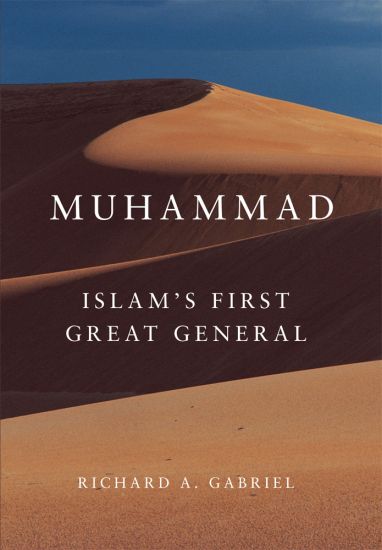
That Muhammad succeeded as a prophet is undeniable; a prominent military historian now suggests that he might not have done so had he not also been a great soldier. Best known as the founder of a major religion, Muhammad was also Islam's first great general. While there have been numerous accounts of Muhammad the Prophet, this is the first military biography of the man. In Muhammad: Islam's First Great General, Richard A. Gabriel shows us a warrior never before seen in antiquity--a leader of an all-new religious movement who in a single decade fought eight major battles, led eighteen raids, and planned thirty-eight other military operations. Gabriel's study portrays Muhammad as a revolutionary who introduced military innovations that transformed armies and warfare throughout the Arab world. Gabriel analyzes the environment in which Muhammad lived and the religion he inspired as they relate to his military achievements. Gabriel explains how Muhammad changed the social composition of Arab armies by replacing traditional ways of fighting with a new command structure. Muhammad's transformation of Arab warfare enabled his successors to establish the core of the Islamic empire--an accomplishment that, Gabriel argues, would have been militarily impossible without Muhammad's innovations. Richard A. Gabriel challenges existing scholarship on Muhammad's place in history and offers a viewpoint not previously attempted.
Richard Gabriel has been studying and writing about ancient warfare for nearly half a century. He has written fifty-five books on the subject (before this one) and over three hundred published articles. These decades of scholarship are complemented by direct military experience as a US army officer (now retired). This book presents his thoughts and perspectives on a selection of aspects of ancient warfare that he has found of particular interest over the years. It does not aim to be a comprehensive overview nor a coherent narrative of ancient military history but adds up to an illuminating, fascinating and wide-ranging discussion of various topics. With topics ranging from broad topics such as the origins of war, through logistics, military medicine and psychiatry or the origins of jihad, to specifics such as the generalship of Alexander the Great (Gabriel’s not a fan), Scipio and Hannibal, there is plenty here for the either the general reader or academic scholar.
Great Generals of the Ancient World
Richard A Gabriel
PEN SWORD BOOKS LTD
2025
nidottu
Halvin toimitettuna 23,70 €
Of the thousands of commanders who served in historys armies, why is it that only a few are remembered as great leaders of men in battle? What combination of personal and circumstantial influences conspire to produce great commanders? What makes a great leader great? Richard A Gabriel analyses the biographies of ten great generals who lived between 1481 BC and AD 632 in an attempt to identify the characteristics of intellect, psychology, personality, and experience that allowed them to tread the path to greatness. Professor Richard Gabriel has selected the ten whom he believes to be the greatest of them all. Those included, and more so those omitted, will surprise many readers. Conspicuous by their absence, for example, are Alexander the Great and Attila the Hun. Richard Gabriel, himself a retired soldier and professor at the Canadian Defence College, uses his selected exemplars to distil the timeless essence of military leadership.
That Muhammad succeeded as a prophet is undeniable; a prominent military historian now suggests that he might not have done so had he not also been a great soldier. Best known as the founder of a major religion, Muhammad was also Islam’s first great general. While there have been numerous accounts of Muhammad the Prophet, this is the first military biography of the man. In Muhammad: Islam’s First Great General, Richard A. Gabriel shows us a warrior never before seen in antiquity-a leader of an all-new religious movement who in a single decade fought eight major battles, led eighteen raids, and planned thirty-eight other military operations. Gabriel’s study portrays Muhammad as a revolutionary who introduced military innovations that transformed armies and warfare throughout the Arab world. Gabriel analyzes the environment in which Muhammad lived and the religion he inspired as they relate to his military achievements. Gabriel explains how Muhammad changed the social composition of Arab armies by replacing traditional ways of fighting with a new command structure. Muhammad’s transformation of Arab warfare enabled his successors to establish the core of the Islamic empire-an accomplishment that, Gabriel argues, would have been militarily impossible without Muhammad’s innovations. Richard A. Gabriel challenges existing scholarship on Muhammad’s place in history and offers a viewpoint not previously attempted.
God's Generals: The Military Lives of Moses, the Buddha, and Muhammad
Richard A. Gabriel
Skyhorse Publishing
2017
sidottu
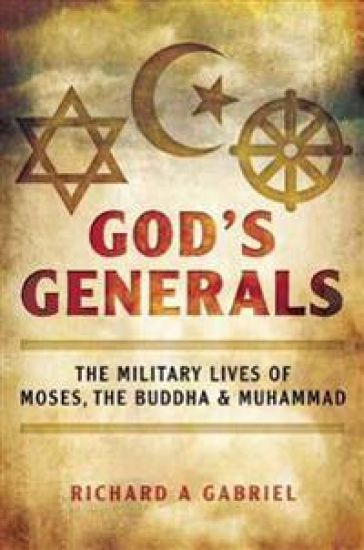
Examines how the military experience of three religious founders shaped their spiritual legacy. It is one of the more startling facts of military history that the founders of three of the four "great religions"--Judaism, Buddhism, and Islam--were also accomplished field generals with extensive experience in commanding men in battle. One of these, Muhammad, fought eight battles and was wounded twice, once almost fatally. Another, Siddhartha Gautama (later to become the Buddha), witnessed so much battlefield carnage that he suffered a psychological collapse. Moses had become so much a "god-intoxicated" personality that it is a reasonable suspicion that he, like the Buddha, was murdered. Indeed, had the experiences of these men in war not been so successful, it is quite possible that their achievements as religious leaders would never have occurred. For all three, war and religion were so closely intertwined in their personalities that it is difficult to discern where the influence of one ended and the other began. This book attempts to explore the military lives of Moses, the Buddha, and Muhammad, and the role their war experiences played in their religious lives. Skyhorse Publishing, as well as our Arcade imprint, are proud to publish a broad range of books for readers interested in history--books about World War II, the Third Reich, Hitler and his henchmen, the JFK assassination, conspiracies, the American Civil War, the American Revolution, gladiators, Vikings, ancient Rome, medieval times, the old West, and much more. While not every title we publish becomes a New York Times bestseller or a national bestseller, we are committed to books on subjects that are sometimes overlooked and to authors whose work might not otherwise find a home.
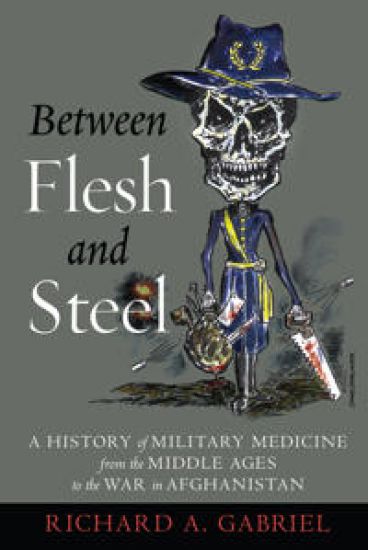
Over the last five centuries, the development of modern weapons and warfare has created an entirely new set of challenges for practitioners in the field of military medicine. Between Flesh and Steel traces the development of military medicine from the Middle Ages to the twenty-first century. Military historian Richard A. Gabriel focuses on three key elements: the modifications in warfare and weapons whose increased killing power radically changed the medical challenges that battle surgeons faced in dealing with casualties; advancements in medical techniques that increased the effectiveness of military medical care; and changes that finally brought about the establishment of military medical care systems in modern times. Chronological and cross-cultural, Between Flesh and Steel is the most comprehensive book on the market about the evolution of modern military medicine.
Over the last five centuries, the development of modern weapons and warfare has created an entirely new set of challenges for practitioners in the field of military medicine. Between Flesh and Steel traces the historical development of military medicine from the Middle Ages to modern times. Military historian Richard A. Gabriel focuses on three key elements: the modifications in warfare and weapons whose increased killing power radically changed the medical challenges that battle surgeons faced in dealing with casualties, advancements in medical techniques that increased the effectiveness of military medical care, and changes that finally brought about the establishment of military medical care system in modern times. Others topics include the rise of the military surgeon, the invention of anesthesia, and the emergence of such critical disciplines as military psychiatry and bacteriology. The approach is chronological—century by century and war by war, including Iraq and Afghanistan—and cross-cultural in that it examines developments in all of the major armies of the West: British, French, Russian, German, and American. Between Flesh and Steel is the most comprehensive book on the market about the evolution of modern military medicine.
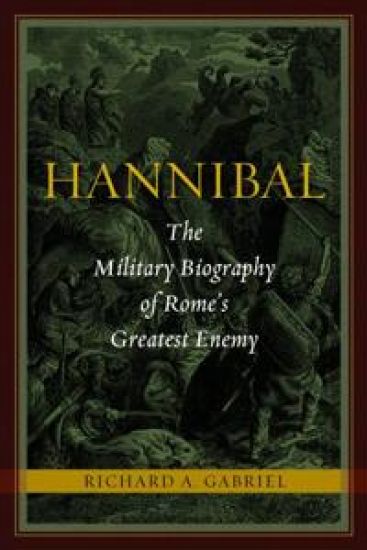
The Romans’ destruction of Carthage after the Third Punic War erased any Carthaginian historical record of Hannibal’s life. What we know of him comes exclusively from Roman historians who had every interest in minimizing his success, exaggerating his failures, and disparaging his character. The charges leveled against Hannibal include greed, cruelty and atrocity, sexual indulgence, and even cannibalism. But even these sources were forced to grudgingly admit to Hannibal’s military genius, if only to make their eventual victory over him appear greater. Yet there is no doubt that Hannibal was the greatest Carthaginian general of the Second Punic War. When he did not defeat them outright, he fought to a standstill the best generals Rome produced, and he sustained his army in the field for sixteen long years without mutiny or desertion. Hannibal was a first-rate tactician, only a somewhat lesser strategist, and the greatest enemy Rome ever faced. When he at last met defeat at the hands of the Roman general Scipio, it was against an experienced officer who had to strengthen and reconfigure the Roman legion and invent mobile tactics in order to succeed. Even so, Scipio’s victory at Zama was against an army that was a shadow of its former self. The battle could easily have gone the other way. If it had, the history of the West would have been changed in ways that can only be imagined. Richard A. Gabriel’s brilliant new biography shows how Hannibal’s genius nearly unseated the Roman Empire.
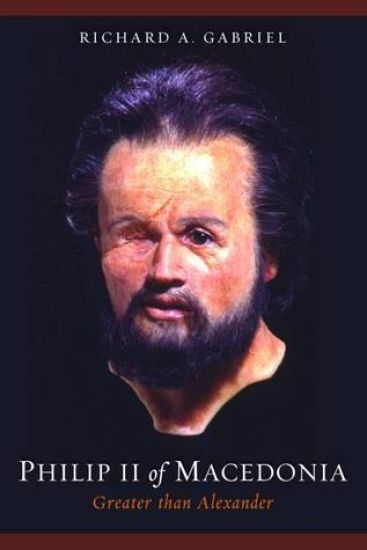
Philip II of Macedonia (382–336 BCE), unifier of Greece, author of Greece's first federal constitution, founder of the first territorial state with a centralized administrative structure in Europe, forger of the first Western national army, first great general of the Greek imperial age, strategic and tactical genius, and military reformer who revolutionized warfare in Greece and the West, was one of the greatest captains in the military history of the West. Philip prepared the ground, assembled the resources, conceived the strategic vision, and launched the first modern, tactically sophisticated and strategically capable army in Western military history, making the later victories of his son Alexander possible. Philip's death marked the passing of the classical age of Greek history and warfare and the beginning of its imperial age. To Philip belongs the title of the first great general of a new age of warfare in the West, an age that he initiated with his introduction of a new instrument of war, the Macedonian phalanx, and the tactical doctrines to ensure its success. As a practitioner of the political art, Philip also had no equal. In all these things, Philip exceeded Alexander's triumphs. This book establishes Philip's legitimate and deserved place in military history, which, until now, has been largely minimized in favor of his son by the classicist writers who have dominated the field of ancient biography. Richard Gabriel, renowned military historian, has given us the first military biography of Philip II of Macedonia.
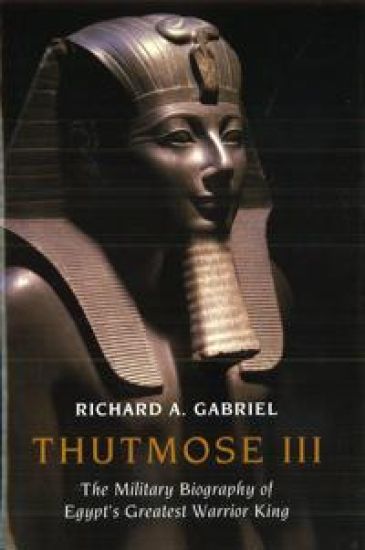
In the course of his thirty-two-year reign over ancient Egypt, Thutmose III fought an impressive seventeen campaigns. He fought more battles over a longer period of time and experienced more victories than Alexander the Great and Julius Caesar did. Despite Thutmose III's surprisingly illustrious record, his name does not command the same immediate recognition as these highly visible military leaders. In Thutmose III, Richard Gabriel deftly brings to life the character and ability of ancient Egypt's warrior king and sheds light on Thutmose's key contributions to Egyptian history. Considered the father of the Egyptian navy, Thutmose created the first combat navy in the ancient world and built an enormous shipyard near Memphis to construct troop, horse, and supply transports to support his campaigns in Syria and Iraq. He also reformed the army, establishing a reliable conscript base, creating a professional officer corps, equipping it with modern weapons, and integrating chariotry's combat arm into new tactical doctrines. Politically, he introduced strategic principles of national security that guided Egyptian diplomatic, commercial, and military policies for half a millennium and created the Egyptian empire. Through these crowning achievements, Thutmose set into motion events that shaped and influenced the Levant and Egypt for the next four hundred years. His reign can be regarded as a watershed in the military and imperial history of the entire eastern Mediterranean.
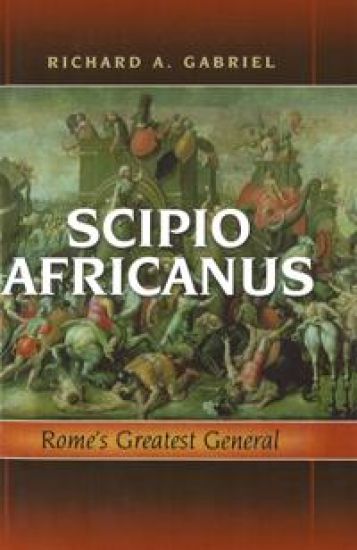
The world often misunderstands its greatest men while neglecting others entirely. Scipio Africanus, surely the greatest general that Rome produced, suffered both these fates. Today scholars celebrate the importance of Hannibal, even though Scipio defeated the legendary general in the Second Punic War and was the central military figure of his time. In this scholarly and heretofore unmatched military biography of the distinguished Roman soldier, Richard A. Gabriel establishes Scipio's rightful place in military history as the greater of the two generals. Before Scipio, few Romans would have dreamed of empire, and Scipio himself would have regarded such an ambition as a danger to his beloved republic. And yet, paradoxically, Scipio's victories in Spain and Africa enabled Rome to consolidate its hold over Italy and become the dominant power in the western Mediterranean, virtually ensuring a later confrontation with the Greco-Macedonian kingdoms to the east as well as the empire's expansion into North Africa and the Levant. The Roman imperium was being born, and it was Scipio who had sired it. Gabriel draws upon ancient texts, including those from Livy, Polybius, Diodorus, Silius Italicus, and others, as primary sources and examines all additional material available to the modern scholar in French, German, English, and Italian. His book offers a complete bibliography of all extant sources regarding Scipio's life. The result is a rich, detailed, and contextual treatment of the life and career of Scipio Africanus, one of Rome's greatest generals, if not the greatest of them all.
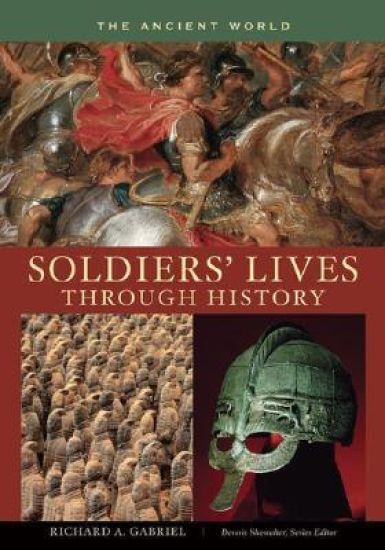
Once warfare became established in ancient civilizations, it's hard to find any other social institution that developed as quickly. In less than a thousand years, humans brought forth the sword, sling, dagger, mace, bronze and copper weapons, and fortified towns. The next thousand years saw the emergence of iron weapons, the chariot, the standing professional army, military academies, general staffs, military training, permanent arms industries, written texts on tactics, military procurement, logistics systems, conscription, and military pay. By 2,000 B. C. E., war was an important institution in almost all major cultures of the world. This book shows readers how soldiers were recruited, outfitted, how they fought, and how they were cared for when injured or when they died. It covers soldiers in major civilizations from about 4000 B. C. E. to about 450 C. E. Topics are discussed cross-culturally, drawing examples from several of the cultures, armies, and time periods within each chapter in order to provide the reader with as comprehensive an understanding as possible and to avoid the usual Western-centric perspective too common in analyses of ancient warfare.
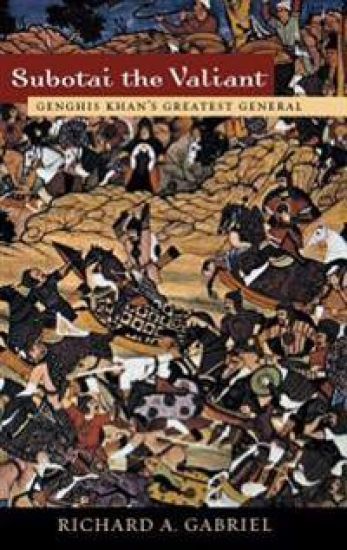
Genghis Khan's Greatest General
Richard A. Gabriel
University of Oklahoma Press
2006
nidottu
Halvin toimitettuna 25,00 €
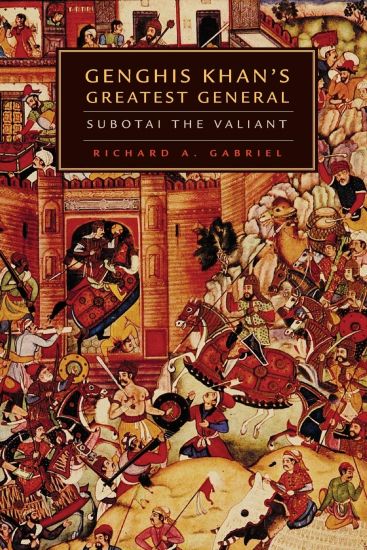
This book tells the story of Subotai the Valiant, a warrior for Genghis Khan and one of the greatest generals in military history. Subotai commanded armies whose size, scale, and scope of operations surpassed those led by any other commander in the ancient world. Under Subotai's direction, Mongol armies moved faster, over greater distances, and with a greater scope of maneuver than any army had ever done before. When Subotai died at age seventy-three, he had conquered thirty-two nations and won sixty-five pitched battles, according to Muslim historians. Had the great Khan not died, Subotai likely would have destroyed Europe itself.
"Jesus The Egyptian" is a revolutionary attempt to examine the origins of Christianity as historical artifacts and not theological ones. The author offers the theory that Christianity is historically rooted in the ancient Egyptian creed of Osiris and not only, as is often claimed, in Judaism, presenting a radical break with established Christian tradition. Professor Gabriel offers an intriguing analysis of Jesus' psychological motivation to explain Jesus' rejection of Judaism and his adoption of the Osiran-Isis creed, the most popular and practiced pagan theology of Christ's time.
This book tells the story of Subotai the Valiant, one of the greatest generals in military history, surely the equal of Hannibal and Scipio in tactical brilliance and ranking right along with both Alexander and Caesar as a strategist. Subotai commanded armies whose size, scale, and scope of operations surpassed all of the commanders of the ancient world. Under his direction and command, Mongol armies moved faster, over greater distances, and with a greater scope of maneuver than any army had ever done before. His legacy lives to the present day, for much of the theory and practice of modern military operations was first used by Subotai. The modern emphasis on speed, maneuver, surprise, envelopment, the rear battle, the deep battle, concentration of firepower, and the battle of annihilation all emerged as tactical skills first practiced by this great Mongol general. Subotai died at age 73, by which time he had conquered 32 nations and won 65 pitched battles, as the Muslim historians tell us. For 60 of those years, Subotai lived as Mongol soldier, first as a lowly private who kept the tent door of Genghis himself, rising to be the most brilliant and trusted of Genghis Khan's generals. When Genghis died, Subotai continued to be the moving force of the Mongol army under his successors. It was Subotai who planned and participated in the Mongol victories against Korea, China, Persia, and Russia. It was Subotai's conquest of Hungary that destroyed every major army between the Mongols and the threshold of Europe. Had the great Khan not died, it is likely that Subotai would have destroyed Europe itself.
Exactly how did the Israelites cross the desert? How did Moses cross the Red Sea? How did Joshua take Jericho, and how did the sun appear to stand still at the Ayjllon Valley? No one has ever analyzed the Bible as a military history Gabriel provides the first attempt at a continuous historical narrative of the military history of ancient Israel. He begins with a military analysis of Exodus, an unprecedented and hugely significant contribution to Exodus Studies. This book includes collaborative findings from archaelogy, demography, ethnography, and other relevant disciplines. As a seasoned infantry officer and military historian, Gabriel brings a soldier's eye to the infantry combat described in the Bible. Seeking to make military sense of the Biblical narrative as preserved in Hebrew, he renders comprehensible some of the mysterious explanations for famous events.
Gabriel examines 18 ancient army systems, examining the organizational structure and weapons employed and the degree to which cultural values and imperatives shaped the form and application of military force. The tactical doctrines and specific operational capabilities of each army are analyzed to explain how certain technical limitations and societal/cultural imperatives affected the operational capabilities of ancient armies. Cross-cultural and cross-historical connections ground the analysis in the larger historical context of the ancient world. •Sumer and Akkad •The Armies of the Pharaohs •The Hittites •The Mitanni •Armies of the Bible •The Iron Army of Assyria •Chinese Armies •Persia and the Art of Logistics •The Greeks •Carthaginian Armies •Armies of India •Rome •The Iberians, Celts, Germans, and Goths •The Army of Byzantium •The Vikings •The Arab Armies •The Japanese Way of War •The Mongols •The Ottomans This book also provides an introductory overview of war in the ancient world, from 2500 B. C. E. to 1453 C. E., as well as an examination of the evolution of modern warfare from 1453 to 2002 C. E.