Kirjailija
Richard J Mouw
Kirjat ja teokset yhdessä paikassa: 51 kirjaa, julkaisuja vuosilta 1991–2025, suosituimpiin kuuluu Formation for Life. Vertaile teosten hintoja ja tarkista saatavuus suomalaisista kirjakaupoista.
Nimi esiintyy myös muodoissa: Richard J. Mouw
51 kirjaa
Kirjojen julkaisuvuodet: 1991–2025.
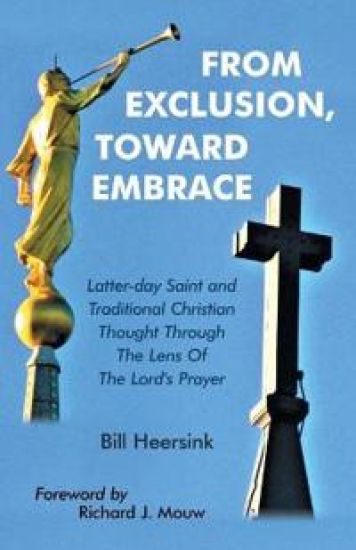
On the four corner lots formed by the intersecting of Main and Church Streets in Palmyra, NY, one finds four large Protestant churches today. Two centuries ago on the Smith family farm a few blocks to the south, a teenage Joseph Jr. found himself caught in the rivalry between such churches contentiously competing to claim the allegiance of repentant converts from the most recent revival. He wrote that, while praying in a grove of trees a short walk from his log cabin home, "I was answered that I must join none of them, for they were all wrong." He would go on to organize a new church, which-ironically-would soon claim to be "the only true and living church upon the face of the whole earth." Over the years Protestant denominational loyalties and exclusivity claims have faded and expressions of mutual embrace are not uncommon. However, the lines between these churches and the one founded by Joseph Smith Jr.-The Church of Jesus Christ of Latter-day Saints-have remained stark and at times harsh. How does Jesus Christ, himself, perceive this excluding of one another? In the Lord's prayer recorded in John 17, Jesus appears to anticipate these divisions arising among his would-be followers. So he prays repetitively and passionately that they be protected from these. At stake is the validity of their witness to the world of his own exclusive claims. To be sure, differing beliefs as to what those claims are should not be superficially dismissed. But, in the light of how Jesus prayed, should they not be honestly and prayerfully discussed in a mutually respectful way? To stimulate and facilitate this discussion is the intent of this book, using as our guide the simple but profound petitions Jesus taught us in the more well-known Lord's Prayer. "I came to know and admire Bill Heersink in a formal theological dialogue between Evangelical Christians and Latter-day Saints. Bill has chosen to look carefully at the beliefs of Evangelicals and Latter-day Saints through the lens of a scriptural passage beloved by both groups-the Lord's Prayer. And how better could we hope to achieve unity of purpose and 'convicted civility' than through Jesus Christ?" -Robert L. Millet is Professor Emeritus of Ancient Scripture at Brigham Young University, where he served as Dean of Religious Education. "Bill Heersink, seminary professor and participant in many dialogues, brings his most irenic and upbeat spirit to this gem of a book. Fully abreast of the most important academic questions, the book nevertheless wears its learning lightly and at times reads more like a devotional. Warmly to be commended to all readers of any or no faith communities." -Craig L. Blomberg is Distinguished Professor of New Testament at Denver Seminary and co-author of the groundbreaking book How Wide the Divide? A Mormon and an Evangelical in Conversation. "Having lived in Utah among the Latter-day Saints for many years, the author affirms his own deeply Christian beliefs while respectfully seeking to reconcile differences between Mormon and Protestant theology and beliefs." -Richard E. Bennett is Professor of Church History and Doctrine at Brigham Young University and former President of the Mormon History Association. "Bill has brought all of that experience to the writing of a book that expresses a pastor's heart, a love of Mormon neighbors, theological savvy, and a Christ-centered spirituality ... a book that evangelical pastors and Mormon bishops can recommend with confidence." -Richard J. Mouw was President of Fuller Theological Seminary,1993-2012.
Political Visions & Illusions – A Survey & Christian Critique of Contemporary Ideologies
David T. Koyzis; Richard J. Mouw
IVP Academic
2019
nidottu
Halvin toimitettuna 42,20 €
What you believe about politics matters. The decades since the Cold War, with new alignments of post–9/11 global politics and the chaos of the late 2010s, are swirling with alternative visions of political life, ranging from ethnic nationalism to individualistic liberalism. Political ideologies are not merely a matter of governmental efficacy, but are intrinsically and inescapably religious: each carries certain assumptions about the nature of reality, individuals and society, as well as a particular vision for the common good. These fundamental beliefs transcend the political sphere, and the astute Christian observer can discern the ways—sometimes subtle, sometimes not—in which ideologies are rooted in idolatrous worldviews. In this freshly updated, comprehensive study, political scientist David Koyzis surveys the key political ideologies of our era, including liberalism, conservatism, nationalism, democracy, and socialism. Koyzis gives each philosophy careful analysis and fair critique, unpacking the worldview issues inherent to each and pointing out essential strengths and weaknesses, as well as revealing the "narrative structure" of each—the stories they tell to make sense of public life and the direction of history. Koyzis concludes by proposing alternative models that flow out of Christianity's historic engagement with the public square, retrieving approaches for both individuals and the global, institutional church that hold promise for the complex political realities of the twenty-first century. Writing with broad international perspective and keen analytical insight, Koyzis is a sane and sensible guide for Christians working in the public square, culture watchers, political pundits, and all students of modern political thought.
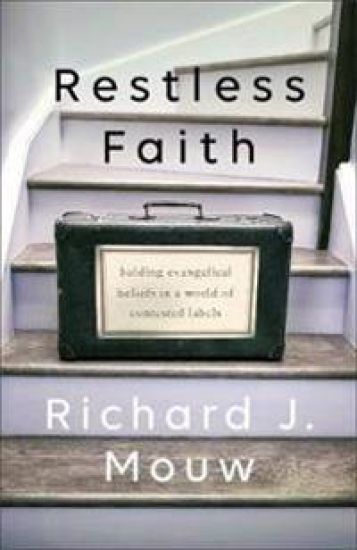
One of the most influential evangelical voices in America chronicles what it has meant for him to spend the past half century as a "restless evangelical"--a way of maintaining his identity in an age when many claim the label "evangelical" has become so politicized that it is no longer viable. Richard Mouw candidly reflects on wrestling with traditional evangelical beliefs over the years and shows that although his mind has changed in some ways, his core beliefs have not. He contends that we should hold on to the legacy that has enriched evangelicalism in the past. The Christian life in its healthiest form, says Mouw, is always a matter of holding on to essentials while constantly moving on along paths that we can walk in faithfulness only by seeking the continuing guidance of the light of God's Word. As Mouw affirms the essentials of the evangelical faith, he helps a new generation see the wisdom embodied in them.
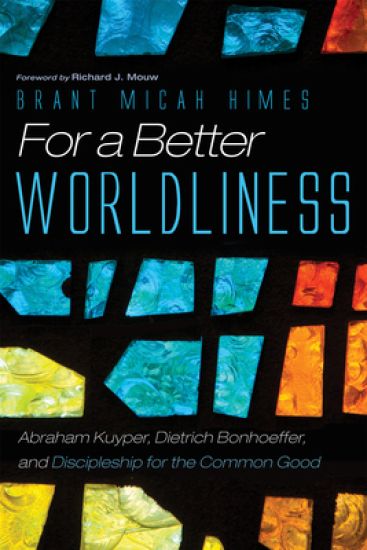
For a Better Worldliness is not only a statement of Abraham Kuyper's and Dietrich Bonhoeffer's theological concept and historical practice of discipleship. It is also--and perhaps more importantly--a call to engage in the fullness of the Christian life here and now. While this book goes to great efforts to establish sound historical and theological insights specifically in regards to Kuyper and Bonhoeffer, there is a strong underlying current that these particular insights deeply matter to the life of discipleship in the world today. History shows us that discipleship is not a singular journey; because of Jesus Christ it is not a description of one set path with one set of guidelines. A disciple can be a prime minister who unabashedly and successfully campaigned on his Calvinistic principles, just as he can be a participant in a coup d'etat launched against a tyrant, leading to the disciple's own imprisonment and death. Jesus Christ calls--whether to the height of political office, or to the dank prison cell, or (more likely for us) to somewhere in between. ""Brant Himes's For a Better Worldliness is one of the most intriguing books I've run across in a long time. While remaining thoroughly academic and well-researched, it bridges two popular theologians into the relevant sphere of public discipleship and social concern. This 'discipleship' is grounded in God's revelation, manifest in the reality of Jesus Christ, and refined through actions of belief and obedience. Thin theology leads to thin ministry; so, a comprehensive theology of discipleship has the potential to prepare individuals and communities to discern and respond to God's unique calling on their lives. Bonhoeffer and Kuyper are perfect guides for a discipleship that makes a profound difference for the world. Enjoy "" --Ken Wytsma is the pastor of Village Church in Beaverton and author of The Myth of Equality ""It is intriguing to bring Abraham Kuyper and Dietrich Bonhoeffer in conversation with each other, as Brant Himes does. Whatever their differences--Himes does not neglect them--he convincingly presents them as two proponents of a theology and a Christianity that should serve the common good. In doing so, he sheds new light on both Kuyper and Bonhoeffer and deepens the dimensions of the discipleship we are called to. The book is a must read for all who are engaged in the present discussion about church and society."" --George Harinck, Theological University Kampen ""In this eminently readable text, Himes skillfully weaves robust theological concepts with the compelling historical narratives of Bonhoffer and Kuyper to develop a holistic exploration of discipleship as 'theology in action'. Written with the precision of a scholar, the clarity of an educator, and the heart of a practitioner, Himes offers a rich portrait of discipleship with implications for Christ-followers in the 21st century. Highly recommended "" --Rhonda M. McEwen, Regent College Brant M. Himes is Assistant Professor of Humanities for Los Angeles Pacific University, part of the Azusa Pacific University system. He is managing editor for the theological journal Resonance.
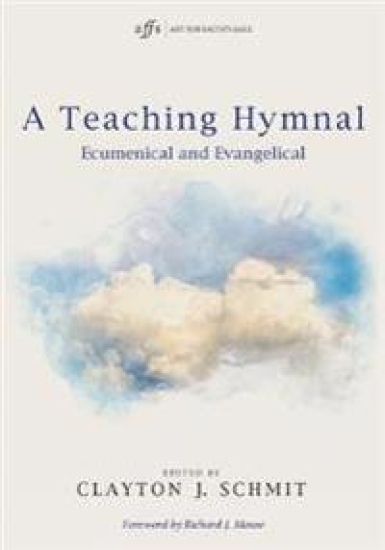
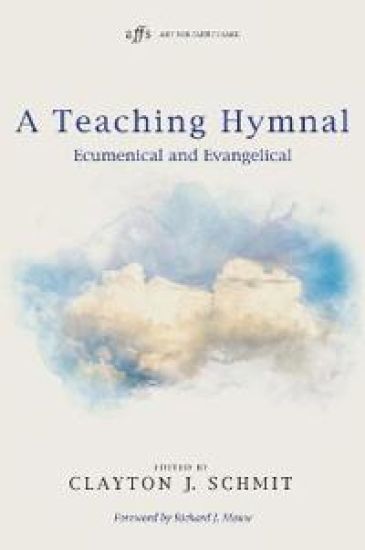
The Teaching Hymnal: Ecumenical and Evangelical is a teaching resource that provides a new generation of worshipers the opportunity to draw upon the rich history of the use of hymns and hymnody in the church. It contains a body of hymns and worship songs, worship services and templates, material that explains the sources of hymns and songs, hymnal usage, the sources of historic prayers and worship texts, and it provides essays on worship planning and leading. It also contains a thorough glossary of worship terms. This is a complete guide to hymn usage and worship planning designed especially for use in seminaries and Christian colleges. Clayton J. Schmit, is pastor of Trinity Lutheran Church (ELCA) in Stevens Point, WI. He was formerly Provost of Lutheran Theological Southern Seminary of Lenoir-Rhyne University. He is author of several books on worship and preaching, including Sent and Gathered: A Worship Manual for the Missional Church and co-author (with Lauralee Farrer) of Praying the Hours in Ordinary Life (Cascade Books).
The Bible is full of questions asked by God of his people. Each of these questions challenge us to struggle with some nagging issue or problem inside us that simply refuses to go away. God's great questions probe the deepest issues of our lives--questions of identity, of adequacy, of balance, of assurance, of mercy, of renewal, of perspective, of ultimate hope, of perception. As the characters in the Bible of whom these questions were first asked wrestle with their answers, we as readers of this book find ourselves wrestling with the same questions in our lives--bringing us face-to-face with ourselves and with God himself. ""In its own way, a good question is better than a good answer, because questions live with us and stretch us as we grow into them. God is the great question-asker, and although we think we'd like to ask questions of God, the more probing questions are the ones God asks of us. This book by Kathy Call will stretch your mind and grow your heart."" --John Ortberg, Pastor and Author, Menlo Church Kathy Call was the founder, and for twenty-five years the executive director of China Connection. Two books of her sermons, delivered in churches in China, have been published in Mandarin and English by the China Christian Council.
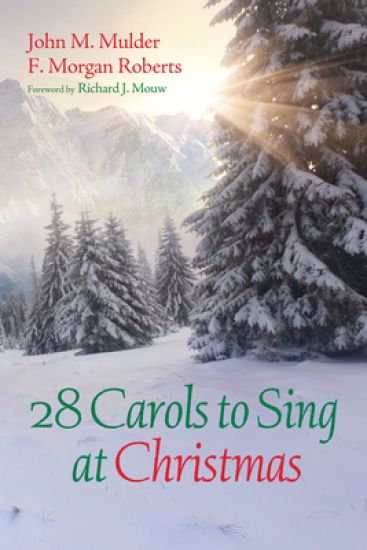
28 Carols to Sing at Christmas
John M Mulder; F Morgan Roberts; Richard J Mouw
Cascade Books
2015
pokkari
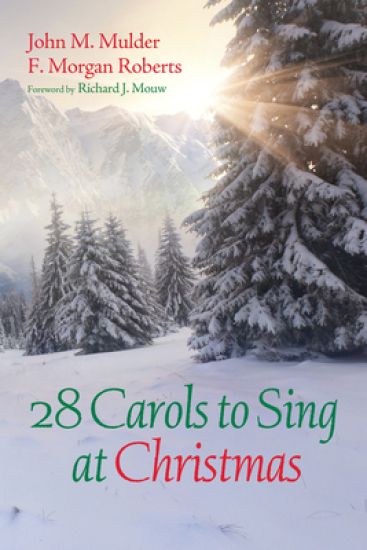
28 Carols to Sing at Christmas
John M Mulder; F Morgan Roberts; Richard J Mouw
Cascade Books
2015
sidottu
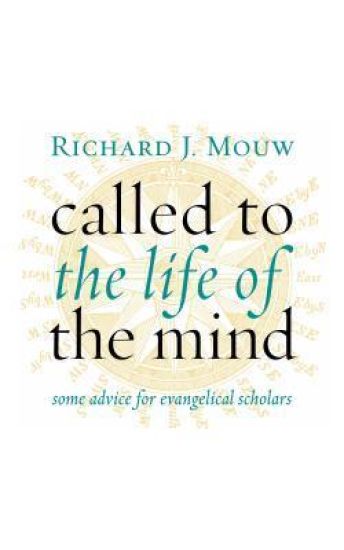
-I wasn't supposed to spend my life in the world of scholarship, - Richard Mouw acknowledges at the beginning of Called to the Life of the Mind. Yet he has indeed spent his career in the academy -- and has become one of the most widely respected evangelical Christian scholars of our time. In this wise little book Mouw defends Christian scholarship as an important and legitimate endeavor, responding in particular to those traditions that continue to be suspicious of intellectual pursuits. Writing in an inviting, conversational style, Mouw reflects candidly on the faithful Christian cultivation of the life of the mind and offers gentle advice on how Christians, especially evangelicals, might fruitfully navigate the world of the academy as followers of Jesus.
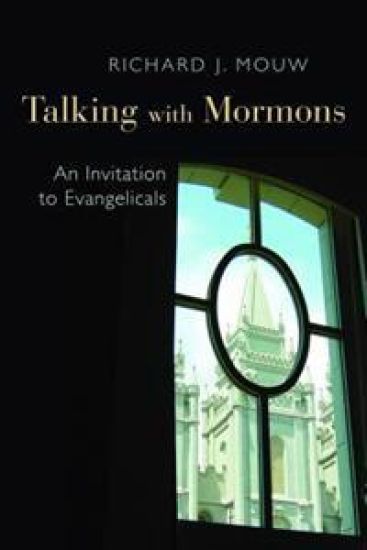
For over a decade Fuller Seminary president Richard Mouw has participated in Mormon-evangelical dialogue with a view to developing a better understanding between the two groups. His participation in these discussions has drawn severe criticism and even anger from people who believe such talks are pointless or even dangerous. This brief, highly accessible book is his answer. Advocating humility, patience, and a willingness to admit our own shortcomings, Mouw shows why it is necessary to move beyond stark denunciation to a dialogue that allows both parties to express differences and explore common ground. Without papering over significantly divergent perspectives on important issues like the role of prophecy, the nature of God, and the creeds, Mouw points to areas in which Mormon-evangelical dialogue evidences hope for the future. In so doing, he not only informs readers but also models respectful evangelical debate.
Richard J. Mouw is well known for his incisive views on the intersection of culture and Christianity and for his efforts to make the thought of major Dutch theologian Abraham Kuyper accessible to average Christians. In this volume Mouw provides the scholarly -backstory- to his popular books as he interprets, applies, expands on -- and at times even corrects -- Kuyper's remarkable vision for faith and public life. In thirteen essays Mouw explores and develops the Kuyperian perspective on key topics in Christian cultural discipleship, including public theology, sphere sovereignty, education, creation, and more. He deftly articulates an ecumenically enriched neo-Calvinist -- or -neo-Kuyperian- -- perspective that appropriates and contextualizes the ideas and insights of this important theologian and statesman for new challenges in Christian thought and service.
Richard Mouw was first drawn to Abraham Kuyper's writings about public life in the turbulent 1960s. As he struggled to find the right Christian stance toward big social issues such as the civil rights movement and the Vietnam War, Mouw discovered Kuyper's Lectures on Calvinism -- and, with it, a robust vision of active Christian involvement in public life that has guided him ever since. In this -short and personal introduction- Mouw sets forth Kuyper's main ideas on Christian cultural discipleship, including his views on sphere sovereignty, the antithesis, common grace, and more. Mouw looks at ways to update -- and, in some places, even correct -- Kuyper's thought as he applies it to such twenty-first-century issues as religious and cultural pluralism, technology, and the challenge of Islam.
Uncommon Decency – Christian Civility in an Uncivil World
Richard J. Mouw
Inter-Varsity Press,US
2010
nidottu
Can Christians act like Christians even when they disagree? In these wild and diverse times, right and left battle over the airwaves, prolifers square off against prochoicers, gay liberationists confront champions of the traditional family, artists and legislators tangle, even Christians fight other Christians whose doctrines aren't "just so." Richard Mouw has been actively forging a model of Christian civil conversation with those we might disagree with—atheists, Muslims, gay activists and more. He is concerned that, too often, Christians have contributed more to the problem than to the solution. But he recognizes—from his dialogues with those from many perspectives—that it's not easy to hold to Christian convictions and treat sometimes vindictive opponents with civility and decency. Few if any people in the evangelical world have conversed as widely and sensitively as Mouw. So few can write more wisely or helpfully than Mouw does here about what Christians can appreciate about pluralism, the theological basis for civility, and how we can communicate with people who disagree with us on the issues that matter most.