
Kirjailija
Richard J Mouw
Kirjat ja teokset yhdessä paikassa: 51 kirjaa, julkaisuja vuosilta 1991–2025, suosituimpiin kuuluu Formation for Life. Vertaile teosten hintoja ja tarkista saatavuus suomalaisista kirjakaupoista.
Nimi esiintyy myös muodoissa: Richard J. Mouw
51 kirjaa
Kirjojen julkaisuvuodet: 1991–2025.
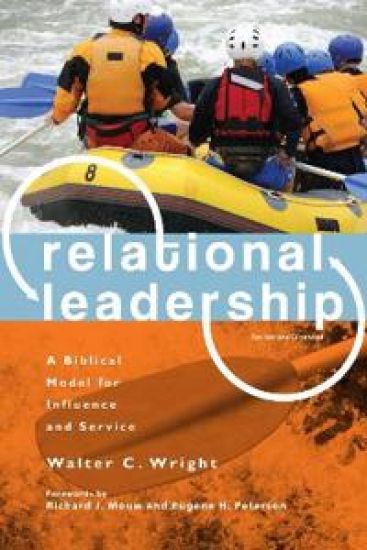
Relational Leadership – A Biblical Model for Influence and Service
Walter C. Wright; Richard J. Mouw; Eugene H. Peterson
Inter-Varsity Press,US
2009
nidottu
Halvin toimitettuna 30,80 €
Leadership. What does it mean? How do I do it? Who is a leader and who is not? Relational Leadership will stimulate your thinking about leadership and management, causing you to both ask questions and find answers. Ultimately, this will enable you to invest yourself in people for the sake of the kingdom. Drawing on leadership theory, his own experience and insights from Jude, Philemon and Colossians, Walter Wright has written a book that will be valuable to anyone in a position of leadership. Leadership is not an assigned role but a way of living that suffuses everything we do and are. The goal of this book is to empower others to contribute to achieving the mission of the organizations with which they are involved. Wright not only presents an ideal but offers practical suggestions for handling such thorny issues as the management of volunteers and performance reviews.
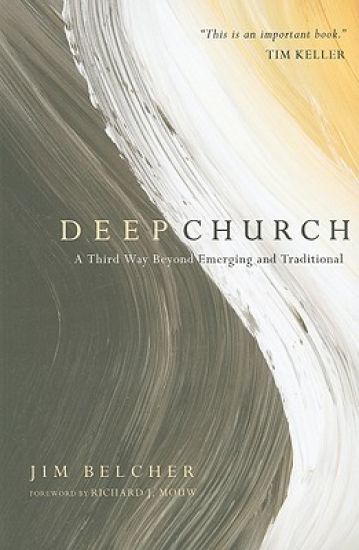
Deep Church – A Third Way Beyond Emerging and Traditional
Jim Belcher; Richard J. Mouw
IVP Books
2009
nidottu
Christianity Today Book Award winner Golden Canon Leadership Book Award winner Feeling caught between the traditional church and the emerging church? Discover a third way: deep church. C. S. Lewis used the phrase "deep church" to describe the body of believers committed to mere Christianity. Unfortunately church in our postmodern era has been marked by a certain shallowness. Emerging authors, fed up with contemporary pragmatism, have offered alternative visions for twenty-first-century Christianity. Traditionalist churches have reacted negatively, at times defensively. Jim Belcher knows what it's like to be part of both of these worlds. In the 1990s he was among the pioneers of what was then called Gen X ministry, hanging out with creative innovators like Rob Bell, Mark Oestreicher and Mark Driscoll. But he also has maintained ties to traditionalist circles, planting a church in the Presbyterian Church of America. In Deep Church, Belcher brings the best insights of all sides to forge a third way between emerging and traditional. In a fair and evenhanded way, Belcher explores the proposals of such emerging church leaders as Tony Jones, Brian McLaren and Doug Pagitt. He offers measured appreciation and affirmation as well as balanced critique. Moving beyond reaction, Belcher provides constructive models from his own church planting experience and paints a picture of what this alternate, deep church looks like--a missional church committed to both tradition and culture, valuing innovation in worship, arts and community but also creeds and confessions. If you've felt stuck between two extremes, you can find a home here. Plumb the depths of Christianity in a way that neither rejects our postmodern context nor capitulates to it. Instead of veering to the left or the right, go between the extremes--and go deep.
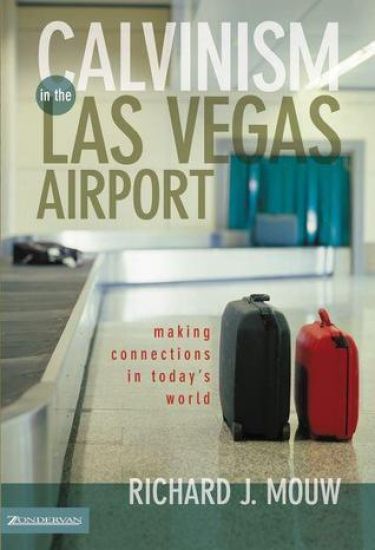
What do the Canons of Dordt mean to people in the Las Vegas airport—and does anyone there even care? In the movie Hardcore, a pious Calvinist elder tries unsuccessfully to explain the TULIP theology of his Dutch Reformed faith to a prostitute in the Las Vegas airport. This incongruous conversation demonstrates how Calvinism is often perceived today: irrelevant, harsh, even disrespectful. Beginning with this movie scene, Calvinism in the Las Vegas Airport addresses the weaknesses of Calvinism and points to its strengths. How does Calvinism shed light on today? Instead of reciting the Canons of Dordt, what’s a more compassionate way to relate to nonbelievers? What might it look like to live out the doctrines of TULIP with gentleness and respect? This conversational book provides answers and shatters some stereotypes. Calvinism in the Las Vegas Airport encourages you to live every aspect of life—business, family, education, politics, activities, and more—before the face of a generous, sovereign God. Calvinists and non-Calvinists alike will find this an enjoyable read. You will discover that Reformed theology can speak relevantly and compellingly today, both to you and to people in the Las Vegas airport. Does Calvinism Have Anything to Do with the 21st Century? What do you think about Calvinism? Do you view it positively or negatively? Or has its day passed? Let’s face it, many non-Calvinists hold a less-than-positive view, sometimes due to caricatures. This friendly, conversational book helps clear up some misconceptions and distorted views. If you’re not a Calvinist, here is an engaging inside look. And if you are a Calvinist, Richard Mouw shows how to live gently and respectfully with others—Christians and non-Christians—who hold different perspectives. Calvinism in the Las Vegas Airport focuses not on what Calvinists believe but on how they live. From a movie scene to the author’s personal experiences in Las Vegas, you are invited to travel with Mouw and see the Reformed faith in a new light. Yes, it still does travel well!
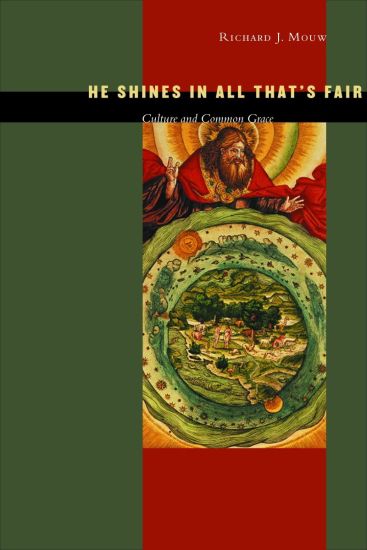
How do Christians account for the widespread presence of goodness in a fallen world? Different theological perspectives have presented a range of answers to this fundamental question over the centuries. In "He Shines in All That's Fair", Richard Mouw brings the historic insights of Calvinism to bear on this question and reinterprets them for a broader audience at the turn of the twenty-first century. Mouw examines long-standing Reformed arguments between those who champion the doctrine of common grace and those who emphasize an antithesis between the church and the world. Defenders of common grace account for the goodness in the world by insisting that God's grace goes beyond salvation to more general gifts of beauty, virtue, and excellence to all human beings - including those who do not believe in God. Those who reject the doctrine of common grace, on the other hand, emphasize the fallenness of the world and the need for the church to maintain a dramatic contrast to it. These divergent theological perspectives, while seemingly remote and abstract, lead to questions with very practical implications: What common ground do Christians share with those outside the faith? How should Christian treat their non-Christian neighbors? How should Christians relate to the world around them? Does God disapprove when Christians form close friendships with people who are "of the world"? Ought Christians to identify with the joys and sorrows of those who do not confess Christ as their Savior and Lord? In the course of this book Mouw looks at these topics, connecting the larger theological discussions to pressing issues in contemporary society. He insists that we have much to learn from thinkers who have rejected the idea of common (non-saving) grace, but he also defends the traditional common grace teachings, showing how they provide an important basis for wrestling with key challenges in present-day culture. Ultimately, Mouw argues forcefully for a Calvinism that is capable of standing in awe before the mysteries of God's gracious dealings with all human beings - and indeed the whole creation. Presented as the 2000 Stob Lectures at Calvin College and Calvin Theological Seminary, these soundly reasoned, elegantly written chapters offer an updated, robust understanding of common grace that will be of great value to anyone interested in the relation of church and culture.
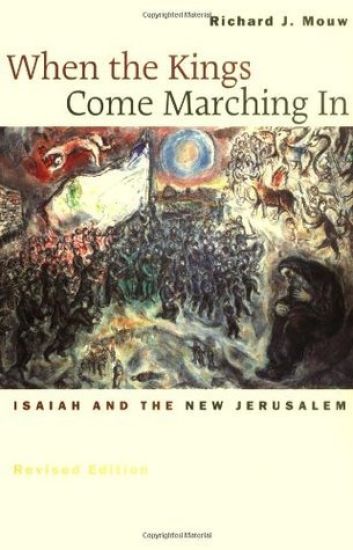
Widely respected for his perspectives on faith in the modern world, Richard J. Mouw has long stood at the forefront of the -Christ and culture- debate. In When the Kings Come Marching In -- here revised and updated -- Mouw explores the religious transformation of culture as it is powerfully pictured in Isaiah 60. In Isaiah 60 the prophet envisions the future transformation of the city of Jerusalem, a portrayal of the Holy City that bears important similarities to John's vision of the future in Revelation 21 and 22. Mouw examines these and other key passages of the Bible, showing how they provide a proper pattern for cultural involvement in the present. Mouw identifies and discusses four main features of the Holy City: (1) -the wealth of the nations- is gathered into the city; (2) the -kings of the earth- march into the city; (3) people from many nations are drawn to the city; and (4) light pervades the city. In drawing out the implications of these striking features, Mouw treats a number of relevant cultural issues, including Christian attitudes toward the processes and products of commerce, technology, and art; the nature of political authority; race relations; and the scope of the redemptive ministry of Jesus Christ. The volume culminates in an invaluable discussion of how Christians should live in the modern world. Mouw argues that believers must go beyond a narrow understanding of the individual -pilgrim's progress- to a view of the Christian pilgrimage wherein believers work together toward solving the difficult political, social, and economic problems of our day.
Current facts about Mormonism:Over 11 million members. Over 60,000 full-time missionaries—more than any other single missionary-sending organization in the world. More than 310,000 converts annually. As many as eighty percent of converts come from Protestant backgrounds. (In Mormon circles, the saying is, “We baptize a Baptist church every week.”)Within fifteen years, the numbers of missionaries and converts will roughly double. Within eighty years, with adherents exceeding 267 million, Mormonism could become the first world-religion to arise since Islam. You may know the statistics. What you probably don’t know are the advances the Church of Jesus Christ of Latter-day Saints (LDS) is making in apologetics and academic respectability. With superb training, Mormon scholars outclass many of their opponents. Arguments against Mormon claims are increasingly refuted as outdated, misinformed, or poorly argued. The New Mormon Challenge is a response to the burgeoning challenge of scholarly Mormon apologetics. Written by a team of respected Christian scholars, it is free of caricature, sensationalism, and diatribe. The respectful tone and responsible, rigorous, yet readable scholarship set this book in a class of its own. It offers freshly researched and well-documented rebuttals of Mormon truth claims. Most of the chapter topics have never been addressed, and the criticisms and arguments are almost entirely new. But The New Mormon Challenge does not merely challenge Mormon beliefs; it offers the LDS Church and her members ways to move forward. The New Mormon Challenge will help you understand the intellectual appeal of Mormonism, and it will reveal many of the fundamental weaknesses of the Mormon worldview. Whether you are sharing the gospel with Mormons or are investigating Mormonism for yourself, this book will help you accurately understand Mormonism and see the superiority of the historic Christian faith. Outstanding scholarship and sound methodology make this an ideal textbook. The biblical, historical, scientific, philosophical, and theological discussions are fascinating and will appeal to Christians and Mormons alike. Exemplifying Christian scholarship at its best, The New Mormon Challenge pioneers a new genre of literature on Mormonism. The Editors Francis J. Beckwith, Carl Mosser, and Paul Owen are respected authorities on the Church of Jesus Christ of Latter-day Saints and the authors of various books and significant articles on Mormonism. With contributors including such respected scholars as Craig L. Blomberg, William Lane Craig, J. P. Moreland, and others, The New Mormon Challenge is, as Richard Mouw states in his foreword, “an important event for both Protestant evangelicals and Mormons” that models “to the evangelical community what it is like to engage in respectful and meaningful exploration of a viewpoint with which we disagree on key points.”
Many evangelicals paint fundamentalism with the same broad, negative brush. But we owe more to our pietist-revivalist roots than we realize. Richard Mouw’s awareness of fundamentalism’s problems hasn’t robbed his appreciation for its strengths. The Smell of Sawdust sheds thoughtful and revealing light on the colorful parentage of contemporary evangelicalism. If you detect fondness, even a hint of nostalgia, you’re right. From its history, to its ethos, to its mores and methods, Mouw takes you on a fascinating journey through the pros and cons of the "sawdust trail." Whatever your outlook on the revivalist tradition, whether favorable or not so favorable, these candid, thought-provoking insights will inspire your respect for fundamentalism’s strong points, help you learn from its weaknesses, and above all, enrich your life as a Christian. Like the author, you’ll find yourself singing the old gospel hymns with new understanding and depth. Filled with anecdotes from the amusing to the poignant, this book takes you back to the sawdust-covered earth of the early tent meetings . . . earlier, to the spiritual hunger that sparked the pietist movement . . . and later, into today, where we strive to effectively communicate the nonnegotiables of our faith to a needy world. The Smell of Sawdust is gentle and deeply personal. It is also wise--neither judgmental nor naive, but healing, furnishing redemptive insights into the character of our fundamentalist heritage. This book will broaden the perspective of thinking Christians who want to engage both their hearts and their intellects to reach the soul of our culture with the gospel.
The president of Pasadena's Fuller Theological Seminary carefully assesses the relationship--or lack thereof--between "popular" religion and intellectual orthodoxy. Mouw argues that therapeutic and managerial "revolutions" can bring beneficial new sensitivities to Christian thought and practice.
Pluralisms and Horizons: An Essay in Christian Public Philosophy
Richard J. Mouw; Sander Griffioen
William B. Eerdmans Publishing Company
1993
nidottu
How should Christians respond to pluralism in public life? Christians have often clashed with the pluralism that characterizes life in modern America. In this classic essay in political philosophy, Richard J. Mouw and Sander Griffioen show how Christians can engage with pluralism productively. Thoroughly engaging with leading voices in the debate, Mouw and Griffioen wrestle with pluralism and its consequences for Christian public life. Ultimately, the authors endorse cooperation and tolerance, without sliding into moral relativism. Christian readers will find their carefully reasoned argument a compelling solution toward promoting the common good.
In this book Richard J. Mouw, one of the foremost thinkers in the field of Christian ethics, develops a constructive theological ethic, employing primarily Calvinist themes. Exploring issues that are at the intersection of philosophical and theological discussions, he sets forth an ethical perspective in which obedience to divine commands occupies a central place. After responding to some secularist objections to divine command theory, Mouw looks at the ways in which treatments of divine authority relate to contemporary philosophical discussions of moral justification. He then discusses the divine command perspective, turning to a specific examination of the Reformation emphasis on "naked selfhood." He defends Reformational selfhood against critiques of Protestantism and explores the differences and similarities between the conceptions of moral selfhood portrayed in classical Calvinism and recent existentialism. Examining Protestant, and especially Calvinist, emphases on divine command, Mouw argues that a divine command perspective need not be viewed as antithetical to the claims made by recent defenders of "narrativist" ethics. He explores the ways in which differing intratrinitarian emphases influence Christian moral experience, and he argues that a strong God-the-Father emphasis needs to be supplemented by perspectives that attend more to divine "nearness," as in contemporary feminism and Pentecostalism. He concludes with some reflections on the way in which a divine command ethical perspective speaks in positive ways to the contemporary moral quest.