
Kirjailija
Richard Jefferies
Kirjat ja teokset yhdessä paikassa: 456 kirjaa, julkaisuja vuosilta 1885–2026, suosituimpiin kuuluu Visions of Collapse. Early Dystopias and the Fragility of Civilization. Vertaile teosten hintoja ja tarkista saatavuus suomalaisista kirjakaupoista.
456 kirjaa
Kirjojen julkaisuvuodet: 1885–2026.

Wild Life in a Southern County is an unchanged, high-quality reprint of the original edition of 1879. Hansebooks is editor of the literature on different topic areas such as research and science, travel and expeditions, cooking and nutrition, medicine, and other genres. As a publisher we focus on the preservation of historical literature. Many works of historical writers and scientists are available today as antiques only. Hansebooks newly publishes these books and contributes to the preservation of literature which has become rare and historical knowledge for the future.
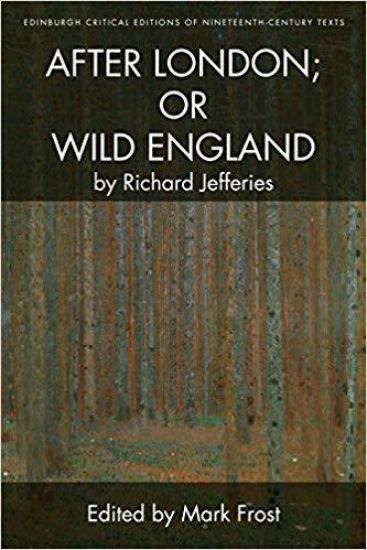
Richard Jefferies, After London; or Wild England
Richard Jefferies
Edinburgh University Press
2017
sidottu
Richard Jefferies' After London is uncanny and intriguing, an adventure story, quest romance, dystopia, and Darwinian novel rolled into one, but also a pioneering work of Victorian science fiction. Imagining a mysterious natural catastrophe that plunges its people into a barbaric future, Jefferies remarkable novel drowns and destroys London and depicts a challenging 'Wild England'dominated by nature and filled with evolved animals and devolved humans. Of its time but also distinctively modern, After London can, in its uneasy expression ofVictorian and post-Victorian anxieties about industrial development, urbanisation, natural resources, and climate, be regarded as one of the first novels of the Anthropocene. This new critical edition provides one of the earliest examples of a global catastrophe novel that is part of a flowering of 19th-century science fiction. It situates After London in a tradition of mid-late Victorian texts that respond to the evolutionary theories of Charles Darwin and Alfred Russel Wallace and responds to a host of other key social, political, and cultural issues of the period.
Amaryllis at the Fair - A Novel is an unchanged, high-quality reprint of the original edition of 1887. Hansebooks is editor of the literature on different topic areas such as research and science, travel and expeditions, cooking and nutrition, medicine, and other genres. As a publisher we focus on the preservation of historical literature. Many works of historical writers and scientists are available today as antiques only. Hansebooks newly publishes these books and contributes to the preservation of literature which has become rare and historical knowledge for the future.


Wood Magic - A Fable: Vol. I. is an unchanged, high-quality reprint of the original edition of 1881. Hansebooks is editor of the literature on different topic areas such as research and science, travel and expeditions, cooking and nutrition, medicine, and other genres. As a publisher we focus on the preservation of historical literature. Many works of historical writers and scientists are available today as antiques only. Hansebooks newly publishes these books and contributes to the preservation of literature which has become rare and historical knowledge for the future.


The Toilers of the Field is an unchanged, high-quality reprint of the original edition of 1893. Hansebooks is editor of the literature on different topic areas such as research and science, travel and expeditions, cooking and nutrition, medicine, and other genres. As a publisher we focus on the preservation of historical literature. Many works of historical writers and scientists are available today as antiques only. Hansebooks newly publishes these books and contributes to the preservation of literature which has become rare and historical knowledge for the future.


The story of my heart: my autobiography. By: Richard Jefferies AND ill. E. W. Waite
Richard Jefferies
Createspace Independent Publishing Platform
2017
nidottu
John Richard Jefferies (6 November 1848 - 14 August 1887) was an English nature writer, noted for his depiction of English rural life in essays, books of natural history, and novels. His childhood on a small Wiltshire farm had a great influence on him and provides the background to all his major works of fiction. Jefferies's corpus of writings includes a diversity of genres and topics, including Bevis (1882), a classic children's book, and After London (1885), an early work of science fiction. For much of his adult life, he suffered from tuberculosis, and his struggles with the illness and with poverty also play a role in his writing. Jefferies valued and cultivated an intensity of feeling in his experience of the world around him, a cultivation that he describes in detail in The Story of My Heart (1883). This work, an introspective depiction of his thoughts and feelings on the world, gained him the reputation of a nature mystic at the time. But it is his success in conveying his awareness of nature and people within it, both in his fiction and in essay collections such as The Amateur Poacher (1879) and Round About a Great Estate (1880), that has drawn most admirers. Walter Besant wrote of his reaction on first reading Jefferies: "Why, we must have been blind all our lives; here were the most wonderful things possible going on under our very noses, but we saw them not. John Richard Jefferies (he used the first name only during his childhood) was born at Coate, in the parish of Chiseldon, near Swindon, Wiltshire, the son of a farmer, James Luckett Jefferies (1816-1896). 4] His birthplace and home is now a museum open to the public. James Jefferies had the farm from his father, John Jefferies, who had been a London printer before returning to Swindon to run the family mill and bakery. Richard's mother, Elizabeth Gyde (1817-1895), always called Betsy, was the daughter of John Jefferies's binder and manager. These relationships are mirrored in the characters of Jefferies's late novel Amaryllis at the Fair (1887); and the portraits of the family in the novel tally with external accounts of the Jefferies. James Jefferies, like Iden in Amaryllis, was devoted to his garden, while struggling to make a financial success of the farm. The garden, lovingly recalled in Wood Magic and Amaryllis, also makes a strong impression on the memories of those who knew the Jefferies at the time. Betsy, like Iden's wife, seems to have been dissatisfied with life on the farm: "a town-bred woman with a beautiful face and a pleasure-loving soul, kind and generous to a fault, but unsuited to a country life." The farm was very small, with 39 acres (160,000 m2) of pasture; and a mortgage of 1500 would later begin a slide into debt for James Jefferies, who lost the farm in 1877 and became a jobbing gardener. But these difficulties were less evident in Richard's childhood. The situation was much as in After London (1885), where the farming and gardening Baron is again based on James Jefferies: 8] "The whole place was thus falling to decay, while at the same time it seemed to be flowing with milk and honey". One part of the Jefferies family is strikingly missing from the books. In Wood Magic, Bevis and Amaryllis, the hero (or heroine) has no siblings; only After London gives the main character brothers and depicts the imperfect sympathy between them. James and Elizabeth's first child, Ellen, had died young; but Richard had two younger brothers and a younger sister.

Hodge and his masters. By: Richard Jefferies
Richard Jefferies
Createspace Independent Publishing Platform
2017
nidottu
After London; or, Wild England. By: Richard Jefferies
Richard Jefferies
Createspace Independent Publishing Platform
2017
nidottu
John Richard Jefferies (6 November 1848 - 14 August 1887) was an English nature writer, noted for his depiction of English rural life in essays, books of natural history, and novels. His childhood on a small Wiltshire farm had a great influence on him and provides the background to all his major works of fiction. Jefferies's corpus of writings includes a diversity of genres and topics, including Bevis (1882), a classic children's book, and After London (1885), an early work of science fiction. For much of his adult life, he suffered from tuberculosis, and his struggles with the illness and with poverty also play a role in his writing. Jefferies valued and cultivated an intensity of feeling in his experience of the world around him, a cultivation that he describes in detail in The Story of My Heart (1883). This work, an introspective depiction of his thoughts and feelings on the world, gained him the reputation of a nature mystic at the time. But it is his success in conveying his awareness of nature and people within it, both in his fiction and in essay collections such as The Amateur Poacher (1879) and Round About a Great Estate (1880), that has drawn most admirers. Walter Besant wrote of his reaction on first reading Jefferies: "Why, we must have been blind all our lives; here were the most wonderful things possible going on under our very noses, but we saw them not. John Richard Jefferies (he used the first name only during his childhood) was born at Coate, in the parish of Chiseldon, near Swindon, Wiltshire, the son of a farmer, James Luckett Jefferies (1816-1896). 4] His birthplace and home is now a museum open to the public. James Jefferies had the farm from his father, John Jefferies, who had been a London printer before returning to Swindon to run the family mill and bakery. Richard's mother, Elizabeth Gyde (1817-1895), always called Betsy, was the daughter of John Jefferies's binder and manager. These relationships are mirrored in the characters of Jefferies's late novel Amaryllis at the Fair (1887); and the portraits of the family in the novel tally with external accounts of the Jefferies. James Jefferies, like Iden in Amaryllis, was devoted to his garden, while struggling to make a financial success of the farm. The garden, lovingly recalled in Wood Magic and Amaryllis, also makes a strong impression on the memories of those who knew the Jefferies at the time. Betsy, like Iden's wife, seems to have been dissatisfied with life on the farm: "a town-bred woman with a beautiful face and a pleasure-loving soul, kind and generous to a fault, but unsuited to a country life." The farm was very small, with 39 acres (160,000 m2) of pasture; and a mortgage of 1500 would later begin a slide into debt for James Jefferies, who lost the farm in 1877 and became a jobbing gardener. But these difficulties were less evident in Richard's childhood. The situation was much as in After London (1885), where the farming and gardening Baron is again based on James Jefferies: 8] "The whole place was thus falling to decay, while at the same time it seemed to be flowing with milk and honey". One part of the Jefferies family is strikingly missing from the books. In Wood Magic, Bevis and Amaryllis, the hero (or heroine) has no siblings; only After London gives the main character brothers and depicts the imperfect sympathy between them. James and Elizabeth's first child, Ellen, had died young; but Richard had two younger brothers and a younger sister.


The Scarlet Shawl, A Novel
Richard Jefferies
Createspace Independent Publishing Platform
2016
nidottu